
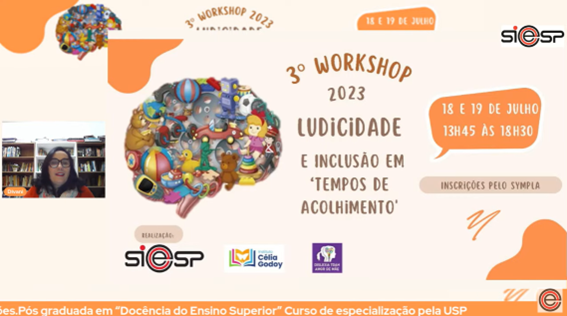
3rd Playfulness Workshop Concludes with More Than 5,900 Participants
)
With more than 960 registrants and approximately 1,300,000 views on the Sieeesp YouTube channel, and featuring a total of 15 speakers addressing various topics focused on the importance of playfulness and inclusion for children, the 3rd Workshop on Playfulness: Inclusion in “Times of Welcome” concluded this Wednesday (19) with extremely positive results for schools, educators, and the entire school community. And new this year was that anyone who registered and signed the attendance list for the live streams received two free e-books on inclusion and playfulness.
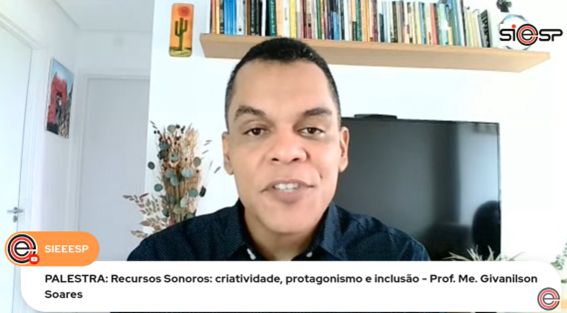
Teacher and master Givanilson Soares spoke about the importance of sound resources: creativity, active participation, and inclusion. He encouraged teachers to find ways to incorporate sound into their work even if they do not play any musical instruments, “including by involving the teacher themselves in the classroom,” not just the children in music, whether or not they have a disability.
Thus, the creation of playful resources not only makes the class itself more appealing to children but also helps in the process of welcoming and educating children with disabilities. Sound puppets are an example of this. They have a strong visual appeal that attracts and piques the child’s interest, which leads to storytelling or the creation of a story based on the character or resource, says the teacher.
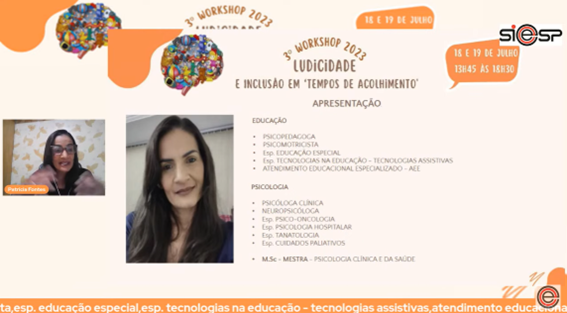
Children with autism should be encouraged to learn in a natural and effective way—and play-based interventions contribute to this, in addition to helping them interact socially, improve their language skills, and reduce restrictive and repetitive behaviors, says Patricia Fontes, M.A., who spoke about play and the holistic development of students with ASD, noting that the goal is to help children realize that building relationships is important, thereby improving their social skills. It is worth noting that children have the right to play and to use play-based activities as a tool that enhances the learning process, she emphasizes.
Divani Albuquerque Nunes, a master’s degree holder and specialist, emphasizes the importance of Playful Games: Welcoming and Inclusive, noting that play is directly linked to the development of various skills—ranging from creativity, imagination, and socialization to motor coordination, language, and logical reasoning. By definition, recreational games are those that provide pleasure and fun, while educational games are designed to promote specific learning outcomes. The ideal is to combine both aspects, allowing children to have fun and learn at the same time, says the educator.
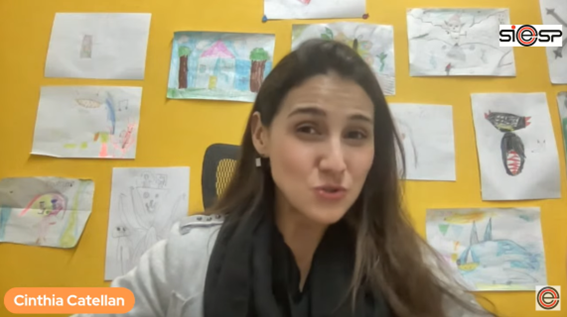
"Through play, children discover new ways of perceiving the world around them, learn to organize their thoughts and feelings, and develop an understanding of the world and themselves," says psychologist and specialist Cinthia Catellan, who spoke about the contributions of neuroscience to the use of play-based stimulation in the learning process and the treatment of dyslexia; but it is also important to emphasize the importance of adult intervention—whether by parents or educators—since children are not born knowing how to play, what a toy is, or how to use one.
Play should be highly valued in the school environment, as it is what interests children the most; when learning occurs through play, it becomes more meaningful to them because it is directly linked to pleasure, and this makes it easier for them to integrate play and learning. “Children are spontaneous, and their way of playing is no different—they play for pleasure and out of their own free will. Therefore, teachers must harness this spontaneity and foster a pedagogical environment within the child’s limitations, creating spaces, providing materials, and, through these means, facilitating learning and intervening,” she notes.
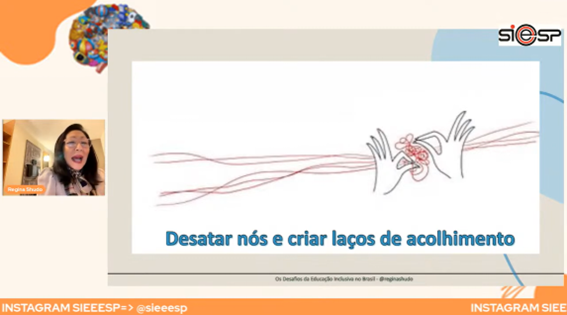
Meanwhile , teacher and expert Regina Shudo explains *Building an Inclusive School: Seeing and Listening to Each and Every One: Reconnecting with What Is Essential and with Human Life*. According to the expert, it is common for parents and educators to complain about a lack of time, and play is pushed to the second, third, or even fourth priority. “The consequences are serious for children’s development and, ultimately, for their adult lives as well.”
The following are harmful to students: a sedentary lifestyle among children and adolescents, childhood obesity, lack of motor skills, depression among children and adolescents, and increased reliance on medical interventions. An inclusive approach to education involves changes and adjustments to content, approaches, structure, and strategies, with the aim of reaching all children in the appropriate age group and based on the conviction that it is the responsibility of the regular school system to educate all children."
If you missed any of the presentations from the Playfulness Workshop—organized by Sieeesp in partnership with the Celia Godoy Institute and Dislexia TDAH Amor de Mãe— visit their YouTube channel to watch the entire event.
Share on social media:
Categories
- Diversity, Equity, and Inclusion (DE&I)