

Learning in the Age of Digital Convergence and the Valuation of Teachers
)
People learn in different ways in this age of digital convergence. The ubiquity of screens in our daily lives and the growing attention paid to the content and interactions they provide are changing the way the brain perceives and processes information. We must remember that what makes us human is our propensity to learn and teach.
A tool can be defined as something that physically or mentally expands human capacity to accomplish something. Tools are part of our culture—this includes any kind of technology. According to biologist and geneticist Adam Rutherford (2020) *, cultural evolution and biological evolution are intrinsically linked, and the best way to think about this phenomenon is as genetic-cultural coevolution.
In other words, according to the author, “biology enables culture, and culture changes biology.” It is plausible to imagine that the advent of the Internet, social media, video games, and the changes in the entertainment industry brought about by digital convergence have an impact on learning, with both positive and negative effects. For example, the idea that we are capable of performing many tasks at the same time (multitasking) is inconsistent with the kind of learning required to form long-term memory.
According to some authors in the biological and health sciences, learning theories are still in a pre-scientific phase, citing examples of successful learning and clarifying and distinguishing effective teaching practices. They hope that brain imaging techniques will make it possible to formulate a theory capable of predicting what actually leads to learning. Educators and educational researchers draw on psychology, philosophy, sociology, and other fields of knowledge to build their theoretical foundations. And they know that, like everything that depends on human relationships, education also requires analysis from the humanities to be fully understood.
According to the OECD (2003) **, Cognitive Psychology has made a significant contribution to the development of hypotheses regarding the mechanisms that generate reasoning and learning behaviors. Neuroscience studies and determines—or confirms—what these mechanisms are. What is already known is that the brain is plastic; that is, it continues to develop, learn, and change from birth through old age or death. And that learning requires the experience of emotion; therefore, the entire body can participate in the learning process.
The fact that the Internet has rendered libraries and encyclopedias obsolete as repositories of information has required information professionals (librarians) to take on an increasingly proactive role in empathetic curation, amid an almost infinite abundance of resources—whether texts, audio, videos, or augmented or virtual reality objects. Learning experiences are now designed to maintain audience engagement—the same trend that has transformed the day-to-day operations of the world’s leading museums, planetariums, and aquariums.
The mere availability of information is not synonymous with effective knowledge-building. And the way social media is growing in importance and influence among Brazilians highlights the pitfalls of consuming information without a well-developed filter—critical thinking—which requires social interaction and the guidance of a good teacher to develop fully.
One of the lessons the pandemic will leave for school and university administrators is that technology-driven changes in learning require a greater appreciation of teachers. The school that took shape within homes through remote learning highlighted the complexity of the educational processes for which educators—both teachers and other education professionals—are responsible.
According to a comprehensive study recently conducted by the Varkey Foundation (2020) ***, there is a direct relationship between the status society attributes to the teaching profession and the learning outcomes achieved by students.
The study examined three different definitions of teacher status and their respective measures. First, it looked at how people ranked teachers in relation to other occupations in terms of respect.
Next, the implicit status of teachers, based on how people responded to a brief word in association tests that assess implicit perceptions of teachers.
Finally, regarding the explicit status of teachers, respondents answered a series of questions about teachers’ attributes and working conditions—including their level of training, overall quality, and professional evaluation.
The ranking reveals that Brazil is one of the countries that values the teaching profession the least in the world, with only slight differences in status between elementary and high school teachers. This is a deep-rooted cultural issue that needs to be addressed, as it is impossible to envision a new school system without the democratic participation, engagement, and ongoing professional development of educators.
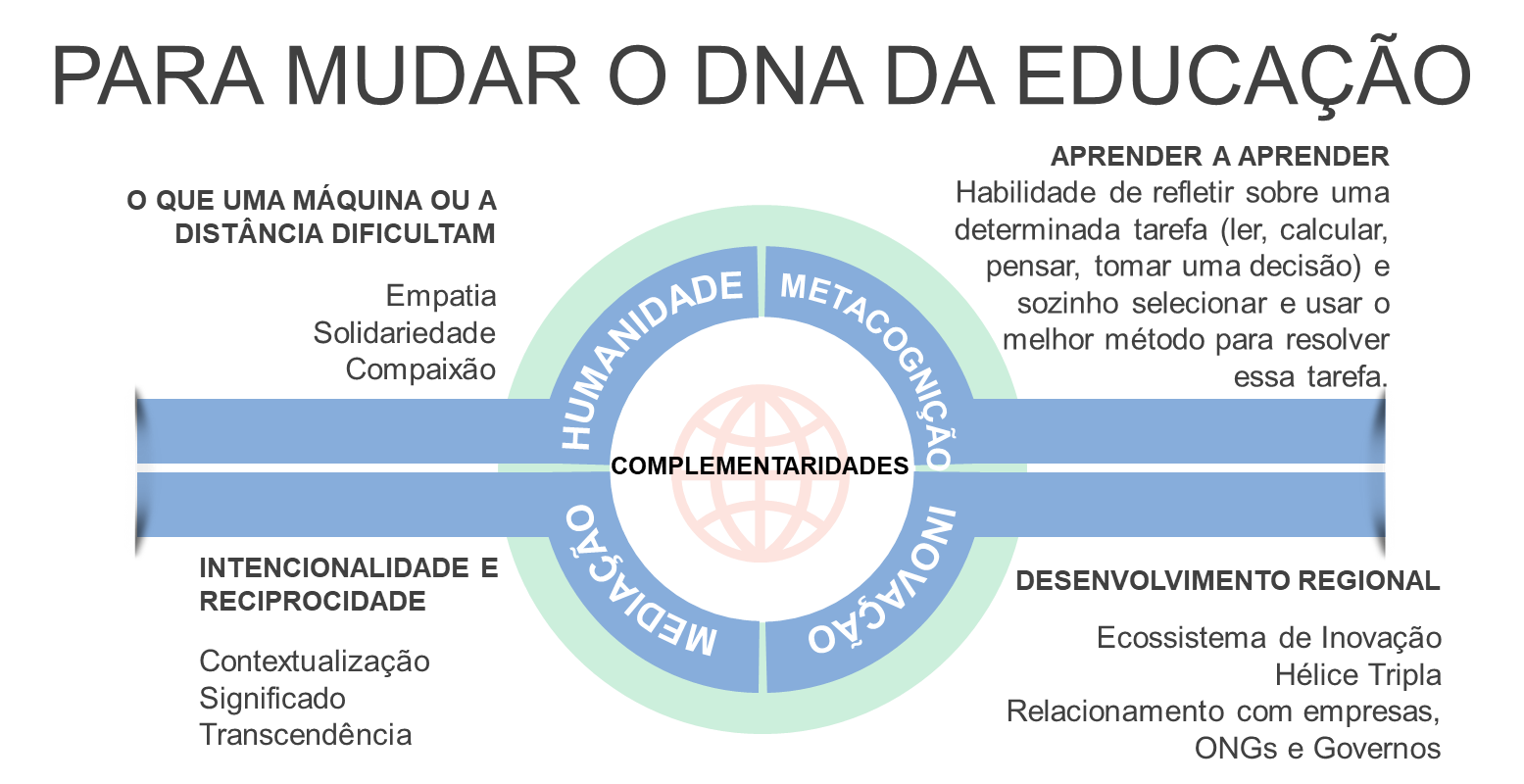
Figure 1 illustrates some of the key areas to focus on in order to transform education; in all of them, the active, informed, and critical participation of teachers is essential.
References:
* RUTHERFORD, A. The Book of Humans: The Story of How We Became Who We Are. Rio de Janeiro: Record, 2020.
** OECD. Understanding the Brain: Toward a New Science of Learning. São Paulo: Editora Senac São Paulo, 2003.
*** DOLTON, P.; DE VRIES, R. Reading Between the Lines: What the World Really Thinks of Teachers. Varkey Foundation, 2020.
Learn more about the author:
)
Did you like this content? Share it on your social media
Categories
- The Future of Education
- Innovation