

Adolescence: An Invitation to Reflection
)
Every investment we make in developing interpersonal relationships—as educators, whether at home or at school—is primarily aimed at fostering the development of healthy relationships throughout life.
This harmonious coexistence depends on values shared by different generations, such as: Respect, Justice, Equity, Empathy, Ethics, Solidarity, Acceptance of Diversity, and Democracy; and, therefore, it requires a deliberate effort to promote the mental health of the entire community. And how is this possible?
To begin with, through an emotionally supportive education in democratic and educational environments designed to build positive role models that inspire and serve as examples to foster in adolescents a sense of belonging, responsibility, and security.
However, we know that, these days, none of this is easy! We adults—fathers, mothers, and teachers—are being tested daily as we strive to better understand our children and students. The spaces and institutions that should serve as models for education also often feel “lost,” pressured by the diverse backgrounds of families, and, in some cases, struggle to adapt to the changing demands of our times.
And that is why, as an educator, I feel compelled to reflect on this today—especially in light of the countless comments that have emerged in response to Netflix’s series *Adolescence*, which has already secured a large audience. The four-episode series explores the aftermath of a teenage girl’s stabbing, in which a 13-year-old boy—a classmate of the victim—is detained as a suspect in the murder.
From the outset, the series raises a crucial point for reflection: the teenager’s isolation and the family’s lack of understanding of who their child really is. Later, we see the pain of school educators who do not know their students and are unable to exercise their authority at school, in addition to knowing very little about them, which highlights the school’s powerlessness when it comes to various issues.
Another source of pain is the guilt that takes its toll on the family, as well as a lack of awareness about the cruelty of bullying—both for the victim and the bully. In short, there are many sources of pain that need to be addressed!
I’ll begin, then, by reflecting on the portrayal of the school. Let’s first reflect on the school depicted in the series. It bothered me that at no point does the school appear to be taking action in the aftermath of the murder; instead, it is portrayed as a “space of chaos,” described by one of the characters—in this case, the police officer—as a “containment cage.”
The school depicted reveals a climate of disrespect among peers and across generations, with educators who can only demand respect through punishment and threats—and even one educator who admits to not knowing the student who was the subject of the police visit very well, only his grades.
This environment depicted in the series, unfortunately, highlights a generational divide between educators and students, where the codes of communication are not understood by everyone and where there is no space for listening and dialogue—neither preventive nor supportive.
Well, this scenario depicted a school overwhelmed by new demands, with educators—who were under immense pressure—taking on different roles without adequate resources to do so. On the other hand, in one of the conversations among the police officers, the officer who said she had lived in such an environment mentioned that she was saved by a teacher, which leads us to reflect on just how important educators are.
And in our context, how are our schools doing? Is this really the situation in our schools? Some schools are well-prepared for the new challenges, while others are not so much!
We know that in some school settings there are generational gaps, a lack of effective training for educators to meet various demands, excessive pressure on educators to take on many roles that should belong to families, few effective programs to help students develop a life plan, and very little listening and dialogue to help adolescents break out of isolation and escape the dangers of social media.
As we reflect on this school, which also needs to be reorganized, we must recognize that we need to support one another through a network to transform the school, help our fellow educators, and strengthen healthy relationships that inspire us for life.
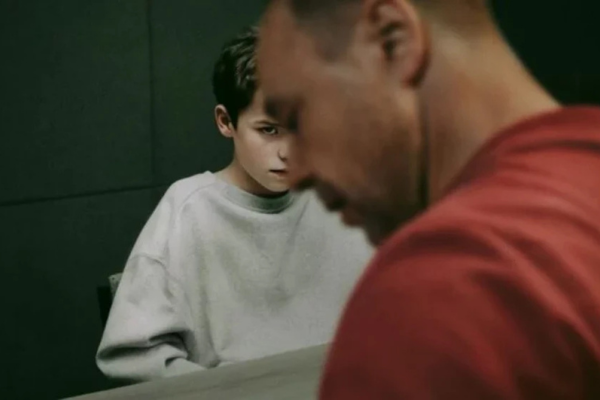
The series "Adolescence" will be shown in British schools. Photo: Courtesy of Netflix.
How can we get started and prevent school from becoming a place of suffering as well? First, we need to be clear about the kind of student we want to help develop and make this clear to families so that there is alignment between family and school expectations.
We need to reflect on the social pressure to achieve results, the push for overloaded schedules, the focus on academics, and the neglect of social-emotional learning—thereby preventing schools from becoming mere arenas of competition and violence. What kind of school is truly right for my child? How can I choose a school that encourages each student to do their best and grow by valuing effort?
In addition to this perspective, we must encourage students to develop a Life Plan based on an understanding of the characteristics of their age group, active listening, and dialogue that provides guidance and strengthens bonds.
Based on an understanding of the school’s PPP, educators must serve as role models, fostering an educational environment with clear boundaries that values ethics, spirituality, and the exercise of responsibility.
It is also the responsibility of educators at all levels—whether they are school inspectors, teachers, or administrators—to promote genuine praise within the group, based on established guidelines, and to ensure that natural corrections are made on an individual basis throughout the process.
It is necessary to invest in emotional security: understanding the signs conveyed by silence and body language; not neglecting emotions; helping to identify and name emotions; it is important to create spaces for communication, face-to-face with active listening; without judgment or comparison; and to create opportunities for interaction through joint activities among peers, placing ever-greater value on respect for diversity.
It is essential to counteract any form of violence and indispensable to foster healthy relationships: teachers, school inspectors, and administrators should be present during snack time and study periods—to engage in dialogue, to offer a welcoming ear to pain and suffering, and to address difficulties through self-awareness, care, and compassion.
In this way, we create a collective environment at school that is welcoming, observant, and responsible—one where there is firmness and kindness, where there is the courage to say “No,” and where there is the moral strength to set boundaries and, in this way, help students build their life plans.
If necessary, the school, as an institution, needs to invest in teacher training so that educators are better equipped to meet these demands, while also paying attention to teachers’ self-awareness and self-care!
A school that is constantly evolving is a major challenge, but educators who work together and share the same values can do a great deal for today’s generations!
Now, let’s take a look at the family! The series begins with a profound sense of shock at what is happening. Despite the parents’ initially clear roles, the aggressiveness of the police intervention leaves everyone stunned, and as time goes on, certain characteristics of each character are revealed. It is through Jamie’s conversation with the psychologist that many of these roles are defined.
As the story unfolds, the family—as it puts it—“tries to survive,” despite being exposed and stigmatized, by tackling each day’s challenges with the help of therapy. The family shows strength in trying to get on with life and courage in seeking therapeutic support.
See also:
- Family-School Relationship: Can Your Institutional Leaders Overcome This Challenge?
- Relational Intelligence in the Workplace
- Childhood and Adolescence in a Healthy Relationship with Digital Technologies
The scene in which the couple talks is crucial: Are we entirely to blame for our children’s mistakes? Not entirely! There are genetic and environmental influences, and during adolescence, social groups are the most important factor.
Let’s not forget, either, about social media and the countless dangerous platforms that expose our children to risks that are often unimaginable. Our children aren’t safe even in their own bedrooms! We need to understand and address this, even though we know we can’t control our children all the time.
But that doesn’t mean we have to distance ourselves, especially at this stage when teenagers aren’t yet ready—including physically, because the prefrontal cortex is still developing—and, as a result, they aren’t capable of making the best choices and tend to act on impulse and under external influence.
From childhood onward, the family must serve as a model of values and principles for life, be a source of support, provide a welcoming environment, offer opportunities that foster independence with calculated risks, provide constructive life experiences, set boundaries, and teach children how to cope with frustration and with being told “no.”
There’s no need to assign blame here, since the family seems to be “good enough,” but we mustn’t lose sight of the need for more dialogue, bonding, and connection; we need to get to know our children’s friends and their families; and we need to talk about a wide range of topics: sexuality, violence, drugs, bullying… During adolescence, we can’t distance ourselves; we need to strengthen our oversight by setting ground rules. We must have the courage to educate them for life! That is what caring means—it’s not enough to simply provide for them or trade attention for material goods!
And now let's talk about the teenager—the reason we're discussing so many things.
We need to understand just how difficult this phase is— a phase marked by mixed feelings and impulses stemming from the prefrontal cortex not yet being fully developed—a phase of instability—and one that is currently characterized by a gulf between teenagers and their parents. As I said during the pandemic, that was the time when some parents really got to know their children, because before that they had relied on nannies, schools, and grandparents...
At this stage, isolation has prevailed because they are at home and alone in their own worlds, comparing themselves to their peers, since the need to belong is immense. In short, this individual is going through a whirlwind of conflicts because they are in a phase of transformation and are driven by the influence of the social group and social media. One can experience a great deal of pain in the midst of all this!
What should we do? How should we act? We should be adults who pay attention, who observe, who serve as role models in how we are, what we do, and what we say—and who keep an eye on things. We should be a source of inspiration! Adolescents need to be listened to and challenged; they need to be encouraged to negotiate boundaries and the consequences of their actions from an early age.
He needs parents who are present and attentive teachers, all of whom are sensitive to each other’s characteristics and struggles and who care about his development. The teenager needs guidance to take on his responsibilities—which begin with his studies and household chores—and should be encouraged to value his talents and to understand and overcome his difficulties; all of this is part of self-awareness.
We don’t always achieve this at school or at home; sometimes we need multidisciplinary support, but we cannot neglect these needs. What an arduous task we have! How wonderful that a work of fiction can open our eyes to new perspectives!
May we come to understand, more and more, that a present and thoughtful family is essential. Furthermore, it is imperative to have a learning-oriented school that partners with families so that, together, they can foster a healthier journey for each student at every stage of development.
Now it’s up to us: what will we do with all that the series has awakened in us? How will we act as fathers, mothers, teachers, and mentors to every teenager who comes into our lives and needs us?
About the author:

*This text does not necessarily reflect the opinion of Bett Brasil.
Share on social media:
Categories
- Educational Management