

Beyond Green: Experts Advocate for Environmental Education That Is More Grounded in Reality and Integrated into Everyday School Life
)
Far beyond environmental preservation, sustainability involves building development models capable of balancing economic growth, social responsibility, and the protection of natural resources.
In an era marked by climate change, environmental crises, and increasingly evident social inequalities, experts argue that education plays a central role in shaping citizens who are more aware and better prepared to face the challenges of the future.
Bringing this topic into schools, however, remains one of the major challenges facing Brazilian education. Although the country has laws, national programs, and curriculum guidelines focused on environmental education, the practical implementation of this topic in schools remains uneven and is often disconnected from students’ realities.
The topic was discussed by Edson Grandisoli, director of Reconectta and the Schools for Climate Movement, and André Palhano, co-founder and director of Virada Sustentável, during a roundtable discussion on sustainability and education at the Bett Brasil Basic Education Congress.
Grandisoli pointed out that Brazil has a significant track record in developing public policies focused on environmental education, including milestones such as the 1992 Treaty on Environmental Education, the National Program for Environmental Education (ProNEA), created in 2005, and the Curriculum Guidelines for Environmental Education, established in 2012.
According to the director, Brazilian legislation provides a sufficient foundation for sustainability to be addressed in a structured manner in educational institutions. Even so, the data show that the topic remains largely absent from most schools. “We have legislation, we have guidelines and public policies, but we still face difficulties in making this practical and appealing within schools, ” he said.
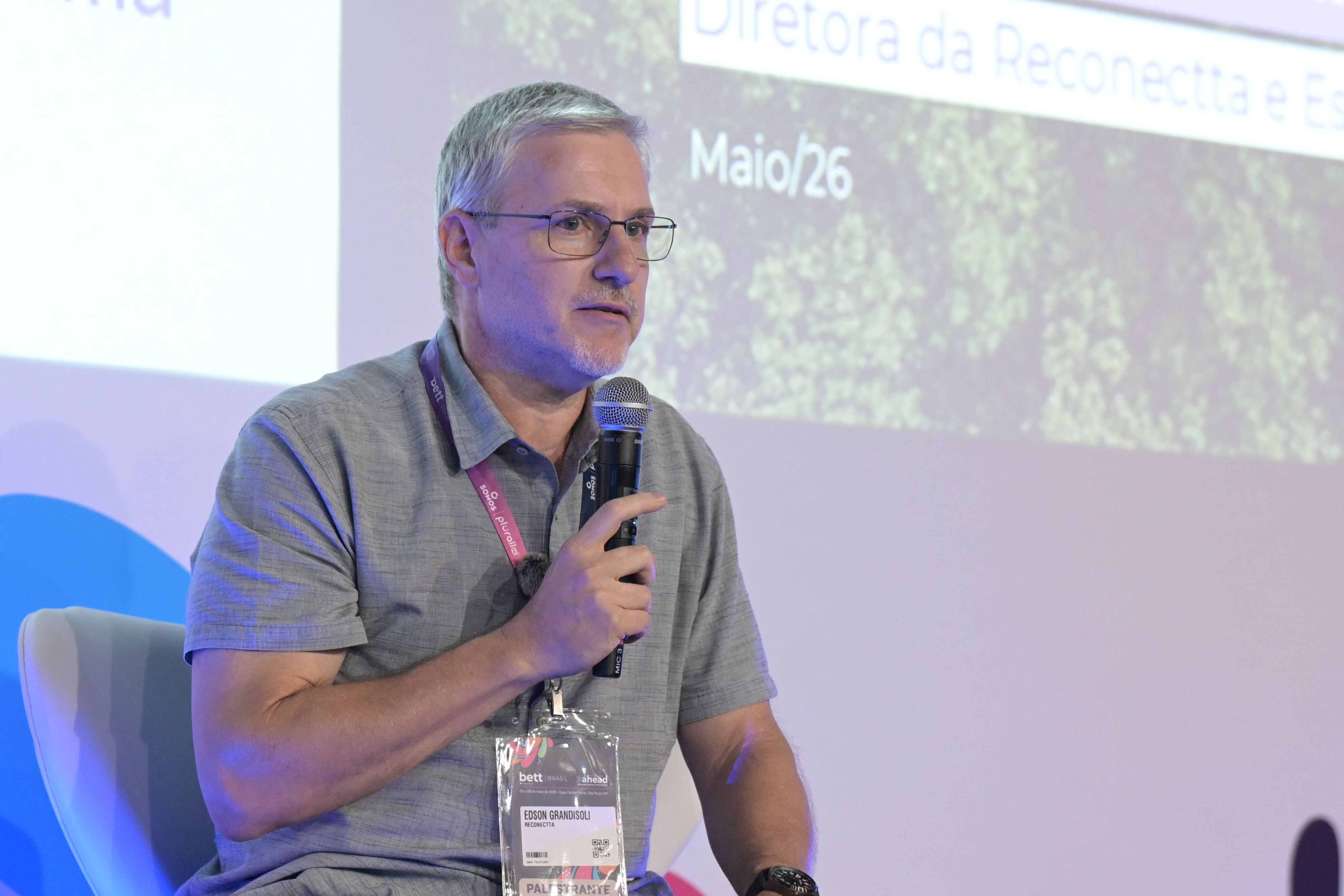
Edson Grandisoli explained the importance of addressing environmental issues in everyday school life. Photo: Bett Brasil.
He also presented data from the 2024 School Census, which showed that of the approximately 179,000 schools analyzed nationwide, more than 59,000 did not implement initiatives related to sustainability and environmental education during the school year.
According to the expert, part of this problem stems from a lack of a sense of belonging and collective understanding of environmental issues, including those related to Brazil’s own territory. “We Brazilians are unfamiliar with more than 50% of our territory, which is the Amazon. There is a lack of collective thinking when we talk about sustainability; it is not possible to discuss this topic on an individual basis,” he emphasized.
The director also explained that the Schools for Climate Movement, created in 2019, aims precisely to bring the environmental debate into everyday school life and to increase the engagement of students and educators on issues of climate change and environmental preservation.
Palhano then provided a broader perspective on the concept. A journalist by training, he explained that the topic cannot be addressed solely from an ecological standpoint, but must also be viewed as a social, economic, and cultural issue. “Sustainability isn’t just about the environment. It’s also linked to economic development, social inclusion, and the way we interact in society,” he said.
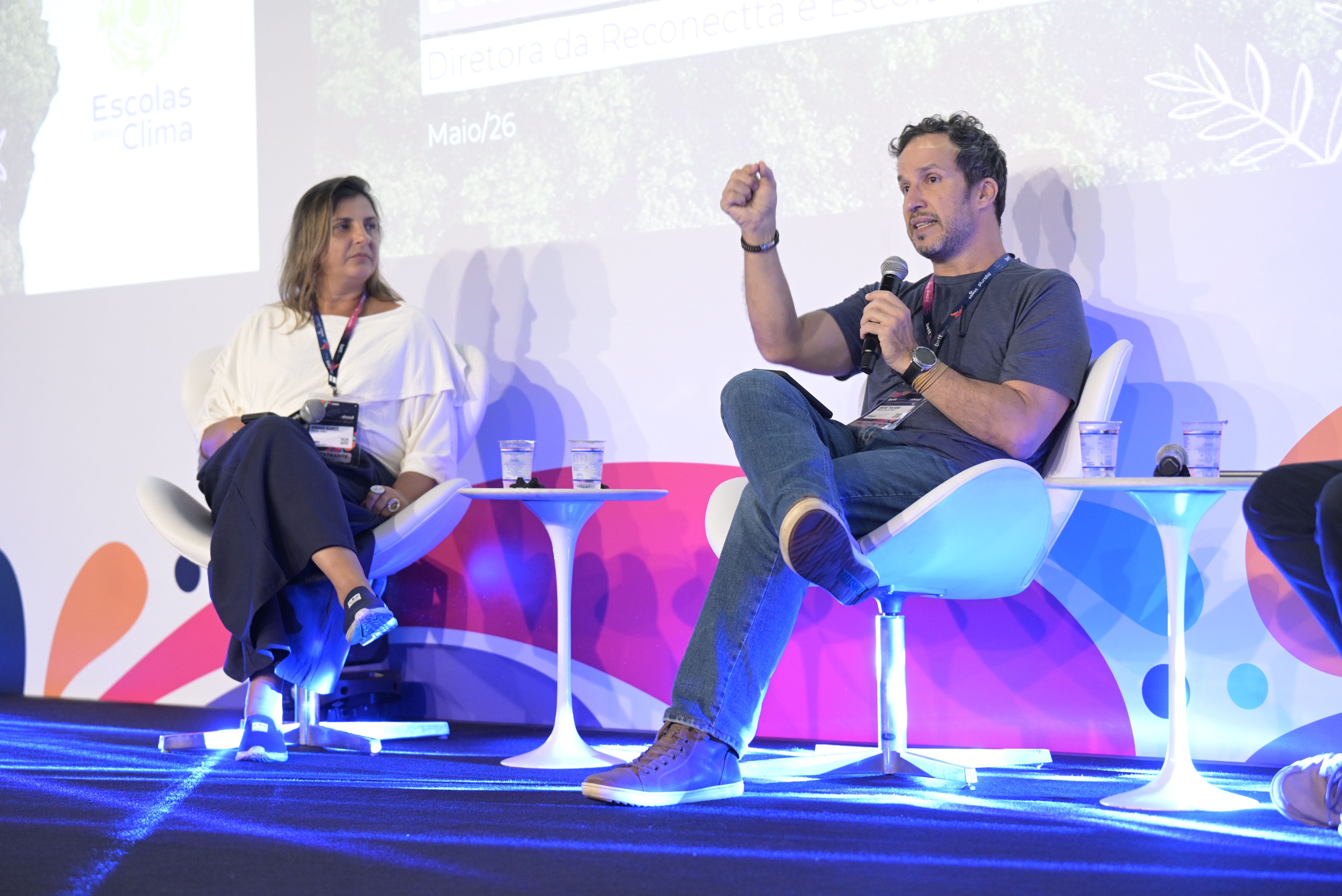
André Palhano discussed how Virada Sustentável helps engage young people in the environmental debate. Photo: Bett Brasil.
He explained that Virada Sustentável was inspired by São Paulo’s Virada Cultural, using artistic and cultural events and urban initiatives as a tool to raise awareness and engage the public.
According to him, one of the main challenges today is to bring the environmental debate closer to young people’s reality by using examples that are more relevant to everyday life in Brazil. “We need to make the issue more relevant to young people’s reality. For example, polar bears are not part of Brazil’s wildlife, but we often continue to use that example when discussing climate change,” he emphasized.
During the debate, the experts also drew attention to studies indicating that young people have little interest in the topic of sustainability, which underscores the need to develop educational strategies that are more closely aligned with students’ social, cultural, and regional realities .
For the participants, environmental education must no longer be treated merely as supplementary content but must instead occupy a permanent place in the school curriculum, fostering critical thinking, collective responsibility, and social participation.
Share on social media:
Categories
- Learning Strategies
- The Future of Education