
Public Education Sector Discusses Ways to Strengthen Education in the Country
)
During the 30th edition of Bett Brasil, held from April 28 to May 1, the Public Education Area brought together educators, administrators, experts, and representatives from various levels of government to discuss concrete solutions to the challenges faced by the public school system.
Featuring an exhibition area and a dedicated auditorium, the goal was to broaden the discussion on educational policies, innovative practices, and ways to ensure equity, quality, and real prospects for the future of public school students.
Among the highlights of the program, the panel discussion “How Can We Prepare Public School Students for the Challenges and Opportunities of the Job Market?” offered valuable insights into the importance of integrated policies, particularly those aimed at vulnerable youth.
Armando Junior, Deputy Secretary of Economic Development and Labor for the City of São Paulo, emphasized the urgent need to listen to young people in order to develop programs that truly address their interests and realities. According to him, the city of São Paulo is home to approximately 3 million young people between the ages of 12 and 24, many of whom face difficulties in accessing vocational training and formal employment.
Programs such as Fundação Paulistana, Adesampa, and CATe were presented as initiatives that combine training and employability. Also worth noting is the Bolsa Trabalho program, which offers financial assistance so that young people can gain professional qualifications without having to give up their studies. The courses offered range from technology to fashion and marketing, and are available in both in-person and online formats.
Representing the state government, Daniel Barros, the director of pedagogy at the São Paulo Department of Education, highlighted the progress made in technical education within the state school system, driven by the high school reform. Currently, 142,000 students are enrolled in this program, which allows them to choose from nine educational tracks, including technical courses offered in partnership with institutions such as Senai and Senac.
Barros also pointed out that teaching practices more closely connected to the real world have contributed to improved performance in core subjects, in addition to increasing student satisfaction, which rose from 22% to 50%.
Maria Sílvia Bacila, the executive secretary for education for the city of São Paulo, emphasized the importance of a curriculum that engages with students’ lives. According to her, practices such as digital literacy, maker culture, and sustainable projects have been gaining ground in the school system. She also highlighted affirmative action policies, such as the anti-racist curriculum and projects aimed at vulnerable youth. The CEUs and UniCEUs were identified as essential tools for providing access to higher education and broadening horizons for young people in the outskirts.
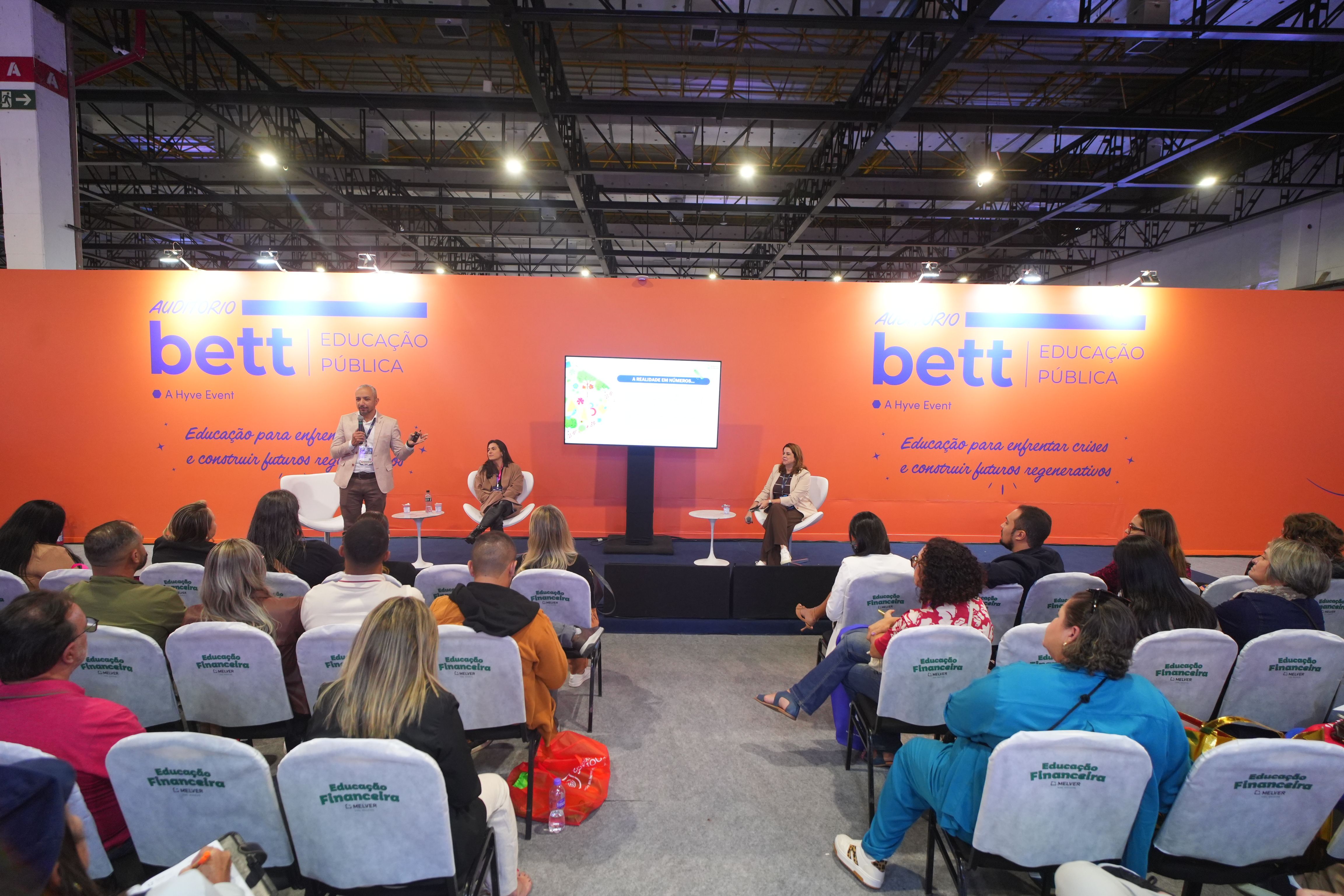
The Public Education Forum sparked discussions and reflections on education in the country. Photo: Bett Brasil
The formative role of public service was also addressed by Municipal Secretary of Management Marcela Arruda, who celebrated the expansion of the São Paulo City Hall internship program—from 4,000 to 12,000 interns in just three years. “We need to trust young people and offer them opportunities to gain hands-on experience and learn through practice,” she said. Along the same lines, CIEE Superintendent Rodrigo Dib emphasized that the city of São Paulo is now the largest provider of internship positions in Brazil, and that this connection between education and work is essential for promoting autonomy and citizenship.
Another highlight of the program was the School Partnership Program, implemented in Paraná. The model, which aims to improve the management of state schools through partnerships with the private sector, was presented by João Luiz Giona Junior, director general of the Paraná Department of Education; State Attorney Vinícius Klein ; and César Cunha, director general of Tom Educação.
The program, already in place at 82 schools in 34 municipalities, transfers the administrative management of the schools (including infrastructure, cleaning, and security) to contracted companies, freeing school administrators to focus exclusively on educational matters. A survey by the Paraná Research Institute indicates that support for the initiative exceeds 75% among parents and guardians—reaching as high as 92% at some schools.
Parental Education also featured prominently in the program. Juliana Nogueira, coordinator of the STJ’s Early Childhood Commission, and pediatrician Giulianna Felizola presented the project “STJ in Schools: Education Support Circle.” The initiative aims to promote respectful and nonviolent educational practices among teachers and families in the public school system.
In addition to supporting teachers, the project organizes discussion groups with parents and guardians, fostering an environment of active listening, empathy, and respect as the foundation for children’s healthy development.
With a focus on solutions and the genuine sharing of experiences, the Public Education Area reaffirmed Bett Brasil’s commitment to an education system that is more accessible, more humane, and better attuned to the challenges of the present and the possibilities of the future.
Share on social media:
Categories
- The Future of Education