

Public Education Takes Center Stage at the 29th Edition of Bett Brasil
)
In its 29th edition, Bett Brasil featured an exclusive area dedicated to public education, where public officials and industry professionals presented the initiatives being undertaken in states and municipalities to improve students’ access to public education, as well as tools that promote learning and inclusion.
Proposals were presented that utilize technology, including artificial intelligence, in both elementary and secondary education as well as vocational training. Topics crucial to educators and public officials were also discussed, such as combating fake news, social-emotional learning, sustainable futures, learning through emotional engagement, and professional development, among others.
The initiative also featured an exhibition area showcasing projects developed by non-governmental entities and organizations, as well as a lounge for public officials to exchange experiences. The auditorium was supported by Digix.
One of the projects presented was that of the state of Paraná, which teaches computer science to more than 530,000 students. For Roni Miranda, the state’s secretary of education, the auditorium dedicated to public education was a very positive initiative. “Today, the vast majority of students attend public schools, and it is crucial to share what is happening in this field. State and municipal education departments are also becoming involved in this modernization process.”
Another panel discussed how Digital Educational Resources (DERs) and professional development drive innovation in public education, based on the case of Minas Gerais. The implementation of the project in the state school system was a significant step forward for education, bringing benefits and innovative possibilities. Among these is the artificial intelligence tool, which has become a valuable resource for students preparing for the National High School Exam (Enem).
According to Igor de Alvarenga, the secretary of education for Minas Gerais, with 853 municipalities, 3,400 schools, and 1.4 million students, Minas Gerais represents a little bit of every part of the country, with distinct characteristics and needs.
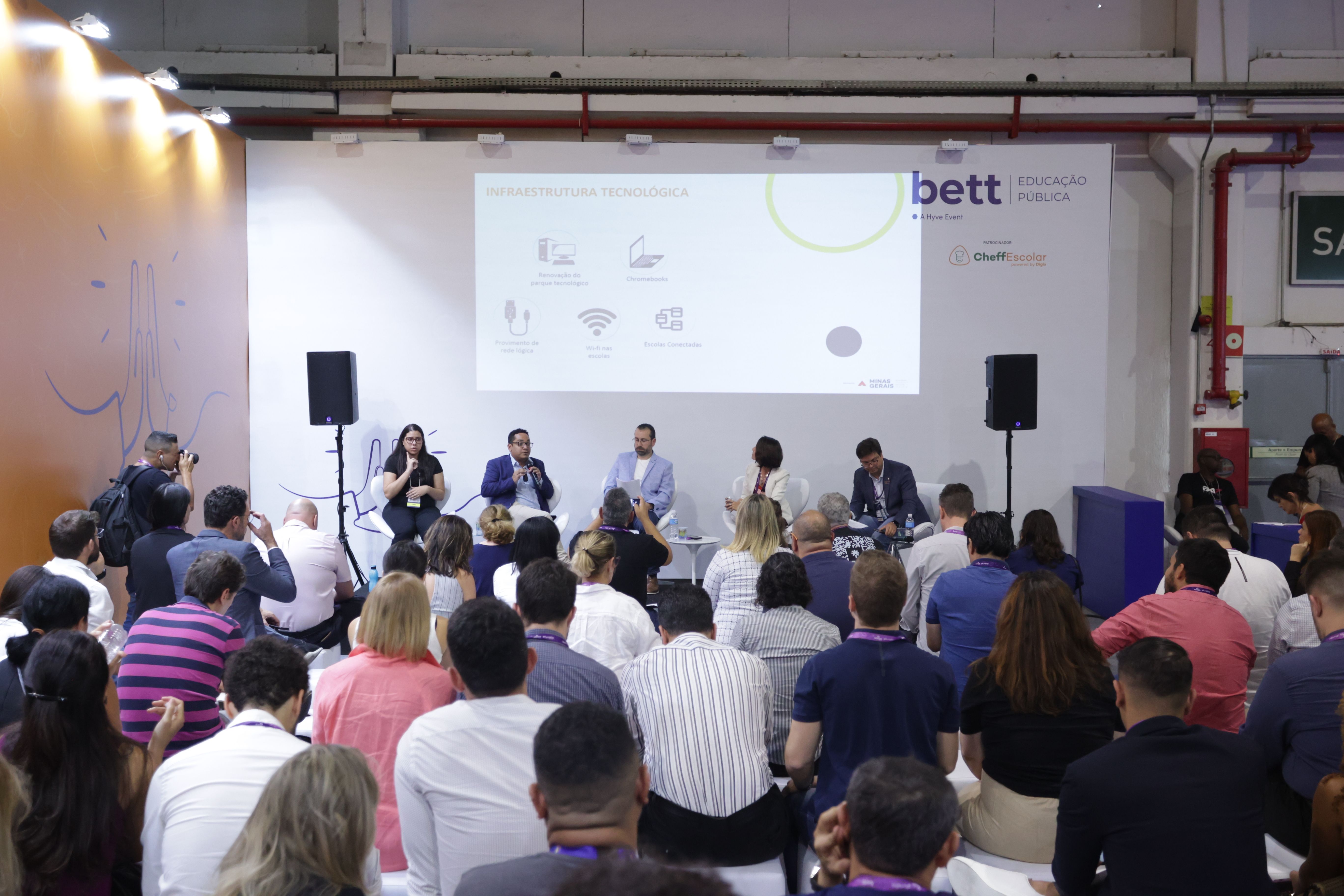
“Our challenge was figuring out how to communicate within such a large and diverse school system. We began by upgrading the technology infrastructure to connect the schools. Then we developed MAPA-MG, which provides the necessary tools, including the state’s reference curriculum, teacher training, implementation materials, lesson plans, and learning assessments. The goal is to provide high-quality, excellent public education throughout the state,” said Alvarenga.
Literacy for All
Ensuring literacy for all was also the topic of the panel discussion presented by Claudia Costin, president of the Singularidades Institute, and Renan Sargiani, president of the Institute for Evidence-Based Education (Edube), moderated by journalist and education columnist Antônio Gois.
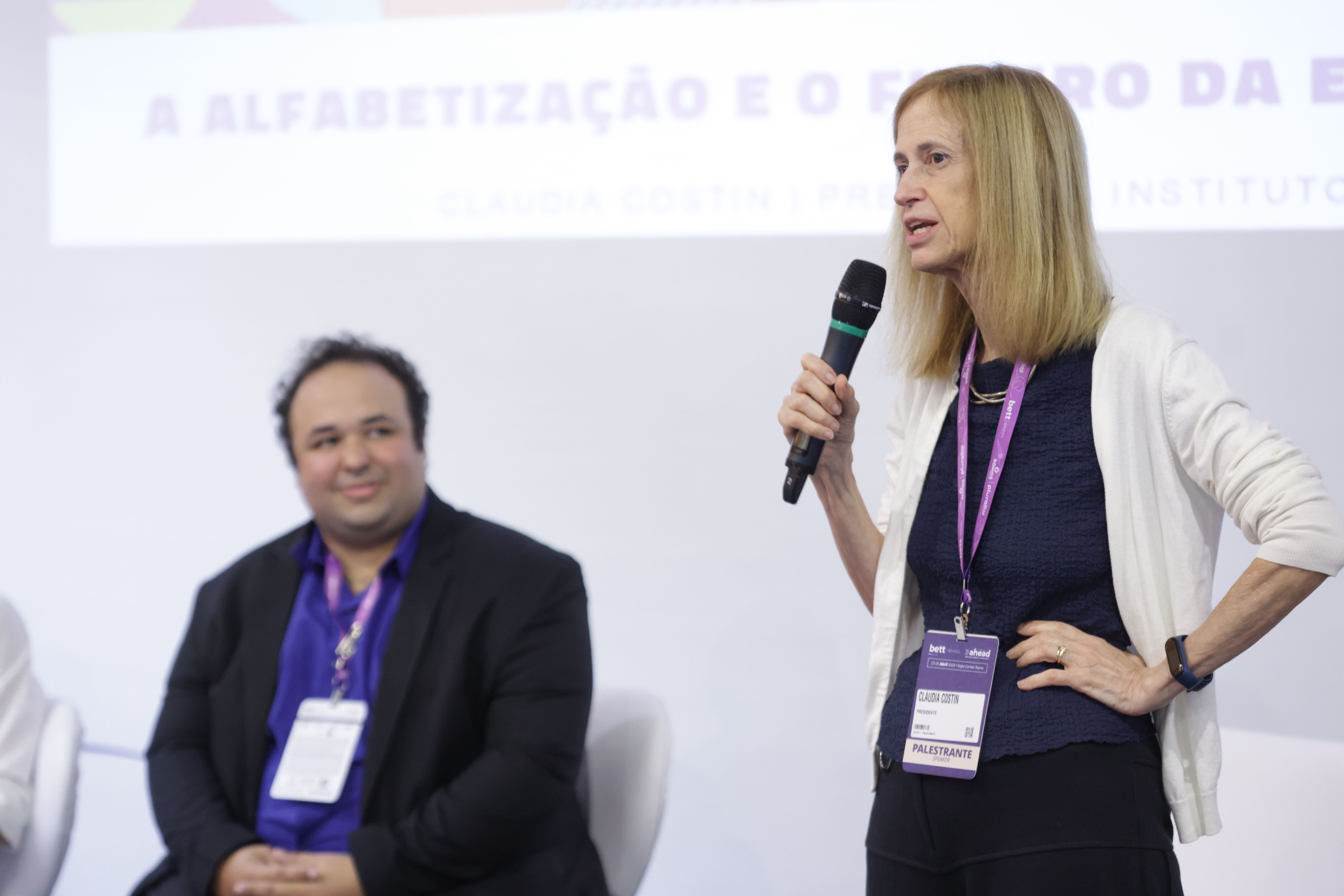
Both speakers presented studies and solutions to promote inclusive, equitable, and high-quality education. At the end, Costin emphasized the importance of dialogue. “We had a very fruitful discussion on literacy based on scientific evidence. I sought to provide a general overview of the transformation of education, our current situation regarding literacy, and the challenges we face starting in early childhood education.”
Innovation ecosystem
Building an innovation ecosystem was another topic that brought together three different regions. Case studies were presented by Nadine Moreira da Silva, deputy secretary of educational management for the state of Mato Grosso; Diego Calegari, municipal secretary of education for the city of Joinville; and Anderson Farias, mayor of São José dos Campos. The perspectives from these three distinct areas demonstrated that the groundwork has been laid for progress in public education.
“Innovation cannot be a collection of ad-hoc efforts. Strategic planning is necessary to create an educational ecosystem for innovation. We must also have the humility not to reinvent the wheel, since innovation builds upon foundations and projects that have already been laid and consolidated by others in the past,” Calegari emphasized.
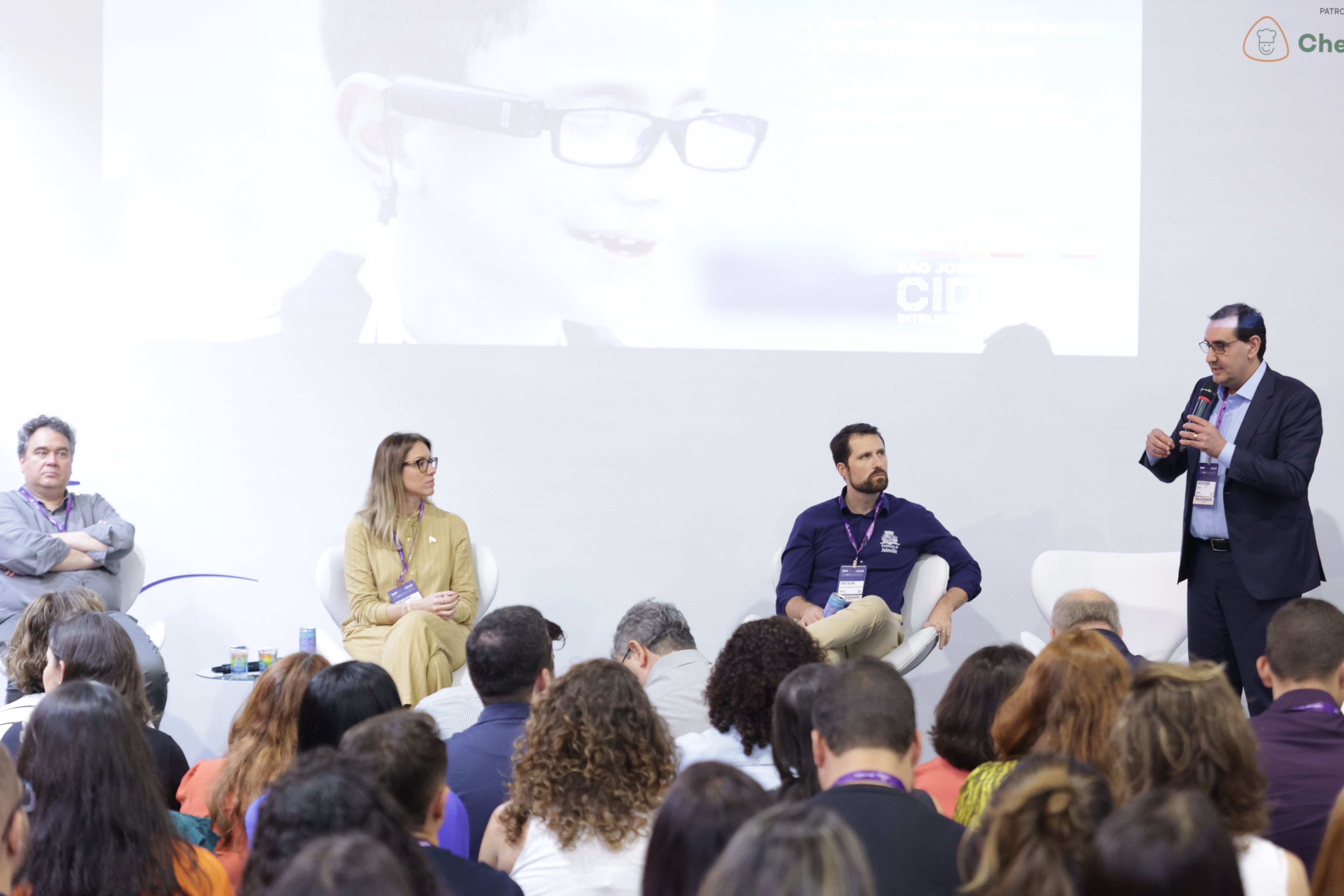
There was a consensus that valuing and involving teachers are essential to success in an innovation ecosystem. According to the mayor of São José dos Campos, Anderson Farias, the greatest investment to be made is in people. “Technology is useless without people, and we won’t change the future if we don’t invest in education today. We must keep in mind that education is not an expense—it’s an investment,” he emphasized.
Vocational Education
The topic was highlighted by the experiences of the states of São Paulo and Paraná, which demonstrated that it is possible to expand the availability of vocational education in the public school system.
According to Daiane Fraile, coordinator of the Paraná State Department of Education, in 2024, 32% of high school students in the state opted for vocational education. In some regions, that percentage reached 41%.
The model implemented in Paraná is the “studio-school,” in which a teacher in a studio interacts in real time with students in classrooms across various cities in the state.
Daniel Barros, director of vocational education at the São Paulo State Department of Education, presented the Novotec program, a model for technical education integrated with high school, implemented by the state government in partnership with organizations such as the Paula Souza Center, private schools, and other institutions.
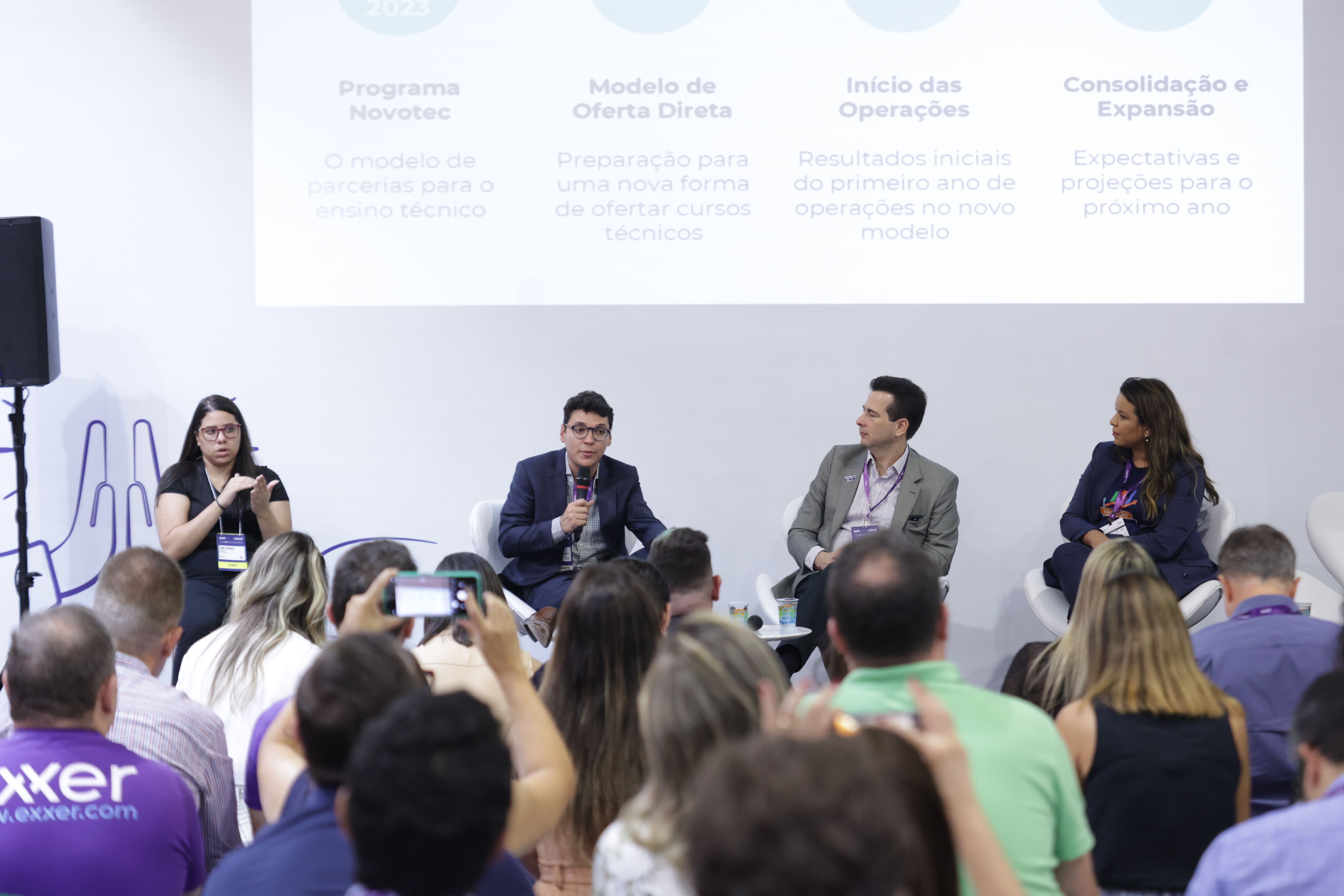
At the end of 2023, there were 35,000 students enrolled in technical programs at 774 schools across the state. In 2024, after one year of implementing the new model, that number jumped to 77,000—a 117% increase—covering 1,401,000 schools. This represents an increase of more than 81% in the number of public schools offering vocational programs.
Most importantly, Barros points out, these students did not go through rigorous selection processes to enroll in the technical program; rather, they were “lucky” enough to be offered this track at the school they were already attending.
“In other words, the program is bringing technical education to those who truly need it most. And while this will have an impact on their employability, it is already having an impact on their level of commitment, engagement, and learning,” he concluded.
Combating Hate and Misinformation
Another topic discussed in the auditorium was combating hate speech in the classroom. Based on a study conducted by Porvir—an educational content platform—the discussion focused on how to address the growing climate of hate and extremism present in everyday school life.
The survey shows that there is a direct link between extremism and misinformation. Students and the school community are bombarded with misinformation in the online environment. Algorithms reinforce users’ online preferences and begin to deliver more and more content that does not expose people to opposing viewpoints.
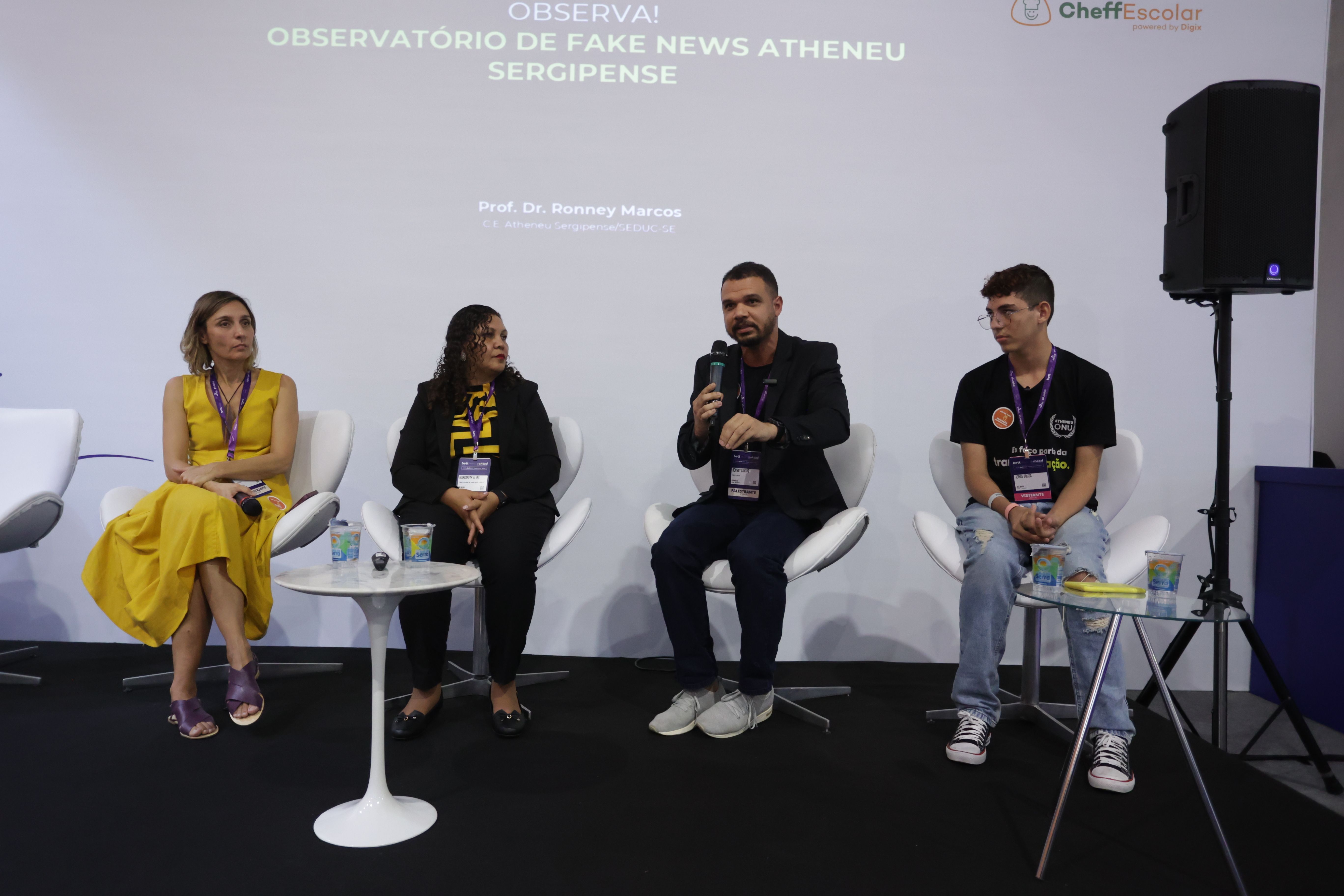
This environment contributes to the rise of hatred and attacks in schools. These phenomena, previously observed in other countries, have grown exponentially in Brazil in recent years.
“Fostering respect for diversity and media literacy is one of the focuses of the projects we develop to help students feel welcome,” said Margareth Alves, a teacher in the Federal District.
Ronney Santos, a teacher in the Sergipe state public school system and coordinator of Observa! Fake News Observatory, highlighted the main types of disinformation, based on a Harvard University study. “I created a fake profile and ended up inside echo chambers where algorithms feed me more and more disinformation, using rhetoric that preys on people’s emotional vulnerabilities to attract followers. Based on that experience, we’ve developed strategies to combat them,” added Santos.
Share on social media:
Categories
- Educational Management
- Innovation