

Bett Brasil 2026 wraps up a historic event with record attendance and strengthens the debate on AI without losing sight of what makes education human
)
Bett Brasil 2026, Latin America’s largest event for innovation and technology in education, came to a close this Friday (the 8th), marking a historic edition. Over the course of its four-day program, the event welcomed more than 65,000 visitors— a 40% increase over the previous edition—andbrought together more than 375 national and international exhibiting brands, which showcased solutions, technologies, and services tailored to all levels of education.
Educators, public and private administrators, experts, companies, and public policymakers gathered throughout the week at Expo Center Norte in São Paulo, cementing the fair’s status as one of the leading global education events. Bett Brasil 2026 was marked by the quality of its discussions and the convergence of innovation, practical application, and real-world impact on the daily lives of students, teachers, and schools.
“What we saw here was education in motion—one that doesn’t deny the challenges, but also doesn’t shy away from forging concrete paths forward. BETT is this space where thinkers, doers, and changemakers come together,” says Claudia Valério, director of BETT Brasil. “We leave this edition with an even clearer understanding that technology and humanity must move forward together to make a real impact,” she notes.
Highlights from the Last Day
On the final day of the program, the discussions continued to delve deeper into key issues in contemporary education. At the Basic Education Congress, Arthur Sacek, Director of Design & Innovation at LEGO Education, led the presentation “From Mystery to Mastery, ” addressing how creativity and collaboration can drive literacy in artificial intelligence. In addition, Sacek divided this literacy into five fundamental parts: perception, representation and reasoning, learning, natural interaction, and social impact.
“We believe that AI literacy should have the same status as problem-solving and creativity in the classroom. AI is still a magic box. Instead of teaching students how to use that box, why not give them a toolbox so they can open it and build something with whatever they find inside? This changes their relationship with and understanding of technology,” Sacek said.
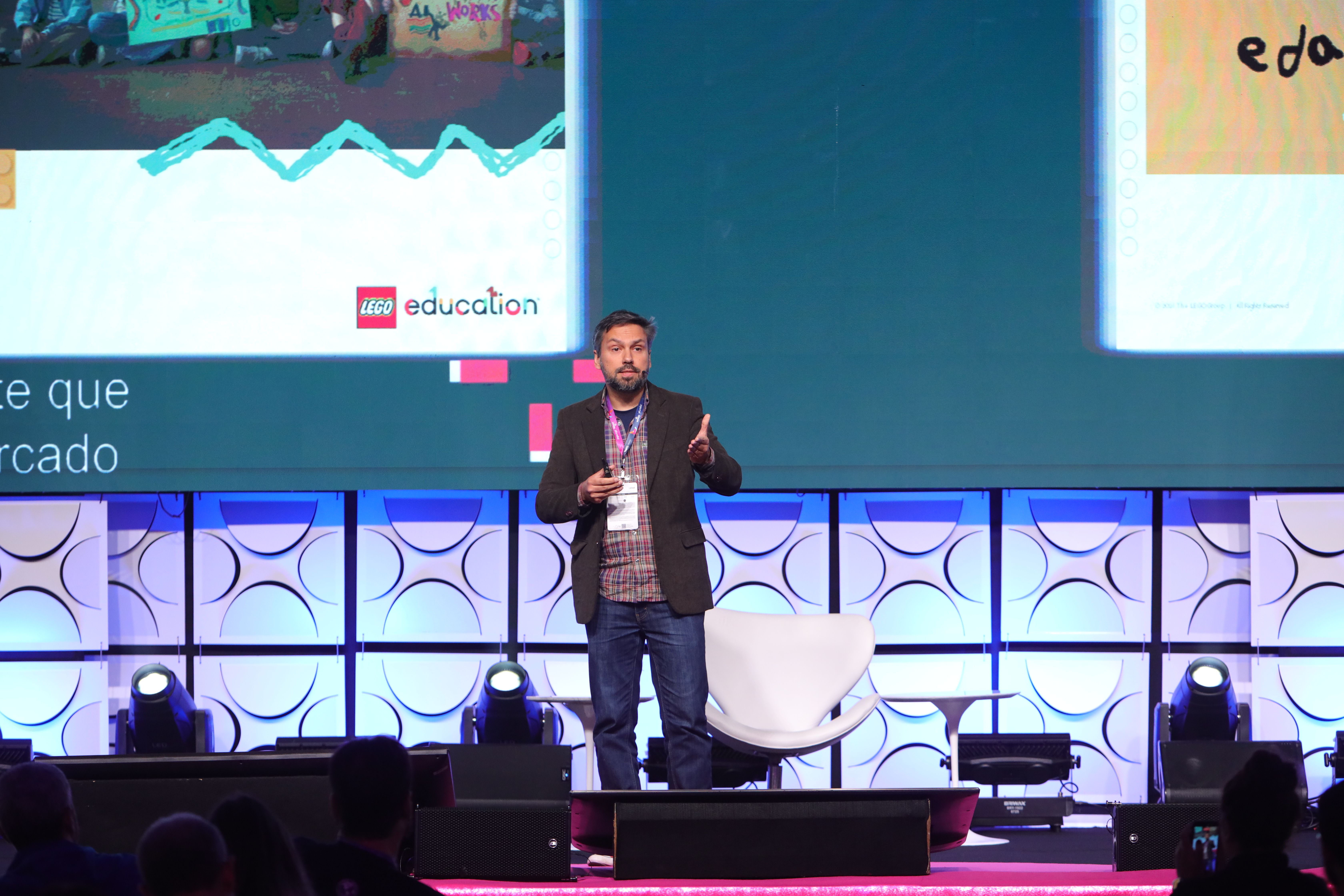
Arthur Sacek spoke about artificial intelligence literacy. Photo: Bett Brasil.
Back in the Public Education auditorium, Josevanda Mendonça Franco, a consultant for UNESCO and the Ministry of Education (MEC), offered a powerful reflection on inclusion and equity. She spoke about the structural challenges facing public schools, the guarantee of educational rights, concrete practices of inclusion, and the development of student leadership.
“Every school needs to understand what it means to have a child with autism—from the janitor to the cafeteria worker, from the teacher to the administration—because we’re going to need to make this inclusion a reality. Inclusion needs to be something that comes naturally and is present regardless of whether you notice the differences.”
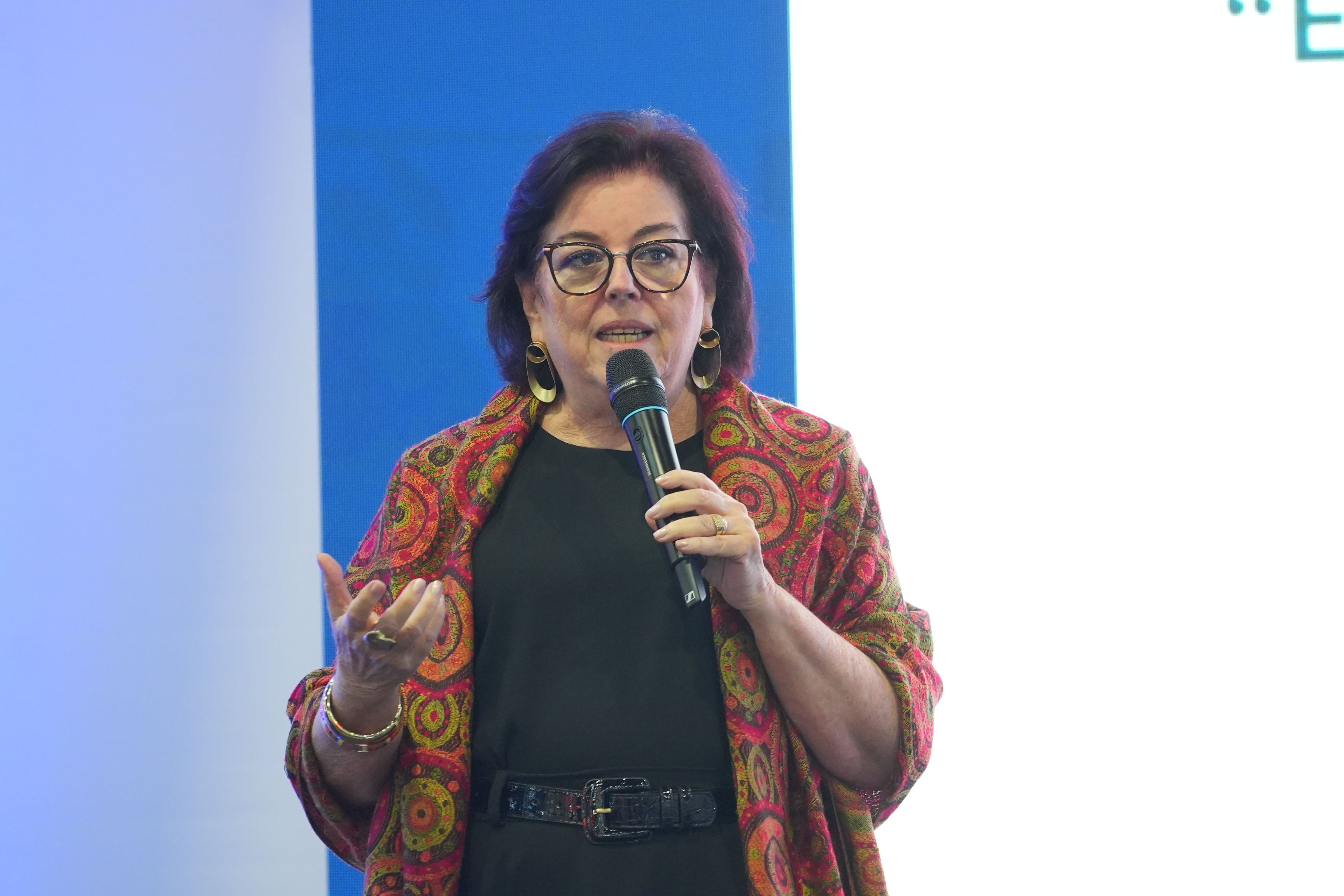
Josevanda Mendonça Franco discussed inclusion and equity, as well as student leadership. Photo: Bett Brasil.
Adriana Martinelli, Director of Content at Bett Brasil, was also among the highlights of the final day of the program, leading a discussion in the Flipped Classroom—a space at the fair dedicated to active learning methodologies and collaborative learning—where participants have prior access to the content and, during the sessions, engage in in-depth group discussions that connect theory, practice, and the exchange of experiences.
Building on this, Adriana shared insights in her lecture on self-awareness and school leadership regarding communication, interpersonal relationships, and the impact of these relationships on the educational environment, arguing that more self-aware leaders directly contribute to healthier, more welcoming, and more efficient schools.
“School is built on relationships, and the quality of those relationships directly impacts learning, social interaction, and decision-making. Leadership begins with the ability to understand how we communicate, how we listen, and how we build trust within educational settings,” he said.
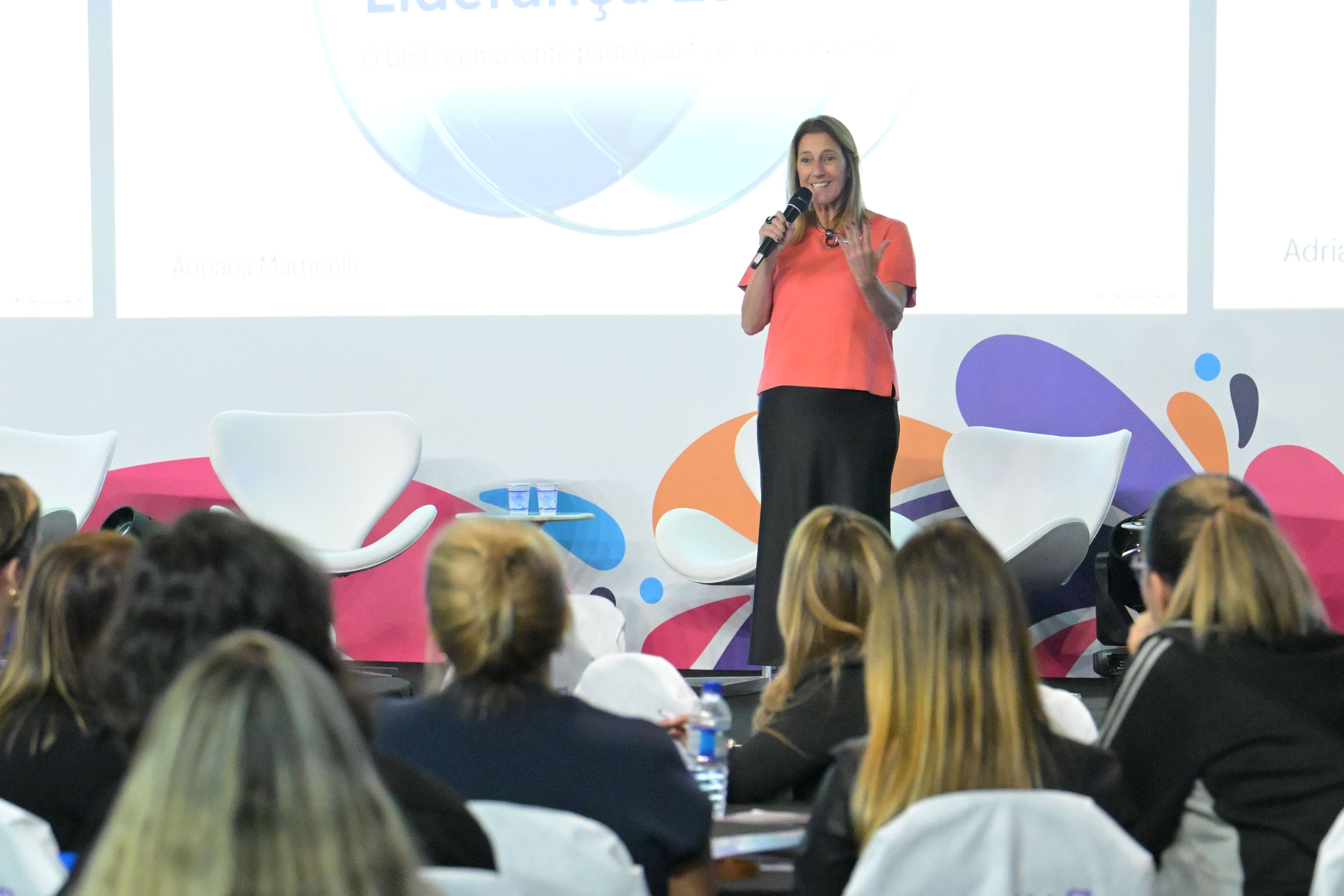
Adriana Martinelli reflected on self-awareness and school leadership during a talk at Bett Brasil. Photo: Bett Brasil.
In the Public Education Auditorium, Débora Garofalo, a teacher and education consultant internationally recognized as one of the world’s most influential educators, led a discussion on the challenges of transforming innovation into public policy that is accessible and applicable to the reality of Brazilian schools.
In her lecture titled “From Policy to Practice: How to Implement Education 5.0 Equitably and Cost-Effectively in Education,” the expert addressed topics such as the restructuring of learning, digital culture, active teaching methods, and teacher training, emphasizing that educational innovation must go hand in hand with inclusion and financial feasibility in public school systems.
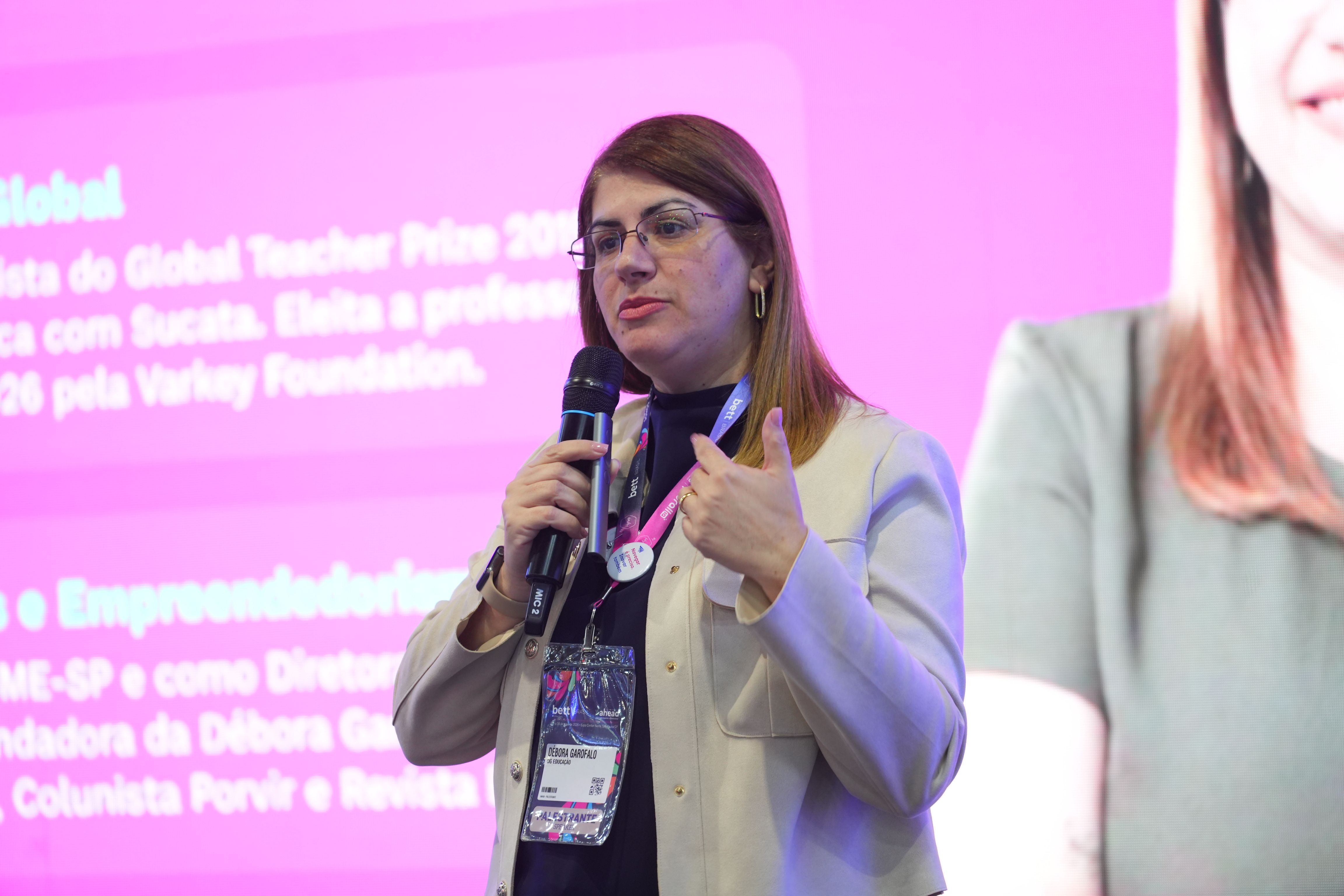
Débora Garofalo spoke about how to implement Education 5.0. Photo: Bett Brasil.
In presenting initiatives implemented in public schools—including the “Robotics with Scrap Materials” project—Débora argued that creativity, purpose, and strategy can bring about transformation even in resource-limited contexts.
“Brazilian public schools don’t need to wait for ideal conditions to innovate. When there is a pedagogical vision, a willingness to listen to the community, and the courage to try new approaches, it is possible to build an education system that is more humane, creative, and connected to the future—even at a low cost,” he argued.
To wrap up the program, the roundtable discussion with entrepreneur Pedro Cortella offered reflections oncritical thinking, transformation, and adaptation in the age of algorithms and artificial intelligence. In his view, in a rapidly changing world, education must prepare people to constantly evolve without losing the ability to question and reflect in a world increasingly shaped by technology.
“You have to be passionate about change, because the only certainty we have is that we will change. The great challenge of education is to prepare people to learn, unlearn, and continually reinvent themselves, without sacrificing critical thinking and human consciousness,” Cortella concluded.
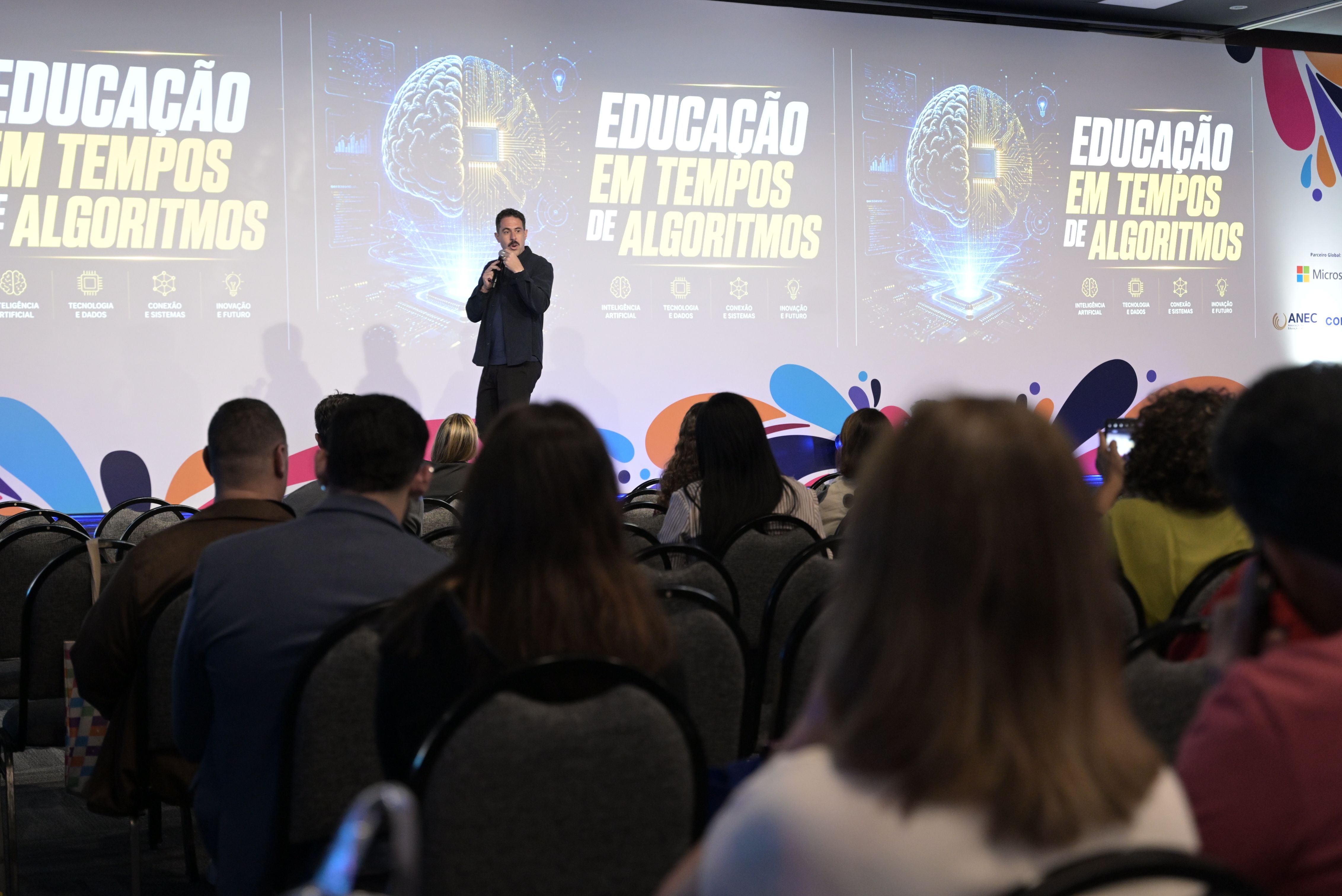
Pedro Cortella discussed education in the age of algorithms during a panel discussion at Bett Brasil. Photo: Bett Brasil.
In addition to the content, the exhibition area was one of the event’s major highlights, serving as a dynamic space for applied innovation. The solutions presented demonstrated how technology, data, and methodologies are being incorporated in practical ways into everyday educational life, bridging the gap between global trends and the reality of Brazilian schools.
Bett Northeast Conference
The fair’s organizers also announced the next steps for the Bett ecosystem in Brazil. The Bett Northeast Conference will be held on August 19 and 20, 2026, in Recife (PE), bringing together educational leaders, administrators, and experts to discuss the challenges and opportunities facing education in the region.
Among the confirmed speakers are Débora Garofalo, Alessandra Borelli, an expert in digital law, and Maria Helena Guimarães, holder of the Ayrton Senna Institute Chair at USP’s IEA.
“We wrapped up Bett Brasil 2026 with a sense of mission accomplished, but knowing that this movement continues. Education needs to be a year-round effort, and that’s what we continue to do with the community,” concludes Cláudia Valério.
Details and the central theme of the upcoming Bett Brasil—which will mark the event’s 32nd edition—will be announced shortly, but the dates have already been set: May 4–7, 2027, at Expo Center Norte in São Paulo. Until then, the legacy of this edition endures: to inspire, connect, and drive a more humane and innovative education system that is aligned with today’s challenges.
Share on social media:
Categories
- The Future of Education