
Bett Brasil: AI, the Future, and the Job Market in the Spotlight
)
During the 29th edition of Bett Brasil, the Ahead Forum hosted a discussion of great importance for the future of the job market. The panel “Bringing Companies and Universities Together: How to Build Sustainable Partnerships” presented thought-provoking ideas and possibilities for reconciling the expectations of recent graduates with those of the corporate world. Celso Niskier, CEO of ABMES (Brazilian Association of Higher Education Institutions) and president of UniCarioca, moderated the panel discussion, which featured Max Damas and Leyla Nascimento.
Damas, a professor and university administrator for 20 years and currently an advisor to the president of FOA (Oswaldo Aranha Foundation) and the president of ABMES, presented a summary of a recent survey conducted by ABMES, which identified four archetypes of young entrepreneurs: the creator, the agile, the idealist, and the traditionalist.
"To meet the expectations of these young people, who have such diverse backgrounds and are driven to manage their careers in so many different ways, we all need to enter this battlefield that is the reinvention of college curricula," said the speaker and educational strategy consultant.
Leyla Nascimento, founder and CEO of the Capacitare Group, vice president of International Relations at the Brazilian Human Resources Association, and a member of the board of the WFPMA (World Federation of People Management Associations)—which brings together 93 countries—brought all her experience and knowledge about labor market dynamics and trends to the table. According to the expert, at least 1 billion workers worldwide will need to undergo some form of professional retraining by 2030 to remain employed.
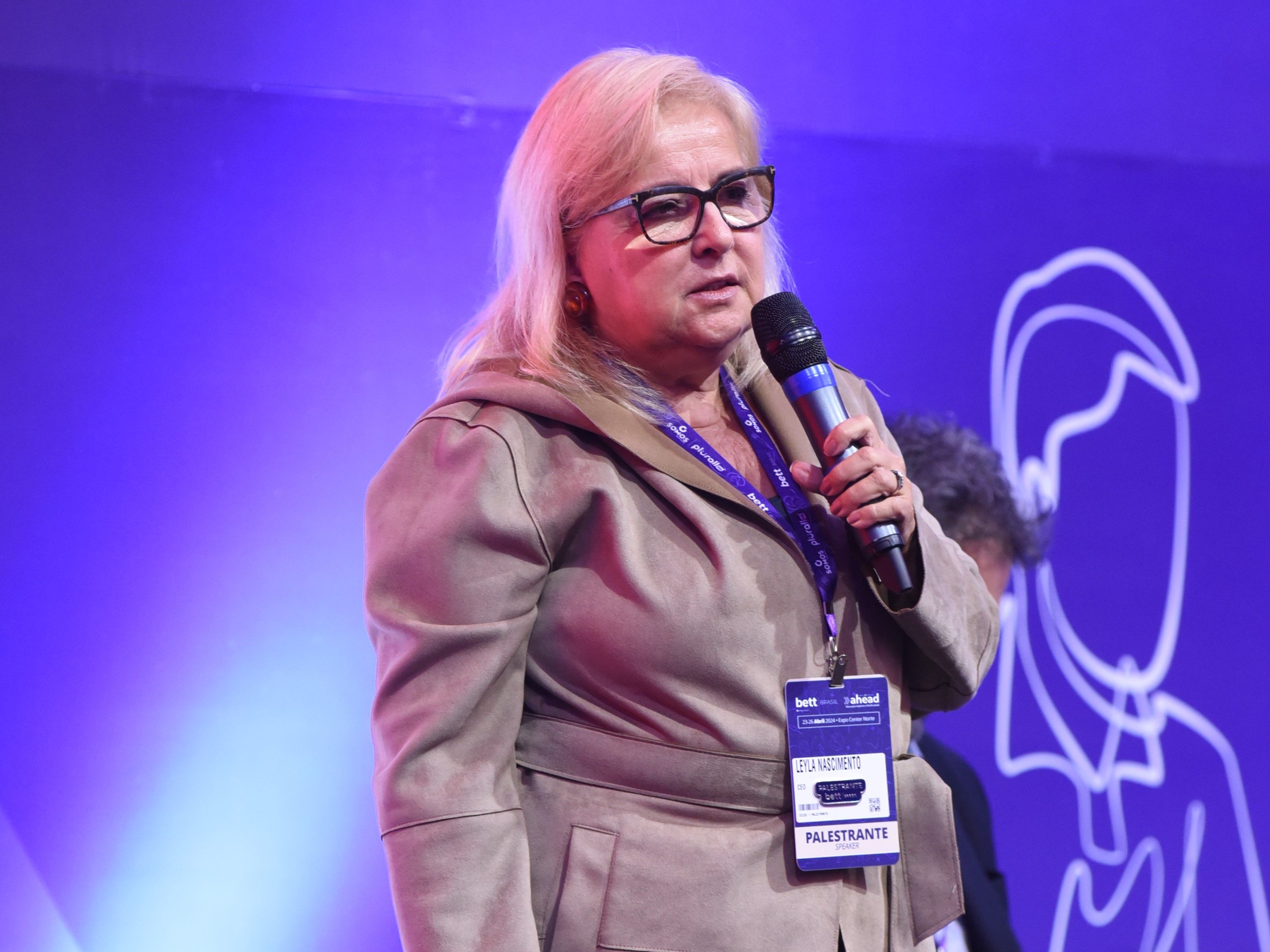
"We are going through what I call a moment of choice and decision. Education is undergoing a phase of disruption and exploring new paths, while the corporate world is restructuring its workforce with a major reassessment of desired skills. It is a time of change in which closer ties between universities and the job market will help this landscape adapt more quickly," said Leyla.
Niskier concluded the panel by emphasizing that all signs point to university extension programs being the linchpin of this mechanism for bridging the gap between these two ends—the university and the job market. “We need to encourage this paradigm shift and help ensure that the focus is increasingly on local development and sustainability,” he noted.
Futurism as a Discipline: Schools Can Change the Future of Education
At the Basic Education Congress, the panel “Can Futurism Reinvent School?” brought together one of Latin America’s most renowned female futurists—who is currently dedicated to training teachers and students in the study of the future—and a school principal who has been reflecting on the future of education for years. Rosa Alegria, from the global team of the Teach the Future movement, and Marcelle Berton, from Escola Estilo de Aprender and Escola São Paulo, discussed how this field can help reinvent education.
"The kind of education I want to see in schools is one that is designed to empower children to shape the future, to foster proactivity, and to make them co-creators of their own future," said Rosa, who promotes "future literacy" for teachers and students in elementary and high school.
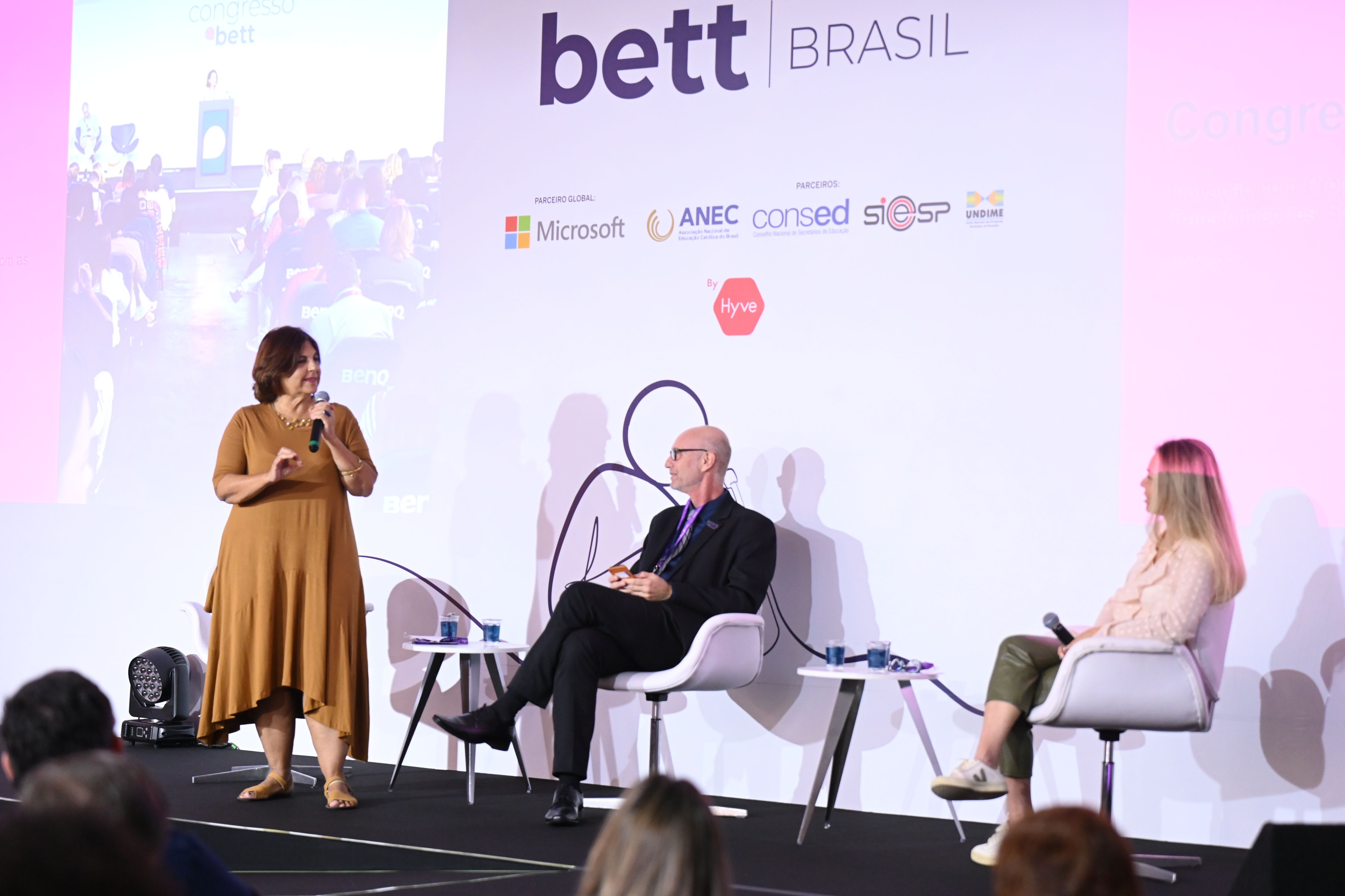
The concept of “future literacy” mentioned by Rosa Alegria was introduced by UNESCO in 2012. It is a practice that can be defined as the ability that allows people to better understand the role of the future in what they see and do. As a concept, being future-literate strengthens the imagination and enhances our ability to prepare for, adapt to, and invent as changes occur.
Although educator Marcelle Berton is not a certified futurist, she can be considered a visionary. Restless, curious, and eager to reinvent her school, she sought out the necessary adjustments and figured out how to apply them to integrate futurism into her institution’s educational mission.
"The 'Future' class shows children how change occurs and also the direct and indirect consequences of those changes in the world. We need new approaches to education, and we need to reinvent school, because we need a school unlike any other—for a future we are still creating," said Marcelle.
Challenges of AI in Brazilian Education Under Discussion
The challenges posed by the advancement of artificial intelligence in Brazilian education were another highlight of the Basic Education Congress during the panel discussion “Challenges and Opportunities in the Connection Between Artificial Intelligence and Human Intelligence,” which featured speakers Fábio Campos, a professor at New York University (NYU), and Ivan Cláudio Pereira Siqueira, a professor at the Federal University of Bahia (UFBA), both of whom are experts in artificial intelligence in education.
The way AI is used is one of the points of conflict highlighted by Fábio Campos. According to the researcher, there are tensions surrounding AI related to conflicting aspects: engineering versus pedagogy and automation versus diversification. “When artificial intelligence is used for more complex situations, there is a clash between the human and the artificial. To deal with these technologies, we need pedagogical expertise to use them in a way that ensures students actually learn. That is why education is important,” said Campos.
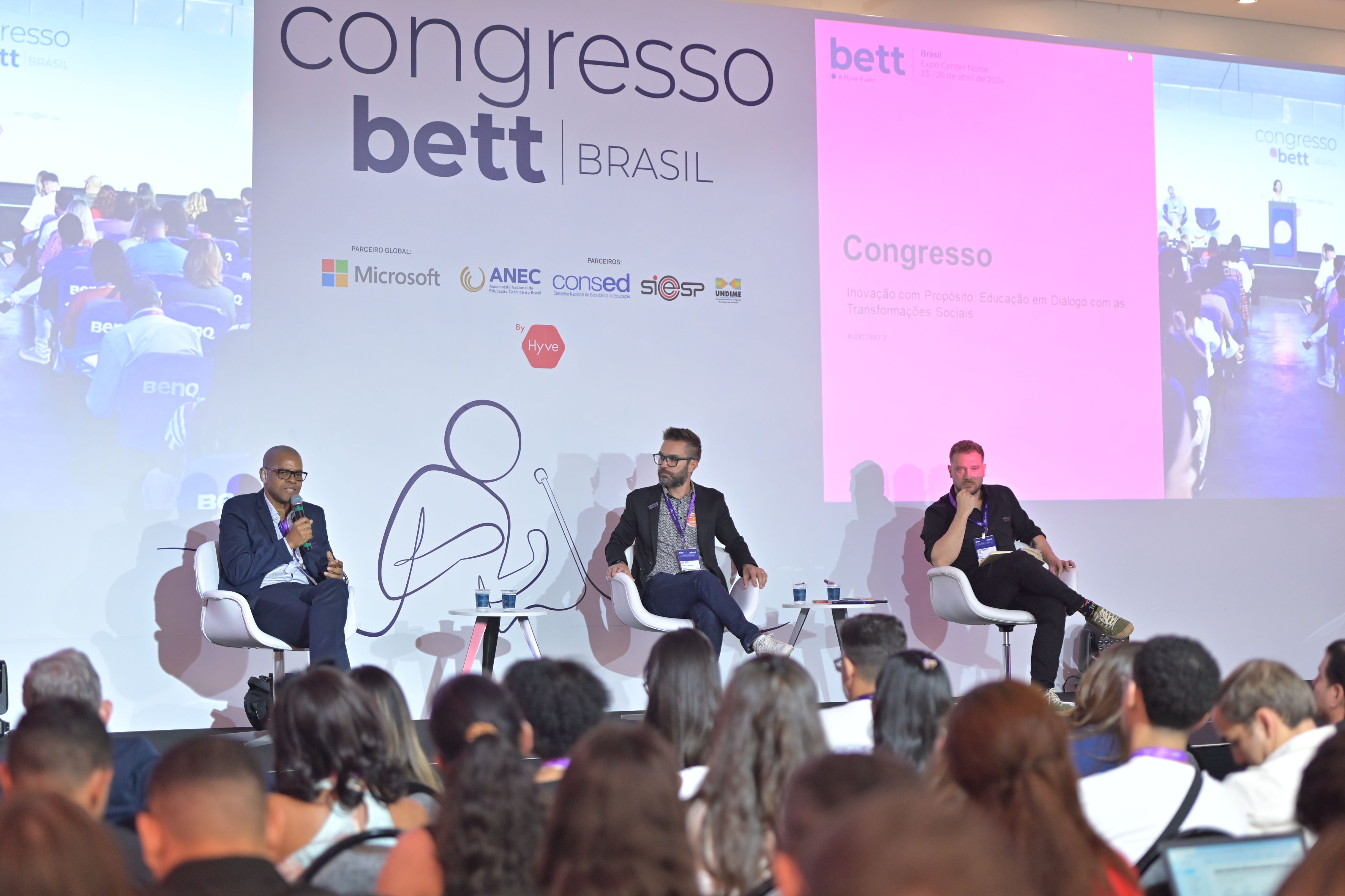
Ivan Siqueira highlighted studies that demonstrate the negative impact the use of AI can have on students’ cognition and learning. The expert emphasized the importance of students thinking critically and using these technologies appropriately. Both speakers advocated for public policies that set limits on the use of artificial intelligence.
Until that happens, Fábio emphasizes the need for regulatory bodies to participate in these discussions: “More than just regulation, Brazil needs guidance from agencies such as the National Education Council or government ministries, as well as the involvement of education researchers in this oversight,” added the professor from New York University.
Article originally published on the Educador21 website.
Share on social media:
Categories
- The Future of Education
- Innovation