
Bett Brasil Recognizes Successful Public Education Initiatives in States and Municipalities
)
A classroom can also be a kitchen, a robotics lab, a listening space, or even the starting point for more effective public policies. It was this diversity of approaches—all sharing the common goal of improving the quality of public education—that defined the “Recognition of Public Education” initiative during the 31st edition of Bett Brasil.
The inaugural awards ceremony was held on May 6 in the Public Education auditorium and highlighted how partnerships between municipal school districts and companies in the sector have driven concrete and scalable solutions across the country.
The awards ceremony was presided over by the event’s executive director, Claudia Valério, and highlighted initiatives ranging from literacy to data intelligence, including technology, healthy eating, and bilingual education.
Claudia emphasized that Bett Brasil has been expanding its presence in public education year after year. “Our goal is to become increasingly involved in public education. With that in mind, the idea for this award was born—to celebrate the great initiatives that exist throughout Brazil but aren’t always publicized.”
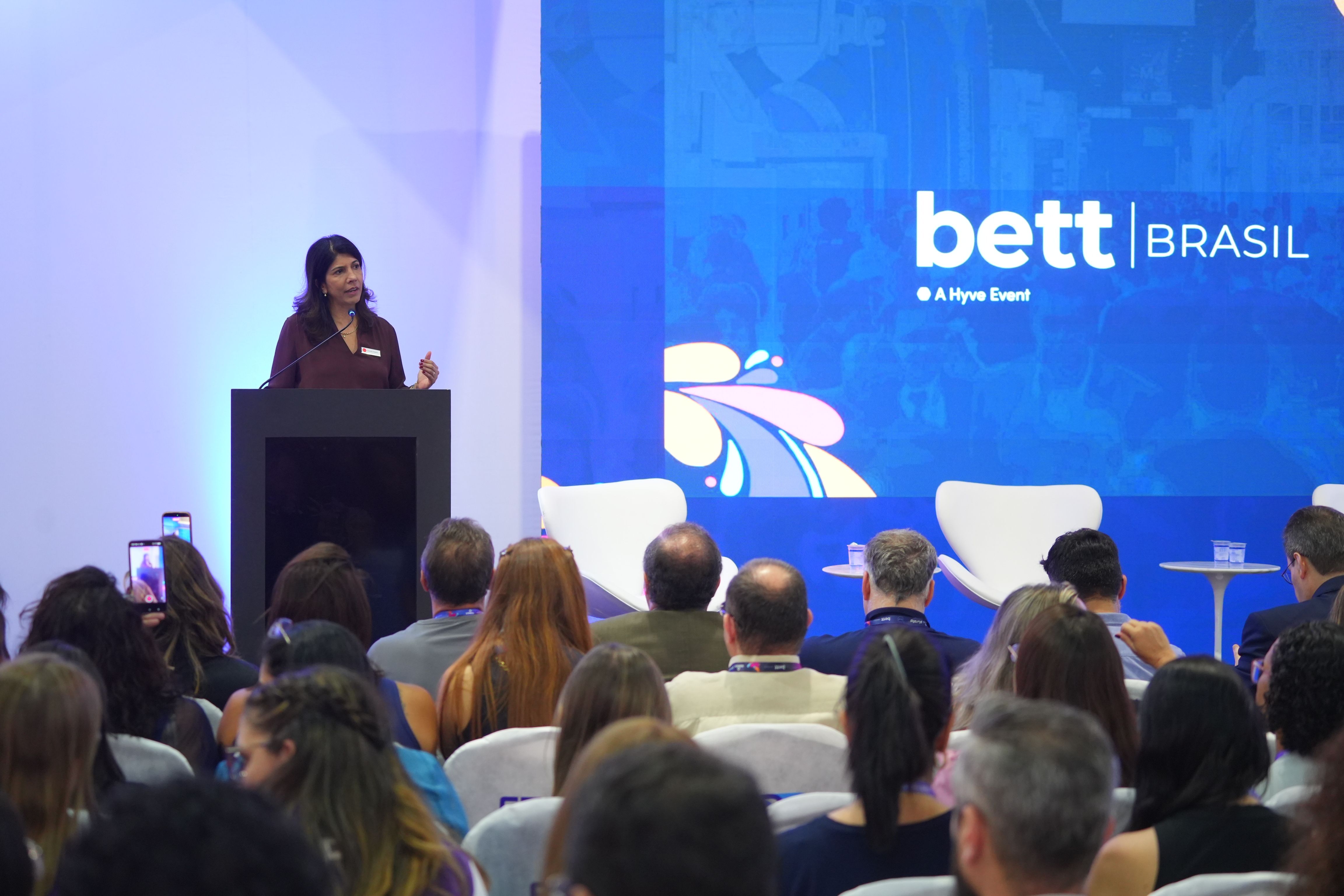
Claudia Valério highlighted the strong presence of public officials at the event. Photo: Bett Brasil.
In Camboriú (SC), the TechChef project, nominated by Robomind Editora, demonstrated how learning can take on new flavors. By integrating technology, gastronomy, and the school curriculum, the initiative has elementary school students cooking in weekly 90-minute classes using recipes aligned with the BNCC, primarily with ingredients from the school lunch program.
In addition to promoting healthy habits, the project fosters independence and leadership, culminating in a dinner prepared by the students themselves. The municipal secretary of education, Carin Krug, represented the municipality.
In Tangará da Serra (MT), the partnership with Pearson has strengthened English instruction in the municipal school system. Through structured materials and teacher training, the project has standardized English instruction and expanded essential skills such as communication, creativity, and critical thinking. The impact was felt both in student performance and in the optimization of teachers’ work. The award was presented to the municipal secretary of education, Vagner Constantino Guimarães.
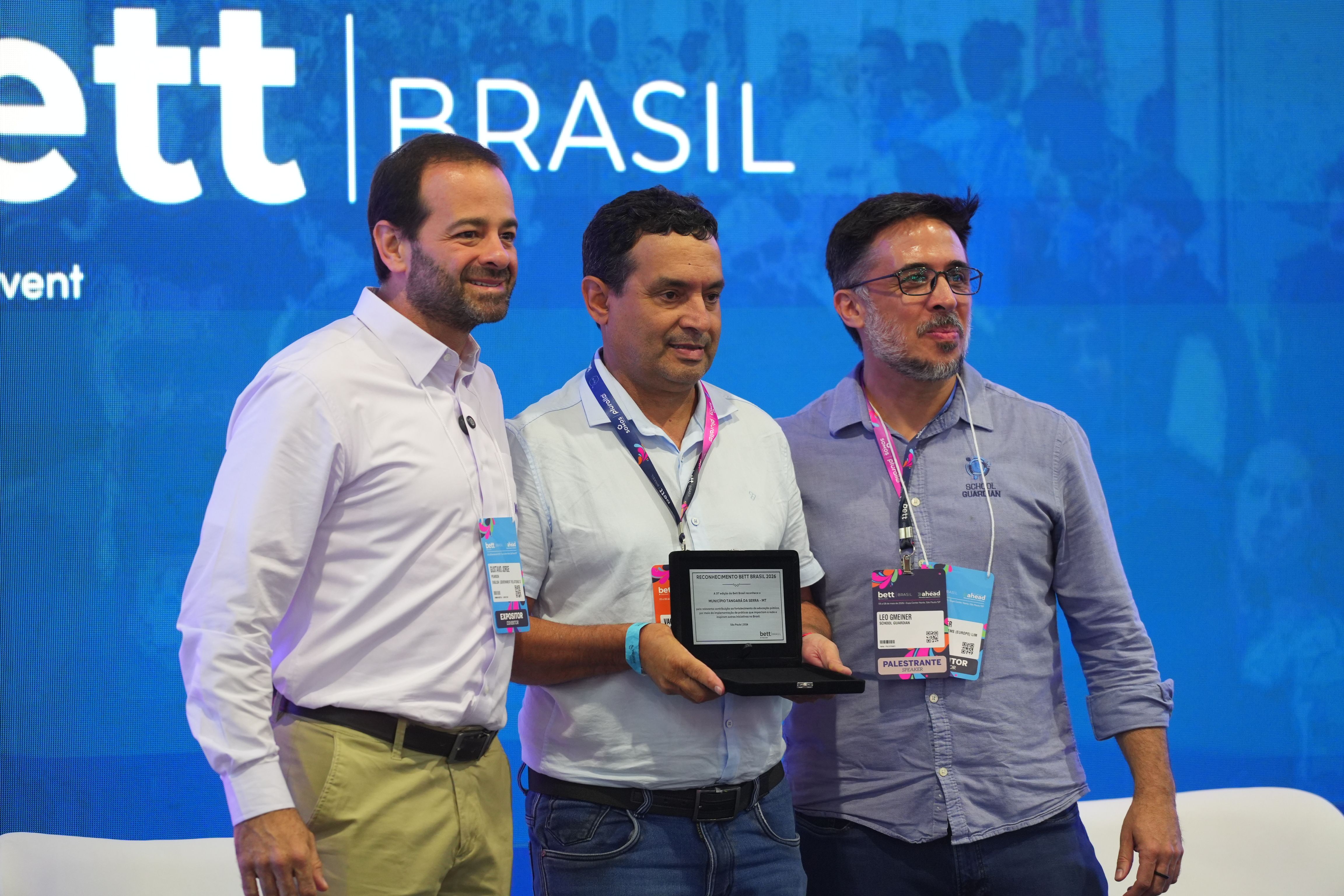
Tangará da Serra (MT) recognized for its English language instruction program in the municipal school system. Photo: Bett Brasil
Alagoas has launched two large-scale projects supported by Systemic Editora. In the municipality of Pilar, the implementation of a bilingual program since 2022 has yielded significant results, with students performing above the municipal average in various subjects, in addition to achieving fluency in English. The initiative combines a structured methodology, ongoing teacher training, and management focused on results—both academic and socio-emotional. The municipal secretary of education, Clewinho Cavalcante, received the recognition.
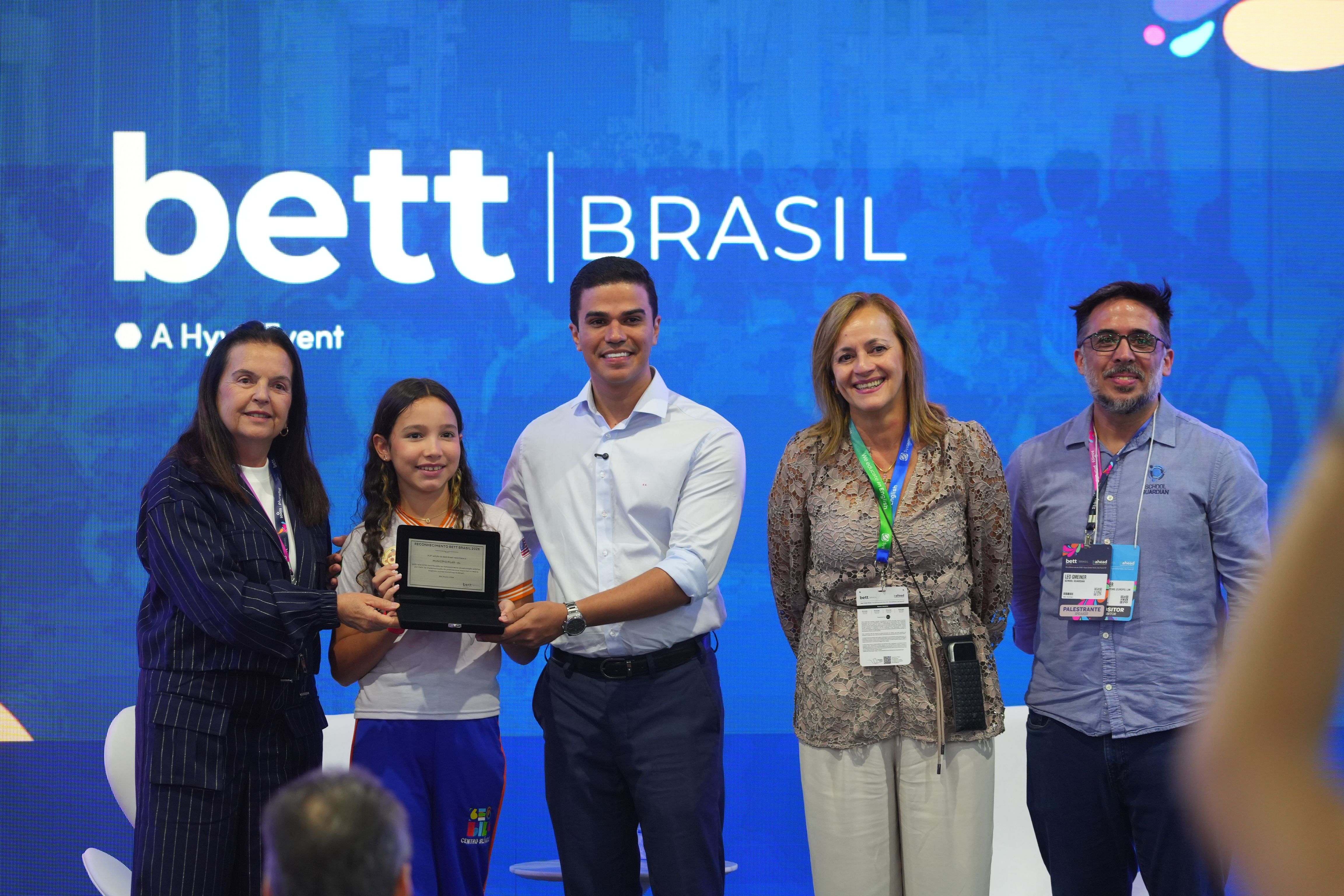
The Municipality of Pilar Recognized for Implementing a Bilingual Program. Photo: Bett Brasil
In the capital city of Maceió, the challenge is even more ambitious: to expand bilingual education to thousands of children. By 2026, in addition to the creation of a bilingual elementary school, more than 4,000 preschoolers aged 4 to 5 will have access to 15 hours of English instruction per week in a full-time setting.
Through this project, countless teachers are receiving high-quality training and ongoing support, which will position the municipality as a national model in terms of implementation. The municipal secretary of education, Rogério Lima, accepted the award alongside the former mayor of Maceió, João Henrique Caldas.
In Indaiatuba (SP), educational robotics has been a driving force for transformation. The program, developed in partnership with SIM Inova Educação e Tecnologia, integrates STEM (Science, Technology, Engineering, and Mathematics) concepts, programming, and maker culture into the curriculum of 29 schools. One of the highlights is the organization of tournaments and events that involve the entire community, where students present projects, test technological solutions, and demonstrate the skills they have developed throughout the activities.
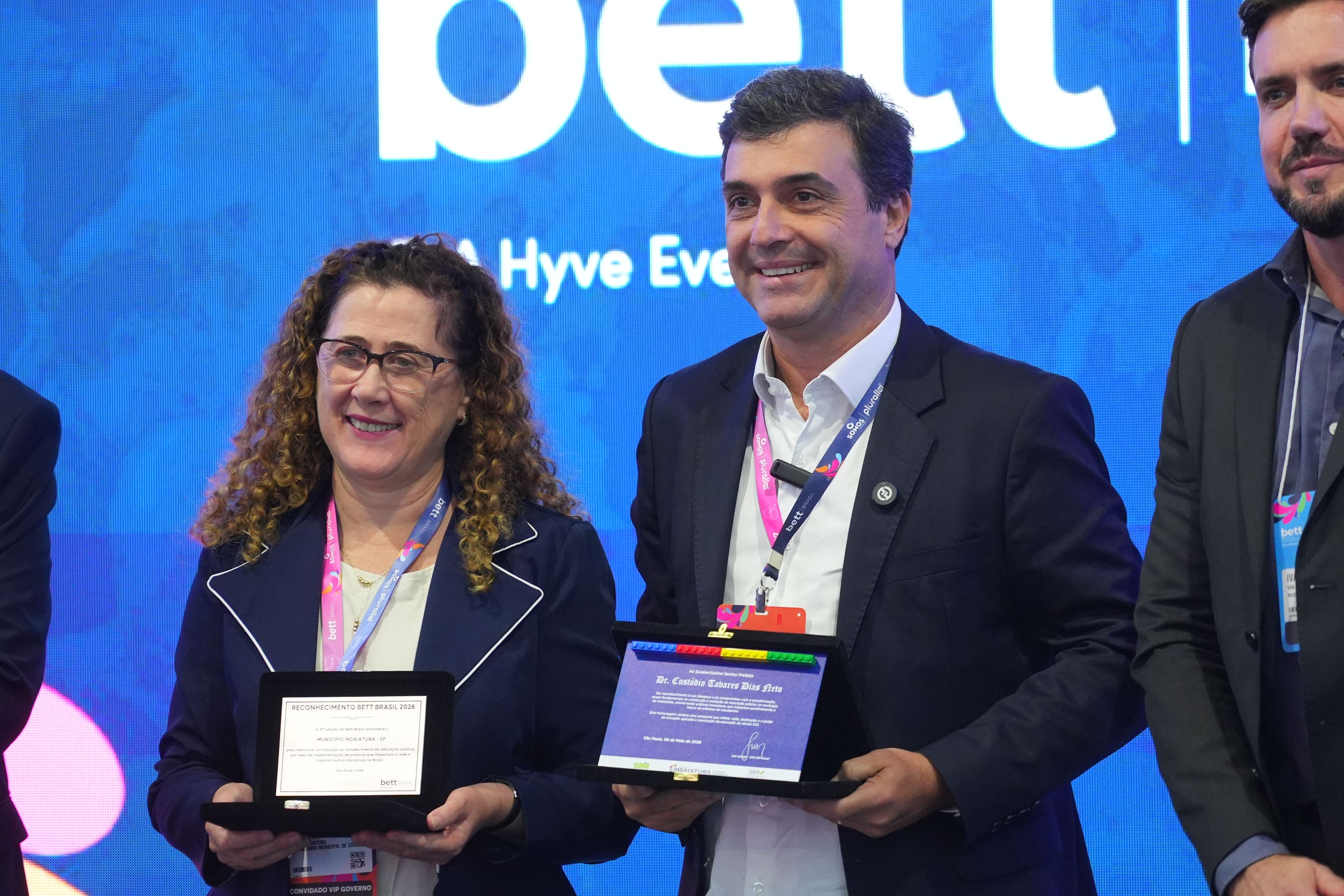
Indaiatuba (SP) recognized for its educational robotics project. Photo: Bett Brasil.
After four years of implementation, with significant results in terms of participation, interest, and skills development, the program has established Indaiatuba as a leader in technology education and educational innovation. The city’s mayor, Dr. Custódio Tavares Dias Neto, and the municipal secretary of education, Alair Lelli, accepted the award.
Literacy was also among the featured projects. In Cerquilho (SP), the project “Read, Write, Sing, and Be Enchanted,” supported by FTD Educação, uses literature as a foundation for developing reading, writing, and critical thinking skills in the early grades. With a playful and inclusive approach, the initiative aims to bridge learning gaps, especially those that have become more pronounced in the post-pandemic period.
The initiative enabled students to actively engage with reading, strengthening skills such as concentration, oral expression, creativity, and empathy. The municipal secretary of education, Osinaldo de Oliveira, and the deputy mayor, Emílio Paschoal, were in attendance.
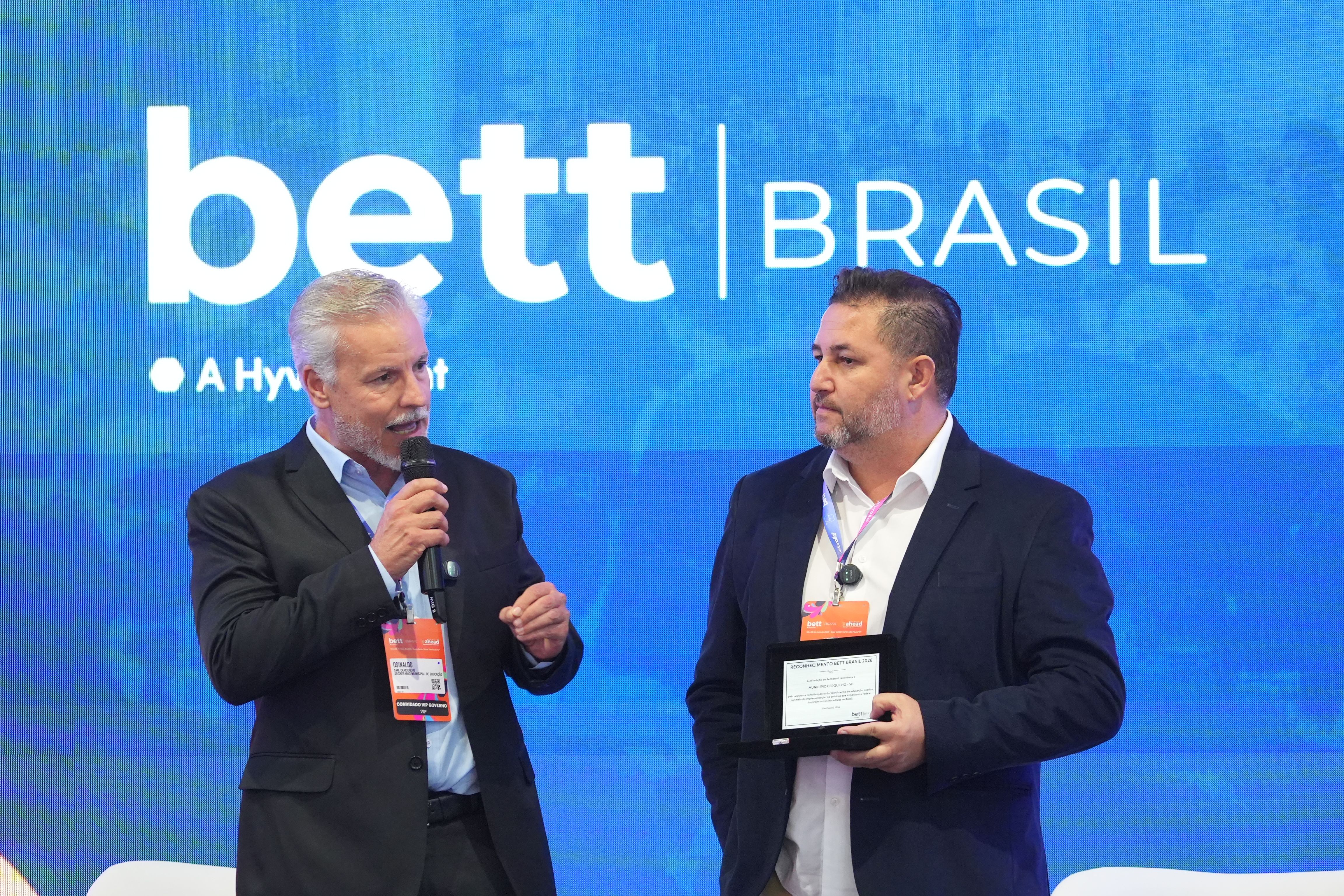
Cerquilho (SP) was recognized for its project “Read, Write, Sing, and Be Enchanted.” Photo: Bett Brasil.
The state of Amapá has demonstrated how data-driven management can turn critical situations around. With support from Proesc and other edtech companies, the Acelera Educação Plan reorganized the collection and analysis of educational data, significantly increasing participation in assessments such as the SAEB and also recovering essential federal funding. In just two years, this transformation has also brought greater equity and engagement to the school system. Sandra Maria Martins Cardoso Casimiro, Deputy Secretary of Education Policy for the State of Amapá, received the award.
In the interior of São Paulo, the city of Votuporanga stood out for an anti-racism education program implemented in partnership with Piraporiando. The initiative reached all early childhood education schools in the municipality, as well as schools affiliated with ADE Noroeste Paulista, promoting more inclusive teaching practices starting in the earliest years of schooling.
Share on social media:
Categories
- Educational Management