

Bett Show: Artificial Intelligence in the Service of Education
)
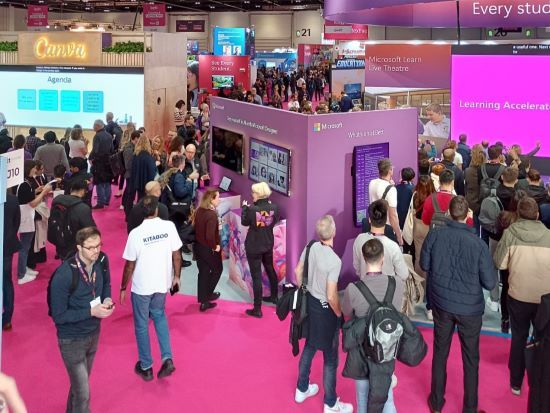
The dominant theme of the first day of the Bett Show in London this Wednesday (24) was the use of artificial intelligence in education. What once seemed like a promise for the future has now translated into various services and products with simple and effective applications for the classroom. In general, these are not new products, but rather the integration of AI systems into existing platforms, with the aim of improving the experience for teachers and students.
Real-time transcription of what a person says—such as a teacher in the classroom, for example—was one of the features presented by companies like Microsoft. This feature can help people with hearing or concentration difficulties, but it ends up being useful for everyone, as it provides a way to save class content to read or study at a later time.
AI systems also have the potential to support students' mental health. Google has developed a tool that can alert teachers to identify risks of certain behaviors, such as self-harm and violence.
Canvas showcased an image generator—a feature that allows the program itself to create an image for use in a specific project or school assignment, if the user so desires. The generator is capable of producing illustrations of even fantastical things that do not exist in the real world.
The use of artificial intelligence also opens up new possibilities for inclusion, thanks to the OrCam device. It is a small, voice-activated device that attaches to virtually any pair of glasses and instantly reads text from books, screens, and signs. It also recognizes faces and colors. It is a product of an Israeli company, but it is also available in Brazil.
“It’s artificial intelligence at the service of people with visual impairments—something that transforms people’s lives. Reading a book gives you independence,” said Doron Sadka, OrCam’s representative in Brazil. And the device can also help people with dyslexia, ADHD (attention-deficit/hyperactivity disorder), autism, and Down syndrome, Sadka explains. At Bett Brasil, the company will launch a device designed specifically for people who do not have visual impairments but need assistance with reading.
More conversations
In addition to the presentations and exhibition area, Bett UK launched a space called “TableTalks” tofacilitate roundtable discussions among people from different parts of the world. In this format, participants sign up to discuss a specific topic, and Bett pairs them with others who share a similar interest.

English teacher Bruna Cocchi was one of the representatives of the Brazilian delegation that took part in the event—and she loved it. “When you bring together people from all over the world to talk about the same topic, it’s incredible. Bett brought us together. I would never have sat down to talk with those people if it weren’t for Bett,” she said.
The Bett Show runs through Friday (the 26th). Brazil is represented at the event by a delegation of more than 190 members, including administrators, leaders, government officials, and executives from education-related companies. The group’s schedule includes a guided tour, access to the VIP area, and an immersive experience at the world’s largest education and technology event.
The Brazilian delegation is supported by Edlatam Alliance and Systemic Bilingual, in partnership with the British Consulate General, Google for Education, and Samsung.
Share on social media:
Categories
- The Future of Education
- Educational Management