

Keys to Combating University Dropout Rates
)
About 12,000 universitiesin Latin America were affected by COVID-19 (IESALC, UNESCO https://www.iesalc.unesco.org/wp-content/uploads/2020/05/COVID-19-ES-130520.pdf ). Even before the pandemic, only half of the students in Latin America were able to graduate, and this trend accelerated even further after 2020.
Currently, participation in some form of educational activity in the region is12 percentage points below the pre-pandemic attendance rate, according to a report by the United Nations Development Program (UNDP).
Brazil is in a similar situation to its neighboring countries. According to figures from SEMESP (https://www.semesp.org.br/mapa-do-ensino-superior/edicao-11/dados-brasil/evasao/ ), the dropout rate in 2021 was 36.6%, one of the highest in history, second only to the 37.2% rate in 2020.
Only18% of the population aged 18–24 attends college. Of this percentage, the first-year dropout rate is approximately 24% at private colleges and 14% at public colleges (SEMESP, 2019).
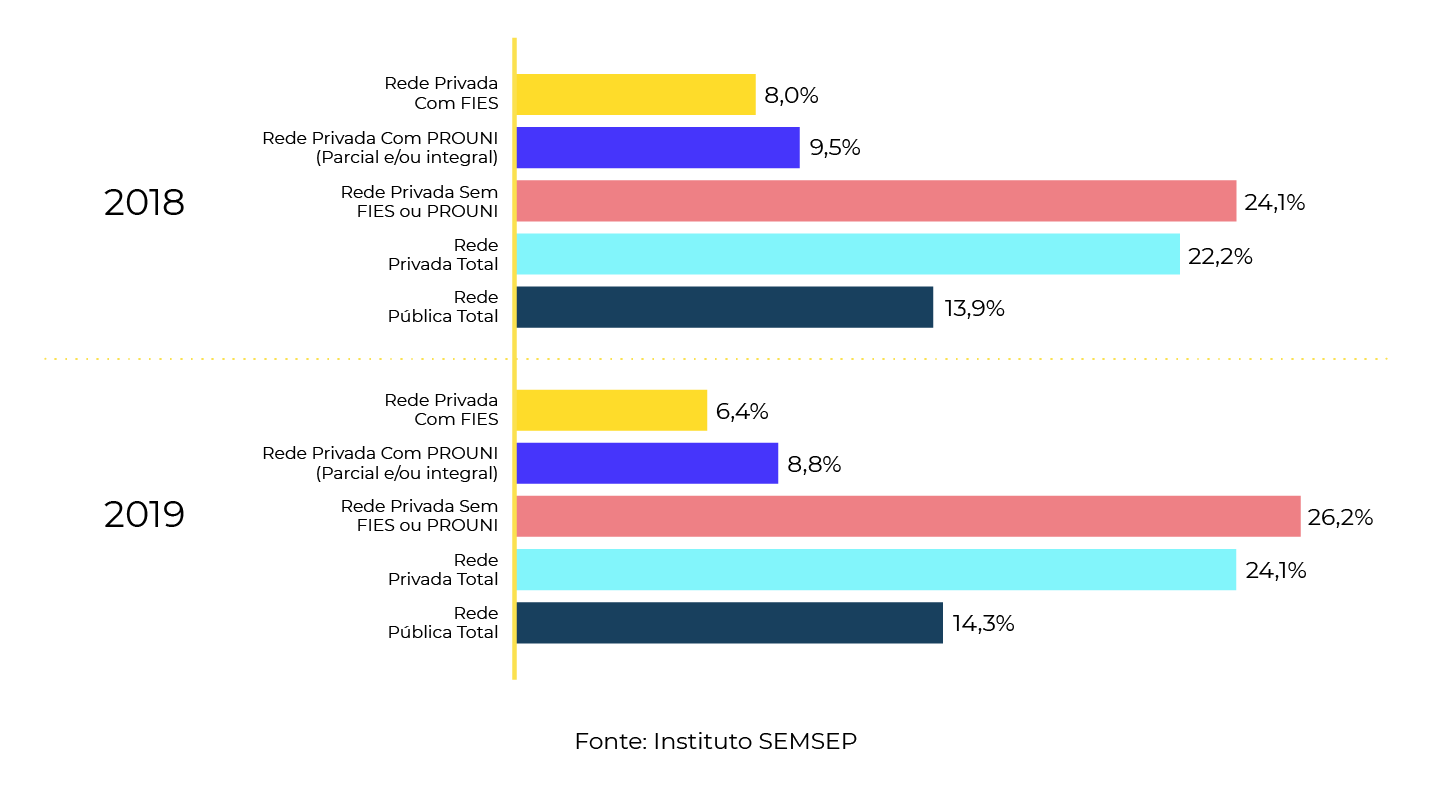
In 2021, nearly 3.5 million students dropped out of private universities in Brazil. A closer lookreveals that the dropout rate was even higher in distance learning programs, totaling 43.3%.
What can institutions of higher education do?
Many institutions are already implementing strategic plans for transformative higher education. The emergence of EdTech solutions, such as Ed Machina (https://edmachina.com/ ), paves the way for new ways of teaching, getting to know students, anticipating different scenarios, and implementing measures at the right time.
Tips for dealing with dropouts:
- Strengthen partnerships with secondary schools to help students make better decisions and increase enrollment.
- Create a flexible, omnichannel model in which students play a more important role.
- Understand student profiles and establish criteriafor identifying the risk of dropping out of school.
- To provide financial solutions for students who truly need them.
- To provide tutoring and academic support in a simple and accessible way.
Are there solutions that apply to all institutions? Certainly not. Therefore, it is best to start with smaller-scale strategies and actions, measuring results and optimizing processes. There is no need for major efforts or investments: the important thing is to understand the needs of each institution and its students, and to set realistic goals.