
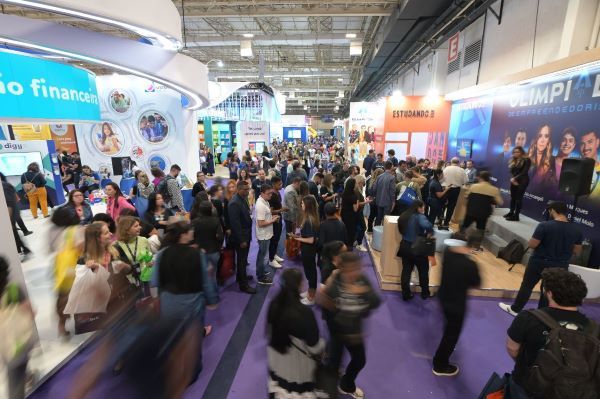
With crowded aisles, Bett Brasil showcases innovative solutions for all levels of education
)
With more than 270 exhibiting brands, the Bett Brazil, Latin America’s largest education and technology conference, is a recognized hub of innovation featuring a trade show that attracts teachers, educators, school operators, and administrators from both private and public educational institutions. For its 28th edition, the event featured a larger exhibition area with a variety of immersive activities and experiences for visitors, including demonstrations of products, services, and solutions.
"The evolution of Brazilian basic education is shaped by Bett Brasil. Attending the event means being able to contribute and connect with the sector’s most transformative minds. For 121 years, we have contributed to Brazilian education, and Bett Brasil inspires us to be increasingly bold and transformative,” said Ricardo Tavares, general director of FTD Educação. He noted that he reconnected with many clients, reaffirmed relationships and partnerships, and renewed long-term contracts.
“Bett Brasil has a much larger trade show this year than in previous years—at least compared to 2022, which, of course, marked the post-pandemic recovery, though the market was naturally a bit cautious at the time, but I see the 2023 trade show featuring numerous technology manufacturers, plenty of educational systems, and a much more positive and promising outlook for generating business and initiating conversations—and, of course, for keeping our brand always visible in consumers’ minds,” said Ricardo Lenti, general manager of ViewSonic in Latin America.
Rafael Martines, CEO of SAS Educação Plataforma, explained that the company has brought a broader lineup of lectures to this edition of Bett Brasil, along with a space to explore and discuss topics ranging from early childhood education to high school, with input from SAS’s educational experts. “We are fostering various discussions both inside and outside the booth on topics relevant to education, together with teachers, administrators, and school operators, and we believe this space is ideal for further fostering interest in the sector and the sharing of new solutions and ideas,” he said.
For Leandro Rossi, commercial director of Semente Educação, the event is an opportunity to showcase the company’s rebranding. “This is the first year we’re participating as ‘Semente Educação,’ which is part of our rebranding. Previously, we positioned ourselves as ‘Programa Semente,’ which is, in fact, one of Semente Educação’s products. Programa Semente focuses on social-emotional development from early childhood education through high school. This year, however, we also have other brands under Semente Educação,” he said.
Lucas Guedes, a consultant at Skies Learning, also spoke about the positive turnout at the event. “Our goal was to launch the Skies brand at the event. It was the first time we printed our educational materials and brought our entire team to show what Skies is all about. We’re introducing a new brand at Red Balloon for schools, one that’s fully aligned with the K-12 education market,” said Lucas.
Bett Conect@
One of the highlights of the 2023 edition is the Bett Conect@ meeting program, which facilitated more than 500 conversations over two days. Featured for the first time in the event’s schedule, the program is designed to foster relationships and networking through pre-scheduled 15-minute meetings between educational institutions and providers of technology and solutions for education.
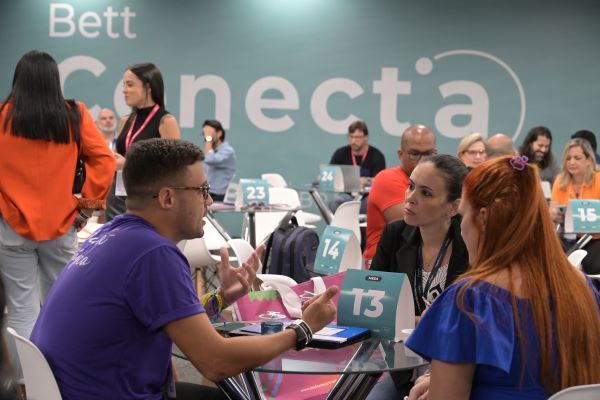
Z26 Director Antonio Ferro noted that he decided to participate in Conect@ because he was already familiar with this type of program from his experiences at other events abroad and trusted Bett Brasil’s expertise to organize these high-quality meeting sessions. “It’s a more relaxed setting to listen to potential clients’ needs and present our solutions at a leisurely pace. The best thing about Conect@ is that we can talk directly with decision-makers, which makes it easier to close deals faster,” said Ferro.
Geppetto CEO Vicente Vieira attended both days of the event and noted that the company held more than 20 meetings. “This format is very practical and effective, as it gave us direct access to the company’s executives. We were able to present our solutions and had very positive conversations.”
For Leonardo Assis, director of Editora Força Máxima, the opportunity to participate in Conect@ serves as a catalyst for the company’s current growth phase. “We had some great meetings here that generated very significant leads, including with people from all over the country. I believe that next year the program will expand even further, as it serves the needs of companies and managers very well,” says Assis.
Ahead By Bett
One of the new features of the 28th edition of Bett Brasil is the launch of Ahead by Bett, a side event focused on higher and vocational education. The goal is to foster an environment for ideas, connections, and the exchange of experiences among educational institutions seeking digital transformation and new learning models and approaches, as well as to provide a space for suppliers of solutions, products, and services in this sector to showcase new releases and innovations.
The Ahead by Bett auditorium is hosting a series of panel discussions organized around five main themes: hybrid learning, employability, innovation (in new teaching models), the integration of extension programs into the curriculum, and initial training for educators. On Thursday (the 11th), one of the panels addressed the topic “Opportunities in the Present and Future of Work.”
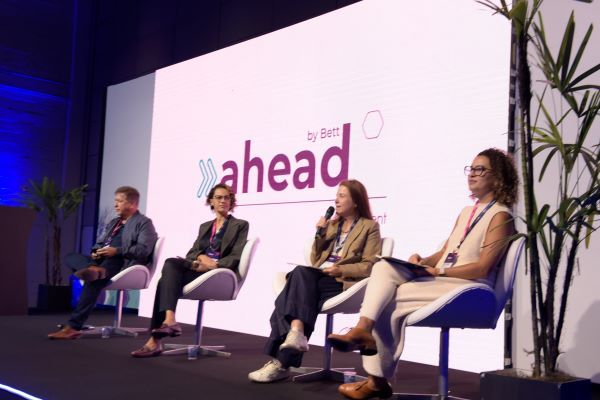
The panelists discussed the impact of digital transformation and artificial intelligence on the job market, as well as opportunities for the internationalization of education. According to Oxygen CEO Andrea Janér, it is not yet possible to predict a definitive scenario regarding the future of work and its relationship with machines and artificial intelligence; however, some skills are unique to humans, which adds value to and ensures the continued relevance of certain activities. “We are at the beginning of the widespread use of AI, so we don’t yet have the answer as to what this means for the world, but we are fully confident that we can contribute with our creative and analytical abilities. What makes us superior to ChatGPT, for example, is our life experience.”
We routinely ask ourselves what the profession of the future will be, but is it really possible to predict that? According to Ricardo Terra, Regional Director of Senai-SP, the answer is no. “The future is dynamic; it changes all the time. We can point to what looks promising right now, but that can change at any moment. Technology cycles are very short these days, and we need to prepare for that,” he emphasizes.
According to the director, Brazil has significant potential, particularly in the field of clean energy. “The low-carbon economy is on the rise, and Brazil has a role to play in it. We already have clean energy practices in place and will be ahead of other countries, but we need to accelerate our efforts; green hydrogen is already creating jobs around the world that haven’t reached us yet.”
SENAI has a market intelligence unit that relies on 56 cloud-based databases. Using this data, experts are able to cross-reference information and predict scenarios. According to Ricardo, the analyses indicate that emerging occupations are primarily data-related professions, such as data scientist and DevOps.

Internationalization of Education — Opportunities to study abroad are also on the rise for both the current and future job markets. According to a study conducted by the British Council in Brazil, Mexico, Colombia, and Peru, 34% of respondents are considering studying in the United Kingdom to advance their careers. Among Brazilians, technology-related professions were among the top choices.
“We must encourage the pursuit of education abroad in order to advance the careers of young people in Latin America, especially those from more vulnerable groups, such as women. At the British Council, we have very successful projects that aim to provide opportunities for women in science, as well as study programs that include support for their children. We need to keep this in mind when we talk about the future,” emphasizes Patricia Santos, Education and Insights Hub Manager for the Americas at the British Council. The panel was also moderated by Marcela Neves Birindelli, HR Manager for Latin America at Pearson Education.
Anti-racist education
Dialogue is the most important tool for transforming education; therefore, fostering greater interaction between the audience and the guest speakers at the Bett Brasil Conference—through innovative approaches to the presentation of content panels—is one of the highlights of this year’s event. The success of this concept is evident in the “Participatory Aquarium” auditorium, where seats are set aside for audience members to join the conversation on stage.
This Thursday (the 11th), one of the highlights of the event was a discussion on the path toward anti-racist education. With a large audience in attendance, Janine Rodrigues, director of Piraporiando, and Débora Dias dos Santos, co-councilwoman for the Quilombo Periférico Collective Mandate, were able to share some of their ideas and opinions on the subject.
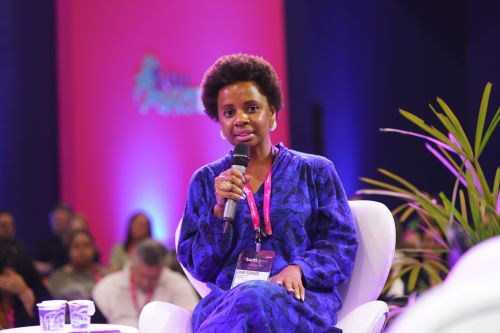
“Anti-racist education is essentially an education about life, since we need to build a path of commitment and respect for the lives of our children in all their diversity,” commented Débora. She spoke about the importance of having white and non-Black people committed to anti-racism, as well as about Black people’s access to positions of power and decision-making in all sectors, including those involved in shaping school curricula.
Janine emphasized the importance of a committed, responsible, and intentional approach to anti-racist education. She also pointed out that the process of implementing anti-racist education is a long one and that we need to manage our expectations—to avoid frustration—because change won’t happen overnight.
Inclusive Learning
Auditorium 6 at the Bett Brasil Conference was packed to welcome Leonardo Gontijo and Dudu do Cavaco, from the Mano Down Institute, for a roundtable discussion on inclusion in schools. The event also featured Professor Doug Alvoroçado, an educator and consultant with extensive experience in the field of inclusion.
Dudu welcomed the visitors to the sound of “Trem das Onze,” played in its entirety on the cavaco. Leonardo, the musician’s brother, noted that the youngest brother had always dreamed of learning music, but the family faced many difficulties in finding a teacher willing to teach him. “Dudu was turned down by dozens of teachers because they believed he wouldn’t be able to learn music. Today, he plays 10 instruments.”
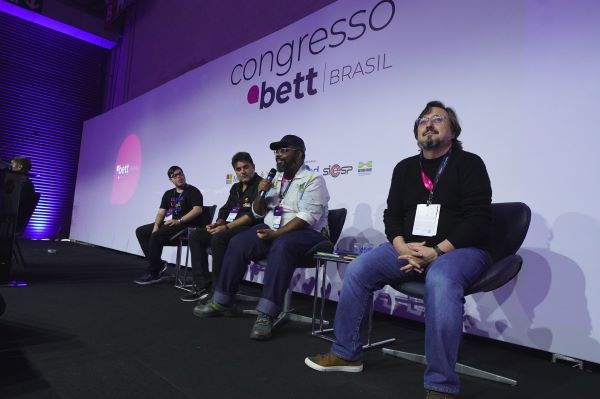
The president of the Mano Down Institute, an organization that supports the inclusion and independence of people with Down syndrome and other disabilities, emphasizes that, to be effective, the inclusion process must be based on a belief in others’ ability to learn. “If educators don’t believe in the principle that everyone can learn, it will never work. We must accept each person as they are and build on their uniqueness,” he says.
Known for his strong commitment to public schools, Professor Doug Alvoroçado emphasized that technology and hands-on experiences play important roles in the learning process of students with disabilities. “I always strive to bring available technologies into the classroom as a form of stimulation and as tools to facilitate learning. I also strongly believe in hands-on experience. The success of inclusive education consists of four steps: assessment, planning, experience, and evaluation. The key is not to be afraid of making mistakes; it’s about trying things out and listening to the students to find out what worked for each of them.”
Doug adds that teachers should focus more on students’ achievements than on their mistakes. “We have to start from what the student already knows, from what they’re capable of doing. We should focus on possibilities, not barriers,” he emphasizes.
Inspiring Talks
Once again, technology took center stage among the inspiring talks at the Bett Brasil Conference. Sidnei Shibata, executive director of Khan Academy, discussed how technological tools can support learning, particularly by helping to reverse the effects of the learning gap caused by the COVID-19 pandemic.
According to him, the novel coronavirus pandemic is considered one of the greatest disruptions in history. At its peak, the pandemic affected 95% of the world’s student population. The study also suggests that students in Brazil lost an estimated 8 to 9 months of progress during a typical school year. The problem primarily affects the most vulnerable populations.
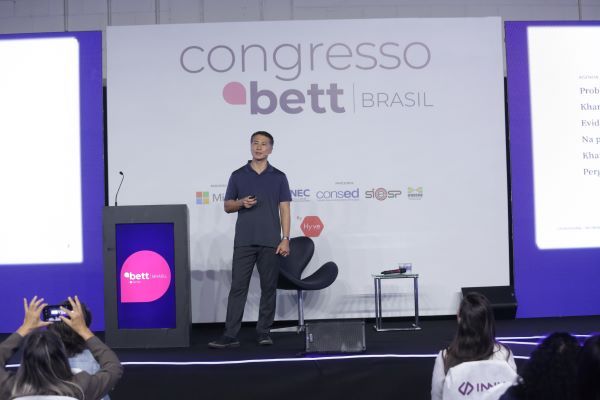
At the time, Shibata emphasized the need to use tools that facilitate and encourage learning, in addition to a personalized approach for each case. "Platforms like Khan can help both students and teachers, as they act as a co-pilot that assists with assignments and supports teaching. It has been shown that students who used these platforms for at least 30 minutes per week achieved estimated gains of 9 to 43 percent above the results expected before the pandemic.”
Among the speakers were also Pedro Aihara, federal deputy; Enio Ohmaye, CXO of EF Education First; Sidnei Shibata, executive director of Khan Academy in Latin America; Priscilla de Sá, CEO of Power Speaker; Felipe Menezes, director of Innovation and Artificial Intelligence (CIAO) at Max.ia Education; João Lacerda, investor at Max.IA; Roberto Shinyashiki, physician and speaker; and Marcos Raggazzi, executive director of Bernoulli Educação.
Did you like it? Share it on social media:
Categories
- Diversity, Equity, and Inclusion (DE&I)
- The Future of Education
- Innovation