

How to Solve Problems in School Administration Using a Startup Approach
)
Hello, school administrators!
Today, we’ll begin exploring a problem-solving strategy we’ve borrowed from the world of startups: problem validation. In short, it involves understanding how relevant a particular problem is and how people relate to it. And one of the most popular tools for this is the Value Proposition Canvas.
This model allows us to clearly identify people’s pain points, fears, and desired benefits regarding the problem we want to solve. And you must agree that this information is the key to the success of any solution, right?
Let's go through the step-by-step guide:
1. Identification of the Problem
The first step in validating a problem is, of course, to identify it. In a school, this could be a high dropout rate, low parental involvement in school activities, or difficulty integrating technology into the classroom—to name a few examples—but keep an open mind.
I recommend using anonymous surveys, interviews, and focus groups to gather information, and you can use tools like Google Formsor SurveyMonkeyto collect data.
2. Problem Definition
Once you've identified the problem, you need to clearly define it. The "5 Whys" method can be used to understand the root cause of the problem. This technique, developed by Toyota's founder, involves asking "why?" five times to get to the heart of the problem. Here is a guide to using the 5 Whys.
3. Value Proposition Canvas
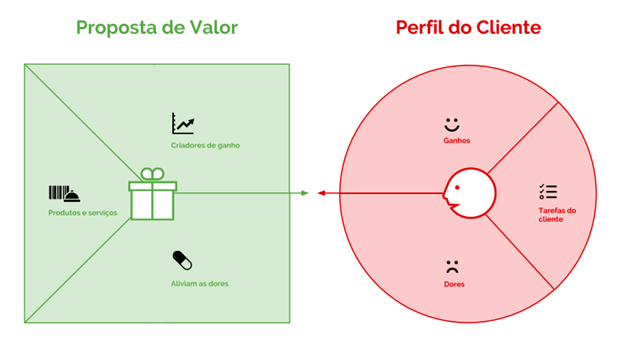
Now that we have a well-defined problem, let’s use the Value Proposition Canvas to validate it. This is a powerful tool that allows you to visualize and refine how a product or service meets a customer’s needs. Download the Value Proposition Canvas template here, directly from the website of the tool’s creator, Strategyzer.
3.1. Customer Profile
In our context, clients are our students, parents, teachers, or anyone else directly affected by the problem.
Next, on the right side of the canvas, describe who they are and what they need to do to solve the problem at hand—including the emotional aspects—in the “Client Tasks” field. In the “Pain Points” field, list the fears and pain points that clients face when trying to solve this problem. And in the “Gains” field, list the desires of these clients, which often go beyond the problem itself.
For example, in a situation where the challenge is to travel safely and affordably from point A to point B, an airline offers affordable tickets and emphasizes all safety protocols in its communications. When looking at the “Benefits” field, however, the airline expands its offering slightly to include discounts on hotels or car rentals, in order to meet its customers’ additional needs.
Ideally, create a Value Proposition Canvas for each customer segment; this will give you a clearer, more focused view of what each customer profile feels and needs. Then, based on these insights, look for the common ground that will allow you to solve the problem from the different perspectives of each customer profile.
3.2. Value Proposition
On the left side of each field, describe how you can alleviate the pain points you identified in interviews or customer surveys, how you can generate the benefits they desire, and, finally, how these possibilities translate into solutions.
Keep an open mind, strive to be creative, and try to think broadly, because you won't necessarily need to look for paid or expensive solutions. Creativity is always a great ally.
But this is just the first step, because the world of startups has a lot to offer education. Today, we looked at techniques for identifying and validating problems, and in upcoming articles, we’ll explore how we can create more effective solutions to our most pressing challenges.
Remember, change starts with a single step. Get started now!
About the author:
)
*This text does not necessarily reflect the opinion of Bett Brasil.
Did you like it? Share it on your social media:
Categories
- Educational Management
- Innovation