

School culture fosters innovation based on human relationships
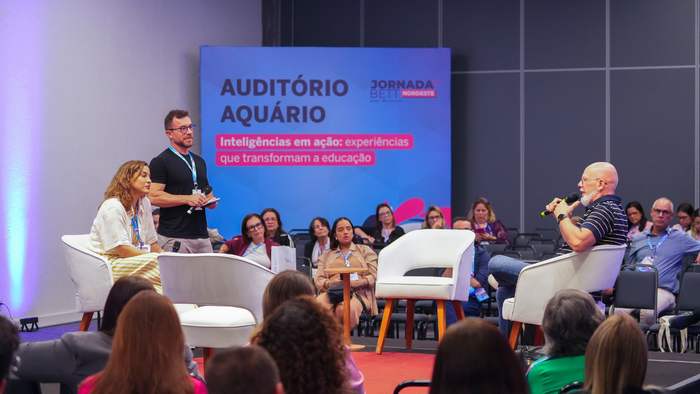
Technological changes place new demands on schools, but the way each institution responds to them is shaped by the culture developed in everyday life. Purpose, trusting relationships, dialogue, and the development of human skills are among the elements identified as necessary to guide pedagogical decisions and prepare students for different contexts.
For Carla Alexandre, the Educational Solutions Manager at CESAR School, school culture is built gradually through the actions and behaviors of the school community. Therefore, before deciding which changes to implement, the school needs to set clear goals regarding what it aims to foster.
“School culture isn’t built overnight,” she says. In Carla’s view, reflecting on school culture also means considering the changes taking place in the world of work and in the very nature of learning itself.
“With the integration of technology and the rapid pace of change, schools need to broaden their perspective on the skills they aim to develop in students for professions that don’t even exist yet. I believe that school culture needs to adopt a multifaceted approach,” he explains.
Content and Soft Skills
To address multiple challenges simultaneously, Carla argues that schools should redefine their priorities. “Schools still place too much emphasis on content. While content is important, we need to broaden our perspective to include the human skills and competencies that should be strengthened in students, so that they can develop responsibility and awareness in their use of technologies that also influence their behavior,” she says.
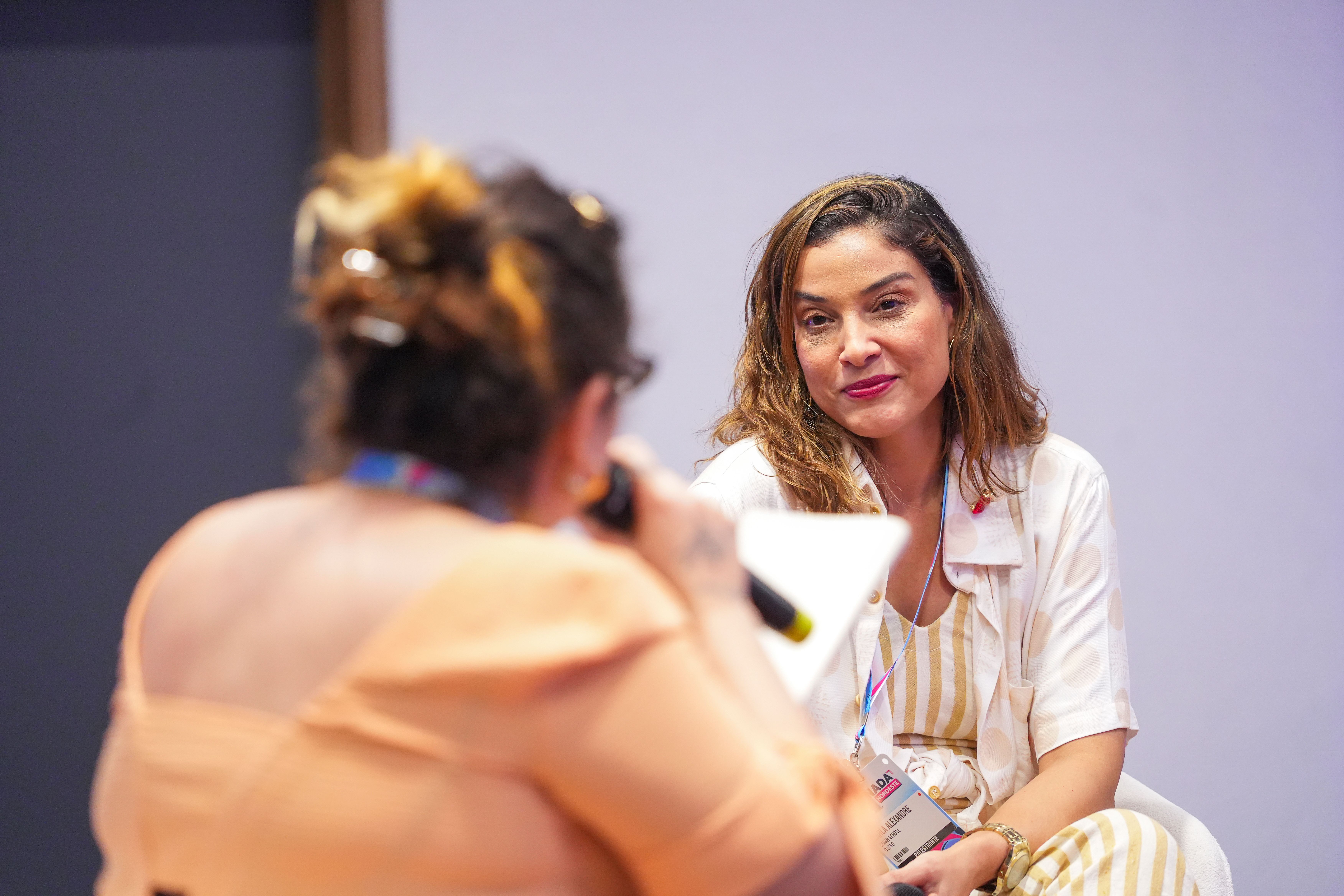
Carla Alexandre explained how social behaviors help shape school culture. Photo: Bett Brasil
According to the administrator, this combination of practices, skills, and behaviors also contributes to the development of the school’s culture itself. “And that’s how we create a cultural cycle,” she adds .
Human Relations as the Foundation for Innovation
The relationship between school culture and innovation is also highlighted by Luciano Meira, a professor and head of the Pedagogy department at Proz Educação. In his view, culture is shaped by human relationships; therefore, environments that value people create the conditions for new practices to be developed.
“Culture is, to a large extent, made up of human relationships. A strong, robust culture that focuses on people is the foundation—the human platform—upon which innovation is built,” he says.
In Meira’s view, innovation is not limited to the adoption of technological resources. It involves behavioral changes in response to new challenges, which requires relationships built on trust among the people involved in this process.
Therefore, in light of the emergence of new technologies, such as artificial intelligence, the professor argues that schools should strengthen relationships among their members. “You need to have very strong human relationships and establish an environment of trust, because innovation also involves risk. It’s a leap—whether in the realm of the imagination or in the concrete reality of daily life—but it’s a leap toward possible futures,” he emphasizes.
For Meira, trust is necessary because innovation involves exploring possibilities and taking risks. “You need to trust the people with whom you’ll be innovating. And trust, at its core, is the ability to build a relationship with another person,” she says.
Dialogue Guides Change
When considering the decisions that can guide a connected, inclusive school focused on human development, Meira points to dialogue as one of the guiding principles.
“Dialogue is a fundamental principle. To bring about change and find allies, we need people who share this vision and help strengthen it. After all, any change requires many allies to build and sustain the path we want to follow,” he explains.
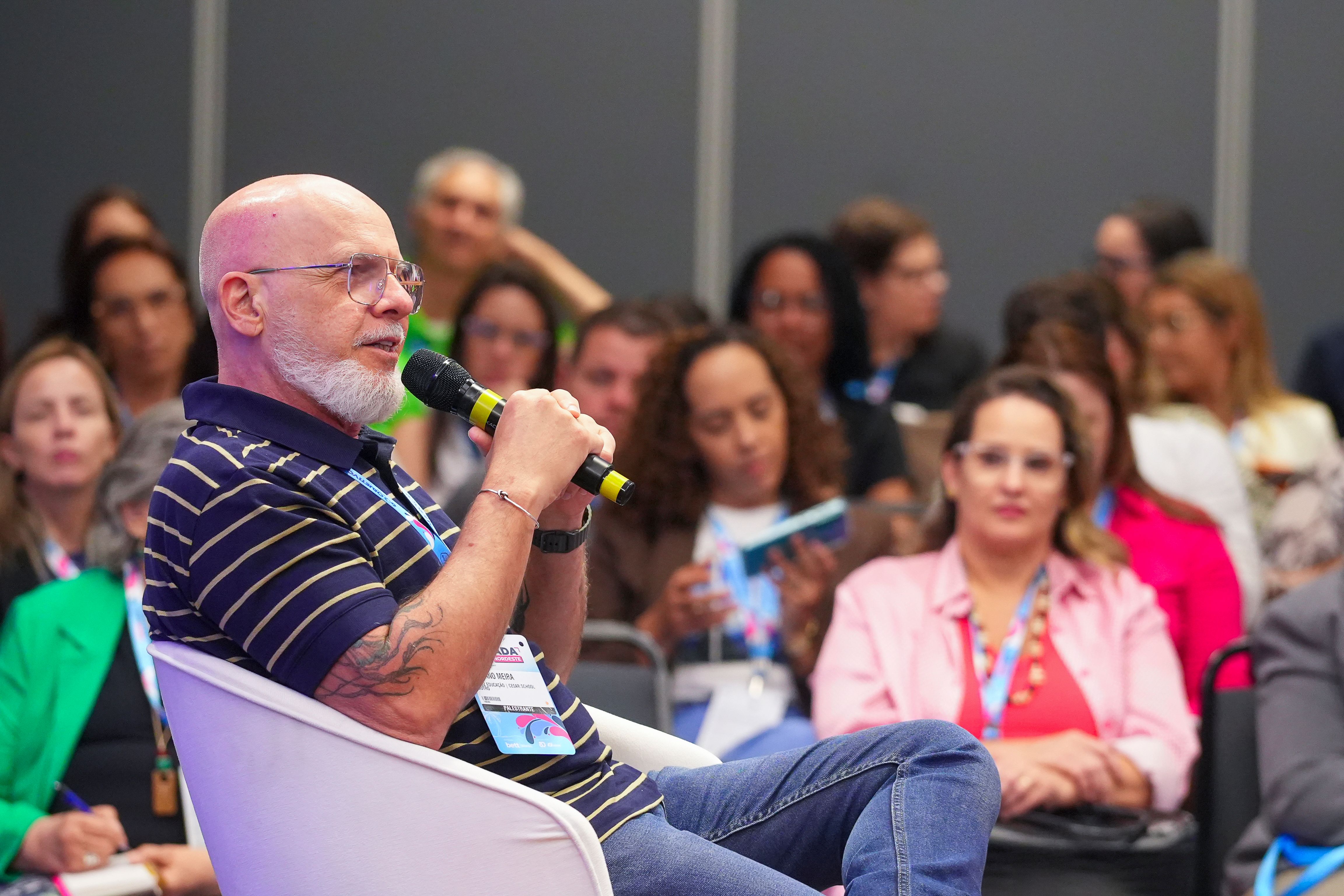
For Luciano Meira, dialogue plays an essential role in education. Photo: Bett Brasil.
For the teacher, dialogue plays a particularly important role in educational institutions because it is closely tied to the very act of teaching. Furthermore, schools do not operate in isolation: they are embedded in networks, communities, and various social structures, whether in public or private education.
This characteristic requires the institution to consider the relationships it maintains with different groups and organizations. In this context, dialogue can serve as a starting point for guiding decisions and reaching agreements on the paths the school intends to follow.
“Teaching is, in a sense, establishing a dialogue with science and knowledge—and, at the same time, with students. From a teacher’s perspective, dialogue is one of the fundamental principles of education,” he adds.
In this sense, school culture is not limited to rules or isolated projects. It is built through everyday relationships and behaviors. By combining purpose, the development of human competencies, trust, and dialogue, schools can create the conditions to incorporate new technologies and practices while continuing to place people at the center of decision-making.
This content is based on the participation of Carla Alexandre, Educational Solutions Manager at CESAR School, and Luciano Meira, teacher and Head of Pedagogy at Proz Educação, at the Bett Nordeste 2026 Conference.
Share on social media: