
Bett Delegation Expands European Tour with a Visit to Portugal in 2027
A Bett Delegation In 2027, Europe will have a new section dedicated to higher education and distance learning. Before heading to London, where Bett UK is taking place, the Brazilian delegation will take part in an immersion program in Portugal, including visits to universities and meetings with educational institutions across the country.
The expansion of the itinerary is the result of a partnership between Bett Brasil and the Brazilian Association of Distance Education (ABED) and aims to expose Brazilian administrators and educators to international experiences that can serve as a reference for the diverse realities of education in Brazil. The delegation’s full schedule is set to take place between January 13 and 22.
For Claudia Valério, director of Bett Brasil, Portugal’s inclusion continues a process of transformation within the delegation itself that began about a decade ago. According to her, rather than simply following in the footsteps of Bett UK, the goal is to provide a learning and networking experience that begins before the event and extends beyond it.
“The greatest benefit is the connections—the relationships we build during a trip like this. The delegation, more than just a trip or a visit to Bett, brings people together and creates very broad bonds,” he said during the live stream.
Portugal Brings Together Experiences in Higher Education
The choice of Portugal is not due solely to linguistic proximity. According to Professor Cassio Santos of ABED, the cultural similarities and the existing relationship between institutions in the two countries create the conditions for expanding cooperation in higher education.
“Portugal is much closer to the Brazilian market culturally. This connection isn’t just about the Portuguese language, but also about cultural affinity, exchanges between institutions, and the flow of goods and services between the two countries,” he explained.
The Portuguese itinerary begins on January 14, with activities at the Institute of Education of the University of Lisbon and the expected participation of representatives from various Portuguese institutions. On the same day, the delegation will visit the Open University of Portugal, an institution with more than 35 years of experience in distance education that offers undergraduate, master’s, and doctoral programs.
The following day, the schedule includes a visit to the Nova School of Business & Economics at Universidade Nova de Lisboa in Carcavelos. The program includes a tour of the facilities and a meeting with representatives of the institution.
In Santos’s view, observing other models allows participants to break free from the limitations imposed by the references they encounter on a daily basis. “This moment of interaction, when we learn about other cultures from the perspective of ecosystems, is very enriching. We end up learning in a holistic way,” he said.
Internationalization Expands the Repertoire
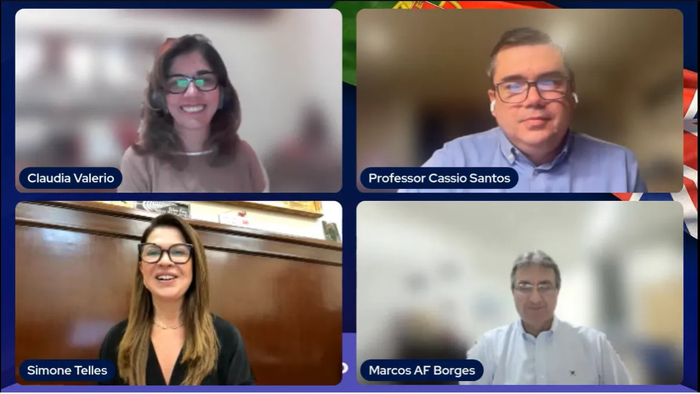
International experience and its potential implications for Brazilian institutions were also the focus of the live stream hosted by Bett Brasil to present the new roadmap.
Simone Telles, director of Internationalization of Basic Education for the State of São Paulo ( ), has participated in several editions of Bett and highlighted the potential to incorporate best practices observed abroad into her professional repertoire.
“When you enroll in a higher education institution or a K-12 school abroad and begin exchanging experiences with researchers and teachers from other countries, you start to reflect very deeply on your work in Brazil and what you would like to bring back to Brazil,” he said.
For her, exposure to other realities can also inspire new ways of thinking about the challenges of education. “We come back from an experience like this with a much more innovative mindset and tremendous potential for entrepreneurship, because you look at it and think, ‘I don’t remember seeing this in Brazil or in a classroom; I want to learn more.’”
Currently leading the effort to internationalize basic education in São Paulo, Simone attributes part of her professional career to the international experiences she has gained over the years. “Much of mycurrent workin internationalization is due to the fact that I had the opportunity to meet people and take advantage of the opportunities that Bett itself offered me,” she said.
Different Models for Similar Problems
Marcos Borges,president of Univesp ,had alreadyfollowed a similar path to the one he is now officially taking as part of the delegation. In 2024, before attending Bett in London, he visited educational institutions in Portugal with Simone.
In his view, experiencing different models of distance learning firsthand allows one to understand aspects that are rarely explored in such depth in studies, articles, or virtual meetings.
“We know our own reality, and sometimes we read about it in books, but to truly understand the atmosphere, the culture, and how things work, going there, talking to the people who live there, and interacting with them makes all the difference,” he said.
Borges cites the differences among distance learning institutions he encountered in Europe as one of his main sources of learning. “There is an immense diversity of approaches and methods. Understanding all these differences gives us the tools to think of new ways to solve certain problems,” he said.
Face-to-face contact, he added, also paved the way for relationships that continued after the trip. According to Borges, some of the partnerships developed by Univesp originated from contacts made during Bett UK.
“Today, we have partnerships with Univesp that are taking shape with people I met there. Having universities on board is great, but getting to know a wide range of people, technologies, and tools is also very important,” he said.
From Portugal to London
After the Portuguese leg, the delegation will travel to London, where participants will take part in the traditional schedule of technical visits and attend Bett UK. Participants will still have the option to attend only one of the legs, although the new format allows them to combine experiences in both countries.
For Cláudia Valério, this combination broadens the range ofexperiencesoffered to participants.“We’ll have two opportunities to learn about different cultures and practices, which can then culminate in a very positive and interesting experience for those who complete the entire journey,”she said.
More than just adding a destination to the trip, Portugal’s inclusion in the itinerary reinforces one of the key themes that has been gaining traction within the delegation: using international experience not simply to import models, but to broaden the repertoire of administrators and educators as they face the challenges encountered in Brazilian institutions.
To rewatch or watch the full livestream, click here.
Share on social media:
Categories
- The Future of Education