
Dialogues of Intelligences: When Humans and Algorithms Forge Ethical Paths for Education
)
With the central theme “Individual, Collective, and Artificial Intelligences: All Within Us, Right Now! When They Engage in Dialogue, Education Is Transformed,” Bett Brasil—Latin America’s largest event on Innovation and Technology in Education—reaches its 31st edition, May 5–8, 2026, at Expo Center Norte in São Paulo.
To explore this overarching theme in greater depth, the Bett Blog has prepared a series of four articles dedicated to the subtopics that form the framework of the event's program.
This text will address the theme “Dialogues of Intelligences—All Within Us,” which brings together individual, collective, and artificial intelligences in dialogue, pointing the way toward inclusion, equity, social justice, and innovation.
It is a space for synthesis, where ethical dilemmas related to technology, digital citizenship, fake news, screen addiction, and the social impacts of digital platforms are discussed.
It is also within this subtopic that new forms of educational management, innovation in business models, and marketing and fundraising strategies emerge, demonstrating how multiple intelligences can work together to transform education and build sustainable futures.
For Luciano Meira, a member of the Bett Brasil advisory board, an adjunct professor of psychology at the Federal University of Pernambuco, and head of pedagogy at Proz Educação, this dialogue is not only possible but necessary. “‘Dialogues of Intelligences’ frames digital citizenship, fake news, and screen addiction not as isolated failures of AI, but as opportunities for a collective intelligence that emerges from the interaction between humans and algorithms,” he explains.
When it comes to digital citizenship, Meira compares the phenomenon to a “game of mirrors, ” in which artificial intelligence amplifies human biases present on social media, precisely because it is, as he describes it, “stochastic parrots grounded in probabilistic rationality.”
For him, the solution lies not only in detecting deepfakes through technical means, but also in training students to “decode” such content through collective narrative reconstructions. “Groups of students can collaborate to counter false narratives in real time, reviving an old but forgotten practice in schools: conversation,” he says.
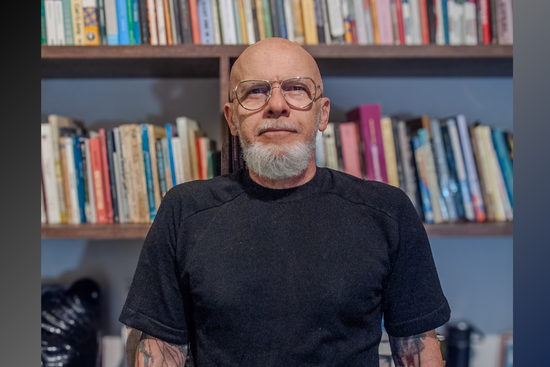
Luciano Meira explains the importance of the subtopic “Dialogues of Intelligences” in today’s educational context. Photo: Reproduced from personal collection.
As for fake news, according to Meira, it plays the role of a catalyst for hybrid intelligence in this context. He points out that recent studies in cognitive neuroscience show that the human brain also processes misinformation through anchoring heuristics—in other words, we tend to rely on the first piece of information we receive.
“Integrating generative AI into classrooms allows us to ‘train’ collective intelligences to generate ethical counter-narratives through AI-generated questions, transforming victims into architects of plural truths. This is important because we often think of LLMs (language models) as generators of answers, but rarely consider their ability to formulate questions,” he says.
As for screen addiction, Meira notes that the issue reveals a disconnect between algorithms and human rhythms. “Recommendation algorithms exploit dopaminergic cycles, but humanized dialogues can recalibrate them through collective biofeedback,” he explains. He proposes that students themselves monitor their digital patterns and collectively adjust their habits to foster reflective breaks, intentionality, and emotional balance.
Hybrid Intelligence Ecosystems
For Professor Meira, it is essential that schools promote integration among people, digital technologies, and human values. He argues that educational transformation must take place within a “collective zone of proximal development”—a space in which individual and group intelligences intertwine with artificial networks to co-create ethical values and move beyond the traditional transmissive model of teaching.
“This integration fosters inclusion by democratizing ‘swarm thinking’: imagine AI platforms that, rather than personalizing in isolation, facilitate ‘cognitive swarms’ where students from diverse backgrounds co-construct knowledge through collaborative agents, dynamically adjusting for socioeconomic equity—for example, by prioritizing underrepresented voices in virtual debates on social justice,” he explains.
For Meira, innovation arises from the fusion of human values and adaptive algorithms. He highlights practices such as “layered ethics,” in which AI simulates real-world dilemmas—such as the allocation of school resources—and allows students to make collective decisions that balance algorithmic efficiency with human empathy and solidarity.
In the field of social justice, this approach gains even more traction. Meira emphasizes that integrating AI into everyday school life can enhance holistic development by fostering relational literacy, in which students learn to interact with artificial intelligence as a partner. “This social metacognition mitigates inequalities, as seen in programs where cultural chatbots adapt content to indigenous identities, for example, fostering a sense of belonging,” she explains.
He further summarizes: “Thus, schools have become ecosystems of hybrid intelligence, where human values anchor AI, leading to more just and innovative life paths.”
The subtheme “Dialogues of Intelligences—All Within Us” is an invitation to think of education as a living tapestry in which technologies do not replace human intelligences, but rather expand and challenge their collective potential.
Share on social media:
Categories
- Learning Strategies
- Innovation