
What if the teacher could map out a student's learning profile?
)
The beginning of it all...
In 2019, while participating in a three-day intensive course on psychological profile analysis from the perspective of various theories, I had the insight to create a robust and well-founded learning profile analysis.
At that time, I had just completed my doctorate and was deepening and expanding my research in the field of education; that same year, I began my bachelor’s degree in law. I devoted nearly 80% of my studies to research focused on the following keywords: learning profiles, learning, intelligence, and assessment.
My academic career led me to a postdoctoral fellowship in Education in the middle of the second semester of 2019, and I continued to delve deeper into the subject. Now, I work with undergraduate research fellows, students writing their final theses, and also some researchers who believed in the project.
Consequently, through daily research, a few gaps were identified in the course of a comprehensive literature review: the need for software that could qualitatively assess a learning profile and generate a report on those profiles. Four theories were identified that are relevant to the objectives of this research: the VARK Model, Kolb’s Learning Styles, Cognitive Styles, and Multiple Intelligences.
The plan was in place and the literature review was already underway when, in late 2020, an opportunity arose for a research grant from the funding agency Fundação Cearense de Apoio ao Desenvolvimento Científico e Tecnológico (FUNCAP). Accordingly, a group of researchers coordinated by Prof. Dr. Daniel Brandão (UECE) and funded by the foundation set out to develop a software program (APA EIVE) and was awarded a grant for the proposal titled: “Study of the Learning Profile from the Perspective of the VARK Model, Learning Styles, Multiple Intelligences, and Cognitive Styles.”
In this call for proposals, for which I applied, I was awarded funding and also five undergraduate research students. Currently, as the leader of the Research Center for Education and Teacher Training, we have established a partnership with the Study Group on Weaving Cognitive Networks of Learning (G-TERCOA) at the Federal University of Ceará, with which we have created local extension courses based on various master’s and doctoral research projects, involving professors, specialists, master’s degree holders, Ph.D.s, and postdoctoral researchers, with the aim of further developing the Theory of Learning Profiles.
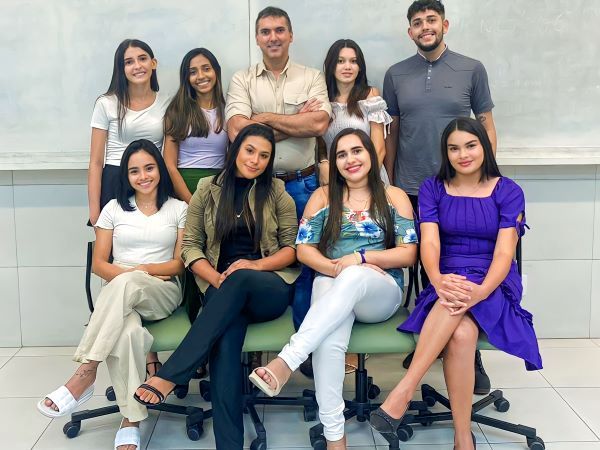
Throughout 2021, all of these participants were able to create a questionnaire addressing the four theories: the VARK model, Kolb’s Learning Styles, Cognitive Styles, and Multiple Intelligences. We even conducted a pretest with approximately 150 people, in which we achieved a 99% validity rate. We were on the right track.
At the same time, a team of Computer Science students and IT professionals was working on developing the platform and the questionnaire system that will generate the report and an action plan, while another group focused on marketing and promotion. We named the APA software EIVE!
Throughout 2021, several scientific papers on this topic were presented at events across the country, and articles were written and submitted to renowned journals in our field of education. In 2022, that dream became a reality.
What is the APA EIVE?
A software program, developed by Professor Daniel Brandão Menezes, Ph.D., that qualitatively assesses a learning profile and generates a report on those profiles from the perspective of four theories: the VARK Model, Kolb’s Learning Styles, Cognitive Styles, and Multiple Intelligences.
Who is this for?
For people of all ages! Provided they have completed at least the early years of elementary school.
Who helped legitimize it?
Vale do Acaraú State University and the Federal University of Ceará, with support from the research groups “Center for Research on Education and Teacher Training” and “Study Group on Weaving Cognitive Networks of Learning,” with the participation of various professors holding doctoral and master’s degrees, as well as specialists, and financial support from the Ceará Foundation for the Support of Scientific and Technological Development in the State of Ceará.
Has it been tested?
Yes. The prototype was tested with more than 500 people of all educational levels and ages, achieving a 99% validity and reliability rate.
Who will benefit?
The entire school community. Education professionals will take the Learning Profile Analyst course to analyze students’ profile reports with the goal of maximizing their learning by understanding their preferred learning styles.
How does it work?
It's simple! Students take a profile test on the APA EIVE platform, and in less than 30 seconds, a learning profile report is generated based on four theoretical models: the VARK Model, Kolb's Learning Styles, Cognitive Styles, and Multiple Intelligences.
The generated report will be reviewed by the Learning Profile Analyst, who, through a feedback session, will work with the student to develop an action plan aimed at maximizing study strategies aligned with the predominant learning profile, as well as strategies to strengthen the less prevalent learning styles.
Why would a school adopt this model?
Scientific research shows that personalized instruction is the trend of today and tomorrow; in other words, addressing each student’s individuality in the educational process yields extraordinary results in their school experience. Teachers will be able to tailor their teaching practices to the characteristics of the wide variety of student profiles in their classrooms.
Furthermore, it will be possible not only for teachers, but also for school administrators and the secretary of education to access individual student profiles for a school or municipality as a whole—and even to create learning scenarios for students with similar profiles. What municipality wouldn’t want such a powerful tool?
Shall we go into more detail?
Learning profiles represent the way in which people interact with their own learning conditions, encompassing cognitive, affective, physical, and environmental aspects that can influence information processing.
Thus, the importance of researching the learning process—which is related to various factors, including intelligence—is emphasized. For a long time, intelligence was assessed primarily through IQ tests, but these did not adequately reflect an individual’s unique learning profile.

Studies show that students replicate learning models imposed by the educational system, which influences their motivation and performance. The methodologies used do not solidify the knowledge acquired, making it necessary to complete the learning cycle by dedicating more time to it; however, this is not always beneficial or sufficient.
In light of this, several questions arise: Would it be possible to develop a report to map students’ learning profiles from the perspective of the VARK Model, Learning Styles, Multiple Intelligences, and Cognitive Styles? Is it possible to correlate the profiles described in these theories? Is it feasible to create a questionnaire that incorporates these theories? Would it be plausible to create an explanatory report template for students who take the test?
Based on the results of this questionnaire, a personalized learning profile report was created; instructional materials on the relevant topics were developed; and articles were submitted to academic journals and presented at scientific conferences. In addition, the findings were shared with the academic community to facilitate the development of teaching strategies tailored to the realities faced by a wide range of learning profiles in the classroom.
The idea that it is necessary to thoroughly investigate students’ learning profiles is essential for understanding teaching and learning processes, as well as for guiding teacher training programs aimed at studying methodological approaches.
In light of this, some theories have conducted studies on student classification based on the perception that each person has a predominant style of perceiving and understanding reality, as reflected in representation systems, learning styles, multiple intelligences, and cognitive styles.
It should be noted, then, in this research project—which focuses on the study of this manifestation of a personalized strategy—that students may come to adopt this strategy if they have a detailed understanding of how their predisposition works.
On the other hand, the theoretical and practical framework of existing teacher-training programs could be redesigned to prepare teachers to meet the needs of a wide variety of student profiles in the classroom.
When teachers understand and respect their students’ unique learning styles and tailor their instruction accordingly, there is an increase in academic achievement and a decrease in disciplinary problems, as well as more positive attitudes toward school. (CERQUEIRA, 2000, p. 37).
A teacher’s willingness to understand individual differences is essential to their teaching practice in the development of their lessons. However, Cerqueira (2000) expands on this idea, advocating for the paramount importance of educators also understanding their own learning profiles, as this can directly influence the way they plan their lessons, devise differentiated strategies, select teaching materials, and interact with students. According to Cerqueira (2000, p. 36):
The style an individual exhibits when faced with a specific learning task. (...) a learner's tendency to adopt a particular learning strategy, regardless of the specific demands of the tasks.
In this vein, Fleming (1995) concluded that students’ preferences are related to how they receive information, and learning profiles can thus be described as follows: visual learners, who rely on symbols and different formats, fonts, and colors to emphasize important points; auditory learners, who favor both spoken and heard information and the use of questioning; reading/writing learners, who enjoy learning through books and documents; kinesthetic learners, who prefer hands-on activities, group work, and research; and bimodal learners, who combine two learning styles.
This is known as the VARK model (visual, aural, read/write, kinesthetic), an acronym that stands for visual, auditory, reading/writing, and kinesthetic, as defined by the questionnaire developed for this model (FLEMING; MILLS, 1992). Kolb’s (1971) learning styles, on the other hand, relate to the way in which people engage with learning conditions, encompassing cognitive, affective, physical, and environmental aspects that can facilitate information processing—both in the search for strategies to trigger the learning process itself and in uncovering the mechanisms of educational practices.
When the teaching style differs from a student’s learning style, the student becomes disinterested, inattentive, or disruptive in class. In addition, the student performs poorly on assessments, becoming demotivated toward the subject, the course, and themselves.
Hence the importance of learning style models when planning a teaching session and, in particular, what Sobral (1992, p. 6) identifies as the most widely applied and disseminated: Kolb’s Learning Style Inventory. Based on the theoretical model of experiential learning created by Kolb himself, it is structured around four dimensions: affective structure; perceptual structure; symbolic structure; and behavioral structure.
In 1921, Stern developed the IQ calculation, based on the ratio of mental age to chronological age multiplied by one hundred (RABELO; DE ROSE, 2016). In contrast to this view of intelligence as a general and singular concept, Gardner (1994) developed his theory that intelligence is the ability to solve problems and create products that are valued within one or more cultural criteria.
In all, eight competencies meet the criteria of Howard Gardner’s Theory of Multiple Intelligences: linguistic (the ability to use language effectively), logico-mathematical (numerical and reasoning skills, including the ability to identify patterns and systematize), intrapersonal (the use of self-knowledge in problem-solving), interpersonal (the ability to understand others’ emotions, expressions, and intentions and respond accordingly), musical (perception, discrimination, and transformation of musical forms), spatial (precise perception of the visual-spatial world), kinesthetic (the ability to use the body to create products or solve problems), and, finally, naturalistic (an individual’s ability to recognize and classify their environment, such as flora and fauna) (GAMA, 2014).
Cognitive styles refer to the characteristics of a person’s cognitive structure, defined in part by biological factors and influenced directly or indirectly by new events. They represent a tendency to perceive and relate data from reality, as well as to draw conclusions about them. They pertain to the form—rather than the content—of what one thinks, knows, perceives, remembers, learns, and decides (BARIANI, 1998).
Among the dimensions of cognitive styles that have been identified, the most widely discussed and researched are: field dependence-independence, response reflexivity-impulsivity, divergent-convergent thinking, and holistic-serialistic thinking. There are indications in the literature that different cognitive styles are interrelated, although there is still little evidence of empirical correlations among them.
Therefore, in light of the foregoing, this project is essential for characterizing each student’s learning profile in a highly personalized manner; since we operate on the principle that each person has distinct ways of processing information, we will develop, based on the studies to be conducted, a software program and a learning profile report template—innovative within the educational landscape—will be developed. This tool will combine the VARK Model, Learning Styles, Multiple Intelligences, and Cognitive Styles to understand, intervene in, and solve problems intertwined with teaching and learning processes, thereby enriching Brazilian education through this software.
About the author:
*This text does not necessarily reflect the opinion of Bett Brasil.
References:
BARIANI, I. C. D. Cognitive Styles of College Students and Scientific Research. 1998. Doctoral dissertation – State University of Campinas, School of Education, Campinas, 1998.
CERQUEIRA, T. C. S. Learning Styles Among College Students. Dissertation (Ph.D. in Education) — School of Education/UNICAMP, Campinas, 2000.
FLEMING, N. D. “I’m different; not dumb.” Modes of presentation (VARK) in the tertiary classroom. In: Research and Development in Higher Education. Proceedings of the 1995 Annual Conference of the Higher Education and Research Development Society of Australia (HERDSA), HERDSA. 1995. pp. 308–313.
FLEMING, N.D.; MILLS, C. VARK. A Guide to Learning Styles. 1992. Available at: http://www.vark-learn.com/english/page.asp
GAMA M.C.S.S. Gardner’s and Sternberg’s Theories in the Education of the Gifted. Revista Educação Especial, vol. 27, no. 50, pp. 665–674, 2014.
GARDNER, H. Structures of the Mind: The Theory of Multiple Intelligences. São Paulo: Artmed, 1994.
RABELO L.Z., DE ROSE J.C. Is it possible to conduct a behavioral analysis of intelligence? Brazilian Journal of Behavior Analysis, vol. 11, no. 1, 2016.
SOBRAL, Dejano T. Kolb’s Learning Style Inventory: Characteristics and Relationship to Assessment Results in Preclinical Education. Psychology: Theory and Research, 8(3):293-303, 1992.
Share on social media:
Categories
- Learning Strategies
- Innovation