

Education and Work for New Futures
)
How do you envision the future of education and work? This is a question that can be answered from thousands of different perspectives, depending on each individual’s personal experience. However, if there is one point of consensus, it is that, although it is impossible to predict with precision what is still unknown, the starting point for preparing for any ideal future lies in the school environment.
And for this reason, it is essential that the current educational landscape—from elementary school through higher education—evolve to keep pace with all the social, economic, and digital transformations we have undergone in recent years. The new profile of students in today’s classrooms needs to be exposed to new pedagogical practices, adapted for a new generation. This means taking into account the digital culture that is already second nature to children and adolescents, paying close attention to the emotional and psychological aspects of each individual, and considering students’ increasingly strong desire to take the lead in their own learning.
“Changes in education in Brazil must be disruptive, involving a paradigm shift in how we teach and learn, as well as in the very role of the school as a social institution. Schools—whether they are institutions of basic or higher education—need to modernize their pedagogical approaches from a hybrid perspective, intelligently promoting self-directed learning by leveraging modern technologies and artificial intelligence,” says Maria Inês Fini, president of the National Association for Hybrid Basic Education (Anebhi) and former president of the National Institute for Educational Studies and Research (Inep).
This quest for transformation in the country’s education system will not be possible without active dialogue among all stakeholders in the sector and the global community. Part of the DNA of Bett Brasil, the organizer of Latin America’s largest education and technology event, is to foster these conversations among administrators, teachers, educators, and experts in the field. For this 28th edition of the event, the central theme chosen to guide all activities was precisely “Education and Work for New Futures.”
“This theme was chosen in recognition of the need to develop solutions that integrate basic education—including its new proposals and demands, especially in the context of the new high school system—with higher and vocational education and their need for innovation. It is crucial that these two worlds come together so that education can focus on developing individuals capable of dealing with the complexity of the contemporary, real world. Many of the professions of the future have not yet been conceived, and therefore it is essential that today’s education be dynamic and centered on the development of broad competencies and skills, providing young people with the necessary conditions to learn how to learn,” explains Adriana Martinelli, Director of Content at Bett Brasil.
According to Ana Paula Gaspar, an expert in educational technology, the main challenge for education to effectively serve as a bridge to students’ future in the job market is reducing the inequalities in access faced by thousands of children and young people in the country. She cites, as an example of recent events that underscore this issue, the impact of the coronavirus pandemic, which has exposed all kinds of social inequalities, and the limited access to new technologies—such as artificial intelligence tools—that have the potential to widen this gap even further.
And what are the skills needed for the modern world?
The dynamics of the labor market in the 21st century are driven by increasingly rapid cycles, which require professionals to stay constantly up to date and adapt quickly. In this context, the challenge of rethinking education for new futures becomes more complex.
The report “The Future of Jobs 2020,” published by the World Economic Forum, presented the outlook for the world of work through 2025 and noted that the coronavirus pandemic has accelerated the arrival of the future of work. According to the report, over the next five years, the job market will require a set of knowledge and skills—beyond technical expertise—that primarily involve analytical thinking, creativity, and flexibility. These are the well-known “soft skills,” already recognized as fundamental prerequisites for the professions of the future and which should be developed starting in childhood.

“Social-emotional competencies are increasingly important in today’s world, given the growing challenges in mental health, interpersonal relationships, and the ability to adapt to change. In the National Common Core Curriculum (BNCC), the 10 general competencies outline the most essential requirements for students and future professionals to become productive members of contemporary society. These are skills that draw on knowledge, attitudes, and values to solve complex challenges in daily life, the full exercise of citizenship, and the world of work,” Adriana emphasizes.
She also believes that, in order to develop these skills, both K-12 and higher education must adopt a pedagogical approach that prioritizes active and hands-on learning, giving students the opportunity to experiment, make mistakes, and learn from their own experiences.
Ana Paula agrees with Adriana that the BNCC should be used as a reference list, because it clearly summarizes the competencies needed for the future of today’s children and young people. She highlights the four competencies that are most relevant to self-development in the contemporary world: education in scientific, critical, and creative thinking; digital literacy, including an understanding of how technologies work so that everyone can navigate the digital world; life planning, including an understanding of the dynamics of the workplace; and aesthetic sensibility and cultural literacy.
“Aesthetic sensibility and cultural literacy are skills that are sometimes overlooked. But it is very important for students to have access to cultural facilities outside the classroom, since it is essential to consider other possible spaces for education. I believe this is fundamental to fostering diversity, respect, and ethical coexistence among citizens,” says Ana Paula.
From Maria Inês’s perspective, two skills are paramount in preparing students for the future: resilience and adaptability. “To develop all these abilities in basic education, children in early childhood education must have the opportunity to develop physically, cognitively, socially, and emotionally. In addition, they need to be encouraged to think for themselves, ask questions, observe nature, social relationships, and social roles, and learn to reflect on values at home and at school. In this way, these children begin to gradually build their autonomy during elementary school and go on to transform this into a strong sense of agency by the time they reach high school.”
She adds that, ideally, the basic education curriculum should promote strong literacy, mathematical literacy, and mastery of sociolinguistic and mathematical structures. However, today we are still in the phase of advocating for these changes, which must be implemented through education administration at all levels and through the training of teachers and principals.
"Higher education, meanwhile, as it awaits these new students, must sustain the disruptive movement in pursuit of that same hybrid modernity, while facing the additional challenge of welcoming young people who have not developed the skills to learn how to learn and who have significant gaps in their education. Brazilian universities are committed to creating curricular frameworks that enable their students to fill in the gaps in their education so they can move forward with a chance of success in the workforce,” adds Maria Inês.
Combating Student Dropout and Learning Gaps
Addressing new futures without addressing the urgent needs of the present is, as the popular saying goes, “like trying to block out the sun with a sieve.” The reported figures on school dropout rates and learning gaps in the country are a widespread concern in the education sector, which has a ripple effect on the individuals affected and contributes to worsening social inequalities in Brazil.
A UNICEF study, released late last year, revealed that two million girls and boys aged 11 to 19 who had not yet completed their basic education dropped out of school in Brazil. This represents 11% of children and adolescents in this age group who are out of school in the country. The study, “Brazilian Education in 2022—The Voice of Adolescents,” was conducted by the IPEC institute at the request of the United Nations Children’s Fund (UNICEF).
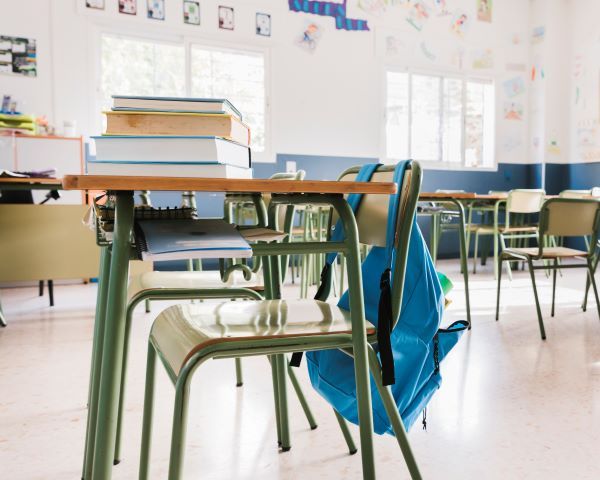
“The country is facing an urgent crisis in education. There are about two million girls and boys out of school, just in the 11-to-19 age group. If we include children aged 4 to 10, the number is certainly even higher. And added to these are millions more who are in school but not learning, at risk of dropping out. It is urgent to invest in school inclusion and in catching up on learning,” said Mônica Dias Pinto, UNICEF’s Chief of Education in Brazil, in a statement.
The causes of school dropout are varied and differ depending on the age group and socioeconomic status of children and adolescents. Among the most common reasons are financial problems, logistical challenges in getting to school, learning difficulties, and a lack of family support. For this reason, to promote student engagement and retention in school and college, it is essential that these institutions be connected to the real world.
The solutions involve promoting public education policies and initiatives in the field of learning methodologies to attract and retain students in school. Ana Paula emphasizes that it is not just a matter of combating dropout rates, but also of addressing extreme poverty in our country to ensure the basic conditions necessary for students to attend and remain in school. She states that this is a problem requiring a systemic solution that must address various areas of social development, health, culture, and public safety.
“There are ongoing discussions in Brazil and around the world regarding student compensation as a way to encourage students to stay in school, especially for young people from less privileged socioeconomic backgrounds. There are some studies exploring how to do this by linking compensation directly to attendance with the goal of completing the program. I believe it is a viable strategy that has already been tested in some countries, including Brazil. We must pay attention to this evidence and urgently put into practice what is already working,” notes Ana Paula.
In addition to the causes mentioned above, students’ lack of interest—especially in high school—is also one of the main reasons why young people drop out of school.
For Maria Inês, making school more appealing is an essential step. “A school based on a 19th-century model no longer holds any appeal or meaning for young people. And, with regard to those who have dropped out, we need to actively seek to bring them back and structure new approaches to formal education around the root causes of dropout.” It’s worth remembering that in a country as unequal as ours, it takes courage to invest in retention scholarships so that young people are respected as being in a critical phase of their educational development.”
Adriana points out that the high dropout rates and lack of interest indicate that many young people are unable to see a direct connection between what is taught and the world they experience, leading them to drop out of school and seek immediate employment to earn an income. She believes that a transformation of the curriculum and the structure of educational institutions is necessary.
“It is essential to provide a pleasant and welcoming learning environment that attracts and retains students in school and college. It is important that students be heard and respected so that they feel they belong to an educational institution that values diversity and respects students’ individuality. An inclusive school or university can help create a more attractive and engaging environment for students,” adds the Director of Content at Bett Brasil.
Did you like it? Share it on social media:
Categories
- The Future of Education