

Entrepreneurship in Education: Myths, Challenges, and New Opportunities
)
In the new episode of Conexão Bett, guests Bruno Gagliardi—coordinator of the Education Committee of the Brazilian Franchising Association (ABF), CEO of Centro Britânico, and partner in the Happy and Brasil Canadá chains— and Fernanda Tellian, principal of Colégio Objetivo in Caieiras and Mairiporã and franchisee of Centro Britânico and Happy, shared their experiences and insights on the paths available to those who wish to become entrepreneurs in the field of education.
The conversation covered risks, opportunities, and the myths that deter many professionals from this growing market in the franchise industry. Watch the full episode:
Gagliardi is the editor of the book “21 Myths About Starting a Business with Education Franchises”, published by ABF. The book, which compiles testimonials from entrepreneurs in the sector, was born out of a question: Why has education—such an essential field—been losing ground among franchise investors?
“Fifteen years ago, English language schools, in particular, were the stars of the franchising market, but that has changed over time. Today, when we think of franchises, other sectors (fashion, beauty, health, and food) usually come to mind. However, education has unique characteristics, such as revenue predictability and recurring revenue. And our end product—the graduate—is something truly valuable that no other sector delivers,” he emphasized.
The project arose from practical research conducted through the ABF Education Commission. Gagliardi spent three years gathering insights from potential investors at franchise fairs and events, even going so far as to act as a “mystery shopper” to understand what people were saying about the industry.
“I wrote down everything negative people said about education and began compiling the data, identifying 21 key issues involving misconceptions and generalizations. Given this situation, we decided to respond to the market,” he said. ABF currently has 94 franchisees in the education sector, representing approximately R$15 billion in revenue and 3 million students.
In the book, the 21 myths were grouped into five major themes: finance, operations, innovation, purpose, and the market.

Bruno Gagliardi is the editor of the book *21 Myths About Starting a Business with Education Franchises*. Photo: Bett Brasil.
“Many people believe that opening a school is too expensive, that only those in the field can succeed, that education doesn’t innovate, that purpose and profit don’t go hand in hand, and that the market is saturated. But reality shows the opposite: school chains have been reinventing themselves, introducing new formats and business models,” explained Gagliardi.
Lessons Learned and Challenges Faced by Those Involved in Educational Entrepreneurship
With more than three decades of experience, Fernanda has firsthand knowledge of the challenges involved in turning a mission into a sustainable business.
“I sort of stumbled into the education franchise business, but I’ve learned that if the work is done well, there’s plenty of room for growth. The biggest challenge for entrepreneurs in this field is balancing their mission with business management. If the school isn’t financially healthy, there’s no way to invest in innovation or improve teaching,” he said.
She emphasizes the importance of planning and choosing the right school system: “Before opening a franchise, you need to ask yourself, ‘How do I want my students to graduate?’ That answer determines the type of school or school system you should partner with. After that, it’s essential to talk to other franchisees—they’ll tell you about both the good and the challenging aspects,” she said.
Another point highlighted by Fernanda is the importance of the initial consultation—a phase she herself is structuring to offer to those interested in opening franchises in the education sector. “A lot of people say, ‘I want to start a business, I have the money, I’ve already thought about the structure… but how do I get started?’ That’s where the consultant comes in—someone with practical experience who can guide you through the first steps,” she explains.
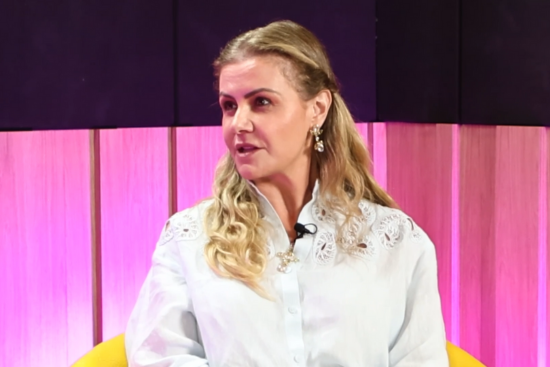
Fernanda Tellian highlights the importance of active listening in the education sector. Photo: Bett Brasil.
According to her, this type of guidance is a major advantage. “It’s not that things won’t work out without consulting, but it shortens the process: it saves time, prevents mistakes, and increases the chances of success,” she emphasizes.
An Industry in Transition and Recovery
Gagliardi believes that the education franchise market is undergoing a period of renewal and maturation. The longevity of the brands, he says, is proof of the sector's ability to adapt.
“If we add up the ages of the 94 educational brands in the ABF, we have more than a thousand years of combined experience. That shows resilience. The British Center is 56 years old and continues to grow. Unlike passing fads like popsicle shops or nail salons, education is solid and doesn’t go away.”
One of the trends gaining momentum is the franchised school model, which expands its scope of operations by bringing together various solutions under one roof.
“We have a school in São Bernardo that’s like a ‘school mall,’ with a high school, English classes, a cooking school, and a ballet school. It’s a trend: educational centers that offer multiple services and learning experiences. The franchise acts as a strategic partner in this model, providing support in processes, brand building, and credibility,” Bruno noted.
He emphasizes that school administrators need to think like entrepreneurs: how to offer more value to students and their families in the context of demographic changes and increased competition.
“Today, families are having fewer children, and that requires schools to be creative. We need to offer unique features and new solutions, and franchises can be a big help in that regard,” he added.
See also:
- How Data Can Humanize School Management
- Educational marketing is a strategy for strengthening a school's image and increasing enrollment
- ECA Digital: Compliance Guide for Educational Institutions
The Power of Purpose
As the conversation drew to a close, Fernanda Tellian extended an invitation to anyone considering starting a business in the sector: to combine passion, purpose, and business acumen.
“I love what I do, and I believe that anything done with dedication works out. Anyone who cares about people and wants to transform lives will always find a place in education,” she said.
She believes that this is a time for consolidation and reaping the rewards. “The entrepreneurs who stayed the course are now reaping the rewards. Education has gone through challenging times, but those who stayed focused and maintained quality are now seeing the results. And I want to keep investing—because I believe in the transformative power of what we do.”
In addition to YouTube,Conexão Bettis also available on major audio platforms, such asSpotify,Deezer,Apple Podcasts,Amazon Music, andGoogle Podcasts, among others, as well as on theEducador21 website.
The talk show is yet another forum for dialogue at Bett Brasil, featuring various experts who offer a different perspective on the most relevant and current topics in the education sector. Turn on notifications on your favorite platform to be notified whenever a new episode is available.
Share on social media:
Categories
- Educational Management