
From artificial intelligence to the climate crisis in the Amazon and emotional health, Bett Brasil discusses the most pressing challenges in education
)
Welcoming thousands of people daily, Bett Brasil—Latin America’s largest event on Innovation and Technology in Education—served as the stage on its third day (the 7th) for an important announcement focused on the future of education and sustainable development in Brazil’s Northern region, while delving even deeper into debates on contemporary education: in a world driven by artificial intelligence, what remains essentially human and non-negotiable within the school.
During the main plenary session, psychologist and writer Rossandro Klinjey, co-founder and ambassador of Educa, led a candid discussion on the limitations of technology in student education and the importance of the emotional bond between educators and students—something that artificial intelligence will never take away from these professionals.
“Education must recognize that we cannot ‘Uberize’ the process; we must preserve identity whenever possible. Students will remember the school and the teacher who left an emotional mark on them. An analogy is a wake—at that moment, we remember the care we received and the moments we shared together. That is the human connection that keeps the school alive. We have to remember this not only at Bett Brasil, but every day,” said Klinjey.
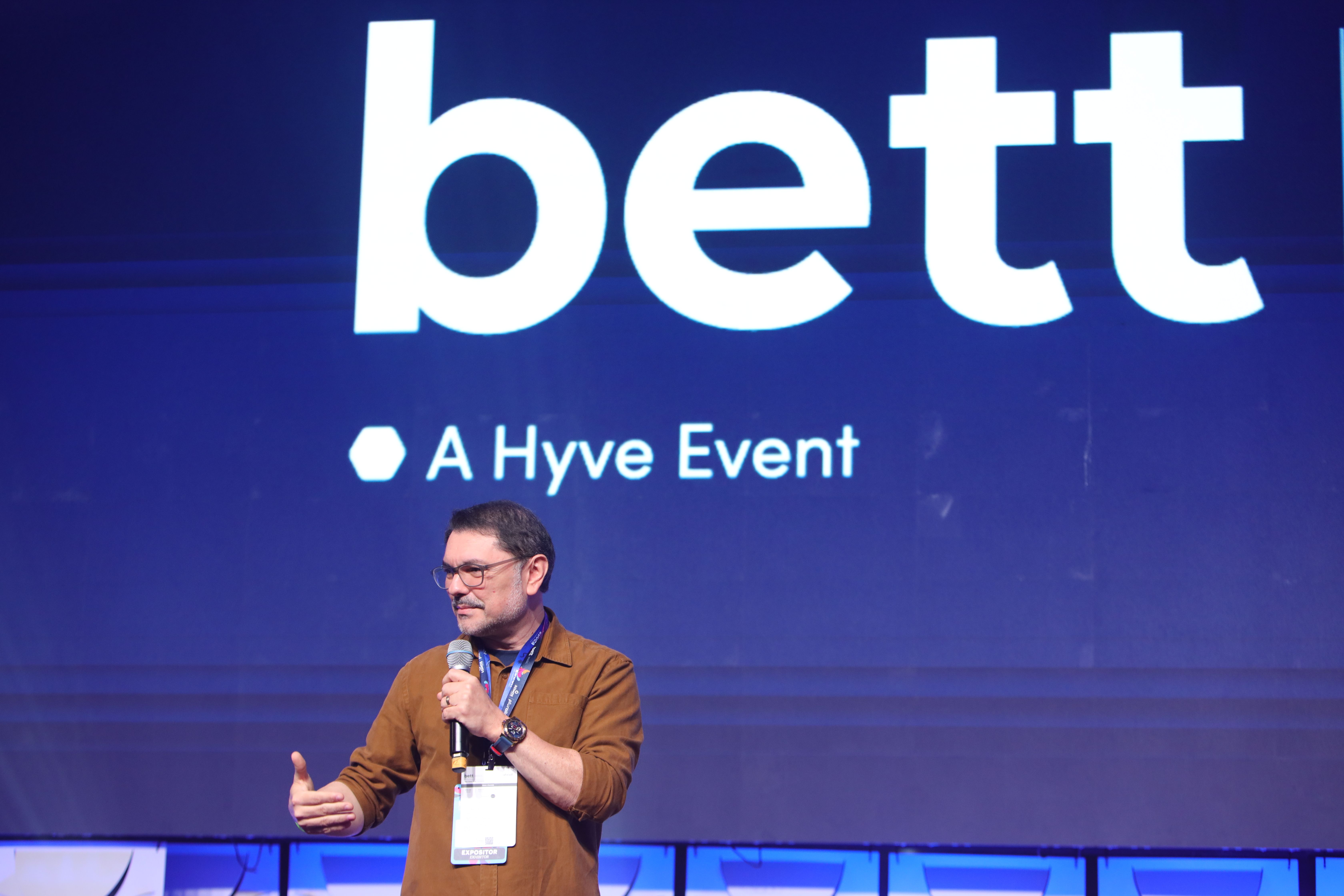
Rossandro Klinjey reflected on the limitations of technology in student education. Photo: Bett Brasil.
Legal Amazon Consortium
At the Saber Educação booth, the Legal Amazon Consortium hosted an important discussion on the impacts of the climate crisis on education and officially launched the Climate Emergency Education Workbooks, an initiative developed under the auspices of the Education Sector Chamber that brings together the nine states of the Legal Amazon, in partnership with UNICEF, Instituto Unibanco, Saber Educação, and Vozes da Educação.
The materials were developed to support school systems, administrators, and educators in preparing for, responding to, and recovering from extreme weather events—a reality that is increasingly part of daily life in schools across the Amazon region. The goal is to provide practical guidance to ensure the continuity of learning, the safety of students, and the strengthening of school communities in emergency situations.
The initiative reinforces the role of education as a strategic tool and broadens the discussion on public policies aimed at building resilience in schools in vulnerable areas.
“The climate crisis is no longer a distant concern; it is already directly affecting the daily lives of thousands of students in the Amazon. Floods, severe droughts, wildfires, and heat waves are disrupting school operations, students’ access to classes, and the safety of school communities. For this reason, these handbooks serve as a practical tool to support school systems and administrators in developing prevention strategies. Written in accessible language and offering practical guidance, the material will serve as a resource for recovery, while always respecting the local realities of the Amazon region,” said Vanessa Duarte, Executive Secretary of the Legal Amazon Consortium.
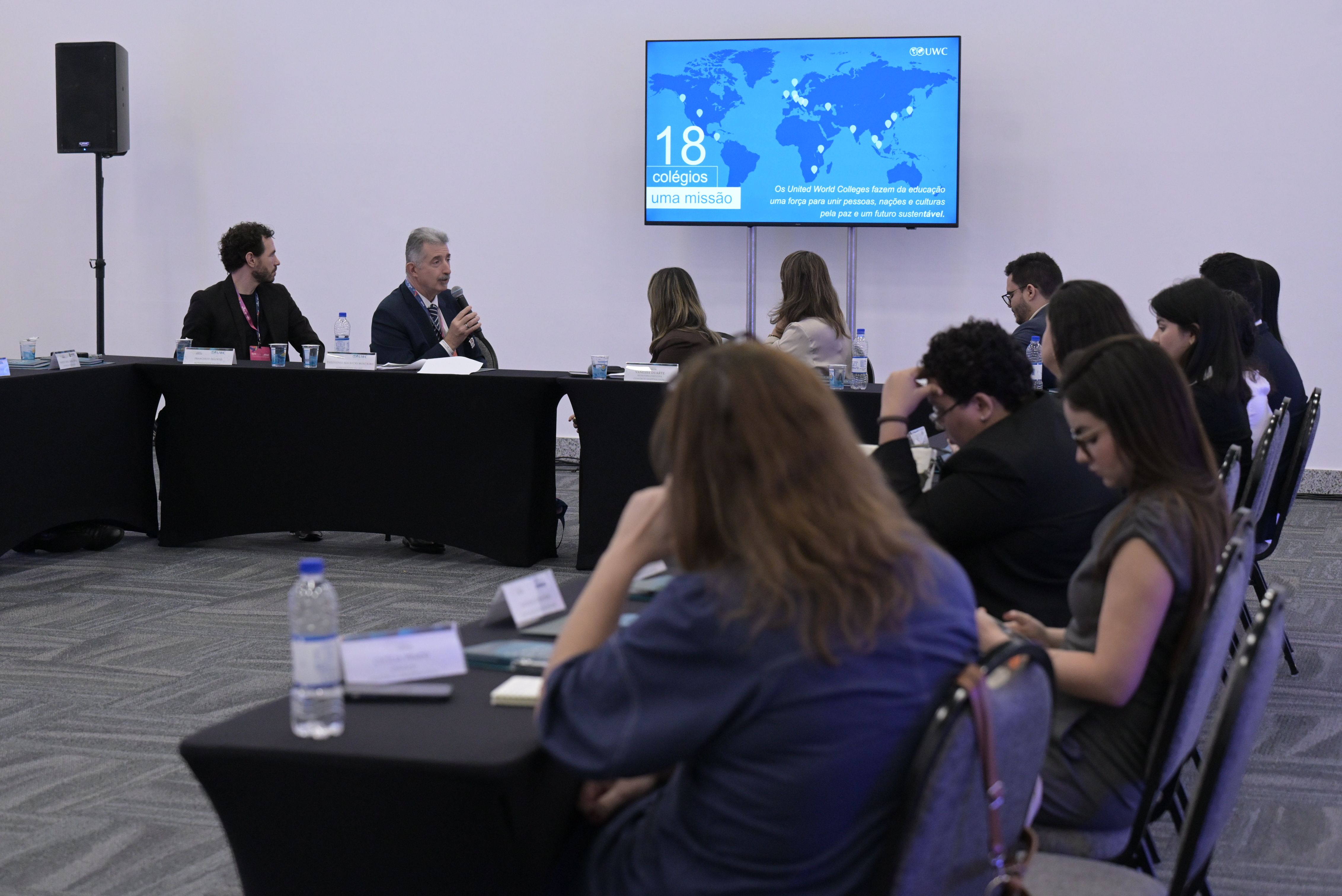
Partnership between the Legal Amazon Consortium and UWC Brazil signed during a meeting at Bett Brasil. Photo: Bett Brasil.
Another high-profile announcement was the signing of a partnership between the Legal Amazon Consortium and UWC Brazil (United World Colleges) to establish an international school in the Amazon. The initiative aims to expand educational opportunities in the region and develop young leaders in a multicultural environment, with a focus on global challenges, sustainability, and innovation.
Currently, the UWC network comprises 18 schools around the world and brings together students from more than 150 countries, establishing itself as one of the leading global benchmarks in international education. The proposal for the Amazon is to create a school that is integrated into the local communities, connecting science, culture, and nature, as well as promoting cultural exchange and strengthening sustainable development in the region.
The project also aims to promote Amazonian knowledge and prepare students to address the climate, economic, and social changes affecting the contemporary world.
“The Amazon wasn’t a choice; this school had to be there. The Amazon calls for our commitment to education in this region—and it must also be at the center of global discussions on education. This partnership represents an important step toward creating concrete opportunities for young people in the region, linking sustainable development, innovation, and the development of leaders prepared to make their mark on the world,” said Theotonio Monteiro, a representative of UWC Brazil.
Basic Education Conference
At the Basic Education Congress, the debate took on an even more timely dimension as it addressed the impact of algorithms and misinformation on students’ education. Dora Kaufman, a professor at PUC-SP, and Alexandre Sayad, director of ZeitGeist and a UNESCO consultant, discussed the role of schools in a reality shaped by digital platforms.
Dora Kaufman emphasized that the debate goes beyond the technological dimension and directly involves civic education. “Schools need to provide three approaches to education: ‘educating about AI, for AI, and also with AI.’ We are facing a scenario of uncertainty that requires new human, digital, and ethical skills. Rather than standardizing education, artificial intelligence can help personalize learning, provided there is pedagogical intent and consistent media literacy education,” said the professor.

Alexandre Sayad and Dora Kaufman during a panel at the Basic Education Conference. Photo: Bett Brasil.
According to the UNESCO consultant, it is no longer enough to simply teach content. “We need to prepare students to understand how artificial intelligence influences decisions, narratives, and social relationships. The big challenge now is to develop AI literacy and critical thinking so that children and adolescents know how to interpret, question, and use these technologies responsibly,” Sayad emphasized.
EdTech Awards
At Arena Startups, the Bett Brasil EdTech Awards ceremony recognized initiatives that are actively addressing challenges such as personalized learning, inclusion, and engagement, reinforcing the role of the innovation ecosystem in transforming education. The award winners announced today were: in the Product-Market Fit category, Prol Educa; and in the Product-Solution Fit category, muda.
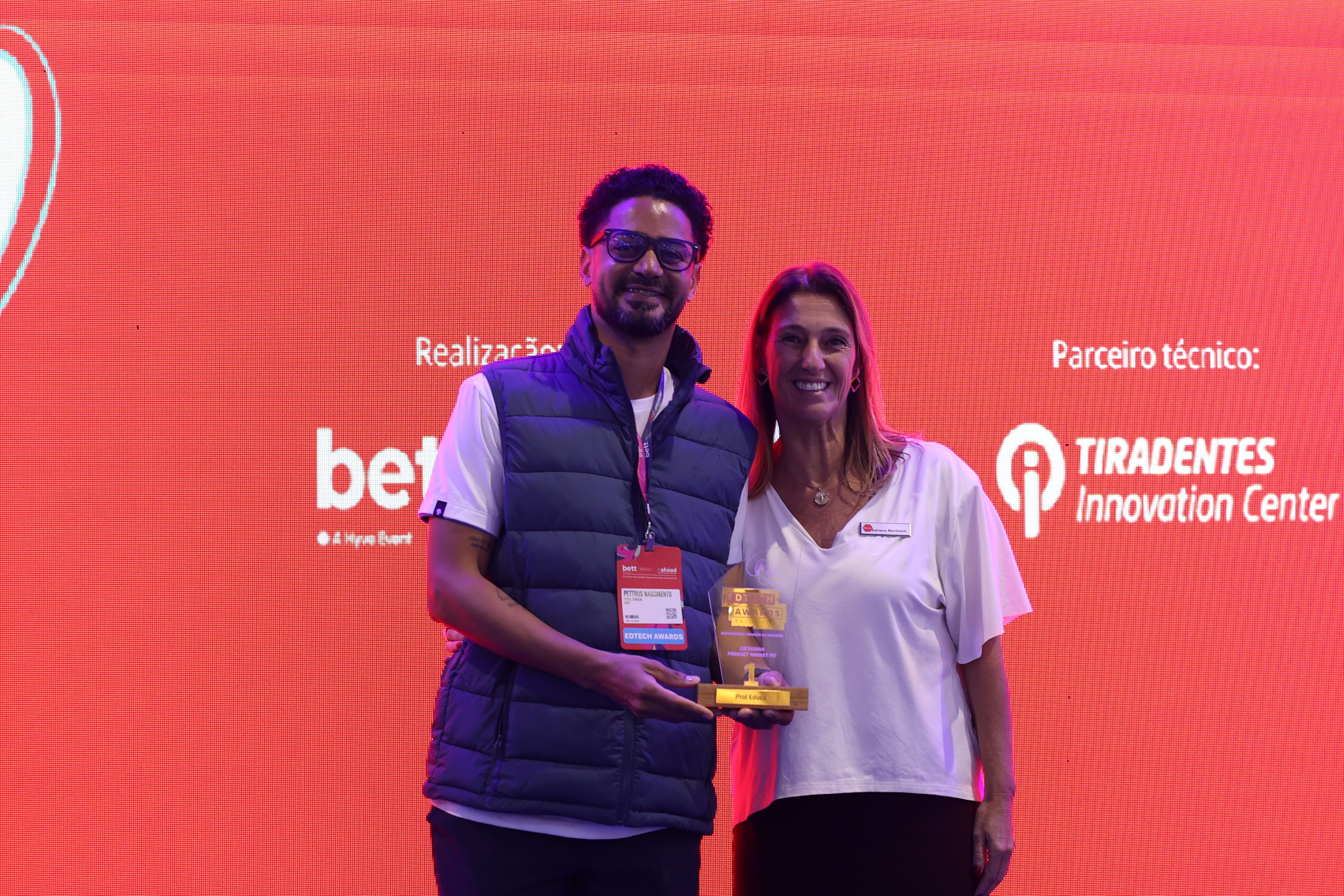
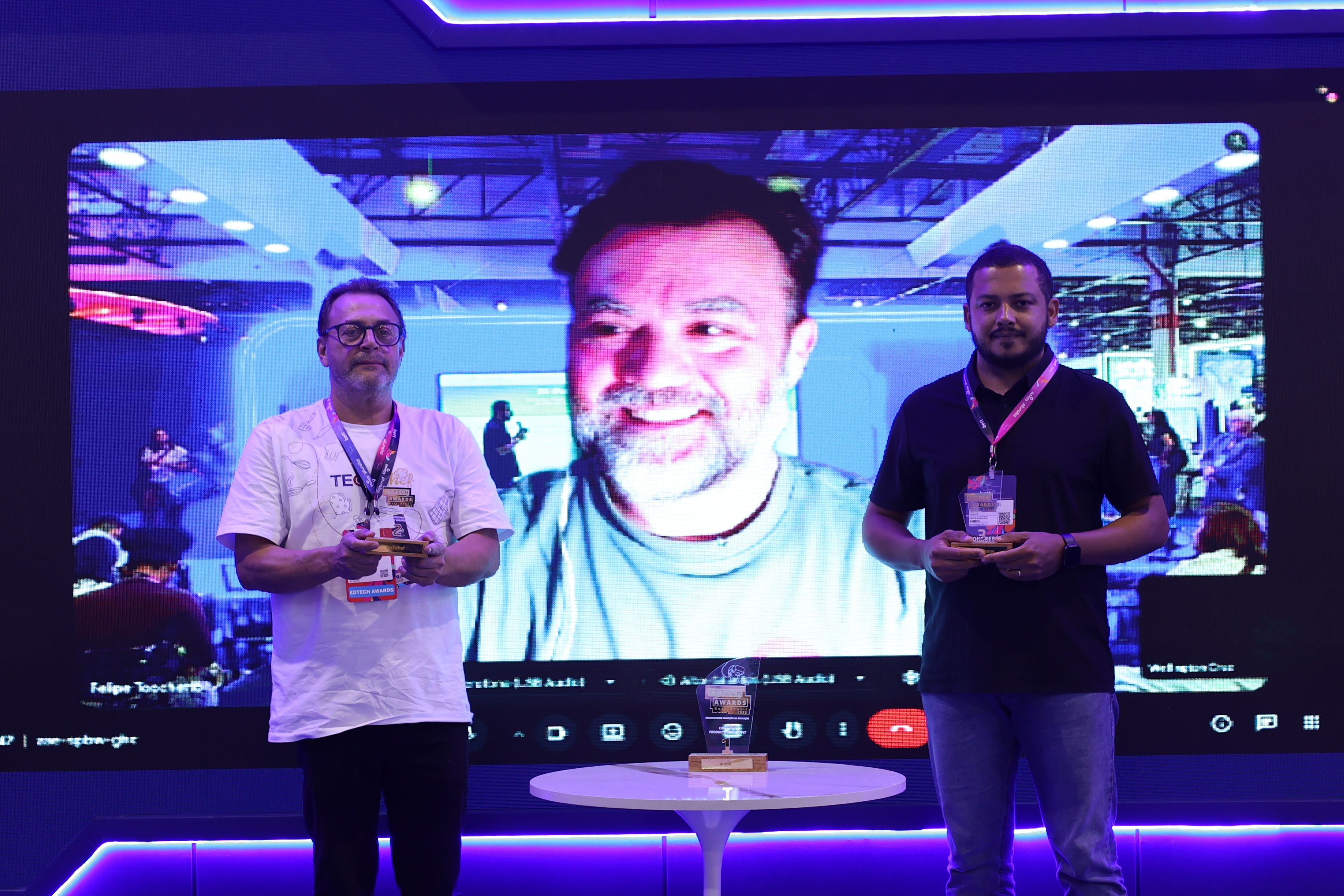
Prol Educa (left) and Muda (center-right in the photo) were the winners of the awards. Photo: Bett Brasil.
Mental Health in Schools
Bett Brasil is also embracing the “Aquarium” format, promoting discussions that broaden perspectives on the topics covered, with active audience participation. Throughout the event, the stage becomes a shared space where speakers and participants continuously exchange knowledge.
Mental health—a topic increasingly present in the news and in schools—was a highlight of the talk given by Viviane Mosé, director of Usina Pensamento, within this space. The expert offered a hard-hitting assessment of the current landscape.
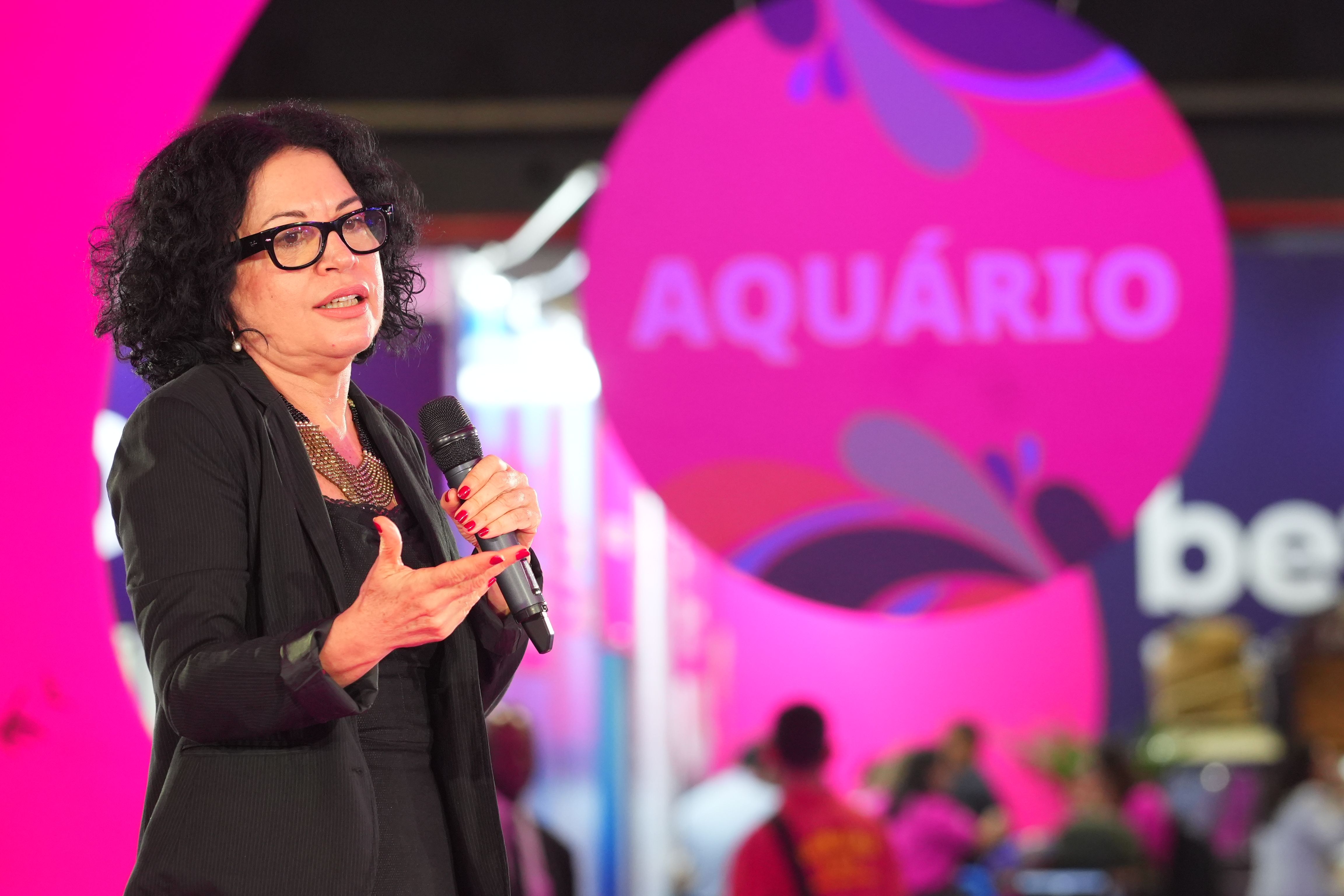
Viviane Mosé emphasized the importance of caring for people. Photo: Bett Brasil.
“We are living in a time of collective emotional exhaustion, and schools are at the center of this process. It’s not enough to simply incorporate technology; we need to reorganize schools to take care of the people within them,” Mosé said.
Between profound reflections and concrete solutions, the third day of the event made one thing clear: in the midst of the technological revolution, education’s greatest challenge is not just to innovate, but to not lose sight of what no machine can replace.
Share on social media:
Categories
- The Future of Education
- Educational Management