

Emotional Balance and Human Connections: Education Inside and Outside the Classroom
)
The 30th edition of Bett Brasil featured a relaxed roundtable discussion on the development of social-emotional skills. Drawing on their diverse perspectives and experiences, historian and writer Leandro Karnal and singer and educator Leo Chaves discussed how emotional balance and self-awareness are fundamental pillars for learning and for building healthy relationships both inside and outside of school. The discussion was moderated by educator Giselle Fouyer.
During the panel discussion titled “Social-Emotional Learning: The Power of Self-Regulation in Building Bonds,” the role of emotional self-regulation in strengthening interpersonal bonds and in overcoming everyday challenges in educational and family settings was highlighted. The discussion also drew attention to the importance of empathy, active listening, and creating more welcoming and humane environments in educational institutions and at home.
Karnal began the conversation with a critique of the historical conception of education. “For centuries, schools were designed to train workers and soldiers. Today, they need to be caring and holistic. Students are not just content; they are whole human beings,” he said.
For the thinker, although subjects such as Portuguese and mathematics are indispensable, other areas such as the arts, dance, and theater are also fundamental to the student’s full development in relation to the subject matter and the educator. “You may forget what you’ve learned, but you never forget who taught you. Human relationships are what endure,” he emphasized.
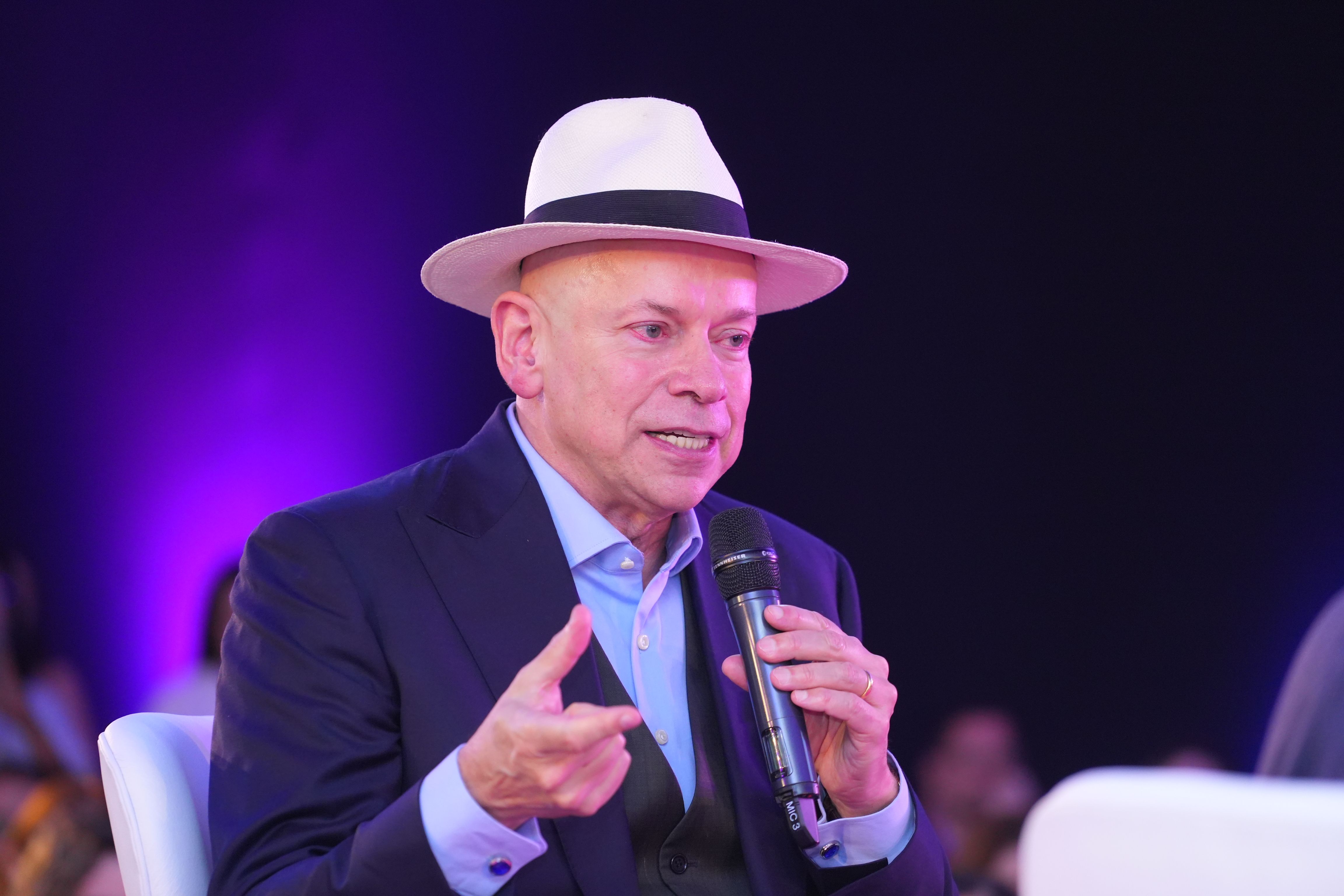
Karnal was one of the speakers at the 30th edition of Bett Brasil. Photo: Bett Brasil.
Next, Leo Chaves shared his personal journey. Renowned for his artistic career, he described how fame had distanced him from his true self and his family relationships. “I was living as a character inside my own home. I was an absent father, just like a teacher who merely hands out the material without explaining it or building connections.” As he sought to learn more about emotional education, he began to redefine his role both at home and outside of it. “To educate is to set an example, to dedicate time, and to participate. We need to embrace this new generation and view it with sensitivity,” he said.
The discussion was enriched by the audience’s active participation. A teacher raised the question of how to balance time between professional and family demands, as well as how to help young people set and achieve their goals.
Chaves emphasized the power of practical examples, while Karnal pointed out: “Children forgive parents who are conservative or liberal, but not absent parents. We need to work with the reality of the time we have, not with the fantasy of a margarine commercial.”

"We need to embrace this new generation and view it with sensitivity," said Leo Chaves. Photo: Bett Brasil.
The roundtable discussion also featured a moving testimony from a 23-year-old man, who described how the traditional educational model pushed him away from school and made him doubt himself. While participating in a nationwide learning residency program, he rediscovered the joy of learning and gained a broader perspective on the country’s educational inequalities and challenges. Today, he is studying sociology.
In the end, the participants sent a clear message: education is an ongoing process of presence, listening, and transformation—for both those who teach and those who learn. Amid the pressures of daily life and social and technological changes, we must reclaim the human touch in our relationships and the power of emotional bonds.
Karnal summed it up: “Education is like a bonsai tree; it requires daily care—it’s not agribusiness.” A metaphor that invites educators, families, and institutions to gently nurture the holistic development of every human being.
Share on social media:
Categories
- Learning Strategies