
Experts advocate for universities that are more closely connected to the job market and social change
)
The rapid changes in the labor market—driven by technology, social changes, and new professional demands—are calling for a fundamental reevaluation of the role of universities. The topic was discussed during one of the panel discussions at the CIEE Ahead Forum—Higher Education— at the 31st edition of Bett Brasil.
The meeting brought together Porto Digital CEO Pierre Lucena, UNIP Director of Internships and Careers Melissa Larrabure, Quark co-founder Ana Uriarte, and CIEE Superintendent Rodrigo Dib, who discussed the impacts of educational changes and the need to align higher education with the real demands of the job market.
During her remarks, Lucena emphasized that higher education is undergoing a period of significant transition, marked by a historic decline in demand for certain traditional programs, such as Business Administration, as well as a growing disengagement among students.
According to him, many institutions still operate under an outdated mindset, in which the university is treated as an end in itself, rather than as a tool for professional and social development. “The university needs to stop being viewed as an end and start being understood as a means for creating opportunities and transforming lives,” he said.
The CEO of Porto Digital, who is also a professor at the Federal University of Pernambuco, drew attention to the high youth unemployment rate and the difficulty universities face in addressing educational deficiencies that have accumulated since elementary school.
“Today, people want to hold universities accountable for solving structural problems that begin in elementary and high school. There is a significant gap in these students’ foundational education, but we cannot blame universities for this,” he emphasized.

Pierre Lucena discussed the transition from college to the workforce. Photo: Bett Brasil.
Dib agreed with Lucena. “Basic education remains one of the major challenges facing Brazilian education. Many young people enter higher education with significant gaps in their knowledge that must be taken into account during this transition, ” he said.
When discussing initiatives focused on inclusion and employability, Lucena cited the Embarque Digital program, created by the Recife city government in partnership with Porto Digital, to expand young people’s access to technology education. The initiative offers scholarships to public school students who performed well on the Enem but have not yet been able to enroll in college.
According to the expert, the program has directly contributed to providing more opportunities for young people, especially Black and mixed-race youth and those from low-income families.
Speaking on behalf of UNIP, Melissa emphasized the importance of bringing businesses closer to the university environment to make education more practical and better aligned with current professional demands.
In her view, students need to gain hands-on experience while still in college, through frequent interaction with companies, group activities, and real-world market opportunities.
“It’s important to bring companies into the university so that students can gain a practical understanding of the job market and envision possible career paths,” he explained.
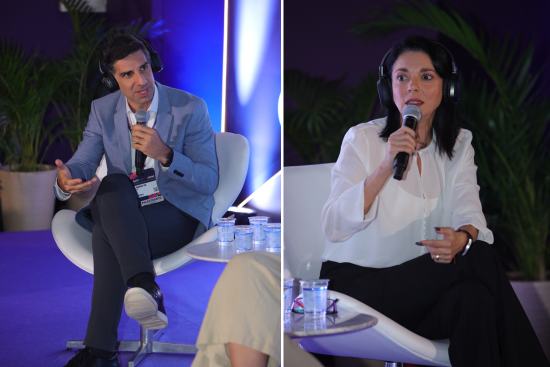
Rodrigo Dib and Melissa Larrabure discussed the challenges college students face in the job market. Photo: Bett Brasil.
Melissa also pointed out that the new generation is highly stimulated, which calls for more dynamic engagement and learning strategies. “Today’s young people need you to show them the way. It’s an overstimulated generation that demands experiences, hands-on learning, and immersive approaches capable of holding their attention,” she said.
Along the same lines, Ana presented the work carried out by Quark, a startup focused on training high school and vocational school students in behavioral skills for the job market. The executive highlighted the importance of developing social-emotional skills aligned with new professional requirements, especially for low-income students.
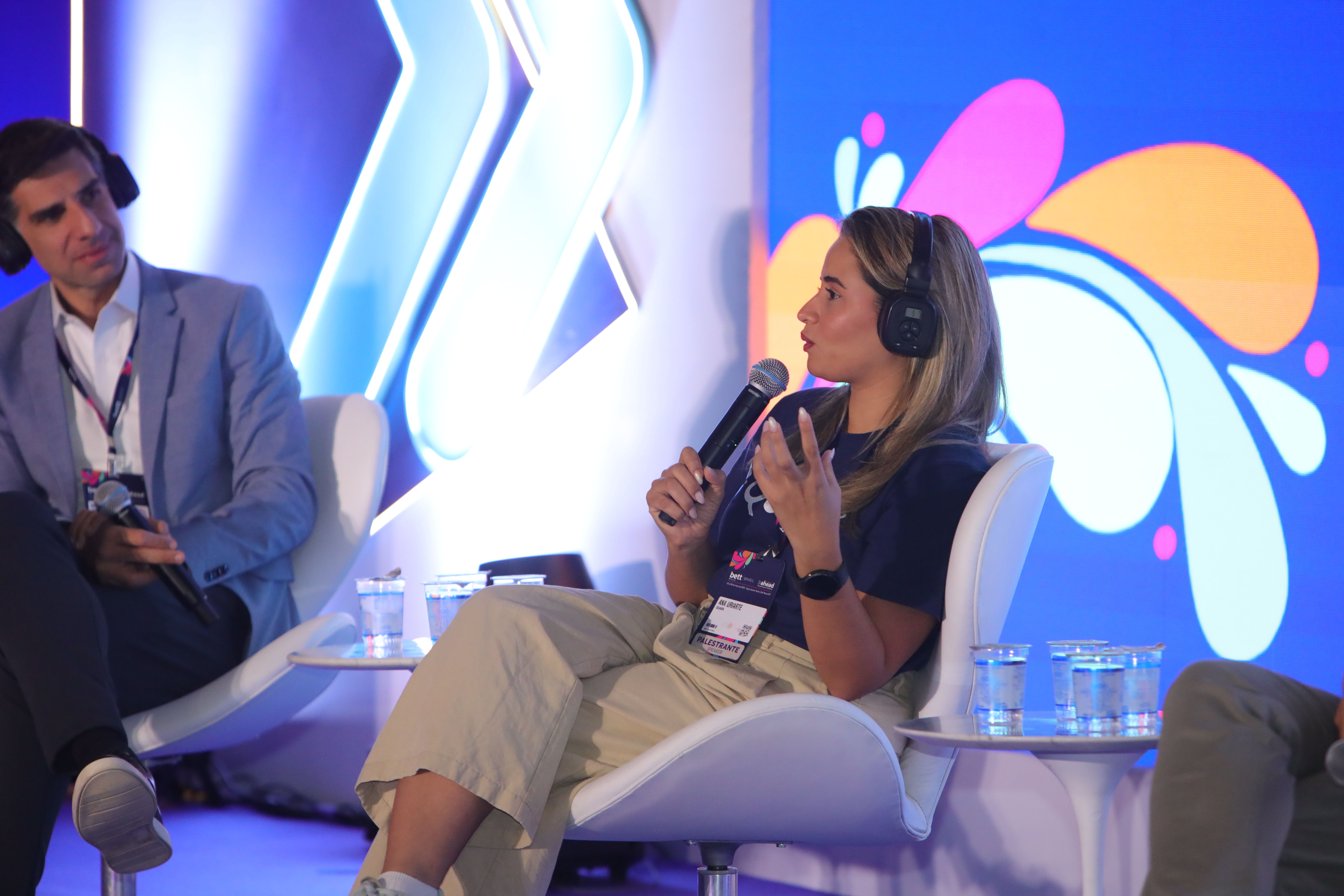
Ana Uriarte highlighted the importance of social-emotional skills in line with new professional demands. Photo: Bett Brasil.
To conclude the panel, Rodrigo Dib discussed the impacts of regulatory changes on higher education. Dib believes that the new education legislation is likely to slow the growth of distance learning and reignite the demand for in-person instruction.
Throughout the debate, participants argued that the future of universities depends on the institutions’ ability to offer more practical education programs that are connected to the job market and aligned with the expectations of this generation.
Share on social media:
Categories
- Educational Management