
CIEE Ahead Forum – Higher Education Expands the Debate on Innovation, Work, and the Future of Universities at Bett Brasil
)
At a time when higher education is under pressure to respond to changes in the labor market, technology, and new social demands, Bett Brasil has opened the floor to an increasingly urgent debate: How can we prepare institutions, faculty, and students for a constantly changing future?
It was against this backdrop that the Ahead CIEE Forum—Higher Education took place during the event’s 31st edition, from May 5 to 8, at Expo Center Norte, bringing together academic leaders, experts, and representatives from companies and civil society organizations for a program dedicated to the challenges and future of higher and vocational education in the country.
Held for the first time in partnership with the Center for Business-School Integration (CIEE), the Forum is a strategic initiative by Bett Brasil that brings together two worlds that are now inextricably linked: education and employability.
For Rodrigo Dib, CIEE’s Superintendent of Institutional Affairs and Innovation, the relevance of the debate is directly linked to the current situation the country is facing.
“Bett Brasil has never been more necessary. I think that for our country, at a time when we’re seeing this debate between education and the new world of work, it has never been more necessary to discuss innovation in education. And more than that, on this Forum stage, to bring this connection—between education and the job market—into the discussion. If we want to prepare young people to lead productive lives, we need to talk about work,” he said.
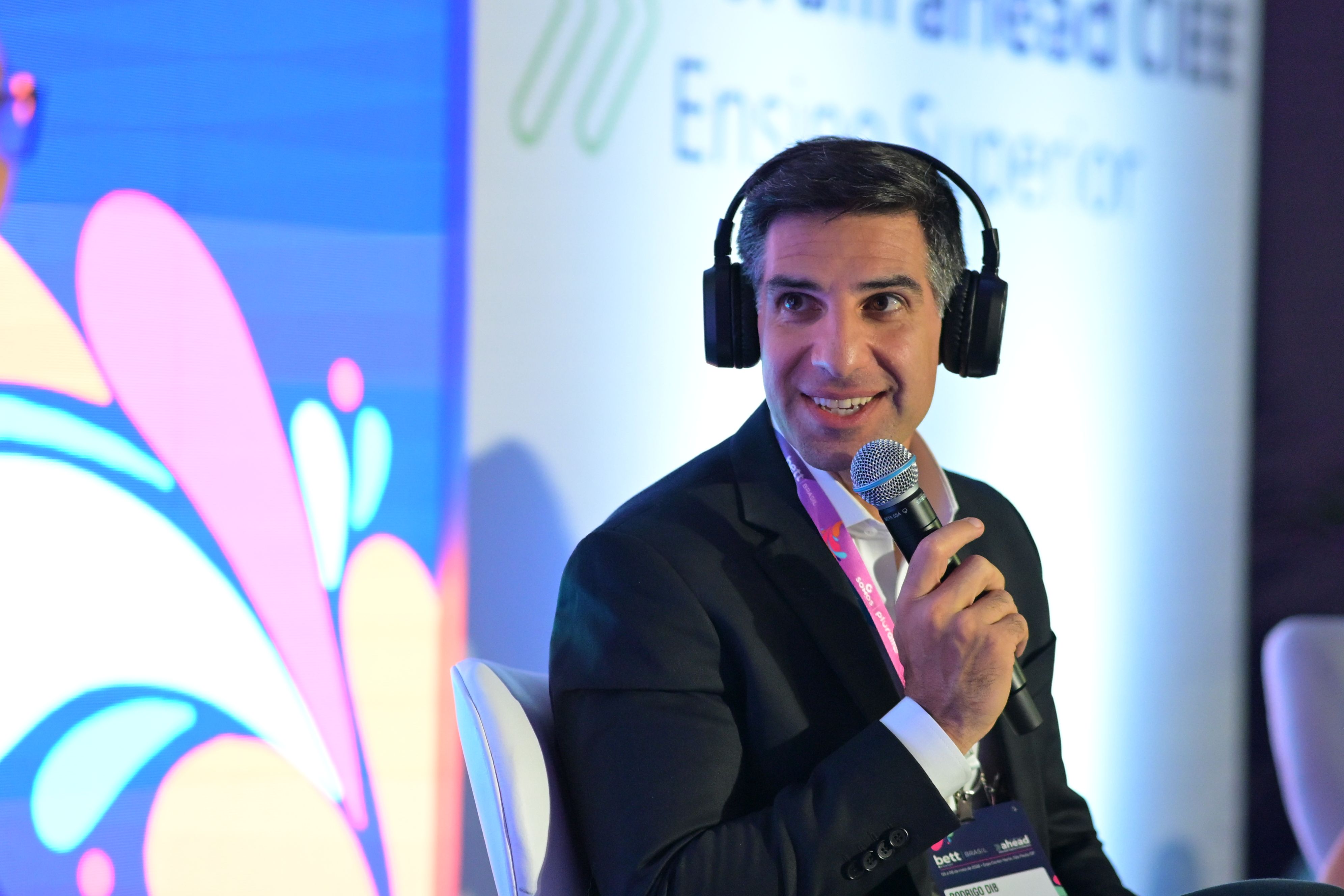
Rodrigo Dib during a session at the CIEE Ahead Forum. Photo: Bett Brasil.
With more than 30 speakers and an exhibition area dedicated to solution providers for the sector, the Ahead CIEE Forum—Higher Education has become a venue for the practical exchange of experiences, trends, and models that are already beginning to have an impact on universities and educational institutions throughout Brazil.
Artificial intelligence, innovation, and new teaching models at the center of the discussions
Artificial intelligence was one of the recurring themes in the program. During the panel discussion “Higher Education in (R)evolution: AI as a Driver of Innovation and New Educational Models,” FIAP’s director of graduate studies, Andrea Paiva, discussed how artificial intelligence is already integrated into the academic structure of many institutions, but noted that the current challenge is to understand the impact of the expansion of these tools on the learning process.
“At the end of the day, we need to educate people to think critically and to be competent and efficient, and that is not the role of AI—it is the role of the teacher,” he emphasized.
This view was also shared by Heloisa Avilez, Pearson’s Director of Higher Education for Latin America, who presented the company’s initiatives aimed at personalizing education and combating student dropout rates.According to her, the development of AI-based educational solutions was driven by research conducted with institutions in Latin American countries, particularly Mexico and Colombia.

Andrea Paiva reflected on the impact of AI on the learning process. Photo: Bett Brasil.
Another highlight of the program was the panel discussion “Higher Education Institutions in the Innovation Game: Education, Investment, and Value Creation,” which focused on Corporate Venture Capital (CVC) and showed how higher education institutions are beginning to serve as business hubs, connecting startups, companies, and investors.
Jeferson Vinhas Ferreira, CEO and vice president of Grupo Integrado, emphasized that the movement is still in its infancy in Brazil. “In the higher education market, only three institutions have taken the plunge into establishing corporate venture capital initiatives out of a total of more than 2,000 educational institutions,” he said.
Guilherme Skaf Amorim, director of Rosey Ventures, noted that investments made by university-affiliated funds go beyond financial returns and seek to establish strategic ties with the groups’ educational operations.
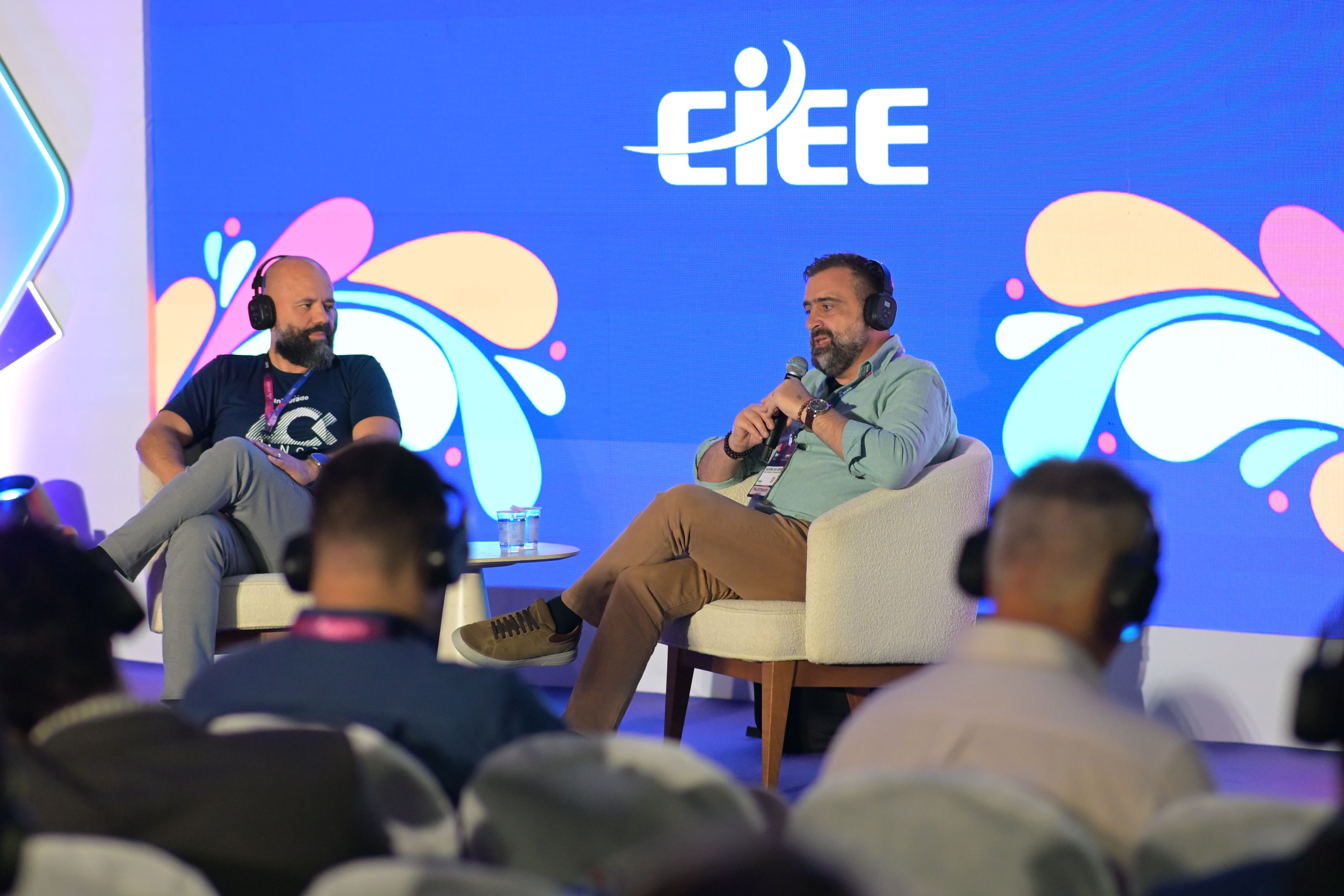
Corporate Venture Capital in Higher Education was the topic of the CIEE Ahead Forum. Photo: Bett Brasil.
Over the course of the four days, other topics also came to the fore, such as the role of companies in vocational training, adaptive learning using AI, data analysis applied to academic management, the impact of new skills on the redesign of higher education, and new trends in teacher training.
Speakers Highlight the Exchange of Experiences and the Impact of the Forum
The CIEE Ahead Forum – Higher Education stood out as a space for connecting different sectors of the educational ecosystem. For many of the guest speakers, the experience of participating in the program was marked by the opportunity to share best practices, broaden dialogue, and foster collective reflection on the future of education and work in Brazil.
Pierre Lucena, CEO of Porto Digital, highlighted the importance of the debate organized by the Forum. “I had never attended the São Paulo edition of Bett Brasil before, and I’m finding it incredible. Discussing education is the only way we have to promote large-scale social and economic transformation and ensure that Brazil can carve out a place for itself in the so-called knowledge economy,” he said.
The executive also emphasized the need to expand access to higher-quality education in an increasingly competitive global environment.
For her part, Daniela Redondo, executive director of the Coca-Cola Brazil Institute, highlighted the importance of the dialogue between the education sector and the private sector fostered by the event. “Bett Brasil plays a key role in fostering dialogue between the education sector and the private sector, which is where we will drive productivity for the country. It was a very enriching experience to be on stage at the Ahead Forum debating, conversing, and exchanging ideas, because we always learn,” she said.
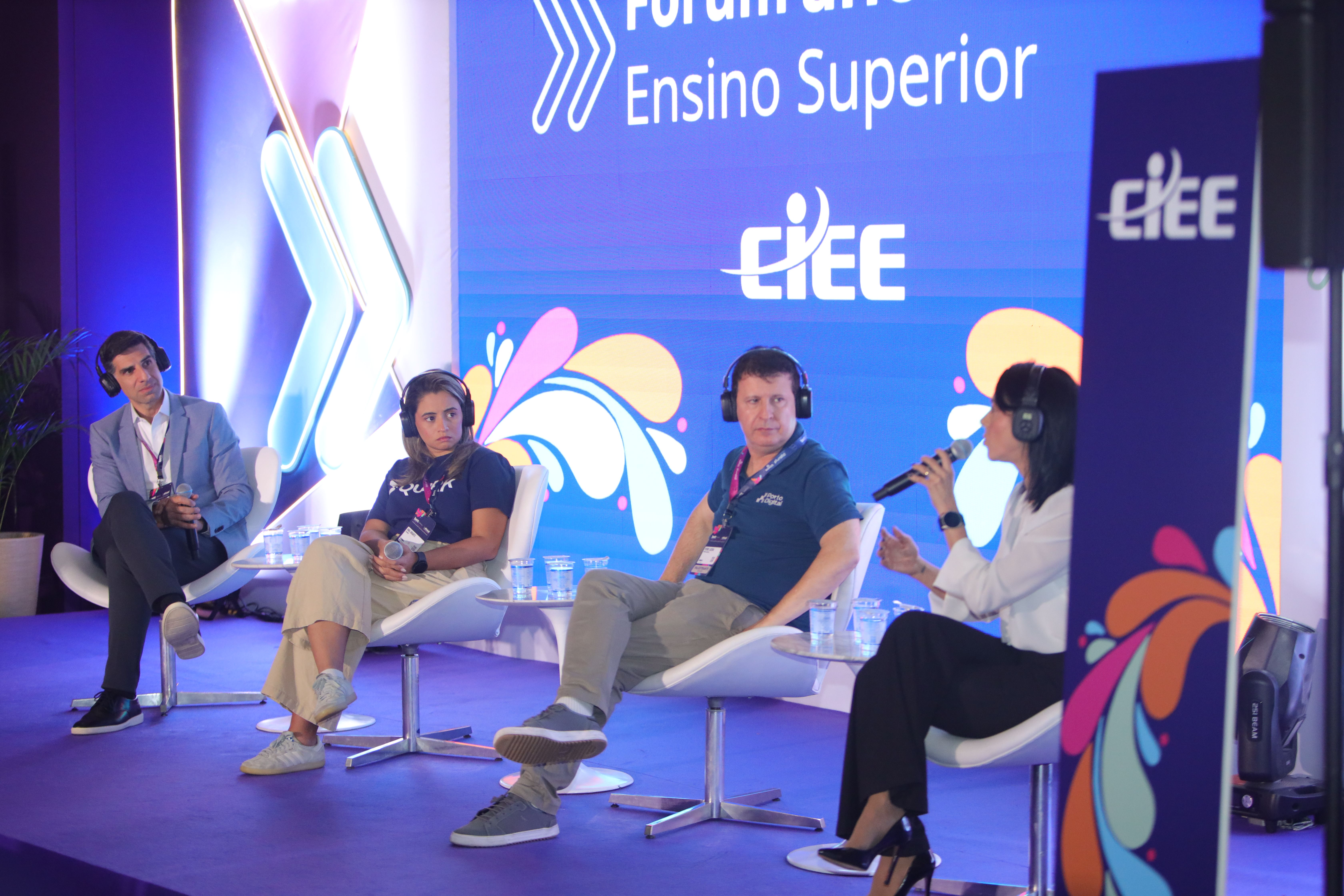
The panel discussed the role of universities in vocational and technical education. Photo: Bett Brasil.
The experience was also praised by Melissa Larrabure, Director of Internships and Careers at Universidade Paulista (UNIP), who highlighted the impact of the connections fostered by the event. “It was a priceless experience. It’s an event that brings together great people, brilliant minds, and leading fields. For education, this is a giant leap forward. There are so many ideas and exchanges that need to take place all the time,” she commented.
Along the same lines, the president of the Municipal University of São Caetano do Sul (USCS), Leandro Prearo, emphasized the value of the exchange of experiences facilitated by Bett Brasil. “It was really great to be able to share a little about my day-to-day life and talk about data in higher education. After the event, in just a few conversations, I’ve already learned more than I did in the entire year. That’s the role of Bett: to promote networking and the exchange of experiences,” he summarized.
The speakers’ perspectives underscored the importance of the Ahead CIEE Forum—Higher Education in fostering an environment that brings together universities, companies, social organizations, and experts to address common challenges, especially in a context of rapid technological and social change.
Share on social media:
Categories
- The Future of Education
- Educational Management