

Managers' Forum Promotes Essential Discussions on School Management in Basic Education
)
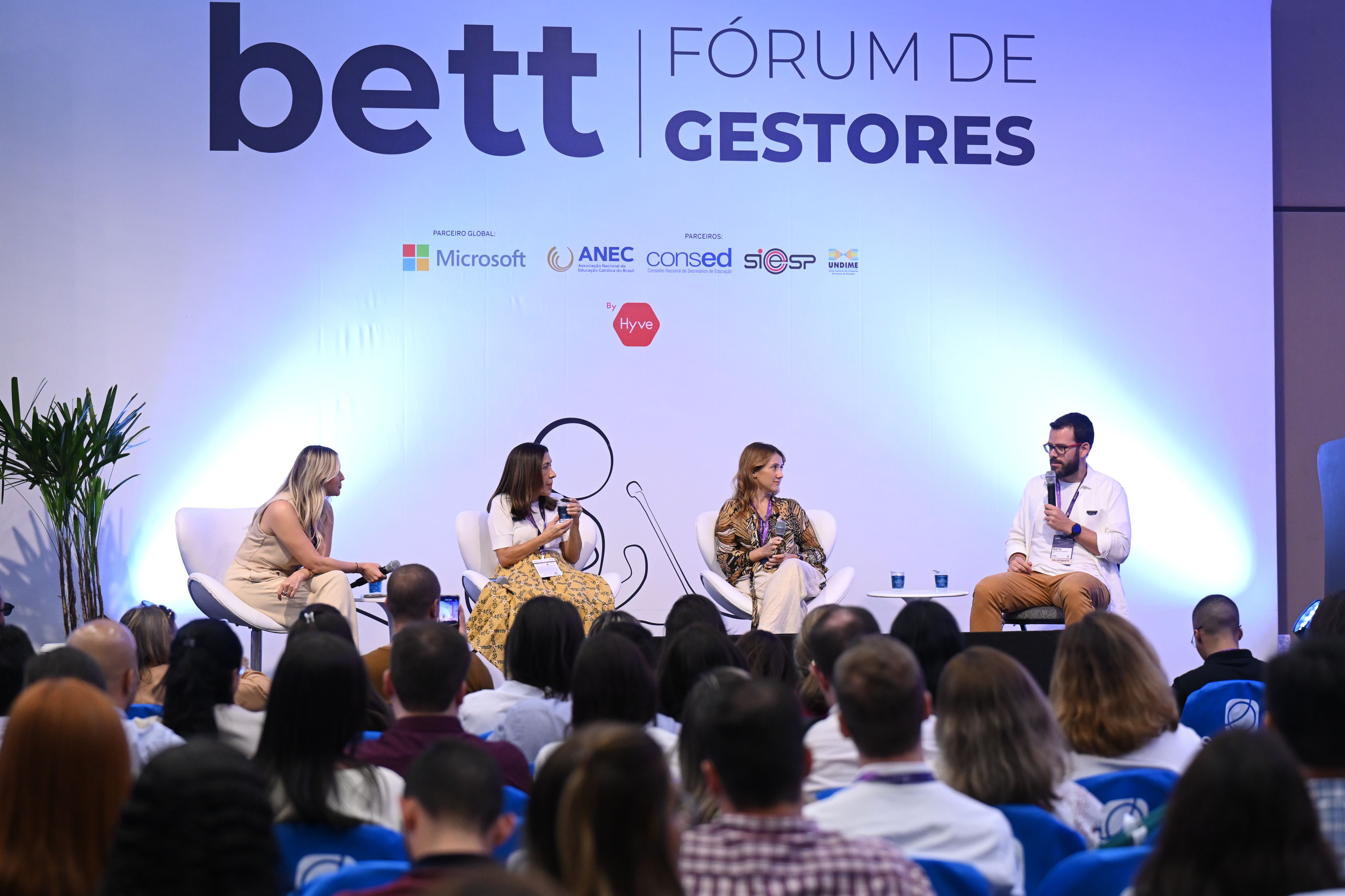
The Managers’ Forum, which has established itself as a platform for generating ideas and solutions in educational management, brought together strategic perspectives on public and private education during the 29th edition of Bett Brasil. Inclusive education and the challenges of balancing rights and responsibilities were among the key topics discussed.
Liliane Garcez, general coordinator of the Ministry of Education’s Directorate of Special Education Policies from an Inclusive Perspective, discussed the work that the Secretariat of Continuing Education, Literacy, Diversity, and Inclusion (Secadi) has been doing to ensure universal access for students with special needs.
“We are giving absolute priority to early childhood education and focusing on those who have never had access to it: Quilombolas and Indigenous peoples. The system is still very unequal, and we must combat these inequalities with an eye toward social transformation,” Liliane said. Also participating in the panel were José Antonio Figueiredo Antiório, president of the Union of Educational Institutions in the State of São Paulo (SIEEESP); Luciana Winck Correa, vice principal for academic affairs at the João Paulo II Marist School; and Deigles Amaro, a specialist in educational management at the Rodrigo Mendes Institute.
Another topic was family involvement in school and in their children’s learning. According to Roberta Bento, an expert on family-school relationships and co-founder of SOS Educação, “discussions like this are essential, because it is very difficult for schools to face the challenges of educating digital natives on their own. Families are also facing these challenges at home. And the key to educating these digital natives so they can handle the challenges they’ll face lies in a family-school partnership. The solution is for families and schools to work together, hand in hand,” said Roberta.
The Future of Work
Another important discussion addressed the transformations in the world of work, in conjunction with climate change. Rather than attempting to predict the jobs of the future—which always prove inaccurate—or discussing desirable skills—which have already been cataloged in more than 300 categories—the panelists highlighted key points regarding how companies and citizens will respond to a far more complex context of societal transformations and adaptations.
There was a consensus among the panelists that education is a unifying force for overcoming adverse circumstances. “The future of professions is vast, and we must prepare young people to thrive in this new world, aware that new and positive transformations must come from people themselves,” stated Lucília Guerra, director of technical, pedagogical, and management training at the Paula Souza Center.
When asked to each identify just one skill as essential for young people, the panelists cited solidarity, critical thinking, and creativity.
Solidarity was the competency chosen by Luciano Meira, an adjunct professor at CESAR School. “For me, solidarity isn’t an abstract value, but something that takes on practical meaning in everyday life. I strongly believe in our ability to continually reshape the future.”
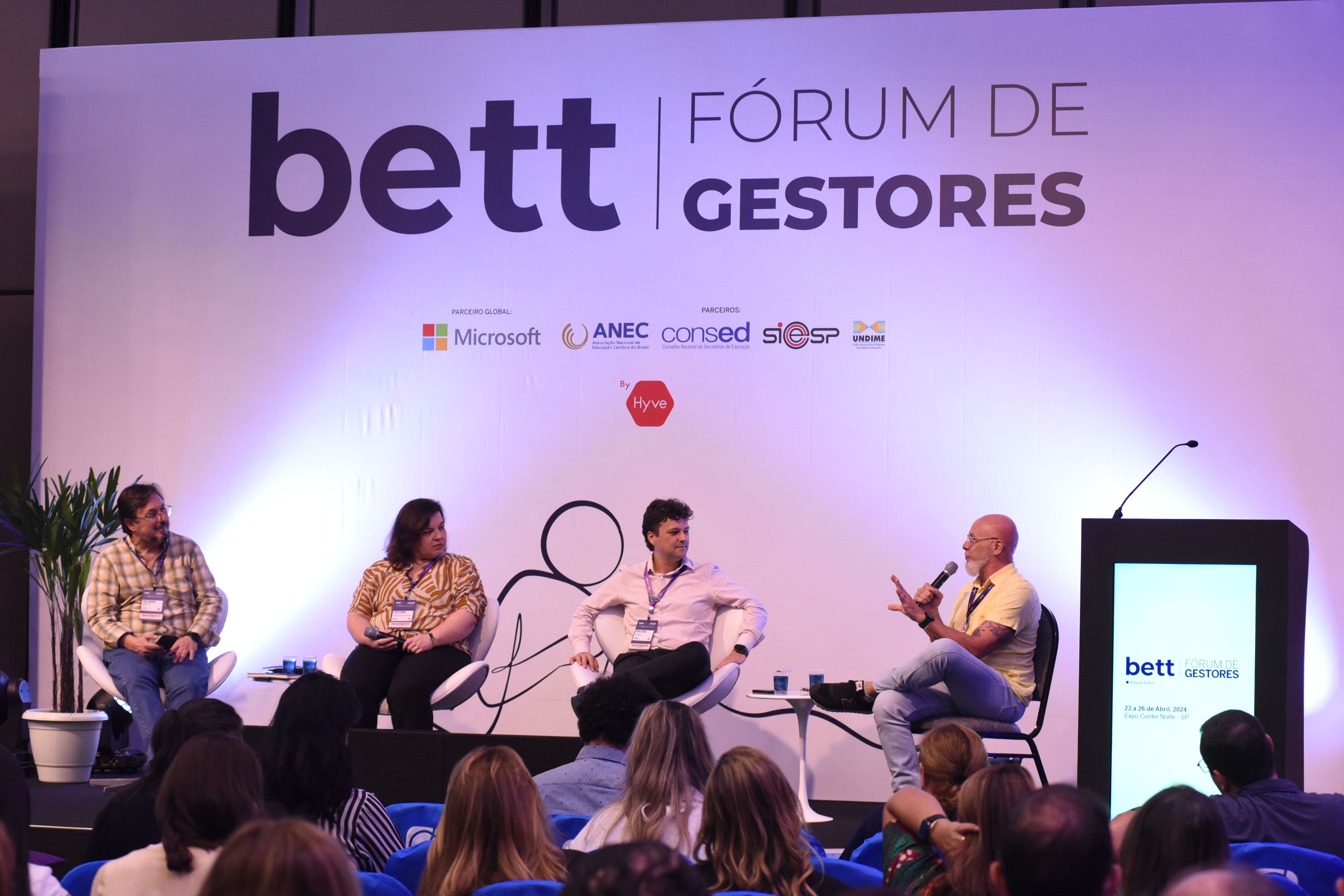
To illustrate solidarity in practice, Meira cited a discussion held with nursing professionals. “Instead of studying how respiratory diseases are affecting people’s lungs (and shifting our focus to studying lungs), we shifted our focus to how to care for the elderly population with respiratory problems. This completely changes the objective and the way the work is done, incorporating solidarity,” she said.
For Rafael Gioielli, director of social and environmental impact at Mombak, critical thinking is an essential skill for young people. “We have to challenge teachers about their mission—which is to prepare citizens—and to help young people become better for the planet, since previous generations have failed to leave a better planet for these young people.”
For Lucília Guerra, creativity is an essential skill in the search for new solutions. “We have to incorporate this into teacher training and change the way we teach—differently from the way we learned in the past.”
High-achieving students
Identifying and providing guidance to students with high abilities and giftedness (AHSD) presents challenges comparable to those of including students with learning disabilities, as was agreed upon in another Forum discussion.
High-ability students also require an environment that fosters recognition and guidance. It is important to provide appropriate educational support to promote their development and maximize their potential.
Ana Cecilia Melo, volunteer executive director of the Apontar Institute, emphasized the importance of schools having a specific program for highly gifted children. “It’s so important because, among their peers, children feel free to participate and ask questions they’ve been holding back—questions they’ve been too afraid to ask because they feel different from their classmates.”
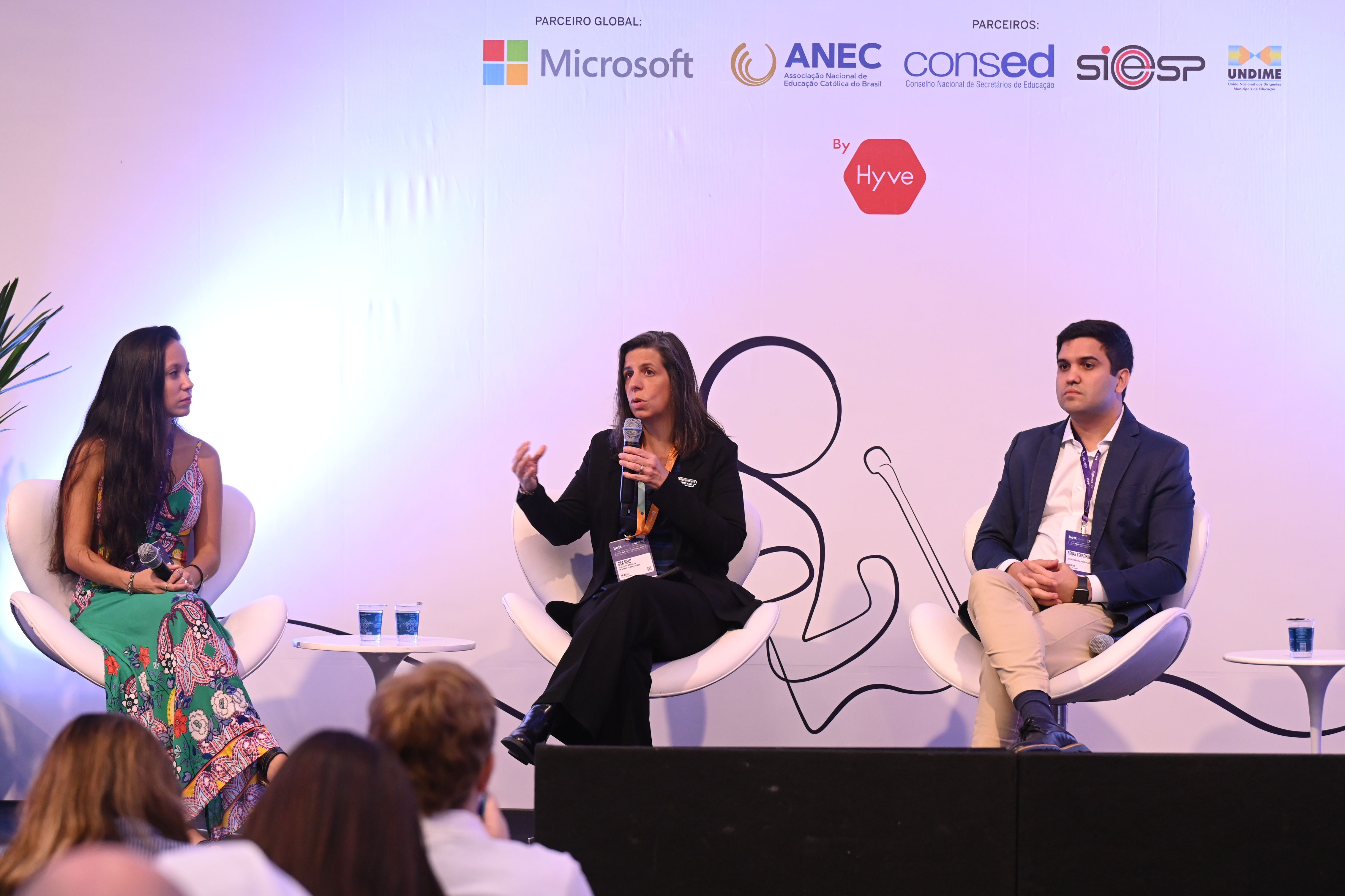
For Renan Ferreirinha, Rio de Janeiro’s municipal secretary of education, the debate is of great importance to society. “Not least because there is very little discussion of gifted students in Brazil. This group, unfortunately, ends up being highly marginalized because it lacks the necessary public policy incentives to keep these students engaged in school.”
“Highly gifted children need extra stimulation. If they find school uninspiring and boring, they’ll end up dropping out. And that’s the worst-case scenario, because there are many undesirable paths in society that prey on highly gifted individuals,” said the secretary.
Neuroscience to Promote Inclusion
Two experts shared their experience of exploring the potential of neuroscience to promote inclusion in schools.
For Carolina Videira, president of Turma do Jiló—an organization that serves as an ecosystem of inclusive initiatives—simply doing the basics with a well-established and recognized tool would already represent a major step forward in neuroscience-based inclusion.
“To this day, few teachers are familiar with the main tool—developed back in the 1980s and still in use today—which is UDL (Universal Design for Learning). It provides multiple ways to represent content, action, expression, and student engagement,” said Carolina.
According to the expert, a Dua-based class will benefit everyone, not just students with special needs. “When we’re able to teach students who are different, all students benefit,” emphasized Carolina, for whom the right to education is not a favor and cannot be a privilege.
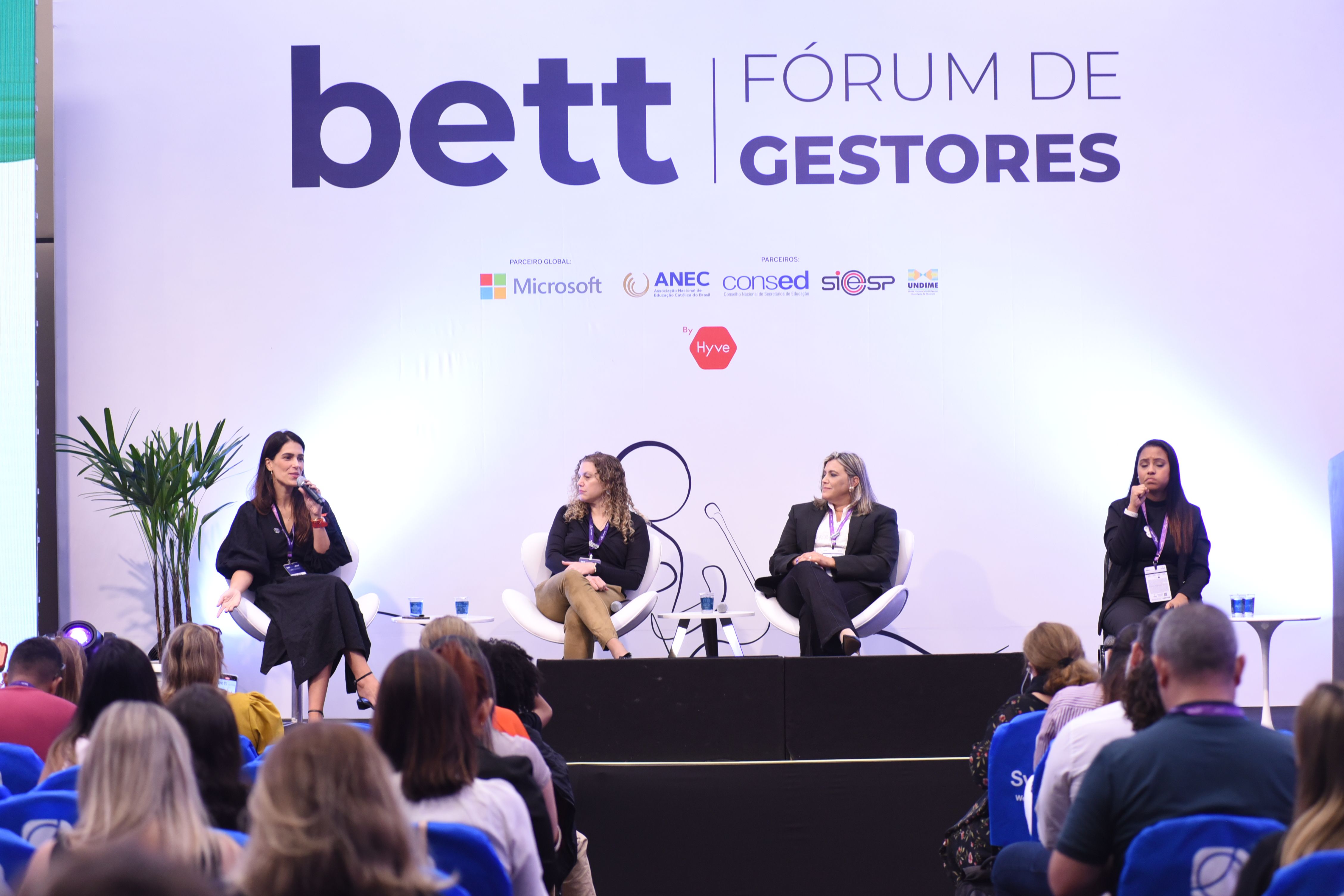
Telma Pantano, a neuroscientist and psychiatrist at the Institute of Psychiatry at Hospital das Clínicas of the USP School of Medicine (FMUSP), discussed how the brain learns, its capabilities and limitations, as well as the ability of children and adults to concentrate and pay attention.
The maximum amount of time an adult’s brain can maintain focus is 12 to 14 minutes. For a child, this time is no more than 4 to 5 minutes. When considering inclusion from the perspective of brain processing, it is necessary to refine attention strategies to meet the needs of children with anxiety, ADHD, ASD, and other conditions, for whom this attention span is even shorter.
According to the neuroscientist, “The fundamental point of neuroscience is that there is no single rule or model for learning. What gives the brain its functionality is the individual’s interaction with the environment. It is not teaching that will provide motivation, but rather the meaning that the school environment holds for the child. It is the child’s connection to that environment that will motivate them to learn,” explained Telma. The Administrators’ Forum was supported by Microsoft, isaac, Systemic Bilingual, and SOMOS Educação.
Share on social media:
Categories
- Educational Management