
Managers' Forum Promotes Discussions on the New Challenges of Educational Leadership
)
In an educational landscape marked by rapid change, new technologies, and increasingly complex social challenges, the role of school leadership has taken on even greater significance at Bett Brasil. In this regard, the Administrators’ Forum has become a space dedicated to strategic reflection and the exchange of experiences regarding educational management.
During Bett Brasil, held May 5–8 at Expo Center Norte, more than 30 speakers shared their experiences, analyses, and perspectives on topics ranging from artificial intelligence to inclusion, including the use of data in school management and the cultural changes needed within educational institutions. In this edition, the Forum was sponsored by Eletromidia, isaac, Microkids, and LIV.
Artificial Intelligence, Equity, and the Challenge of Transformation
One of the debates focused on the so-called “mix of intelligences” needed to transform schools in a context increasingly shaped by artificial intelligence. The panel featured brothers Luciano Meira, a professor at Proz Educação, and Silvio Meira, chief scientist at TDS.company, who challenged the audience by arguing that technological innovation alone is not enough to bring about real change in education.
For Luciano Meira, digital transformation in schools is directly tied to the discussion of equity. “There’s no point in advancing artificial intelligence if we don’t create the conditions for everyone to have access to the same opportunities to develop skills and abilities. Technology can reduce costs, but without equity, it can also widen inequalities,” he said.
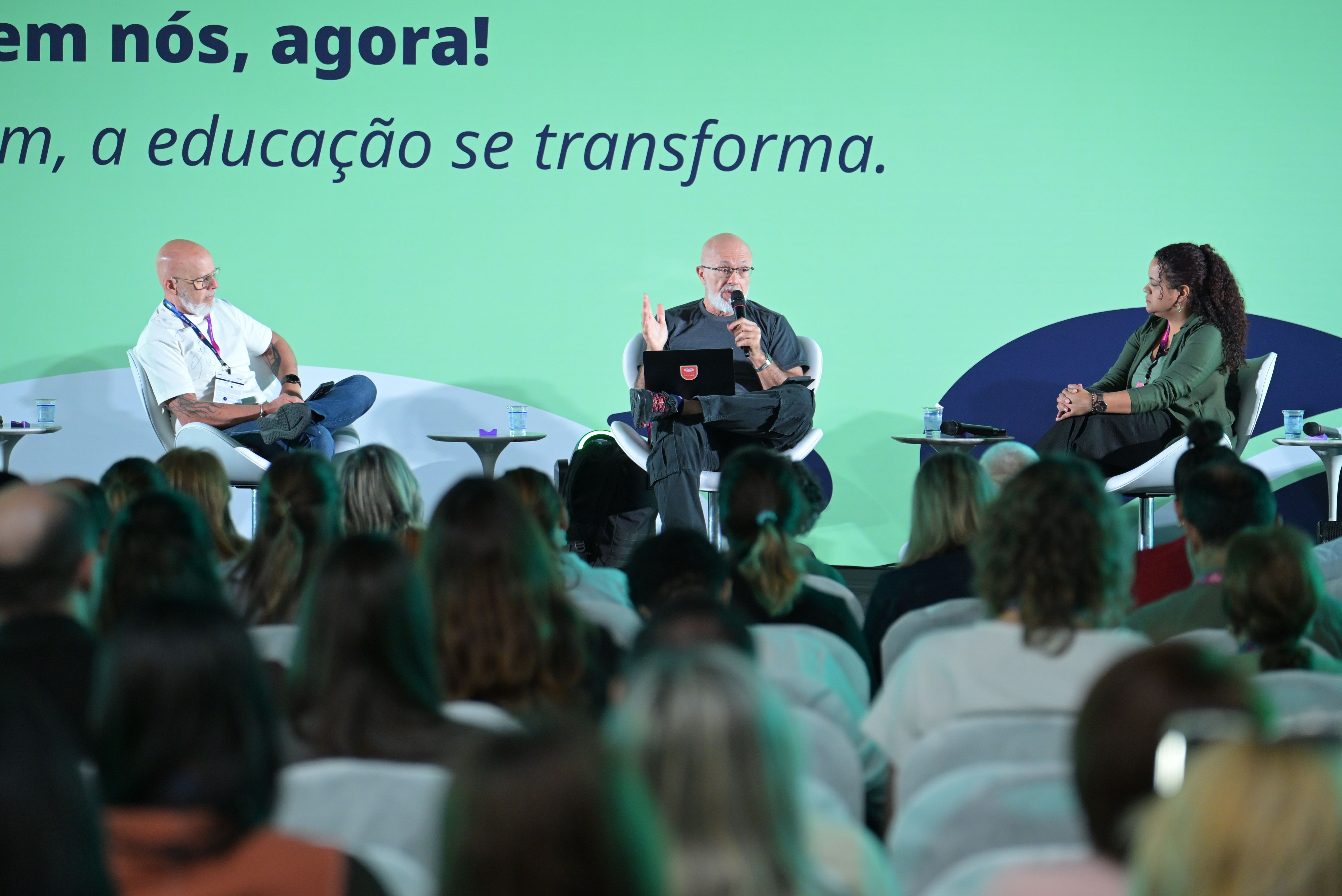
A panel featuring the Meira brothers discussed the “mix of intelligences” in education. Photo: Bett Brasil.
The discussion also addressed the gap between society’s hyperconnected reality and the models that still prevail in schools. In introducing the concept of the “phygital” world—which integrates the physical, digital, and social realms—Silvio Meira argued that education needs to reinterpret its pedagogical practices.
“Today, we have completely integrated experiences, but schools have not yet been able to interpret this within their own framework. The challenge is to redesign teaching practices so that technology makes sense within the learning process,” he emphasized.
For the Meira brothers, technology only creates value when combined with human intelligence and the ability to coordinate within educational ecosystems.
Inclusion requires structural change in schools
Another key focus of the Managers’ Forum was inclusion. At a time when neurodiversity is gaining increasing prominence in the educational debate, experts argued that institutions should move beyond mere rhetoric and promote effective changes in their culture and pedagogical structure.
The panel featured Kadu Lins, CEO of the Autism Institute and the University of Inclusion, and Telma Pantano, a speech-language pathologist and educational psychologist at the Institute of Psychiatry at FMUSP’s Hospital das Clínicas .
During the debate, the experts emphasized that inclusion cannot be understood merely as a one-off adjustment, but rather as a profound overhaul of relationships, curricula, and school practices. For Kadu Lins, the challenge lies in ensuring that each student is understood in their individuality.
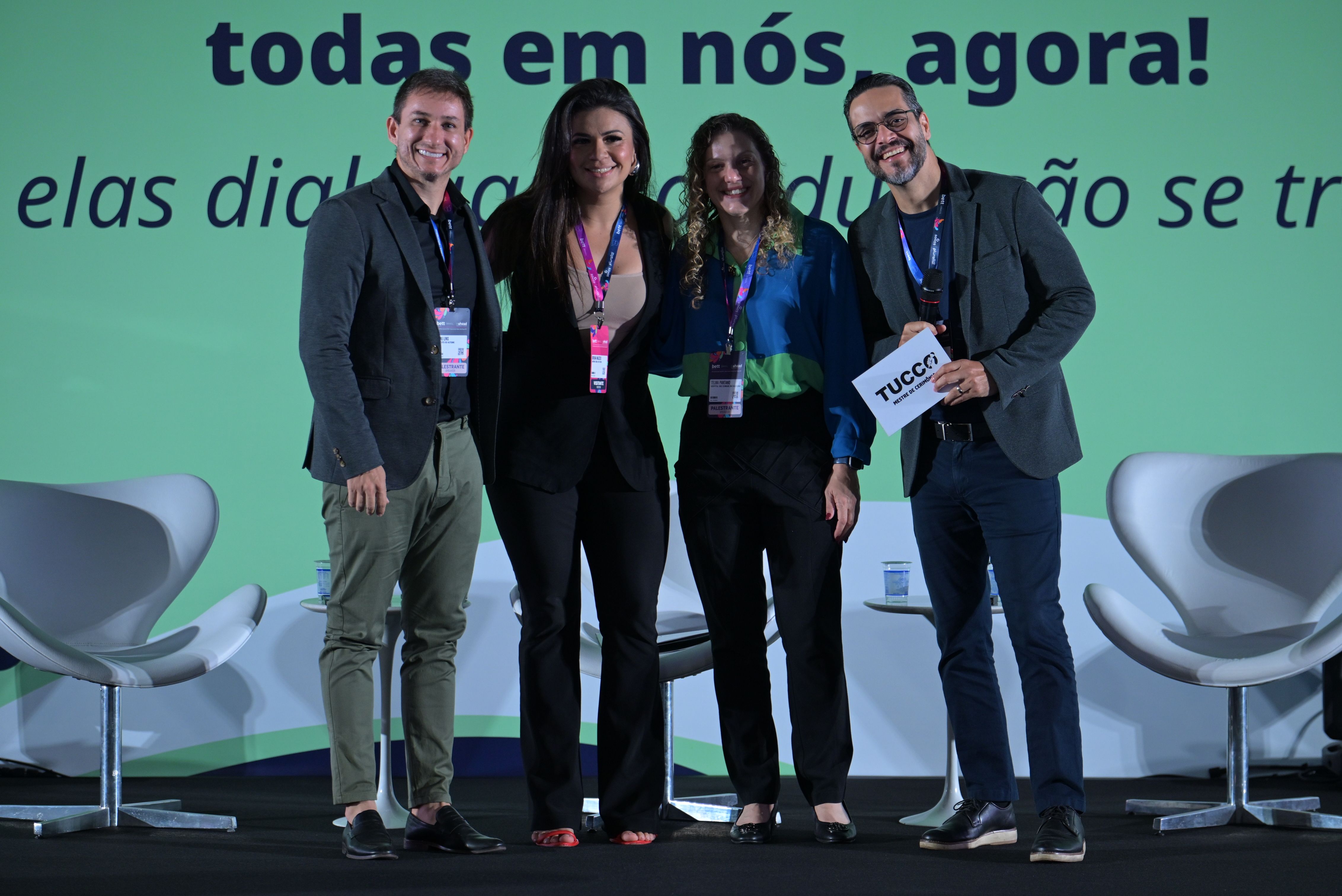
A panel featuring Kadu Lins and Telma Pantano discussed inclusion in the classroom. Photo: Bett Brasil.
“The biggest challenge today is ensuring that truly tailored education reaches everyone. Inclusion involves understanding each student, making the necessary adjustments, and creating viable pathways within each context. It also requires the trust of families and the school’s readiness to support students, including in their emotional development as they face the changes and challenges of the school environment,” said Lins.
Telma Pantano, for her part, emphasized the importance of understanding the different learning processes and the multiple ways the brain functions.
“Learning is not a simple process. It requires encouragement, perseverance, and the right conditions for attention. And it doesn’t happen the same way for everyone. When we talk about neurodiversity, we are acknowledging these differences. Schools need to understand these characteristics and develop strategies to address them, because diversity has always existed; what’s changing now is our level of understanding of it,” Telma emphasized.
Data and Technology as Allies in School Administration
Data-driven management also emerged as one of the Forum’s strategic priorities. In a scenario where institutions accumulate information from different systems and platforms, experts discussed how to transform data into concrete actions to improve learning, reduce dropout rates, and strengthen student support.
According to Tayguara Velozo, the Technopedagogical Integration Manager at Colégio GGE and Juntos Educação, many schools still operate reactively, addressing problems only after they have already impacted students’ performance or retention.
“The school is a source of data, which comes in through various systems—from the front desk, through administration, marketing, scheduling, and student tracking records, all the way to channels of communication with parents. The challenge begins with integrating so many layers of communication and organizing that data,” said Velozo.
Carina Sucupira, the leader in Data Strategy and Data and Analytics Coordinator at Itaú Unibanco, emphasized that no student drops out of school without showing warning signs— and that data analysis can help institutions take preventive action. “There are always signs. The systems used by schools track these trends and can support more personalized and thoughtful interventions,” she said.

Data-driven management was the topic of the panel discussion featuring Tayguara Velozo and Carina Sucupira. Photo: Bett Brasil.
According to Carina, many institutions still make little use of the available reports and make decisions based more on intuition than on evidence. In her view, integrating and interpreting information makes it possible to identify patterns and develop more effective preventive measures.
Velozo also cited some examples. “Schools have systems in place to monitor students: attendance, completion of assignments, academic progress, performance, etc. They also have systems that flag what is known as ‘silent dropout,’ when a family becomes disengaged and stops participating. ‘Once this data is organized and analyzed, it allows for actions to be taken to prevent student dropout or grade repetition, not just at the end of the school year, but throughout the school year,’ he added.”
Hyperconnectivity in Adolescence
The talk “Between Likes and Laws,” meanwhile, brought to light one of today’s most sensitive issues: the impacts of hyperconnectivity on adolescents. Participants included Caio Lo Bianco, CEO of LIV, and Judge Vanessa Cavalieri, who discussed excessive screen time, digital citizenship, legislation, and the effects of social media platforms on young people’s mental health, including the new guidelines set forth in Law No. 15,211/2025, which establishes limits on how digital platforms may interact with minors.
“We are facing a concerning situation in which digital exposure is beginning at an increasingly early age and carries real risks. Today, we are already seeing an increase in sensitive content, such as the sharing of intimate images and even the creation of fake nudes using artificial intelligence—a UNICEF study estimates that 1.2 million children will be affected by this type of situation by 2025. This underscores the importance of parents and guardians being vigilant and closely monitoring what their children consume and post,” noted Caio Lo Bianco.
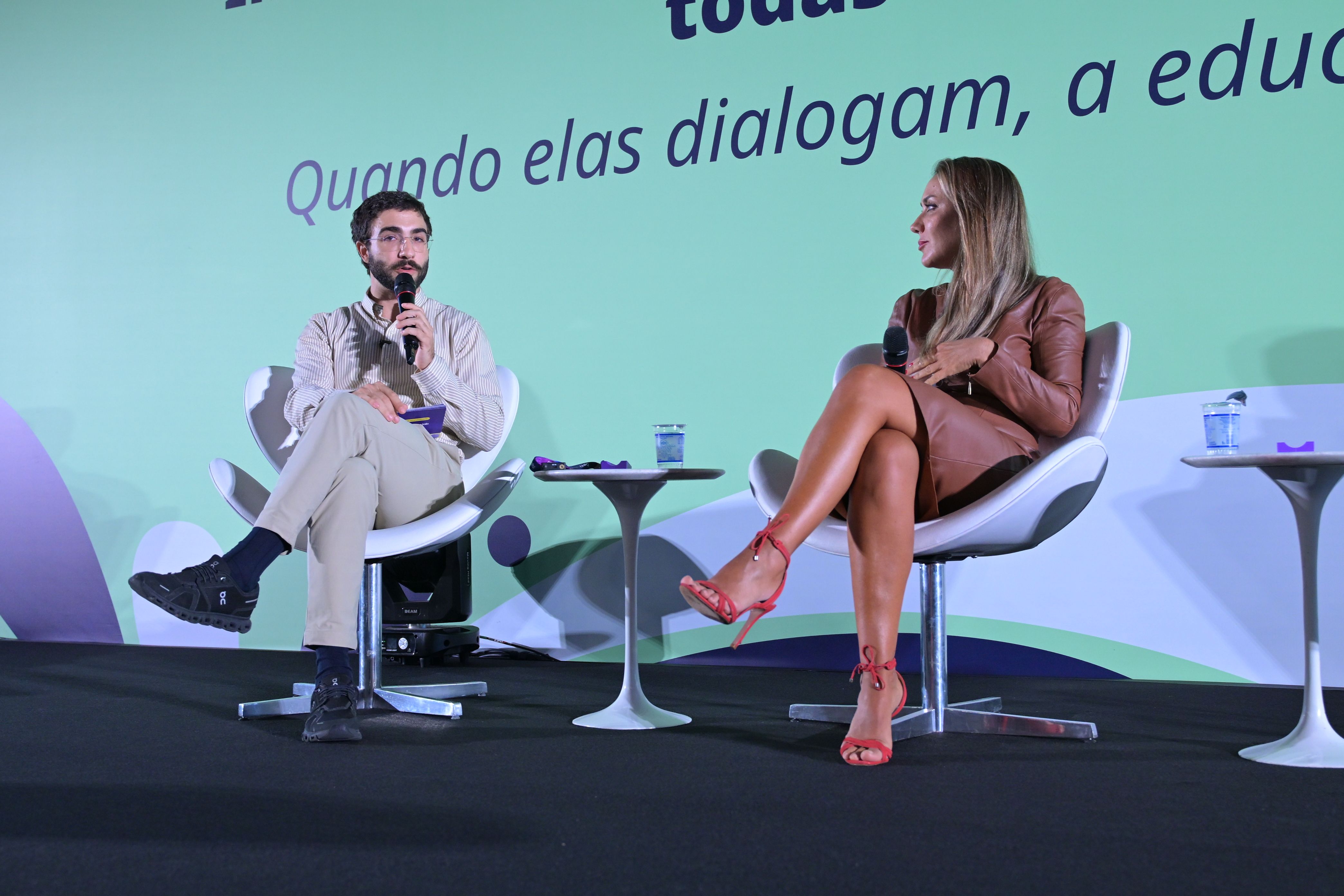
Caio Lo Bianco and Vanessa Cavalieri discussed the impacts of hyperconnectivity on adolescents. Photo: Bett Brasil.
Vanessa Cavalieri highlighted the need to combine regulation with education. “The legislation represents important progress by restricting practices such as advertising targeted at minors, emotionally charged notifications, and unrestricted access to social media. But that doesn’t solve everything. We’re talking about a phenomenon that also needs to be addressed within schools, through training, dialogue, and the development of a more mindful digital culture that involves students, families, and the government itself,” she noted.
The discussion also turned to an issue that has been concerning educators, families, and public policymakers: the rise of online gambling among young people, known as “Bets.” Experts highlighted that the gamification logic of these platforms, combined with the sensation of immediate reward, has increased the risk of addiction—a behavior already classified by the World Health Organization (WHO) as a gaming disorder.
“There’s an element of playfulness in these environments that masks the risk. For many young people, gambling starts out as entertainment, but it can quickly turn into compulsive behavior, with direct impacts on their personal, academic, and financial lives,” warned Vanessa Cavalieri.
Recent data underscores the scale of the problem. According to a survey by the Brazilian Association of Higher Education Institutions (ABMES), 34% of young people between the ages of 18 and 35 who had planned to enroll in higher education in 2025 postponed their enrollment due to gambling expenses— which means nearly 1 million people are not attending college.
Human and Artificial Intelligence
In the field of human transformation, the talk by João Branco, a marketing expert and former CMO of McDonald’s, was a true source of inspiration for educators to reflect on the role of purpose in the workplace. João Branco opened his talk at Bett Brasil by posing a provocative question to the audience— “What is your job?”— and answered with a perspective that goes beyond each person’s title or role:
"Your work isn’t just about exchanging tasks for a salary. Your work is about being useful, using your talents, gifts, and skills to put into practice what can improve the lives of others. Intentions matter. Work with the right intention—to serve, help, and love your neighbor,” said the expert. In a landscape where educators face growing challenges—from burnout to the need to reinvent themselves in the classroom—the discussion about meaning and engagement took center stage at Bett Brasil.

João Branco spoke about leadership and purpose at work during a panel discussion. Photo: Bett Brasil.
Businessman Walter Longo , for his part, offered a thought-provoking reflection on the advancement of artificial intelligence in the educational context. Taking a more humanistic and less alarmist approach, he invited the audience to view technology not as a threat, but as an extension of human capabilities.
“Artificial intelligence is not the end of human intelligence; it is the beginning of an enhanced version of ourselves. The challenge is not to compete with machines, but to understand how they can enhance what makes us human—through our creativity, our ethics, and our ability to ask better questions,” he said.
For Longo, the current moment calls for less fear and more clarity. According to him, the role of education is precisely to prepare individuals for this new landscape, in which technology and critical thinking go hand in hand. “The revolution has already begun, and it calls for a shift in mindset. It’s not about replacing people, but about expanding possibilities—which necessarily depends on the way we educate and think,” he concluded.
A More Human and Strategic Approach to Educational Leadership
Throughout the discussions, the Administrators' Forum made it clear that the future of education will depend increasingly on the ability of school leaders to integrate technology, inclusion, human intelligence, and strategic management.
Rather than offering ready-made answers, the event encouraged reflection on how to build institutions that are more attuned to societal changes and better prepared to address the challenges of the present and the future. At a time when schools are called upon to respond to increasingly rapid changes, the Administrators’ Forum reaffirmed the importance of dialogue, collaboration, and conscious innovation in strengthening Brazilian education.
Share on social media:
Categories
- Educational Management