
The Future of Work: The Topic Raises the Issue of Humanization
)
The 29th edition of Bett Brasil provided insight into trends in the convergence between education and the job market, both at the Managers’ Forum and at Ahead by Bett. The panel discussion “New Professions and the Future of Work” at the Forum brought together three speakers who have a foot in both of these worlds.
Luciano Meira, Science and Innovation Coordinator at Joy/PROZ Educação; Lucilia Guerra, director of the Center for Technical, Pedagogical, and Management Training at the Paula Souza Center—which provides continuing education for 17,000 teachers working at the institution’s technical schools and colleges of technology— and Rafael Gioielli, Director of Social and Environmental Impact at Mombak, a company focused on carbon removal, brought diverse perspectives to the discussion.
According to Meira, the main problem with education is that it fails to keep pace with changes in the world of work, which have actually slowed down. “Educational institutions are more focused on digitizing analog processes than on truly driving digital transformation. We need to build and establish a culture of digital transformation within our institutions to respond to changes in the world of work,” said the educator.
Lucília believes that technology is set to transform the world of work. And, in contrast to the almost apocalyptic view of her two fellow panelists, the educator drew attention to the need for a well-rounded education that goes beyond the professions of the future—whether they already exist or we don’t yet know what they will be.
"We have to view education as a source of hope amid the major changes we need. We need to build on all this progress, and we need to teach young people to look at the world they live in and understand how they can be critical thinkers who can bring about change—not just be passive participants in it," said the educator.
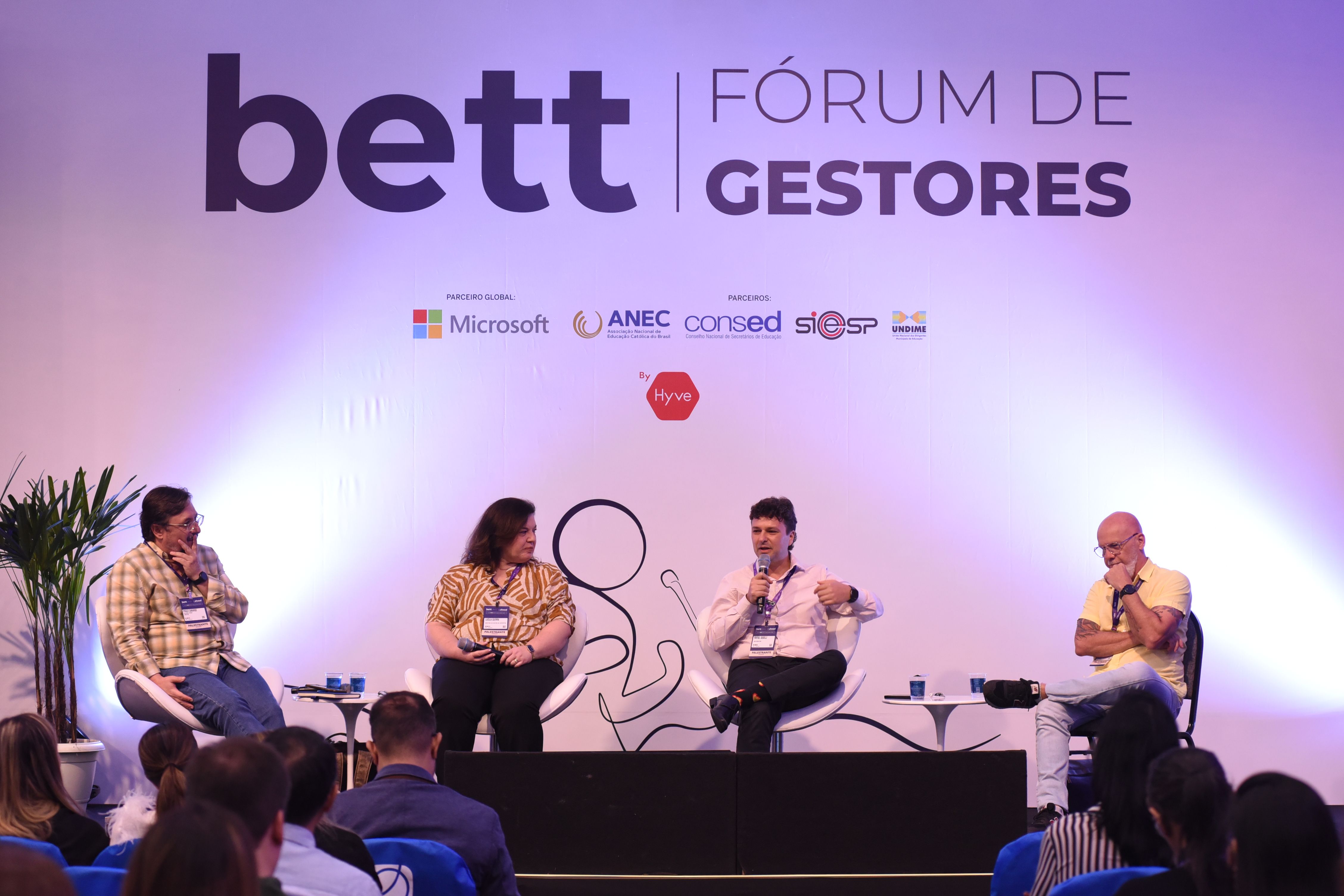
Rafael Gioielli, on the other hand, believes that we must see opportunities in crises and disasters. The entrepreneur cited global warming and its consequences as an example, emphasizing that we must, as soon as possible, envision a new economy and develop the skills of these new professionals so they can enter this new world of work.
"When we think about the future of work, we need to look at the world we live in, where we're headed, and what kinds of jobs we'll need. This world of climate change will require professionals and economic sectors to understand how to mitigate climate change and adapt to this new reality," said the director of Mombak.
LinkedIn Executive Discusses the Future of Work to a Packed Auditorium
The organizers of Bett Brasil took the announcement of the integration between two of its most sought-after auditoriums by conference attendees—the Managers’ Forum and Ahead, located side by side on the second floor of Expo Center Norte—to heart. For the first time, lectures are being held on topics of common interest to both audiences. And the walls separating these two worlds—educational management and the world of work—are literally being torn down.
Ana Claudia Plihal, executive director of Talent Solutions and executive representative of Women at LinkedIn, delivered a presentation titled “The Future of Work: Trends and the Importance of Continuous Learning” at the +Ahead Forum to a packed, integrated audience. The information presented was based on the most recent survey conducted by the professional networking and career transition platform, dated November 2023.
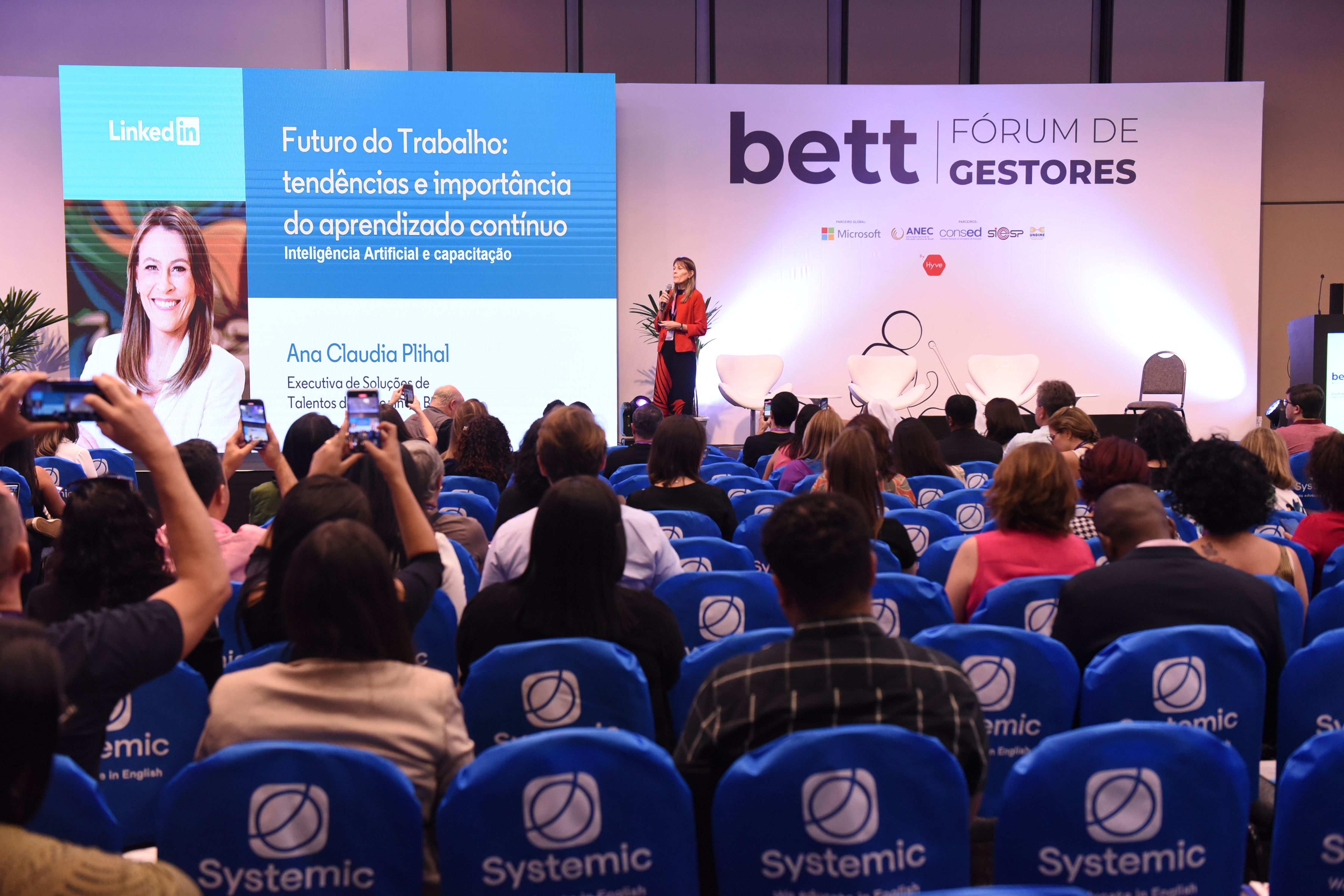
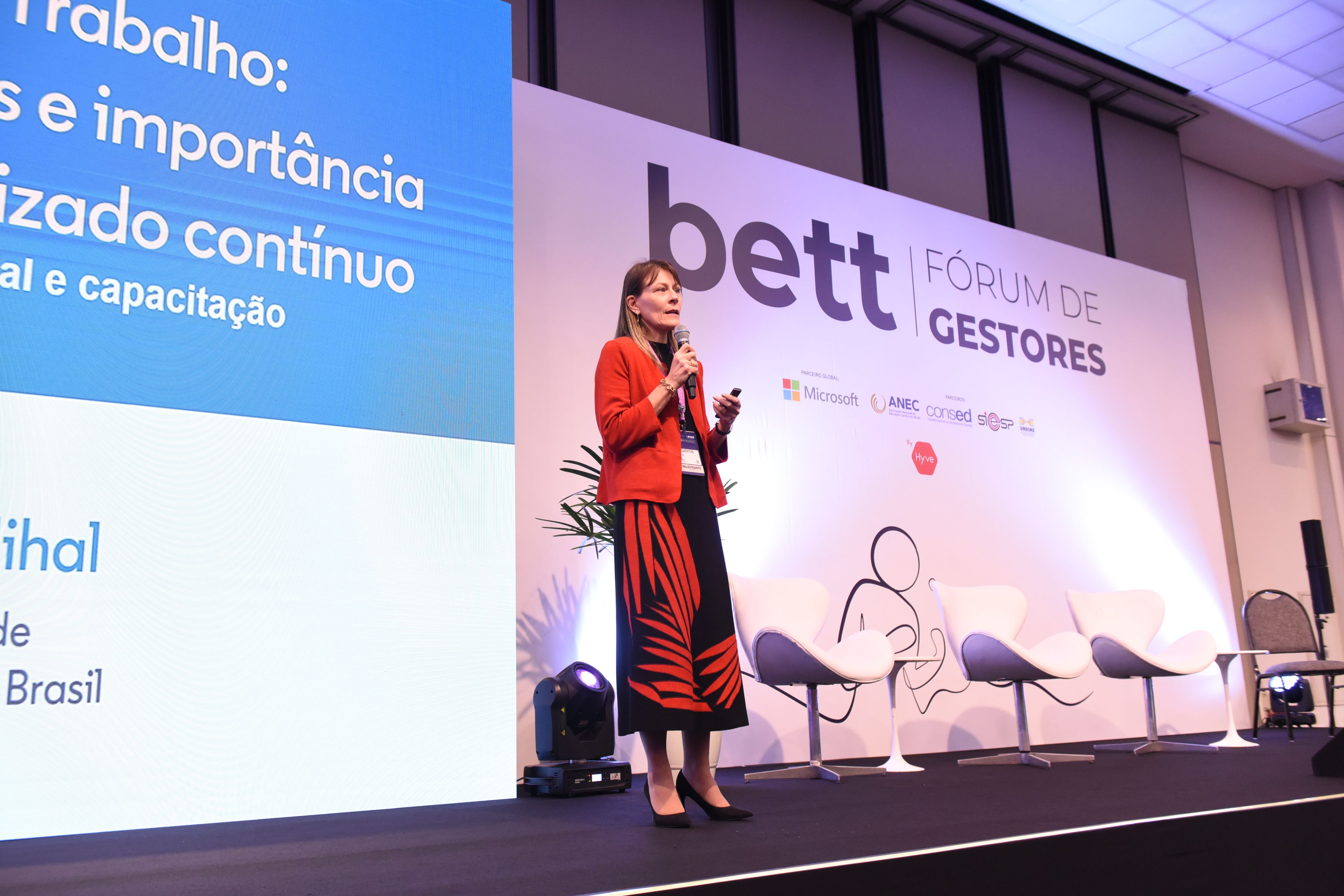
"When we talk about the future of work, what we need are the right people with the right skills. And in that context, the search for professionals who use artificial intelligence is already a reality. It’s a topic that has grown by 73% on the platform over the past 12 months," the executive revealed.
Ana Cláudia warns that this type of change tends to be happening at an increasingly rapid pace in the corporate world, as companies begin to adopt new technologies to streamline their processes. “We know that 75% of LinkedIn users already understand that their jobs will be affected in some way by AI by the end of this year,” she said.
The LinkedIn executive also shared with the audience the ten skills most in demand by Brazilian companies at the moment. The list emphasizes interpersonal skills over technical skills: communication, analytical skills, teamwork, negotiation, leadership, SQL, project management, people management, strategic planning, and sales.
Article originally published on the Educador21 website.
Share on social media
Categories
- The Future of Education