
Human-centered management in schools is a long-term investment
)
Education has always been associated with the development of individuals, but in addition to students, schools also need to take care of those who make the process happen: their staff. Human-centered management is a model that places people at the center of strategies
Amaro França, principal of Colégio Elite Setúbal in Recife, and Patrycia Alves, innovation manager at the University of Pernambuco, argue that strengthening a sense of belonging, providing clarity of purpose, and balancing the well-being of staff with the financial sustainability of schools are the pillars of a more humane and effective management approach.
A sense of belonging is not built solely through words, but through everyday actions that demonstrate attention and care. For França, getting to know people as individuals is already an essential step.
“Knowing who a person is—their name, a little about their family background—helps build identity and a sense of belonging. In addition, it’s essential to take care of school spaces, such as the teachers’ lounge or the dining area. It’s also important to value achievements and give credit and recognition. These practices humanize the experience; they don’t cost anything per se, but they foster commitment and produce results in every way,” she says.
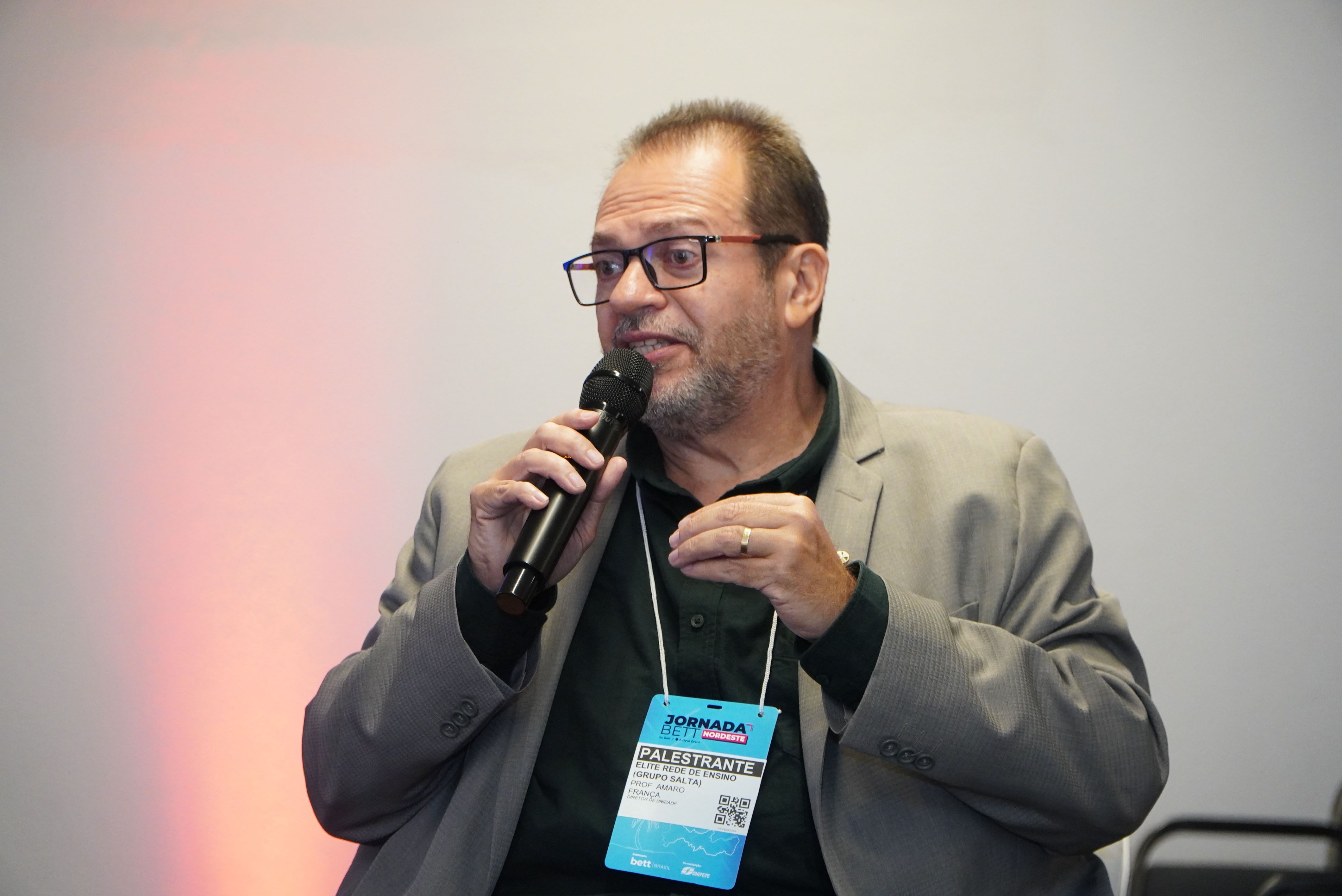
Amaro França during his presentation at the Bett Nordeste Conference. Photo: Bett Brasil
For Patrycia, a sense of belonging is directly linked to engagement. “Feeling that I’m heard and seen by leaders makes all the difference. When the school asks me for solutions and actually implements my ideas, or when my input is taken into account, that’s when a connection is formed. And you can’t talk about a sense of belonging without talking about clarity: the school needs to make its mission—its reason for existing—clear. It is through this alignment of values that genuine loyalty and engagement are born,” she emphasizes.
Caring for People and the Impact on Results
One of the main challenges facing schools is balancing the pursuit of results with the well-being of their staff. Amaro is emphatic in stating that these two aspects are not mutually exclusive, but rather reinforce one another.
“I am very clear that people are the institution’s greatest asset. When I take care of people, I’m also taking care of the results. People who are well cared for produce good results. Absenteeism drops, and commitment grows. Every dollar invested in human-centered management yields a fivefold return. It’s not a cost; it’s an investment with direct academic and financial impact,” he explains.
Patrycia raises another point: the importance of professionalization and clear processes. In her view, schools need to be treated like sustainable businesses, with processes that function regardless of who holds a particular position.
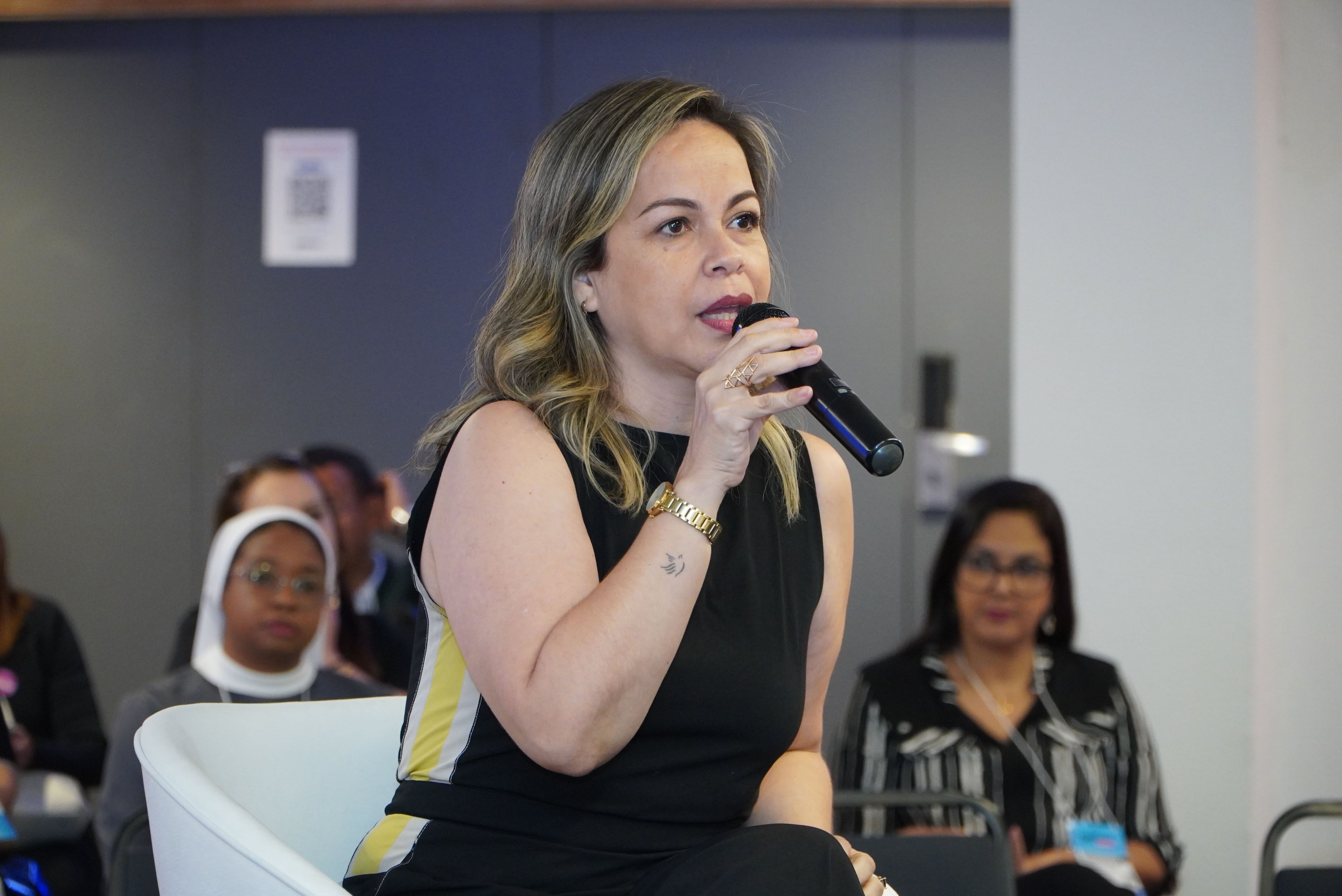
Patrycia Alves was one of the speakers at the Bett Nordeste Conference. Photo: Bett Brasil.
“Seeking professional support and understanding the school’s positioning and target audience is essential. A Level A school, for example, will charge tuition fees commensurate with the value it provides, and this must be aligned with the team. But on a personal level, everything needs to make sense to the staff. When there is clarity of purpose, clear guidelines for workplace conduct, and an environment that fosters listening and collaboration, professionals remain engaged,” he notes.
The content of this article is based on the participation of Amaro França, principal of Colégio Elite Setúbal in Recife, and Patrycia Alves, Innovation Manager at the University of Pernambuco, in the Bett Nordeste 2025 Conference.
Share on social media:
Categories
- Educational Management