

Inclusion in Schools: Experts Identify Challenges and Strategies to Ensure Students' Full Participation
)
Ensuring that all students not only enroll in school but also participate fully and have their potential recognized remains one of the greatest challenges facing Brazilian education. Overcoming these obstacles requires consistent public policies, investment in teacher training, and the development of a human rights-based approach in the classroom.
For Josevanda Franco, an expert in education and human rights, the starting point for inclusion must be teacher training. “The greatest challenge of all is training. Today, municipal school systems end up shouldering the obligation to provide initial training, which should be the responsibility of academia. University curricula—especially in teacher-training and pedagogy programs—are not adapted to the reality of schools,” she notes.
According to her, this shortfall prevents continuing education—which is essential for teachers’ professional development—from fulfilling its full potential, since there is no solid foundation to build upon.
In addition to training, Josevanda points out that the lack of adapted teaching materials limits the practice of inclusion. “Unfortunately, we already have more than two million children with special educational needs who lack the appropriate materials. For teachers, it is a huge responsibility to adapt content for different students, often without ever having been trained to do so,” she notes.
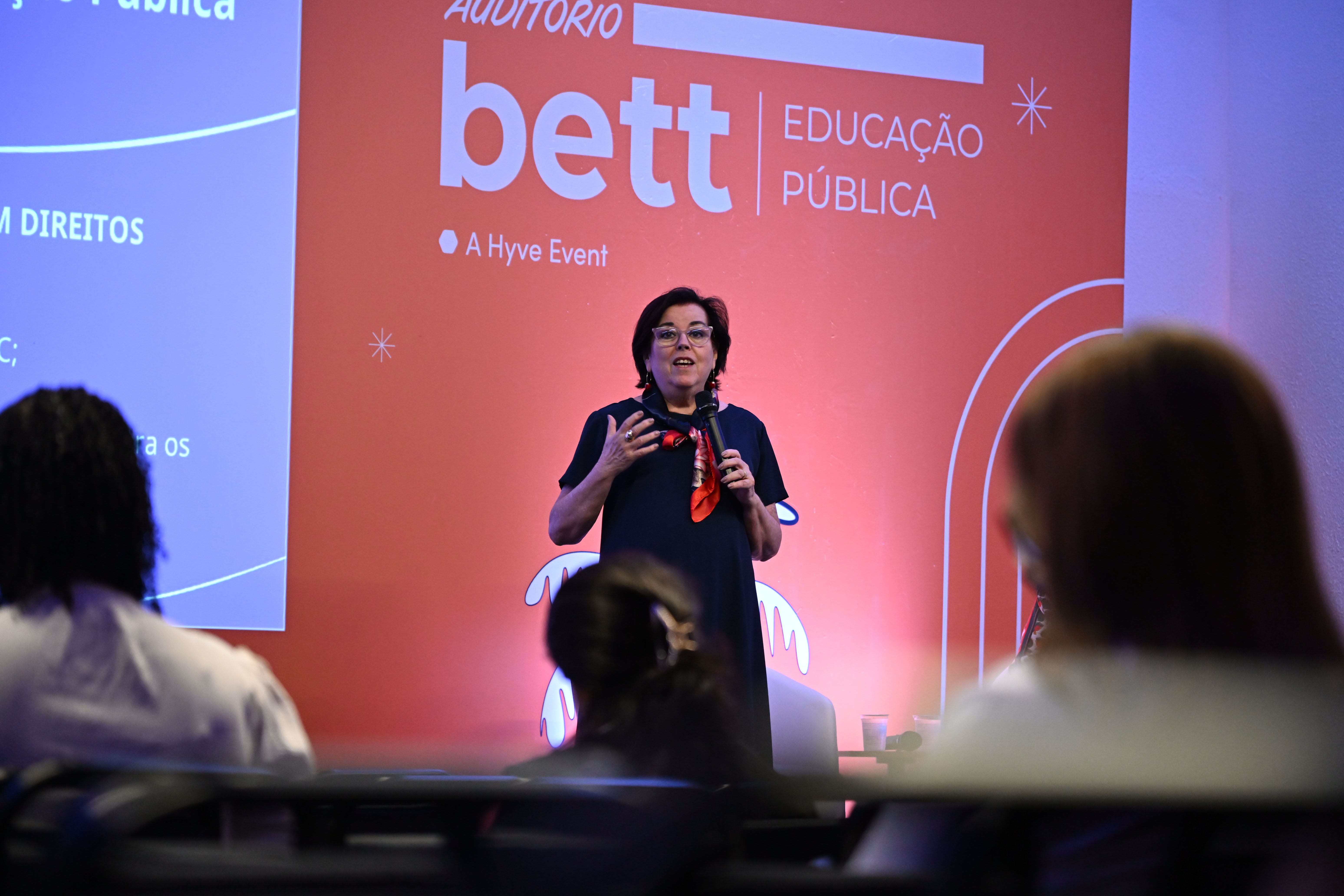
Josevanda Franco highlights the importance of teacher training in the process of inclusion in the classroom. Photo: Bett Brasil.
The expert emphasizes that no educator can put into practice strategies they are unfamiliar with. “The answer to the question of how to achieve inclusion necessarily involves training. This has been a huge obstacle.”
Adriane Damascena, a teacher and head of the School Projects for Human Rights Service at the Sergipe State Department of Education (SEED), emphasizes that inclusion must be understood as a reflection of social diversity. “It involves recognizing that the student body is diverse. We need to develop public policies that address different needs and value the potential of the students being included,” she argues.
For Adriane, the interaction between students with and without disabilities is one of the greatest strengths of the process. “It’s a mutual learning experience, an extraordinary opportunity to learn from those who are different. This exchange benefits both the students in the inclusive program and the others, in addition to strengthening the network as a whole.”
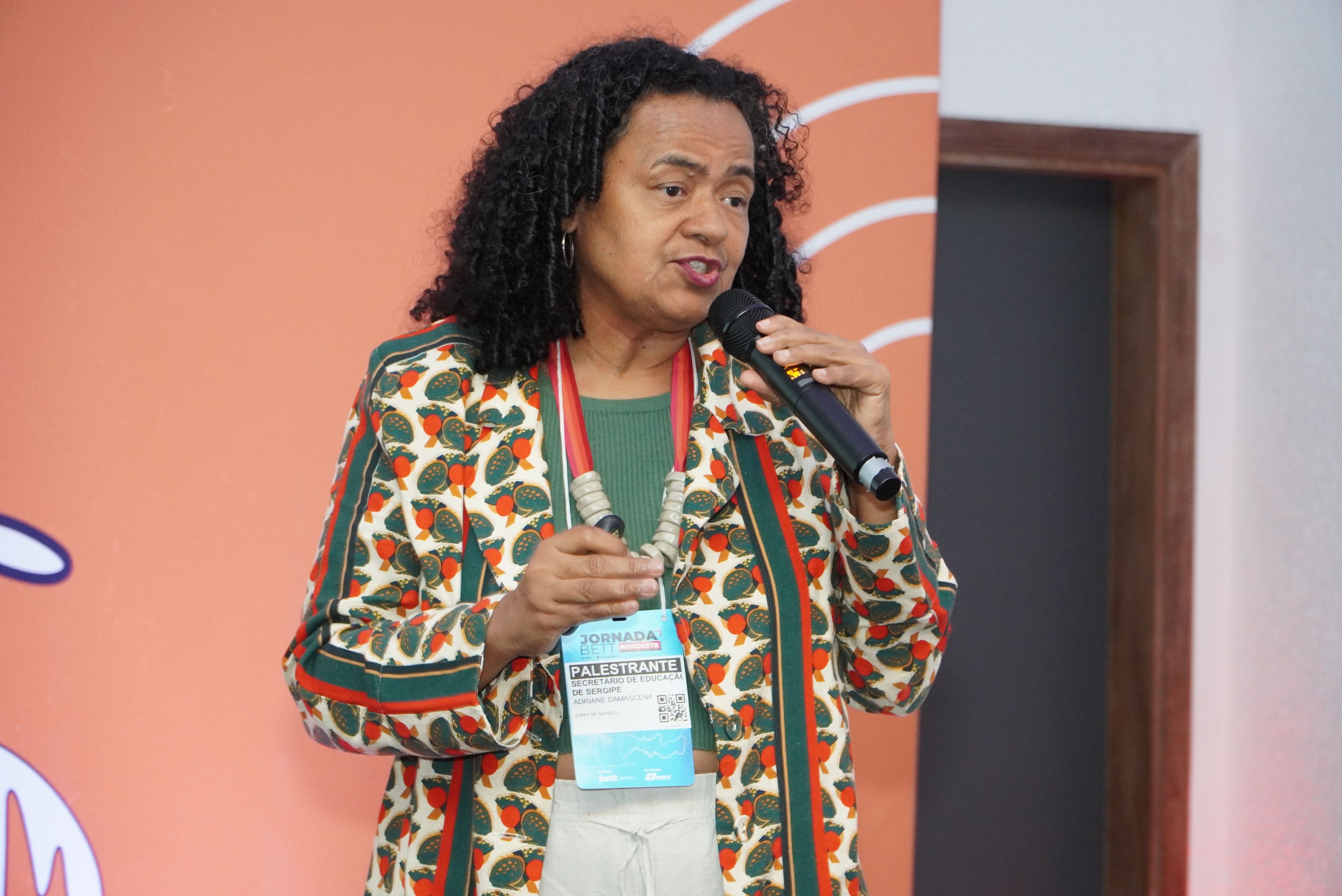
Adriane Damascena advocated for integrating human rights education to promote inclusion. Photo: Bett Brasil.
When asked how to prepare teachers for this challenge, the administrator emphasizes that teacher training cannot be limited to the curricular content of the subjects.
“Many teachers think, ‘I majored in geography or physics, but what do I know about this student who is so different?’ We need to develop a training program based on skills and competencies, one that adopts an inclusive curriculum focused on diversity,” explains Adriane.
She emphasizes the importance of integrating human rights education into this process. “Teachers need to understand which values are fundamental. Respect for others and the appreciation of differences are central to inclusive education and have a direct impact on the outcomes we strive for, including educational indicators,” she says.
The two experts agree that inclusion will only become a reality when the educational system recognizes that diversity is not the exception, but the rule.
The content of this article is based on the participation of Josevanda Franco, an expert in education and human rights, and Adriane Damascena, a teacher and head of the School Projects for Human Rights Service at the Sergipe State Department of Education (SEED), at the Bett Nordeste 2025 Conference.
Share on social media:
Categories
- Diversity, Equity, and Inclusion (DE&I)