

Artificial Intelligence and Schools: Should We Ban It, or Learn to Use It to Enjoy and Teach the Right Way?
)
In self-driving cars, navigation apps, inventory management, automated customer service, and countless other everyday situations, we can already see and experience the presence of artificial intelligence.
The field of education is no exception, and there have been numerous applications of AI in the sector. In fact, there is great potential for its use in this area, both to support student learning and to optimize and even enhance teachers’ work.
In this regard, professor, author, and futurist Matthew Lynch succinctly summarizes five key benefits of integrating AI into education: content customization is one of them, as are personalized instruction, timely performance assessment, instant feedback on the quality of teaching methods and strategies, and immediate insight into the challenges students face.
Without delving here into the legal requirements that must guide such applications—particularly with regard to the protection of personal data— AI is already being used to help students with special needs gain access to a more equitable education, as well as to facilitate and manage educational games, provide guided learning experiences, develop lesson plans, optimize communication between schools and families, conduct diagnostic assessments, and more.
I once read a quote that went something like this: “Living the situation is wisdom; thinking about the situation is theory.” Given the rapid pace of technological advances and their impact on society, the greater our ability and interest in anticipating them, the better we will be able to enjoy them.
We were able to observe the impact the COVID-19 pandemic had on many educational institutions that, for years, had been unable to make progress on projects related to the use of new technologies in their educational approach.
With this “abrupt shift,” it’s worth remembering that it also brought with it uncertainties regarding the use of video conferencing apps, as well as concerns about monitoring of classes—by students, teachers, and their families—of one another, and various other challenges that were part of the “package.”
Similarly, the need for schools to prepare for the arrival of AI is not a recent one, especially given that AI tools have been present in this field for some time. But it was only with the release of the ChatGPT chatbot, developed by OpenAI, and its rapid adoption that the issue gained greater prominence.
And no wonder: the service offers a wide range of amazing features, such as answers to any kind of question in any language, solving math equations, summarizing texts, translations, recommendations, code corrections... And best of all: it’s all free and easy to use. Anyone familiar with and who uses assistants like Alexa and Siri will have no trouble interacting with ChatGPT.
But what was interesting to note—in some of the discussions on the topic that I had the opportunity to participate in—was that the panic surrounding the tool has led many teachers and school principals to develop an aversion to the chatbot without even having tried it.
Many have been focusing their energy, time, and research on finding ways to curb its use by their students and on tools capable of detecting when chat features have been used in school activities. Some understandably express concern that the bot might provide misleading information to the most vulnerable students, whose educational development could consequently be compromised.
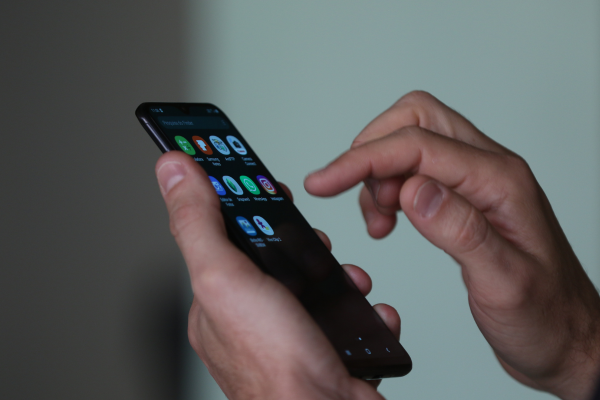
New legislation has restricted the use of cell phones in schools. Photo: Tânia Rêgo/Agência Brasil
In January 2023, one month after the launch of OpenAI’s AI tool, the New York State government went so far as to ban the use of ChatGPTon school devices and networks, believing that the bot could encourage students to plagiarize, negatively impact learning—given the ease of access to information—and pose a significant risk of minors accessing content from sources of questionable credibility. However, in May of the same year, the ban was lifted and replaced with an encouragement for students to use the technology.
It’s certainly not easy to have to decide whether to implement systemic changes in the school setting, especially when these changes directly impact the core of teaching and learning. But, on the other hand, ignoring the possibilities that AI offers for improving the educational process does not seem to be the best course of action.
In fact, one of the leading authors on the benefits of AI in education, Matthew Lynch (read the article “My Vision for the Future of Artificial Intelligence in Education”), acknowledges that, although the use of AI in education is very valuable in some respects, we must be extremely vigilant in monitoring its development and its overall role in our world.
See also:
- Law 15,100/25: The new law governing cell phone use in schools
- New legislation on cell phones in schools is an invitation to change behavior
- Cell Phones and Education: The Dilemma of the Connected Generation
Under no circumstances should we underestimate the concerns of educators regarding the potential of ChatGPT—on the contrary, especially given all the challenges that the art of teaching itself already presents. But if there is anyone the younger generations can and should count on to teach them how to best make use of this and other AI tools, it is their teachers.
Banning their use is not the answer. We’ve seen and experienced this with cell phones. First, because AI is a reality with no turning back. Second, because we must consider that banning the use of these and other bots on devices accessed in the school environment does not prevent their use outside of school—especially when students find ways to circumvent the block and manage to use them right in school. Third, if there is no one to guide them toward the best, most ethical, mindful, and safe use of new technologies, they may learn the hard way.
Of course, it is perfectly acceptable to use solutions that can monitor the misuse of these tools, but not with the aim of trapping the student, rather to correct and guide them in their proper use.
Ethical debates surrounding AI are intense and frequent. In the article “The Importance of Ethics in Artificial Intelligence” from Towards Data Science, we find two important recommendations: the first reflects the need for ethics to be embedded in the rationale behind why a particular piece of AI-powered technology is being developed; and the other concerns the importance of monitoring the results of that specific piece of technology to fully understand its behavior and ensure that it does not violate our (human) moral compass.
The fact is that we need to teach younger generations to use this tool as a resource and source of inspiration to develop their own creativity and to support the teaching of traditional subjects. For example, ChatGPT can provide, upon request, numerous synonyms for words, which can be used to improve a student’s writing. The platform is also capable of translating texts with great accuracy, which can be useful in language instruction and for expanding research sources.
Another opportunity that using this tool can provide is the chance to demonstrate to students the limitations of AI, as well as the possibility that different users may receive different answers to the same question. Having ChatGPT generate answers that students know are wrong, so that they learn to be skeptical of the solutions it offers, can also be very interesting.
But just as important as the students’ intellectual development are the opportunities this tool offers to discuss the ethical use of technology, encouraging them to engage in the necessary critical thinking. How about starting by explaining that the tool was trained using texts from millions of people gathered from the internet? To what extent can this be considered ethical? Under what circumstances can the use of this faster method of generating texts be considered ethical and honest?
Of course, the use of this and other types of digital tools in the school environment requires measures—technical, awareness-raising, and even procedural. But this is an irreversible path for education, and the better prepared the school is for demands of this nature, the lower the risk of digital incidents involving its teachers, students, and other staff members. After all, the only way to learn how to use technological innovations is by using them.
In fact, there is no question about the school’s responsibility in this context—especially given that it deals with children and adolescents—but this should not be an obstacle to the digital inclusion of its students.
To begin with, it must be made clear—whether in the Educational Services Agreement signed with the guardian or in a separate document linked to it —such as the Internal Regulations or even a Code of Conduct—that the encouragement to use or any resources made available by the institution must serve an educational purpose, such that, if used in a manner other than what was agreed upon, this will constitute a breach of contract, the consequences of which will be the responsibility of the parents or legal guardian.
Thus, if the fundamental goals of education are the full development of the student and their preparation for active citizenship and the labor market—as provided for in the Federal Constitution, reiterated in the Statute of the Child and Adolescent, and reinforced by the Law on Guidelines and Foundations of Brazilian Education— as well as the Civil Rights Framework for the Internet itself, finding ways to adapt to this new reality and to instill in young people the critical thinking necessary to evaluate, in practice, the positive and negative aspects of technological innovations such as artificial intelligence systems does not seem like an option to us.
About the author:

*This text does not necessarily reflect the opinion of Bett Brasil.
Share on social media:
Categories
- Learning Strategies