

Neurodiversity in Schools: Challenges and Pathways to Equitable Education
)
Neurodiversity is a term that refers to the natural variations in neurological organization among human beings. In this regard, Dr. Raquel Del Monde states that we are not only diverse in our physical characteristics, but also in the way our nervous systems are structured. The cognitive profiles that develop differ from one another, and that is why we feel, learn, and interact differently, she says.
According to Del Monde, the debate and understanding surrounding neurodiversity have led to the normalization of our neurological differences. This process moves away from the concept of pathology and aligns with the line of thinking that these biological variations are natural and should be valued. “Everything we have achieved on this planet was not in spite of our differences, but precisely because of them,” the doctor emphasizes.
Neurodiversity, therefore, refers to a neurological configuration that differs from the average, typical human pattern and influences neurodevelopment. Among the conditions that fall under this umbrella are: Autism Spectrum Disorder (ASD), dyslexia, Attention-Deficit/Hyperactivity Disorder (ADHD), intellectual disabilities, giftedness, high abilities, and certain psychiatric disorders, as Del Monde explains.
Among the characteristics of the condition, Del Monde explains that autism consists of impairments in social communication—how the individual interacts with others—as well as restricted and repetitive interests and behaviors, and sensory processing differences. In ADHD, there is a difficulty in coordinating behavioral functions, and, precisely because of the difficulty in inhibiting competing stimuli, fluctuations in arousal, impulsivity, and psychomotor restlessness occur. Dyslexia, on the other hand, is characterized by a specific learning disorder related to the decoding of written language—that is, reading.
Neurodivergent individuals face a range of challenges throughout their educational journey, whether at the elementary or higher education levels. Experts emphasize that a lack of awareness about neurodivergent conditions, insufficient training for education professionals, and the absence of appropriate strategies for adapting instruction are factors that permeate the daily lives of thousands of students living with neurodivergence.
In Brazil, the National Policy on Special Education from the Perspective of Inclusive Education, established in 2008, is one of the government initiatives that set guidelines and standards for the provision and development of inclusive education that addresses the specific needs of students with disabilities, global developmental disorders, and high abilities/giftedness.
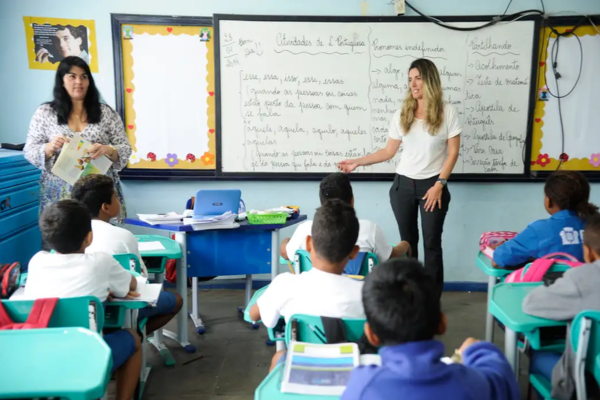
The demand from students with neurodevelopmental conditions has been growing over the years. Credit: Tânia Rêgo/Agência Brasil
According to data from the 2023 School Census, presented by the Ministry of Education (MEC), there were a total of 1,771,430 enrollments in basic special education, representing a 41.6% increase between 2019 and 2023. In this breakdown, there were 636,202 students enrolled in basic education who have autism and another 38,019 with high abilities or who are gifted.
In higher education, 9,718 students with Autism Spectrum Disorder and 4,309 with high abilities/giftedness were enrolled, according to the 2023 Higher Education Census. From 2013 to 2023, there was a 219.4% increase in the number of students with disabilities, global developmental disorders, and high abilities/giftedness enrolled in higher education.
The data underscore the growing demand from students living with neurodivergence, which highlights the need for educational institutions and professionals to ensure a high-quality and equitable education. In this regard, the importance of training educators and educational administrators in the development and implementation of inclusive methodologies and appropriate academic support is emphasized.
Challenges for Equitable Education
In the teaching and learning process, it is essential that education professionals understand and know how to address neurodiversity.
Inadequate training for educators in addressing different learning styles is detrimental and leads to actions that negatively impact the experience and learning of neurodivergent individuals, emphasizes Vanessa Azevedo, an educational psychologist.
“The greatest challenge in the educational landscape is not merely accepting neurodivergent students, but ensuring genuine inclusion. This involves adapting teaching practices, fostering a welcoming environment, and having trained professionals who can meet the specific needs of these students.”
Vanessa Azevedo - Educational Psychologist and co-author of the book *Atypical Motherhood*
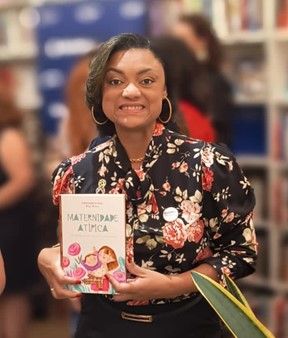
Educational Psychologist Vanessa Azevedo. Credit: Personal Archive.
The reluctance of some families to seek specialized evaluations, the lack of therapeutic support, and the difficulty in implementing educational practices are among the factors that complicate the educational experience of neurodivergent students, according to clinical and school psychologist Camila da Silva Conceição of Legacy School.
Keep in mind that equity means that people involved in a given process or situation have the same opportunities. It is a principle that acknowledges our differences but emphasizes that those differences must not lead to inequalities.
Educational Strategies
Vanessa Azevedo emphasizes the importance of the educational psychologist’s work in the school setting as a learning therapist. This professional plays an essential role in inclusion, as they understand students’ difficulties and potential and work to promote effective measures for each student’s development, Azevedo argues.
The role of the educational psychologist is to assist in identifying and addressing learning difficulties. The professional notes that it is still rare to see these professionals in schools. Ideally, according to Azevedo, they should be part of the teaching staff, collaborating to create an inclusive educational environment that is accessible to all. “The presence of an educational psychologist should not be viewed as a luxury, but rather as an essential necessity.”
Family Support
According to Azevedo, family members contribute through their knowledge, acceptance, partnership with the school, encouragement at home, and positive reinforcement —recognizing every achievement, no matter how small, helps build self-esteem and motivation.
In this regard, the family plays an essential role in the development and learning of neurodivergent children. The active participation of family members in monitoring the child’s progress can make all the difference in ensuring a welcoming and stimulating environment, the educational psychologist emphasizes.
Atypical Motherhood
In Goiânia (GO), content analyst Nayana Moreira (33) says that her son, Arthur (10), has always been a bit different. Although he began speaking and walking at the right age, he didn’t socialize, had an aversion to certain types of food, couldn’t stand noise, and often repeated words.
Arthur was diagnosed with Level 1 autism in 2018, when he was three years old. Since then, Nayana has sought to learn more about the condition and discovered the Center for Art and Inclusion for People with Autism (Naia), a nongovernmental organization (NGO) that provided Arthur with psychotherapy. During the neuropsychological reevaluation process due to Arthur’s advancing age, Nayana said she had to hold a raffle to cover the cost of the procedure and emphasized the challenges posed by health insurance plans regarding psychological care.
At school, Arthur’s restlessness made it difficult for him to attend classes. The COVID-19 pandemic exacerbated the situation, as classes began to be held online. Years of therapy and follow-up care with speech-language pathologists, occupational therapists, and psychomotor therapists have contributed to the young man from Goiás’s quality of life.
“Over time, the therapies began to take effect, and today he handles his activities and classmates very well, makes friends, and is able to focus in class. He used to have severe cognitive rigidity, but that gradually faded with the help of his therapists and the school. As a family, we felt very uncertain for a long time. But we’ve always sought out doctors, therapists, and educators who speak about this topic.”
Nayana Moreira - Arthur's mother
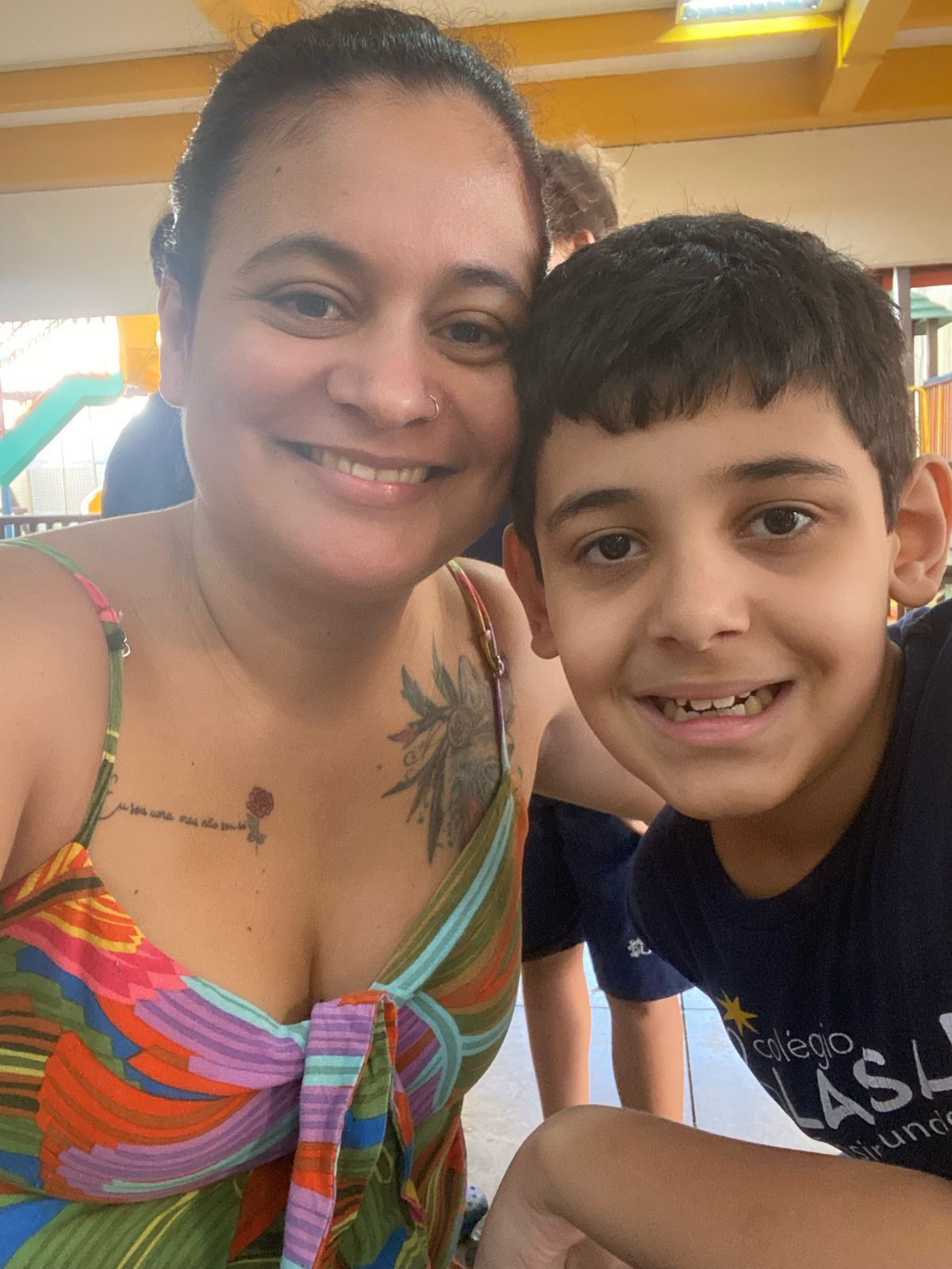
Nayana Moreira and Arthur. Credit: Personal Archive.
In Nayana’s opinion, most schools are not prepared to accommodate neurodivergent students. According to Nayana, who is from Goiás, a well-known school in the state capital even turned Arthur away because he is autistic. Although she knew this was illegal, she did not want to pursue the matter further. Currently, his school experience has been positive. The warm welcome and the skilled work of the academic coordinator, the homeroom teacher, and the support teacher have all contributed to her son’s development.
In Campinas (SP), Raquel Del Monte is not only a doctor but also an activist and the mother of Bruno, who has autism. He was diagnosed at age eight. The first signs that caught her attention were his difficulties interacting with others, staying in school, and performing certain activities. At the time, the lack of easy access to information online made it harder to identify the condition quickly.
Raquel says she had a positive experience with the school where Bruno studied for many years and graduated from high school. The school welcomed the new ideas she brought back from books and conferences to enhance her son’s educational experience.
At age 26, Bruno studied Computer Science at the University of São Paulo (USP), the degree program he had always wanted to pursue. Del Monde points out that he was lucky and enjoyed many privileges throughout his experience.
“I’ve been working all these years so that other children won’t have to rely on luck, so that we can fight for an educational system as a whole that moves away from this rigidity—this idea that everyone learns the same way, that everyone has to conform to a standard—and that embraces the idea of diversity, diverse learning environments, and flexibility.”
Raquel Del Monde - Physician specializing in neurodevelopmental disorders

Raquel Del Monde and her son Bruno. Credit: Personal Archive.
Vanessa Azevedo is the co-author of the book *Maternidade Atípica*. This work is the result not only of her study and research on the topic but also of her experience as the mother of Bernardo (5). She explains that, from the very beginning, she realized her son had a unique way of seeing the world, and it was this “special way” of his that led her to delve deeper into the world of neurodiversity.
Vanessa points out that the lack of understanding of her son’s needs, the difficulty in finding qualified professionals, and the struggle to find an education that truly respects his pace have been—and continue to be—part of an ongoing battle.
“Bernardo reminds me every day that neurodiversity isn’t a limitation, but a new way of seeing the world. And if I can leave a legacy, it will be that of helping to create spaces where children like him are welcomed, respected, and can shine in their own unique way.”
Vanessa Azevedo - Educational Psychologist and co-author of the book *Atypical Motherhood*
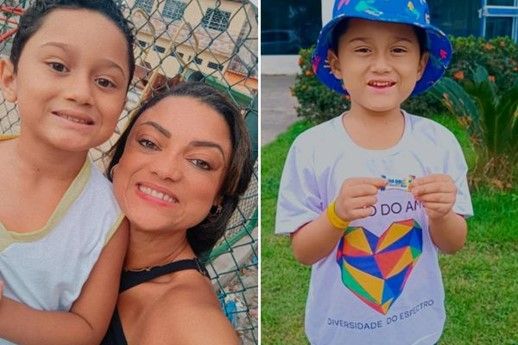
Vanessa Azevedo and her son Bernardo. Credit: Personal Archive.
See also: How to Take Care of Teenagers’ Mental Health?
Diagnosis and Treatment of Neurodivergent Conditions
Behavior is the basis on which most cases of neurodivergence are diagnosed. The symptoms of neurodivergent conditions, such as autism, dyslexia, and ADHD, begin in the early stages of development, says Raquel Del Monde.
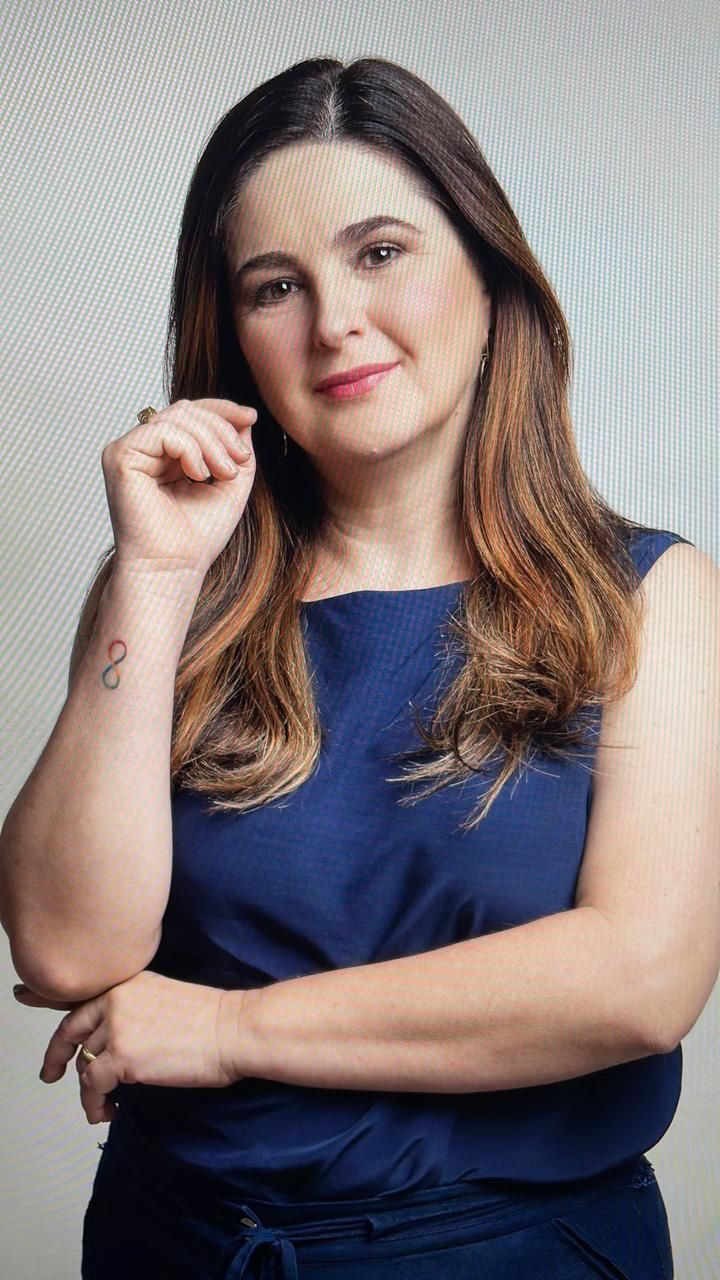
Raquel Del Monde, who specializes in neurodevelopmental disorders, earned her medical degree from the University of São Paulo (USP). Credit: Personal Archive.
Over time, science has established increasingly objective criteria, even though the observation of behavior involves a subjective process that depends on the experience, perspective, and knowledge of the professional observer. For the physician, observation must be extremely careful and take into account the person’s entire history, as well as their behaviors in various contexts and over time.
As for treatment, in the case of ADHD, there is strong evidence that medication plays a significant role and is combined with certain environmental interventions. In autism, there are specific initiatives focused on social communication, and in dyslexia, educational and pedagogical support is the primary tool for management.
See also: Teachers’ Mental Health - qWho takes care of those who teach?
Psychology and Digital Influence from the Perspective of a Neurodivergent Person
In the interior of São Paulo, in Botucatu, Lucas Pontes (27) grew up exhibiting atypical behaviors. He says he was a quiet baby who didn’t react much to social stimuli. “I walked on tiptoes, had a hard time playing with other children, was a picky eater, and had countless tantrums; I would cry desperately and lose control, for no apparent reason at the time,” he says.
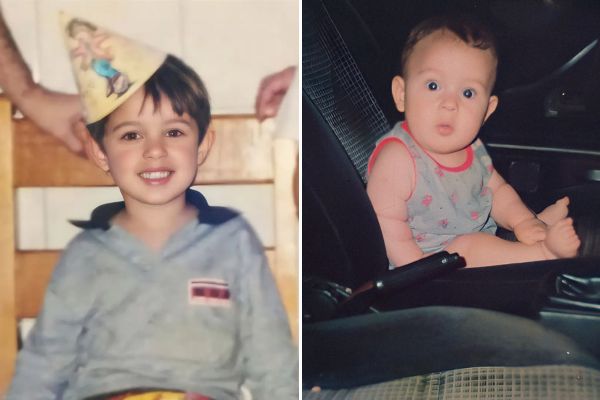
Lucas Pontes as a child. Credit: Personal Archive
During adolescence, the young man from São Paulo began to experience more frequent episodes, especially when he was in environments with a lot of stimuli. He had limited social interaction, rigid behavior, and a hyperfocus on activities such as drawing and music. After seeing various specialists, he was diagnosed with autism at age 19. The diagnosis came as a relief to the young man, who, together with his family, had always been searching for answers to questions he had been asking himself since childhood.
Since then, with appropriate support, Lucas has begun to develop the necessary skills, particularly in the areas of communication and socialization, as well as an understanding of sensory issues. At age 24, he received another diagnosis: high abilities and giftedness (HA/G).
Regarding his school experience, Lucas points out that school has always been an extremely unpleasant and exhausting environment. Unfortunately, the bullying shaped Lucas’s reality, and he also did not receive adequate support from the staff at the school.
Throughout his education, he found it easy to learn the material taught, but had greater difficulty with activities that involved group work and noisy environments with bright lights and many people.

Music is an art form that has always interested Lucas Pontes. Credit: Personal Archive
Although he wanted to pursue a career as a musician, Lucas chose to enrollin a college program in psychology because he recognized the challenges he would face as an autistic person working in music. He chose this program because of his interest in better understanding human behavior—which, from his perspective, had always seemed strange—as well as to help others with stories similar to his own.
Internships involving activities directly related to other people on the autism spectrum, in a school setting, fostered in Lucas a deeper fascination with the autism spectrum, leading him to decide to pursue a career in the clinical care of neurodivergent youth and adults.
Lucas is also currently a digital influencer and has over 120,000 followers on Instagram (@lucas.atipico). He believes that representation is one of the essential weapons against prejudice.
“Content about autism created by autistic people—which has seen a considerable increase over the past decade—has brought a new perspective on the spectrum and has debunked many myths about autism, while also fostering a sense of identification and acceptance.”
Lucas Pontes - Psychologist and digital influencer
However, Lucas emphasizes that among the problems currently faced on the internet is the lack of diversity in representation, especially regarding autistic people who require greater support and/or experience intersectionality. Another issue is the growing trivialization of the condition through the dissemination of information that is often incorrect and overly generalized. The lack of more critical content—which goes beyond the aspects and characteristics of autism to explore the forms of oppression experienced by these individuals and their families—is a reality in the digital sphere.
Regarding educational strategies that can be adopted to support neurodivergent individuals in education, Lucas emphasizes the need for better training of education professionals, who should have access to supportive tools—such as Augmentative and Alternative Communication—as well as collaborate with professionals from other fields.
“Overcoming attitudinal barriers by recognizing ableism and its impact on professionals’ practices, as well as raising awareness among classmates and ensuring that bullying and social exclusion of students with autism are not accepted as normal, are other key points.”
Lucas Pontes - Psychologist and digital influencer
From a psychologist’s perspective, the presence of autistic people in health-related fields—such as medicine, psychology, and speech-language pathology—is essential to changing the way we view autism and welcome autistic people, with the goal of building an “accessible and anti-ableist science.”
By Lucas Afonso, journalist.
*Content is the sole responsibility of the partner.
**This text does not necessarily reflect the opinion of Bett Brasil.
Share on social media:
Categories
- Diversity, Equity, and Inclusion (DE&I)