
The Challenge of Being a Teacher in the Age of Education 5.0
)
Have you ever stopped to think about how your “familiar world” (that classroom you’ve been in charge of for years) changed almost overnight? If you felt butterflies in your stomach when you turned on your camera for the first time in 2020, or if you look at your Generation Alpha students today and feel like they’re on a different wavelength, know that you’re not alone.
Recently, we delved into a fascinating study by Fernanda Capeli Ludgero, our educational consultant here at Microkids. Her work, which focuses on training teachers in computer science, offers a necessary “reality check,” but also a very clear roadmap for navigating these uncharted waters. What she shows us is that the conflict we’re facing isn’t just technological—it’s also existential. We’ve decided to highlight a few points from the study to help you reflect on this. Here we go:
The "legacy" of 2020 and the advent of Education 5.0
The COVID-19 pandemic was the biggest “particle accelerator” education has ever seen. In March 2020, we were thrust out of our comfort zone. Teachers who had never recorded a video before became “heroes”—and, at times, “memes.” But the legacy left behind wasn’t just the use of Zoom or Google Meet. It was the consolidation of Education 5.0.
But what is it, exactly? While Education 4.0 focused on efficiency and industrial technology, Education 5.0 puts people back at the center. It uses active learning methods, gamification, and educational technology to develop not only intellectual abilities but also social-emotional skills.
The big challenge is this: while our students are digital natives who are “born immersed” in the online world, most of us educators are between 30 and 50 years old. We learned to use technology as a work tool. For them, it’s an extension of their own bodies. This “generational time zone” gap is what creates the resistance and insecurity that many of us feel.
So how should we deal with this?
One of the most liberating aspects is debunking the idea that teachers need to know how to code like an engineer to be relevant. It’s true that the role of the educator has changed radically, but let’s focus on what matters in this change:
- From transmitter to curator: if Google and AI deliver information in seconds, their value no longer lies in “providing content,” but in helping students filter out what is true and useful.
- From a holder of knowledge to a validator of experiences: the Alpha student learns by doing. Their role is to make sense of that experience, ensuring that it is transformed into real knowledge.
Technology doesn't replace the teacher, you see? It enhances the teacher's potential. But for that potential to emerge, we need confidence. And confidence comes from training that respects our analytical journey and gives us practical tools for everyday life.
Intelligence Beyond the Screen
An important concept that all teachers need to understand is computational thinking. And here’s the best news: you can start teaching it without turning on a single computer.
Computational thinking is a way of solving problems. It is based on four pillars:
- Breakdown: Breaking a large problem down into smaller parts.
- Pattern Recognition: Identifying what repeats itself.
- Abstraction: Focus on what's important and ignore the rest.
- Algorithms: Create a step-by-step guide to the solution.
This can be achieved through games, logic puzzles, and physical activities (what we call “Unplugged Technology”). The machine (the computer) is merely the final tool. The intelligence behind it begins with its pedagogical application.
When students learn to think in a structured way, they become creators of solutions, not just consumers of screens.
Active learning methods: putting the student at the center
The question that comes up time and again is how to turn the classroom into a laboratory for innovation. The answer lies in active learning methodologies, especially Project-Based Learning (PBL).
Instead of a traditional lecture, where the teacher speaks and the student listens, Project-Based Learning (PBL) presents a real-world challenge. Students must investigate, collaborate, and create something tangible. In this setting, technology serves as a support tool: for research, for creating prototypes, and for communication. The teacher acts as a guide on this experiential journey.
This is what Professor José Moran defines as “deep learning.” It’s not about memorizing formulas; it’s about understanding how to apply them to solve a real-world problem.
“Deep learning means understanding, connecting, applying, and transforming knowledge into meaningful action. When students tackle real-world problems, work on projects, and connect theory with practice, what they learn takes on meaning and becomes more relevant and lasting. The teacher, as a designer, facilitator, and mentor in this process—with the support of technology—helps foster students who are more independent, critical thinkers, and capable of acting creatively and ethically in life and society,” says Moran.

Professor Jose Moran advocates the concept of "deep learning." Photo: Courtesy of the source.
4 Steps to Help Your School "Turn Things Around"
Okay, but how do you turn the key? There are many ways, but today we're going to highlight four of them, which are:
- 1. Reflection and History (The "Why")
Understand the evolution of Education 1.0 through 5.0. Where do you fit into this timeline? Recognizing your challenges is the first step toward overcoming them.
- 2. The 3 Pillars of the BNCC for Computer Science (The "What")
The BNCC now requires Digital World, Digital Culture, and Computational Thinking. Explore how these areas connect to your subject. They aren't "extra subjects"; they're new ways of teaching what you already know.
- 3. Experimentation (The "How")
Start with the "desplugado" (learn more about “unplugged” here). Use logic and collaboration. Then, introduce simple digital tools that help students create, not just consume.
- 4. Development and Feedback (The "Result")
Create integrated lesson plans. Try things out, make mistakes, and learn from your students. Their feedback is the most accurate guide you’ll ever have.
Food for thought at the teachers' coffee break
"No one can facilitate learning about content they do not master, nor can they construct meanings they have not yet constructed."This quote, cited in the study that helped us create this content, is a call to responsibility, but also to acceptance. We at Microkids, have been serving as a bridge between teachers and technology for 30 years. Our ETC (Education, Technology, and Construction) methodology was designed precisely to make you feel secure.
Having a great method isn’t enough. Being a household name isn’t enough either. What really makes a difference is your ability to serve as that human bridge in an increasingly digital world. Generation Alpha doesn’t expect you to know everything about technology. They expect you to validate their journey.
The future of education isn't a distant mirage, dear teacher; it's happening right now, in every interaction in your classroom. Thinking about this is what makes the difference.
About the author:
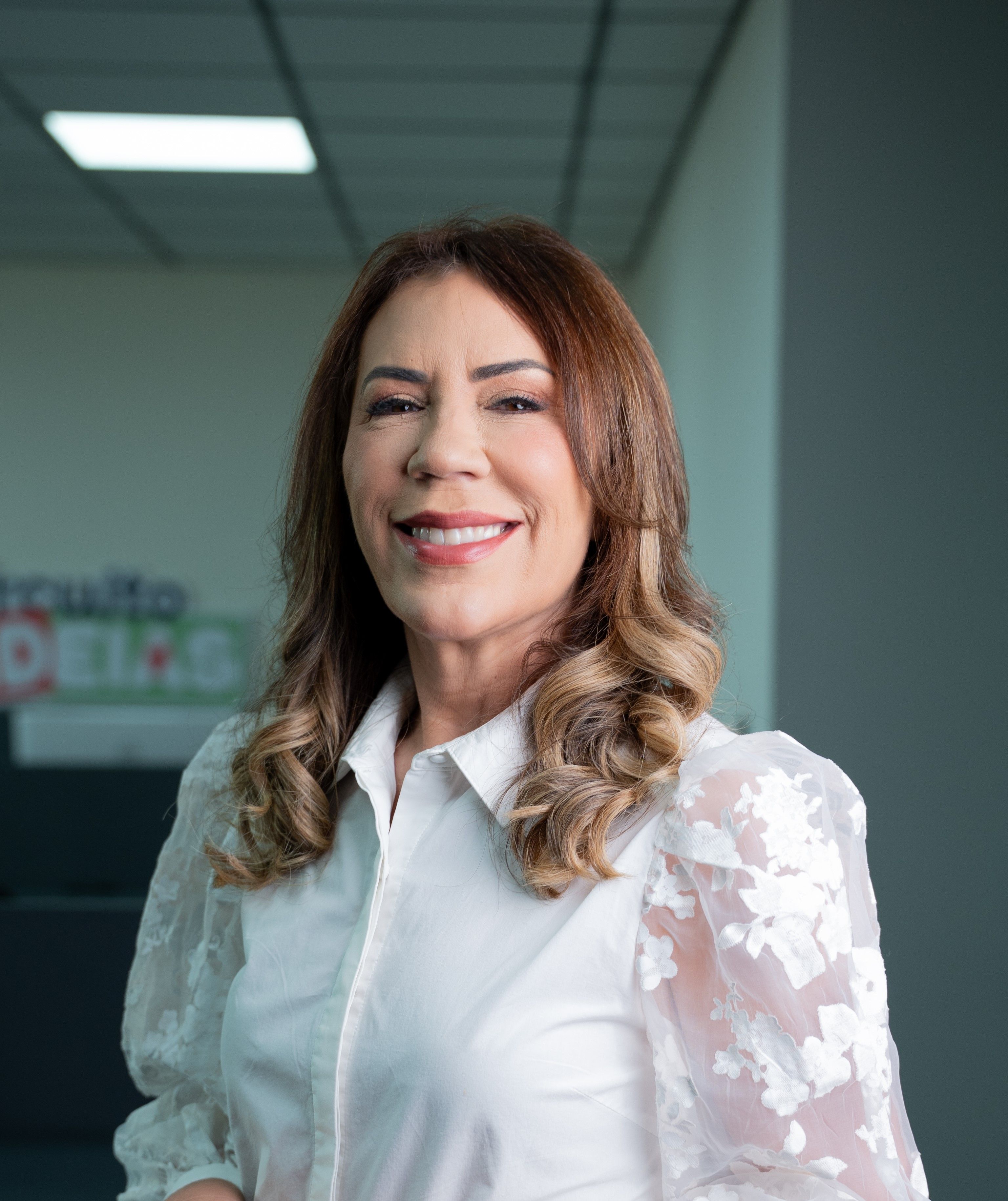
Microkids: Building futures for 30 years.
Learn about our methodology | @microkidsbr
This article was inspired by and based on the master’s thesis of Fernanda Capeli Ludgero, a master’s student in Educational Technology and an Educational Advisor at Microkids.
*Content is the sole responsibility of the advertiser.
**This text does not necessarily reflect the opinion of Bett Brasil.
Share on social media:
Categories
- Sponsored content
- Learning Strategies