
The Challenge of Schoolwork in Restoring Learning
)
There is no doubt that the pandemic has caused a significant disruption in the learning process for all Brazilian students, across all levels of education and social classes.
We know that Brazil was the second country in South America and the fourth in the world to keep schools closed for the longest period of time during the two and a half years of the pandemic, according to the OECD—the Organization for Economic Cooperation and Development.
We now face an immense challenge! We need to establish a task force to create a new environment for effective and meaningful learning, and this challenge involves all of us—teachers, school administrators, secretaries of education, and the government as a whole—who, as new administrations take office at the state and federal levels in 2023, must develop an effective policy to reverse this situation.
I believe it is necessary not only to address issues related to learning, but also to work on the social-emotional development of students and teachers in order to ensure the improvement of their quality of life, well-being, and mental health—though this topic will be the subject of another article. Today, my focus is on the recovery of learning.
So let's get started! Let's begin by briefly reviewing how students learn!
We know that learning is a highly complex process that takes place throughout one’s life and is enriched by various stimuli and lived experiences that promote the synapses that create, strengthen, and modify neural connections, thanks to brain plasticity.
Therefore, it is essential that, when organizing our plans, we adopt a variety of work strategies to broaden the range of stimuli and, in this way, develop different skills and competencies.
In this process of selecting learning experiences, we educators must not forget that the stimuli we provide generate neural changes which, as they pass through the filter of attention, create short-term memories—what is known as working memory. During sleep, these memories are transformed into long-term memories, which is why it’s important for us to educate families about the importance of sleep for children and adolescents; in addition to its restorative effect, sleep helps solidify what has been learned. When these learnings are put into practice and continuously applied in different situations, they become firmly established as skills and competencies.
However, if information falls into disuse or does not undergo consolidation processes, it is forgotten. This is what happens when a student studies for a test, memorizing concepts just to reproduce them, and then forgets everything right afterward. This shows that no learning took place, since the brain considered the information to be of little relevance—it was not used consistently and, therefore, was not consolidated. Here, it’s worth recommending the movie *Inside Out*, which perfectly illustrates these processes!
Well, the pandemic has disrupted all these processes because it has reduced exposure to a variety of stimuli, has failed in many cases to ensure the systematic organization of the information received, and has made it difficult to apply different types of information in different contexts—and this has already compromised learning.
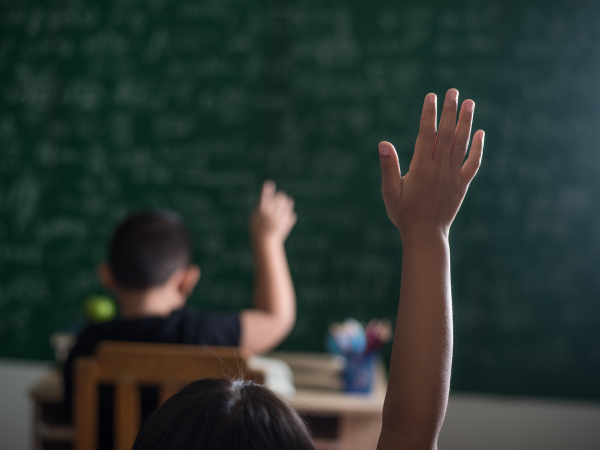
After all, to learn effectively, students need time to form long-term memories, repetition using different strategies to reinforce what they’ve learned, motivation for students to demonstrate effort toward achieving learning objectives, and personalized instruction so that teachers can monitor student performance, through a variety of learning evidence demonstrated by the student, and from there decide on the most effective actions to support learning and focus on problem-based learning to help the student develop hypotheses based on the stimuli received.
The pandemic has also disrupted these processes; furthermore, it has created a distance between teachers and their students, which has also impacted learning, since a close relationship between student and teacher allows the teacher to demonstrate interest, and the adult’s expectations of the student also influence the student’s learning processes—and may even alter the student’s brain.
Positive feedback that reinforces achievements, or constructive feedback that highlights how far students still have to go to reach their goals and views mistakes as constructive elements—as obstacles to be overcome—goes a long way toward encouraging students to reflect on their learning process and their metacognition—that is, on how they learn and understand their own learning process—and, if necessary, to revise their learning strategies.
When it comes to stimuli and synapses, we must not forget the importance of executive functions—and here I’d like to highlight attention! Just how much attention, focus, and concentration have been compromised during the pandemic! Our students, most of the time with their cameras off when online, have intensified their tendency to multitask—a trait characteristic of teenagers: they listened to music, played video games, watched TV shows, and even slept, “all at once,” while class was in session! How can we learn when we know from neuroscience that we don’t use our full potential when we do several things at once—and this, of course, compromises the quality of learning!
In short, we now need to incorporate into our daily school routine the development of a variety of strategies that foster the attention so essential to learning! The possibilities are endless; some of them may include: activities that involve making connections and associations—such as linking new concepts to prior knowledge; introducing new concepts that spark students’ interest; activities that involve some form of movement for students every 20 minutes—the maximum attention span for older students—such as rotating through different stations, a very interesting active learning method; using rewards for each learning milestone; and, ultimately, ongoing activities that facilitate the systematization and assessment of learning progress and/or difficulties.
Looking to the Future
Based on this brief overview of how we learn, administrators and teachers need to reevaluate their approaches to planning and adopt a new perspective on their work plans. We must start with the end in mind—that is, with the objectives. What objectives are essential for student learning? To achieve this, we must redesign the school curriculum to prioritize the skills and competencies outlined in the BNCC for that stage of development.
In this process of reorganizing the lesson plans, it is up to us, as educators, to also adopt a model of continuous and diagnostic assessment that will allow us to identify students’ strengths and areas of difficulty in order to adjust the learning path and select appropriate learning strategies and resources.
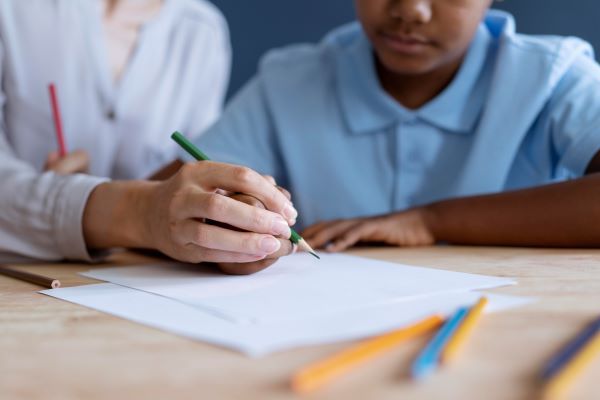
In this redesign of the plan, which involves curriculum revision and diagnostic assessment, a proactive pedagogical intervention is essential to redefine work schedules and the use of resources and strategies, promote the creation of student groups based on their profiles or learning needs, customize work assignments to meet diverse learning levels, and encourage the development of tasks as opportunities for consolidation.
In this new approach, content becomes a means to achieve objectives, and in this way we ensure not only conceptual learning, but also procedural and attitudinal learning, since the chosen strategies will contribute to the development of practical skills. And as we consider the attitudes we aim to foster—with a view to the student’s holistic development—we will address social-emotional development based on the chosen concepts and strategies; thus, the social-emotional competencies outlined in the BNCC will also be developed in an integrated manner with the content.
All of the above characterizes the process of rebuilding learning as a response to address accumulated learning gaps; therefore, it must be a collaborative effort between teachers and administrators, who must work together with a sense of shared responsibility to advance the country’s education system.
We must not forget that families must also be involved in this process, as they need to be informed about the purpose of the school’s work. They should also be encouraged to value education, and to that end, they should be invited to maintain close ties with the school, viewing it as a space for dialogue so that together they can devise initiatives that complement the school environment to reduce learning difficulties and help students reestablish good study habits.
Undoubtedly, this set of initiatives at various levels can help shape a new landscape in the country’s education system and, in this way, contribute to the development of students’ well-rounded education as they prepare for an increasingly demanding world in which school graduates are expected to demonstrate creativity, problem-solving skills, openness to new ideas, commitment, and social competence.
The challenge is no small one, but we can overcome it, just as we did during the pandemic years when we reinvented ourselves in a short period of time. To do so, we need to have clear goals, a willingness to adopt innovative teaching practices, an openness to learn more every day, and a management team that is collaborative, responsible, and committed!
About the author:

*This text does not necessarily reflect the opinion of Bett Brasil.
Article originally published in *Revista Escola Particular*.
Did you like it? Share it on social media:
Categories
- Learning Strategies