
Where are ethics and citizenship in the digital society?
)
Bett Brasil is a space for dialogue and exchange, and for this reason, on Thursday afternoon (the 11th), it hosted a meeting of the TE & TI Partners group, a community founded 11 years ago to promote dialogue among school technology professionals. Currently, the group includes more than 200 public and private educational institutions, as well as experts.
“Our goal is to facilitate the sharing of experiences among school technology professionals so that we can create a safer and healthier environment for everyone,” explained Grace Gonçalves, the founder of TE & TI Partners.
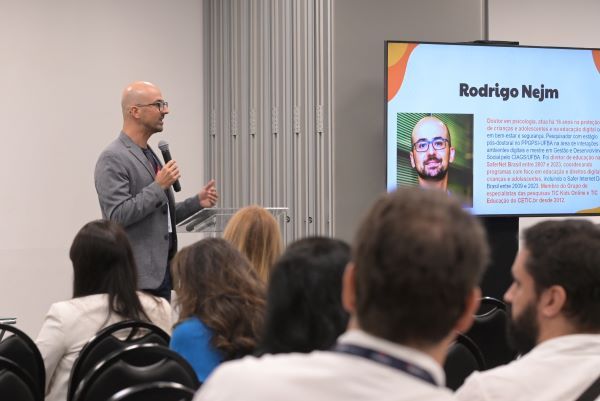
This Thursday, under the theme “How Technology Can Be Used to Foster a Positive School Environment,” attorneys Cristina Sleiman and Patrícia Peck, along with Rodrigo Nejm—who holds a Ph.D. in psychology and is a specialist in digital security—spoke about citizenship and digital ethics.
Cristina believes that our society is currently experiencing a period of intolerance, which has had an impact on the school environment. “We also need to remember that technology often reinforces negative behaviors, and no matter how much parents educate their children or how much teachers guide them, we are dealing with a group within a social context, and our challenge is to take a creative approach to discussing ethics with young people.”
Patrícia emphasized the idea that there is no right or wrong when it comes to technological tools; it all depends on how they are used. “We’re facing a paradox: the same technology that brings us closer together (we’re in contact with people in different corners of the world) also distances us, because it makes us slaves to our screens and prevents us from giving the attention we should to those who are close to us.”
One of the approaches she suggested is working with young people based on the fundamentals of digital democracy, grounded in pillars such as freedom of expression, transparency, participation, and freedom with responsibility. “Rather than just talking about digital citizenship, we need to talk about citizenship in a digital world,” Nejm challenged.
The debate helps educators gain the tools they need to expand digital education, fostering more responsible young people and safer environments.
Did you like it? Share it on social media:
Categories
- Educational Management
- Innovation