
The Pedagogy of Error
)
The process of human evolution is, to say the least, paradoxical. Overcoming personal limitations begins with a clear awareness of them. This mechanism of awareness in Western society, however, has been overshadowed by a prejudice that is difficult to overcome: the prejudice against error.
The perfectionist view rooted in the Cartesian paradigm has led us to believe that where there is error, there is no correctness, and vice versa. The sciences, “contaminated” by this paradigm, have become the greatest perpetuators of prejudice against error, and schools—the institutions responsible for formalizing the teaching and learning of these very sciences—have structured themselves in accordance with beliefs and values that segregate error from the context of learning.
The situation described at the beginning of this text reflects, in practice, the consequences of this prejudice. As Rui Trindade analyzes in his essay, schools only pose questions with predetermined answers. People live in a way that is consistent with the belief that a mistake is something to be hidden, disguised, and avoided. What stands out in the context at hand is the fact that this notion is so deeply ingrained in teachers.
This fact immediately raises a few questions: How do these teachers view their students’ mistakes? How do they feel when a student makes a mistake? How do they understand the role of mistakes in the learning process? It is these questions that we intend to reflect on from this point forward, as it is indisputable that mistakes and correct answers must coexist in real-world teaching and learning situations.
The Meaning of Mistakes in the Learning Process
In school, error is the main character (as the villain, of course!) in the soap opera called “Assessment of Learning.” Error is the result of the teacher’s analysis of students’ answers in terms of right or wrong, which reveals just how much the “pedagogy of the answer” is still revered—a fact that, in turn, shows how much we are still, as Paulo Freire so aptly put it, in the “Era of Banking Education.”
Paulo Freire proposes, as an antidote to the pedagogy of the answer, that teaching be oriented toward a liberating education—one that shifts the Cartesian focus on the “right” answer to the liberating focus of a form of teaching that encourages questions and fosters a curiosity to learn.
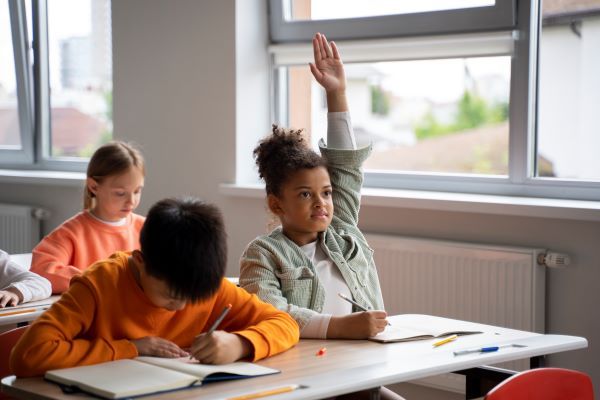
Paulo Freire proposes that teachers change their attitude toward mistakes and begin to view them as a “provisional form of knowledge” ( Freire, 1995, p. 71). This change in attitude requires viewing mistakes as a subject for discussion and for understanding the knowledge that students bring with them to formal learning situations.
Such an approach necessarily entails a break with relationships based on a “banking” model of education, in which correctness is tied to an exact match with the answer anticipated by the educator. “This process of reproducing answers creates the ‘bureaucratization of the mind’ and hinders reflection and creative capacity” (Freire, 1985, p. 53).
Therefore, it is essential that, as children develop their concepts, mistakes be viewed as stepping stones toward future success. These mistakes, in fact, reveal what the child is thinking, and this is what the teacher should focus on: the student’s thought process, in order to understand it and, in this way, challenge the student to find other answers.
See also:
- Teacher Performance Evaluation: How to Conduct It Effectively?
- School and Diversity: The Discourse of Practice and the Practice of Discourse
- Registration is now open for the Bett Nordeste Conference
Once again, teachers are called upon to rethink their role and responsibility in student learning. It is the teacher’s role to make the necessary interventions, based on the student’s zone of proximal development, in order to facilitate the student’s “transition” from their current state to a desired state.
To become a true mediator between the student and the subject matter, the teacher must redefine assessment so that it becomes a process for understanding the student’s learning and revising their own lesson plan. It is essential that we foster genuine learning through mistakes, providing opportunities for students to express themselves as they seek intuitive solutions, develop new lines of reasoning, and refine their hypotheses.
How do mistakes affect learning?
First, we need to clarify the concept of the learning process we are referring to so that we can define the role of error in this context. Here, we will use Piaget’s (1978) framework. From this perspective, learning is shaped by hereditary and maturational factors, as well as by the individual’s interaction with the environment.
According to Piaget, although the individual’s intrinsic factors influence learning, stimulation and interaction with the environment are fundamental factors in the construction of knowledge.
Learning is constructed through the interaction of the individual—who possesses their own action schemas—with the environment. Wadsworth (1992) defines schemas as “mental or cognitive structures through which individuals intellectually adapt to and organize the environment” (p. 02). Thus, schemas are constructed and/or modified through the individual’s interaction with the environment.
As people develop, they encounter situations that go beyond their existing schemas and involve new circumstances, creating a state of imbalance in which the person, in order to return to their previous state of balance, must assimilate or accommodate the new knowledge into their schemas.
In simple terms, we can say that when an imbalance occurs, the individual may integrate new perceptual, motor, or conceptual information into their existing action schemas (assimilation), or they may modify their schemas to incorporate the desired knowledge (accommodation). Both are considered cognitive processes regulated by equilibration.
Equilibration is a process of transition from disequilibrium to equilibrium that functions as a self-regulatory mechanism. The mechanisms of equilibration are assimilation and accommodation. As a result of these processes, the individual can adapt to the environment, either by expanding the schemas they already possess or by developing new ones.
The processes of assimilation and accommodation are fundamental to overcoming errors and, above all, to the development of intelligence. When a person makes a mistake, they may realize it or may not be aware of the mistake at all.
Piaget, as cited in Aquino (1997), when referring to the issue of error and its function, states: “(the null effect) occurs when the child is too young (for the problem presented), and there is not yet, for the child, a relationship between the zones of assimilation related to the introduced factor (the possibility of observing the error) and the expected reaction; at a more advanced level of development, the connection is established” (p. 9).
Following this line of reasoning, when the subject makes a mistake and is aware of it, a state of imbalance is created. This state is triggered by a disturbance—that is, a cognitive conflict. This imbalance refers to the regulatory process through which the individual, as a result of the error, assimilates and accommodates knowledge in order to return to the previous state of equilibrium—only now it will be different.
When we consider the positive value of error, we realize that if a person “makes a mistake, they will tend to reflect more deeply on the problem and on the actions they took to solve it. It is worth noting that a mistake can lead the individual to modify their schemas, enriching them (...) a mistake can be a source of self-awareness.” (Aquino, 1997, p. 36).
Are all mistakes the same?
According to Vinocur (1998, p. 98), errors can occur for various reasons: distraction, conceptual understanding, difficulties in interpreting instructions, and construction. The table below characterizes each type of error and presents the recommended teacher intervention, demonstrating that the teacher’s action must be based on identifying the type of error made by the student in order to intervene appropriately in each situation.
Error due to inattention: The student possesses the cognitive framework and understanding of the concept, but due to a lack of concentration at a given moment, an error occurs. It is the teacher’s responsibility to ask the student to reflect on the question so that they can recognize the error they made and, thus, be able to redo the question.
Conceptual error: The student has not yet developed a concept necessary to solve a particular problem. In this case, the teacher can help the student develop the desired concept through constructive intervention.
Errors due to difficulty interpreting instructions: there are various causes. The teacher must carefully identify the cause. Specific action should be taken based on the cause identified through a detailed investigation of the situation.
Constructive error: The student relies on a subjective line of reasoning that the teacher must identify and understand. Specific action based on the line of reasoning identified through a detailed investigation of the situation.
What is a construction error?
Not all mistakes are constructive. Therefore, the first step is to understand and distinguish between mistakes that are constructive and those that are not.
In constructive errors, there is a logic to students’ hypotheses when tackling any new problem that differs from the logic of adults. Even if this idea is incorrect from an adult’s perspective, it is considered a constructive error. This “error” is the hypothesis at this (current) moment regarding a particular body of knowledge still under construction.
They are said to be constructive because these hypotheses, which are initially constructed, are progressively reconstructed by the individual through comparisons of similarities and differences with other situations or through questioning by the teacher, leading the student to become unsettled and to question what they thought was certain.

A very interesting strategy for solving certain problems is the exchange of viewpoints within a group, since in this case, each student must use arguments to defend what they believe to be correct. This practice helps form a shared understanding of error, because, as Isabel Parolin aptly points out in her text, schools train students to develop strategies for concealing their mistakes in life.
Non-constructive errors do not indicate a difficulty in comprehension on the part of students, as they relate to arbitrary knowledge (that is, knowledge based on convention). As an example, we can cite spelling errors, which do not indicate difficulties in comprehension for students, since spelling is a form of arbitrary knowledge. In this sense, teachers cannot expect their students to identify these errors, because there is no underlying logic to them.
Teachers make mistakes, too
A pedagogical practice guided by liberating education is based on a critical analysis of social reality and is implicitly underpinned by the sociopolitical goals of education.
This means that teachers must understand that education is not neutral and acknowledge the political nature of the educational act. This understanding is reflected in the educator’s approach, which—by breaking away from the authoritarian teacher-student relationship—seeks to build a horizontal relationship through dialogic practice.
In this process, the one-sided relationship in which the teacher asks questions, the student answers, and the teacher corrects is transformed; asking and answering are viewed as fundamental elements of curiosity, which is a cornerstone of knowledge construction.
This entire system, however, can only take root in a context where making mistakes is considered a characteristic of mortal beings and, more than that, in a context where teachers can set aside the facade of pseudo-perfection and dare to make constructive mistakes in an effort to foster meaningful learning.
About the author:
*This text does not necessarily reflect the opinion of Bett Brasil.
Share on social media:
Bibliographic references:
AQUINO, Julio Groppa (ed.). Error and Failure in School: Theoretical and Practical Alternatives. São Paulo: Summus, 1997.
DELVAL, Juan. Learning to Learn. São Paulo: Papiruz, 1991.
FREIRE, Paulo; FAUNDEZ, Antonio. Toward a Pedagogy of Questioning. Rio de Janeiro: Paz E Terra, 1985.
PIAGET, Jean. *Doing and Understanding*. São Paulo: Melhoramentos: USP Press, 1978.
VINOCUR, Sandra, in BOSSA, Nadia Aparecida (ed.). Psychopedagogical Assessment of Adolescents. Petrópolis: Vozes, 1998.
WADSWORTH, Barry J. Children’s Intelligence and Affectivity in Piaget’s Theory. São Paulo: Pioneira, 1992.
Categories
- Teaching Methodologies