
National Education Plan 2026–2036: The School as a Space for Democracy, Care, and Equity
Now that the elections to determine the President of the Republic and state governments have concluded, it is time to resume work on the new National Education Plan (PNE) 2026–2036, enacted in April as Law 15,388. The governments taking office in January inherit a short-term commitment: to approve the state education plans that will guide the next decade. The election campaign is over. The plan remains, and it must now move beyond the drawing board.
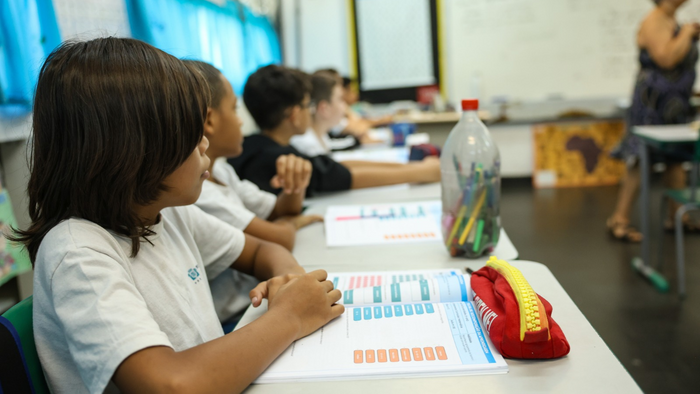
This movement isn't just about governments. When a student enters school, they learn much more than what the curriculum calls for. They learn to resolve conflicts and to live alongside people of different races and backgrounds, with and without disabilities.
School is the first public space a child attends and, as such, the place where they experience democracy, respect, and mutual care. This applies to both public and private schools. It is this potential that the PNE can help strengthen.
From the national level to the classroom
With 19 goals, 73 targets, and 372 strategies, the PNE sets the national direction, but it is the states and municipalities that, by law, approve their own plans, defining the actions that will turn the targets into reality. The states have until April 2027 to do so, and the municipalities, until July 2027. Monitoring, in turn, must take place every two years. The implementation at the local level is carried out through state departments and councils, but is finalized in each school’s political-pedagogical project (PPP). That is where the plan ceases to be mere text and becomes part of daily practice.
One of the new developments is that the goals now require a reduction in inequalities among social groups. By 2036, the ratio of outcomes among groups defined by race/color, gender, socioeconomic status, region, and location must be at least 90%. Equity cuts across all goals, with a focus on special education from an inclusive perspective, bilingual education for the deaf, and education for Indigenous, Quilombola, and rural communities.
What about private schools?
Most of the PNE’s goals are directed at public authorities. This does not exclude private schools from the plan. They are part of the education systems, which authorize and oversee them, and some goals apply to all schools, such as those related to environmental education, thermal comfort, and accessibility in all schools.
The plan also calls for a revision of the National Common Core Curriculum (BNCC) and national guidelines for the use of digital platforms and artificial intelligence in education, which will be implemented in every classroom.
Several obligations that the PNE reinforces already apply to the private school system: the enrollment of students with disabilities at no additional cost, as provided for in the Brazilian Inclusion Law and upheld by the Federal Supreme Court; the teaching of Afro-Brazilian, African, and Indigenous history and culture; and the fight against systematic bullying. The PNE does not create these obligations, but it places them at the center of the coming decade.
For the South and Southeast, there is a specific provision. The plan stipulates that all school systems must have plans for climate change prevention, mitigation, and adaptation, including emergency response protocols. The 2024 floods in Rio Grande do Sul demonstrated that this agenda is already part of school management.
Principles for the Educational Program
The PNE sets forth the principles that should guide all schools, regardless of the school system to which they belong, which are:
- The right to access, retention, and learning;
- Democratic management, in which student councils, school boards, and listening to families make participation a daily practice;
- Promoting diversity through curricula and materials that recognize the histories and cultures of Black people, Indigenous peoples, Quilombolas, people with disabilities, and rural communities;
- Care as a culture, characterized by inclusivity and the fight against racism, ableism, and other forms of violence;
- Educational, physical, and digital accessibility, designed from the outset—not as a retroactive adaptation.
From Principle to Guaranteed Right
To ensure rights, we need to know who is being left behind. To this end , the National Education Plan (PNE) calls for assessments using data disaggregated by race/color, disability, gender, and region; active outreach to out-of-school students; continuing education; and coordination with health, social services, and cultural sectors.
In addition, the document emphasizes that it is important to consider listening to the students themselves about what works and what needs to be improved as part of the process.
Points to Note
Educators and administrators should keep three points in mind.
- Let’s not let “equity” become a catch-all term. National goals only make sense when each school knows, based on data, which students are underperforming and why, and documents what it will do about it.
- The PNE should not be treated as a checklist. Cultural change takes time and trust.
- State and municipal plans—which determine what actually reaches schools—should be closely monitored.
The PNE does not transform schools by decree; rather, it provides guidance. It is up to those on the ground to transform this environment into experiences of belonging, where every student knows they have a place, a voice, and are cared for. And by “on the ground,” we mean education departments, school boards, and schools working together—each with its own responsibilities—to ensure that students have access to a transformative education.
About the author:
Share on social media:
Categories
- The Future of Education
- Educational Management