
Why has knowing how to ask questions become an essential skill in school?
)
For decades, schools have been organized to teach content and assess students’ ability to reproduce answers. The rise of artificial intelligence—which can generate text, solve problems, and produce answers in a matter of seconds—challenges this logic and places a new skill at the center of the learning process: knowing how to ask questions.
This will be the starting point for the panel discussion “Beyond Clichéd Answers: Authorship, Creativity, and Thinking in School, ” which is part of the program for the Bett Nordeste Conference, taking place on August 19 and 20 at the Recife Expo Center in Recife (PE). Admission is free. Register here.
The discussion will bring together Katia Smole, executive director of the Reúna Institute, and Marina Pinheiro, a professor in the Department of Psychology at the University of Pernambuco (UFPE), for a conversation on how schools can foster teaching practices that prepare students to respond critically, creatively, and proactively to the challenges of the present and the future.
“Perhaps the greatest challenge in education is to prepare people who are capable of transforming knowledge into wisdom,” says Katia. According to the executive director of Instituto Reúna, the difference between information, knowledge, intelligence, and wisdom becomes even more evident with the advent of AI. While technology facilitates access to knowledge and aids in problem-solving, it is up to people to make sense of what they learn and decide how to use that knowledge.
According to her, this process hinges on the ability to ask good questions. “High-quality questions foster curiosity, guide investigations, help analyze evidence, identify biases, establish connections between different fields of knowledge, and construct new meanings,” she points out.

Katia Smole explains the importance of schools fostering critical thinking in students. Photo: courtesy of the organization.
Katia links this challenge to the competencies identified for 21st-century education, which involve knowledge, skills, character, and meta-learning. In her view, creativity and critical thinking depend on a repertoire of skills, but also on experiences that lead students to investigate, formulate hypotheses, and refine solutions.
She also points out that the results of the 2022 PISA assessment—which evaluated creative thinking for the first time—underscore the need to expand this type of experience in Brazilian schools.
"In the end, perhaps the most important question for contemporary schools is not 'What do our students need to know?', but 'What kind of people do we want to nurture so they can use that knowledge responsibly, creatively, and with purpose?'" he adds.
See also:
Marina notes that the ability to ask questions has always been a fundamental prerequisite for the production of knowledge, authorship, and scientific and technological innovation. With AI, she argues, this skill is no longer merely desirable—it has become indispensable.
According to the researcher, for a long time, teaching was structured around memorization and the trial-and-error approach, leaving little room for curiosity and inquiry.
"Artificial Intelligence highlights the obsolescence of this line of reasoning. When any answer can be obtained in a matter of seconds, the key is no longer accumulating information but rather knowing how to ask relevant questions, critically interpret the answers, compare them with prior knowledge, and generate new insights," the professor argues.
For Marina, this movement requires schools to value the desire to learn just as much as mastery of content.
Authorship remains the student's responsibility
Another point on which the experts agree is the importance of creativity as a central element of learning.
Katia emphasizes that the use of artificial intelligence does not diminish the importance of original work. On the contrary: it increases the need for students to be able to justify their choices, analyze information, and take responsibility for the knowledge they produce.
In practice, this means using AI to support investigations, not as a substitute for human thought.
"A practical example is turning a school assignment into an investigative project. Instead of simply asking students to write an essay on a specific topic, the teacher can encourage them to formulate investigative questions, compare the answers generated by AI with reliable sources, and develop their own summaries, explaining which arguments they accepted, modified, or rejected—and why," he explains.
Marina also views authorship as a process shaped by dialogue with different perspectives. According to her, being an author does not mean creating from scratch, but rather interpreting, selecting, questioning, and attributing new meanings to existing knowledge.
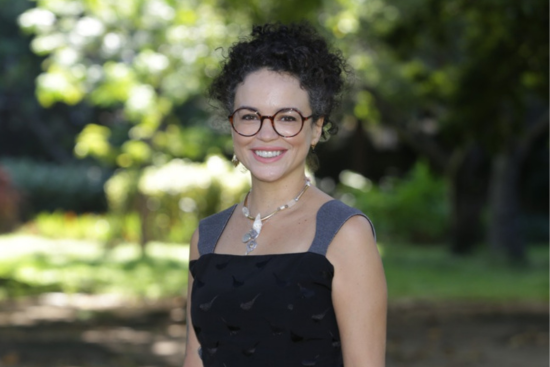
Marina Pinheiro emphasizes the role of authorship as a central element of learning. Photo: courtesy of the organization.
In this context, AI can play an important role in establishing connections and recombining information, provided it is used as a discussion partner rather than as a definitive source of answers.
"Some possibilities include developing projects based on solving real-world problems, facilitating discussions in which students compare different responses generated by AI, discussing the criteria that make a source reliable, and encouraging the rewriting and refinement of texts produced with the help of these tools. In these situations, technology shifts from providing ready-made answers to stimulating reflection, reasoning, and creativity, " Marina points out.
From Intention to Action in Schools
Although the development of skills such as critical thinking, creativity, authorship, and problem-solving is outlined in educational documents and policies, ensuring that these skills are consistently present in the day-to-day life of schools remains a challenge.
In Katia’s view, Brazil has already laid an important foundation for this change through initiatives such as the National Common Core Curriculum (BNCC), the National Digital Education Policy (PNED), the National Strategy for Connected Schools, and the Ministry of Education’s recent guidelines on Artificial Intelligence in Basic Education. According to her, the challenge is no longer about setting the direction but rather about putting these guidelines into practice.
The director of the Reúna Institute states that competencies cannot be treated as additional content but must guide the entire organization of education. This requires greater coherence between the curriculum, assessment, instructional materials, initial and continuing teacher training, school management, and public policies. “When all these elements move in the same direction, an environment is created in which complex competencies cease to be mere intentions and begin to effectively guide pedagogical work,” she points out.
See also:
Artificial Intelligence accelerates this need to rethink the educational model. “AI is just a catalyst. The real shift is the transition from a curriculum focused on content delivery to one geared toward developing complex skills. This puts technology in its proper place: not as an end in itself, but as a context that makes this transformation even more necessary,” says Katia.
Marina agrees that the main obstacle is cultural. According to her, although curricula emphasize skills such as critical thinking, creativity, and problem-solving, many school practices continue to focus on the transmission of content and the reproduction of correct answers.
For the teacher, fostering creativity and critical thinking requires time to investigate, formulate hypotheses, engage in dialogue, revise ideas, and construct arguments. It also requires teacher training that enables educators to understand how AI is changing the production of knowledge and which educational experiences remain irreplaceable.
"The path forward, therefore, lies in strengthening teacher training, promoting investigative and collaborative practices, and building a school culture in which asking questions, arguing, creating, and revising are understood as central aspects of learning," he concludes.
Share on social media:
Categories
- Teaching Methods