
First Day of Bett Brasil Highlights Educational Innovations and Discussions on the Future of Education
)
Bett Brasil, Latin America’s largest event on Innovation and Technology in Education, kicked off this Monday (April 28) with a packed schedule focused on building regenerative futures in education, bringing together experts and leaders from various fields.
One of the highlights of the day was the panel discussion dedicated to the world of edtech. Vitor Harano, head of research at Distrito, presented an overview of the sector based on data from the Atlantico report, focusing particularly on the Latin American market for education startups.
According to Harano, Latin America is fertile ground for startups. “Latin America is the third-largest economy in the world, and Brazil accounts for a significant portion of that market. Companies that are founded in the region already have a competitive advantage in the medium to long term,” he said.
The executive also pointed out that the political, economic, and social inequalities present in Latin American countries can be transformed into excellent business opportunities. “Depending on one’s focus and perspective, these disparities open up different possibilities, including for edtech companies. If they are created with a keen and careful eye on their role in the ecosystem, these companies can enter high-value-added markets,” he emphasized.
Harano also highlighted the size and strength of the South American market as a driver of growth for scale-ups. According to him, returns from venture capital funds in Latin America are among the best in the world. “Today, we have 22,000 active startups in the region. It’s common to see edtech companies that grow and establish themselves in their home countries, expand into neighboring markets, and then come to Brazil to advance even further,” he noted.
Another point emphasized was the intensive use of artificial intelligence in the education sector. “Edtech companies make up the fifth-largest segment within Latin America’s innovation ecosystem. Naturally, they are also the ones that invest the most in and integrate AI into their businesses,” said Harano. He added that, by 2025, the sector is expected to return to pre-pandemic revenue levels, reaching approximately $3 billion.”
Higher Education and Vocational Education
At the Ahead by Bett Forum, experts discussed how Artificial Intelligence (AI) can be a strategic ally in the transformation of higher education. The panel “Reinventing Higher Education: AI Strategies to Transform Institutions” brought together leaders from the education sector to discuss possible paths for innovation in teaching.
The panel moderator, Pedro Henrique, who holds a master’s degree in communication from the Federal University of Fluminense (UFF), presented data showing how technology is already integrated into everyday academic life: “A recent survey reveals that seven out of ten undergraduate students use artificial intelligence as a tool to support their studies,” he noted. Its use ranges from automating summaries and research to developing projects in various fields.
Bruno Rocha, Head of Digital Technology at YDUQS, opened the discussion by highlighting the need for the mindful use of emerging technologies. “We need to be careful not to exacerbate the superficiality of research. Teachers play a crucial role in instructing students and fostering their critical thinking when using these tools,” he said. Rocha emphasized that, when used properly, AI can support the creation of more personalized learning experiences and promote student autonomy, but always with the care not to replace the reflective and creative process, which is essential to academic education.
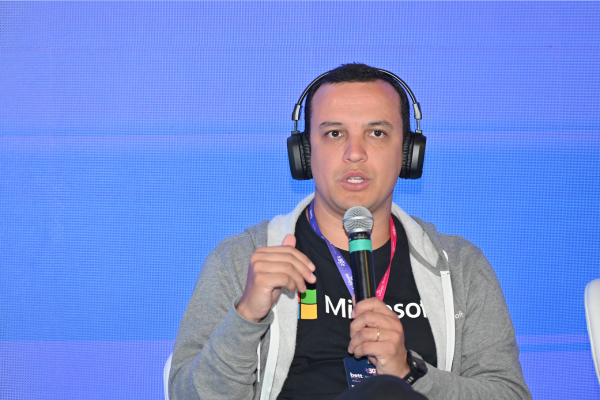
For Fernando Cruz, Microsoft’s sales director and education lead, AI should be viewed as an enabler of human capabilities rather than a threat. He cited Copilot, a Microsoft platform that uses AI to assist with academic and administrative tasks, such as generating reports, automating repetitive tasks, and analyzing learning data. “By 2027, hundreds of jobs will undergo transformations. A LinkedIn study indicates that 83% of companies expect to hire professionals with new skills,” he said.
Fernando argued that AI can help all sectors solve complex problems, from the judiciary to medicine. “Widespread adoption can help move the backlog of cases awaiting review in the courts, the completion of medical reports, and so on,” he noted.
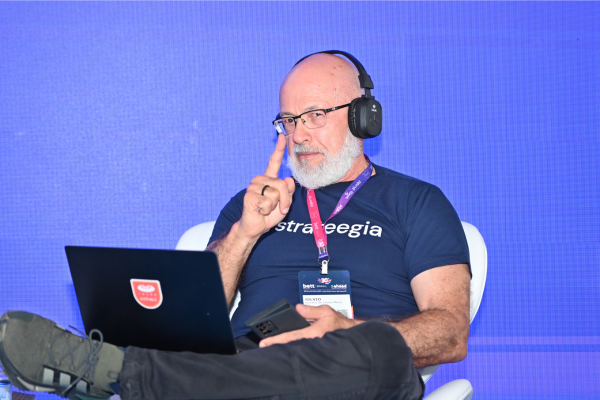
Silvio Meira, chief scientist at TDS Company and a leading figure in technological innovation in Brazil, emphasized the importance of taking a critical view of AI adoption. He proposed the concept of “Generalized Intelligence” to explain the technology’s expansive potential. “We are still exploring the practical possibilities of AI. To move forward, we need to experiment, test, and adapt to real-world scenarios,” he noted.
For Meira, the biggest challenge is modernizing the educational system by training teachers to work in this new environment. “Education needs to stop focusing solely on memorizing content and start focusing on the development of human intelligence, fostering critical thinking and problem-solving skills,” he concluded. The expert compares the advent of AI to the invention of the Gutenberg printing press, stating that generative tools will transform the future.
The debate underscored that the integration of artificial intelligence into higher education must be approached strategically and ethically, prioritizing the strengthening of human skills and the development of new pedagogical models that prepare students for the future.
Against Vilification
At the Managers' Forum, Mario Ghio, a businessman and president of the Alfa e Beto Institute, and Thamila Zaher, CEO of the SEB Group, discussed the challenges of educational leadership in times of crisis and rapid change.
The panel discussed practical strategies for ensuring the sustainability of institutions, promoting adaptation to new realities, and strengthening innovative management in times of uncertainty. Among the experts’ main concerns was the process of “vilifying” schools, in which all blame for social or educational problems ends up being attributed to educational institutions.
For Ghio, this is an issue that requires cooperation and unity among schools. “Generally, the school is always in the wrong in any situation that goes against the wishes of a group of families. Increasingly, we see parents seeking legal recourse to force schools to accept their wishes—something they cannot achieve through reasoning alone. Schools need to stand together, even when they operate in the same community,” he argued.

Ghio also highlighted the collaborative work he is doing with an association of competing educational systems, citing as an example a debate scheduled for the 15th in Belo Horizonte on a bill that proposes allowing parents to determine the pedagogical methodology of educational institutions. “Imagine the impact if this bill is passed,” he warned.
Thamila Zaher agreed with Ghio and added two key guidelines for minimizing damage to the schools’ reputations: “The first point is the contract, which needs to be as clear as possible so that parents can easily understand all the terms. The second is to establish effective communication channels for one-on-one conversations, where it is possible to clarify any sensitive issues,” she explained.
According to her, disagreements often arise in WhatsApp groups or other informal networks, and it is necessary to address these issues before they escalate and end up being referred to agencies such as Procon.
The CEO of the SEB Group also emphasized that it is essential to build closer ties with the school community by promoting transparent dialogue and welcoming families, always with firmness and without compromising the institution’s educational principles.
Anxiety in Schools
Another topic discussed during the first day of the event was “Anxious School: Cell Phones, Mental Health, Adolescence, and Learning in the Digital Age,” moderated by Beatriz Araujo, a journalist and reporter for *Estadão*; and a discussion with Leticia Lyle, an educator with a master’s degree in Curriculum and Inclusive Education from Teachers College at Columbia University; and Dr. Maria Carolina Pinheiro, a psychiatrist, psychotherapist, and university professor, who discussed how the “anxious generation”—more than just a simplistic label—is a reflection of the social, economic, and technological challenges faced by young people in the digital age.
According to Dr. Maria Carolina, the first step for educators is to understand what mental health is. “We hear about ADHD, ASD, depression, and anxiety, but, after all, what is mental health? Have you ever asked yourselves that? Many people equate mental illness with the intensity of feelings and sensations, but that’s not the case. After all, if we can’t live life passionately, then perhaps we do become ill,” she says.
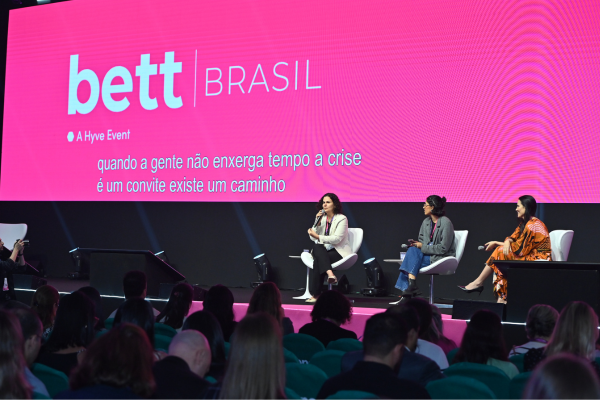
She states that it is essential to understand that schools play a fundamental role as a healthy environment that fosters development—not as the source of these problems. “You need to realize that mental health is existential freedom, and you, as educators, are directly connected to mental health because you are shaping children,” emphasizes Dr. Maria Carolina.
Leticia brought up the educator’s day-to-day experience regarding adolescents’ mental health, linking the topic to the onset of the pandemic and the increased use of cell phones in daily life and in the classroom. “We’re seeing our adolescents struggling and disengaged. That’s a very strong word when you consider that this engagement is their connection—not just to their studies, not just to school, but to their peers and their families.”
Second day
Bett Brasil features a robust program that includes more than 450 national and international speakers, spread across12 concurrent auditoriums. The activities include conferences, forums, and themed arenas, featuring innovative interactive formats such as the Aquarium, Roundtable, and Flipped Classroom. Highlights include topics such as the climate crisis, artificial intelligence, mental health, equity in education, and human development.
Another highlight of the second day of Bett Brasil will be the official launch of the 3rd edition of the Transformative Educator Award, an initiative of the event organized in partnership with Sebrae and the Significare Institute. Open to the public and free of charge, the award recognizes educators who make a difference and drive real change in education. The launch will feature a special address by Silvio Meira, who will share his thoughts on the role of artificial intelligence in the award process and its power to strengthen innovative educational solutions.
The event runs through Thursday (May 1) at Expo Center Norte in São Paulo and features more than 330 exhibiting brands, offering cutting-edge solutions for K-12, higher education, and vocational education. Admission is free.
Share on social media:
Categories
- The Future of Education