

Teacher: What is your role regarding technology in education?
)
In my work with innovation and technology in education, I have often heard that schools are conservative and that educators are unwilling to change, despite students’ desire for more engaging and innovative instruction. But to what extent does this message reflect a stereotype that does not correspond to reality?
The experimentation required during the lockdown caused by the COVID-19 pandemic has lowered the barriers to accepting the use of technology in an educational setting. The recent surge in the use of artificial intelligence has generated enthusiasm for adopting new tools. This has increased the pressure—particularly on teachers—to address the challenges of implementing more modern tools and methods in schools.
The issue, however, is more complex. I believe that, in reality, within the school ecosystem, there is resistance from four key stakeholders: students, families, school administrators, and, yes, teachers as well. But there are nuances and underlying causes that must be addressed when introducing innovation in the educational context.
Students live in a hyperconnected world, and schools cannot ignore this reality. However, the way innovation is integrated into their daily educational lives often falls short of expectations, since, for the most part, educational tools do not elicit (and perhaps should not) the same level of enthusiasm from students. This hypothesis was corroborated by a study from the American company BrightBytes, which showed that in the United States, only 30% of app licenses purchased by schools are used by students, and 98% of them have never been used extensively—that is, for at least ten hours between two assessments.
Another key factor is the types of incentives we offer students. Schools sometimes give students extra points to encourage them to use certain tools. However, in doing so, they fail to foster genuine engagement with learning.
In a practical exercise I conducted in which I interviewed “good” and “bad” students—based on criteria such as grades and behavior—I received the same response: they viewed the educational tool merely as a way to earn extra points, rather than as something that would help them learn. This situation only changed when the school involved teachers in the project by providing them with guidance on how to help students use the tool and by monitoring the entire process.
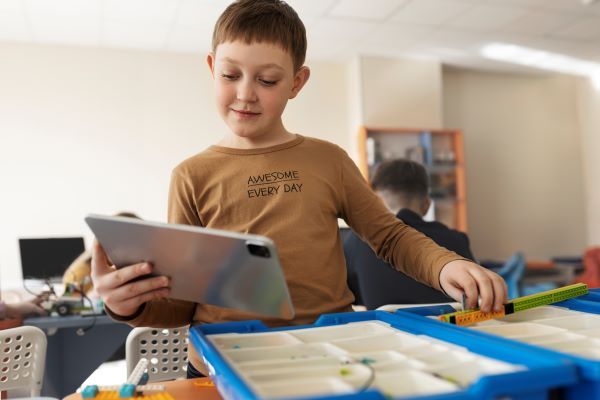
The second factor—families—fears that changes in education could jeopardize their children’s academic and professional futures, leading them to prefer traditional, proven educational approaches. This is because there are prejudices and a lack of knowledge when it comes to using technology as a tool, and it is difficult to embrace new approaches when their results are generally only visible in the long term.
The school experience that families have gone through is completely different from the one their children and teens are experiencing today. Similarly, the experience of students currently in school will be different from that of those who will attend elementary and middle school in the future.
On the other hand, administrators are also hesitant to adopt educational innovations due to the risk of failing to meet established performance goals, as education secretaries, principals, and coordinators—whether in public or private schools—are expected to achieve significant results. Furthermore, as we have already mentioned, there is enormous pressure from families to maintain conventional educational practices. Relying on a new company to carry out a project, for example, could lead to problems for which they may be held accountable in the future.
Finally, teachers. They face practical and cultural obstacles when integrating technology into education, ranging from inadequate infrastructure to resistance (from the system and other stakeholders) to changes in teaching methods.
Anyone who has ever taught a class using technology at a school that isn’t equipped to use these tools has experienced “technical issues,” such as poor internet connection, a projector that doesn’t work, or individual tablets that won’t connect. It’s worth noting that access to this type of equipment is a reality that few schools in our country have.
In addition to the lack of infrastructure, which can derail any lesson plan, there are cultural factors at play. There are bills that prohibit the use of cell phones and electronic devices in schools, while explicitly stating that exceptions apply in the case of educational activities. However, this in itself indicates an aversion to the use of these devices—a sentiment supported by data and evidence.
Studies by the OECD (Organization for Economic Cooperation and Development), for example, show that, on average, there is no correlation between heavy investment in technology and learning outcomes. Other research shows that typing on computers does more harm than good when it comes to knowledge retention and that a sheet of paper has significant benefits.
See also:
- What do we mean when we say “transforming education”?
- Teachers' Day: Should We Rethink the Teacher Training Process?
On the other hand, a study conducted by Insper’s Center for Racial Studies (NERI), with support from the Telefônica Vivo Foundation, which used data from the School Census and SAEB (the Federal Government’s Basic Education Assessment System), identified a positive relationship between how technology can influence teaching and learning at different stages of students’ educational trajectories. Focusing on basic education, the study analyzed the extent to which students’ exposure to technology can impact their SAEB test scores and how differences in performance are linked to racial issues.
What matters most here, however—namely, “how to use” technology in education—is not being widely discussed. Laws that prohibit the use of such devices reinforce the fact that we do not believe it is possible for teachers to teach their students to use technology responsibly. But from a systemic perspective, this is possible.
A school that truly wants to make the most of technological tools needs an environment conducive to a model in which teachers incorporate innovation into the learning process.
In an interview with *Escola Viva* in 1993, Paulo Freire, while discussing the integration of the technologies of his time into schools, offered us the following insight: “The first condition for an educator’s discourse to be valid is to keep pace with the times.” This statement remains absolutely relevant today. And I would add that this need extends not only to educators but to the educational community as a whole.
During this Teachers’ Month, it is important to highlight the vital role teachers play in helping to design contemporary models for a well-rounded, engaging, and modern education that incorporates today’s technologies—always with concrete goals in mind. These are strategies that will truly bring about change and drive the entire educational system forward and renew it.
About the author:
*This text does not necessarily reflect the opinion of Bett Brasil.
)
Share on social media:
Categories
- Innovation