
The second day of the 30th edition of Bett Brasil highlights innovation, sustainability, artificial intelligence, and educational management
)
The second day of the 30th edition of Bett Brasil, Latin America’s largest event for innovation and technology in education, which is taking place in São Paulo through May 1, underscored the school’s leading role as an agent of change in the face of contemporary challenges. With more than 330 exhibiting brands, the exhibition area showcased solutions that combine active learning methodologies, cutting-edge technology, and social and environmental responsibility, reflecting the most discussed trends in public and private education.
Among the topics that dominated the event’s hallways and stages, sustainability took center stage, especially following the enactment of Law 14.926/2024, which made it mandatory to include the topics of climate change and biodiversity in school curricula.
The panel discussion “From Local to Global: Education and ESG as Strategies for a Sustainable World” prompted reflection on the role of education in the face of climate emergencies and the environmental changes challenging our planet. Moderated by Thaís Brianezi, a professor at the School of Communications and Arts at the University of São Paulo and a member of the Advisory Committee of the São Paulo City Hall’s Special Secretariat for Climate Change (SECLIMA), and Edson Grandisoli, educational director of the Schools for Climate Movement, the session highlighted data, initiatives, and strategies that connect schools, public policies, and the private sector to the global climate agenda.
Thaís shared details of a Fapesp research project that investigates the role of communication in the impact of environmental and climate education. The initiative, which began in February 2024 and is expected to continue through 2026, is structured around four pillars: developing a public policy agenda, creating a collaborative database, training educators, and conducting ongoing monitoring.
One of the highlights of the initiative was the pilot teacher training program for 35 schools in the São Paulo municipal school system, with the participation of 12 Regional Education Boards (DREs). “The goal was to develop a climate action plan with the participating schools, which can now be scaled up through a distance learning platform on AVAMEC, the Ministry of Education’s virtual learning environment,” Thaís explained.
To track the results, the project uses the MonitoraEA platform, a continuous assessment system designed for public schools. Thaís noted that, although progress has been made on these initiatives, awareness of the importance of environmental education remains low. “There has historically been a disconnect regarding this issue. We need to make progress on this front.”
Worsening of the climate crisis
Professor and researcher Edson Grandisoli brought up the worsening climate crisis, emphasizing that the term “climate emergency” is increasingly necessary to describe the intensity and urgency of the current situation. He presented alarming data: if the entire world population adopted the consumption habits of Americans, it would take five Earths to sustain that lifestyle; in the case of Brazilians, it would take two. In addition, Grandisoli pointed out that by 2023, humanity had exceeded six of the nine planetary boundaries, including biosphere integrity, land-use change, and the freshwater cycle.
Engaged Youth
Grandisoli also shared encouraging results from the National Survey on Climate Change, organized by the Schools for Climate Movement and Reconectta, which focused on the perceptions of children, youth, and adults regarding climate change. The study revealed that the 7- to 14-year-old age group is the most engaged with the issue.
According to the survey, concern about climate change increases with age. While 73.4% of children aged 7 to 14 say they are concerned or very concerned about the issue, that figure rises to 86.1% among young people aged 15 to 29 and reaches 96.9% among adults aged 30 and older.
With regard to perceptions of the ability to take action, children (ages 7 to 14) and adults (age 30 and older) perceive themselves as more capable of taking action against climate change than young people aged 15 to 29. Similarly, when it comes to levels of optimism, the youngest group—ages 7 to 14—is the most optimistic about the future in relation to climate emergencies.
“When considered as a whole, this age group—7 to 14 years old—is the one best suited to take on climate activism, especially girls. We have an audience interested in this issue, and we need to take advantage of that,” she emphasized.
The Role of Institutions and the Future of the Planet
To discuss sustainability, governance, and the role of institutions in the future of the planet, a panel brought together Ewerton Fulini, vice president of the Ayrton Senna Institute, and Carmen Murara, director of Institutional, Governmental, and Sustainability Relations at the Marista Group.
Fulini emphasized that, although ESG is typically associated with the corporate world, it is also highly relevant in the educational context. “Education is the root of this tree called ESG and serves as the starting point for this concept, since it is through education that children learn behavioral skills and follow the examples set by their educators.”
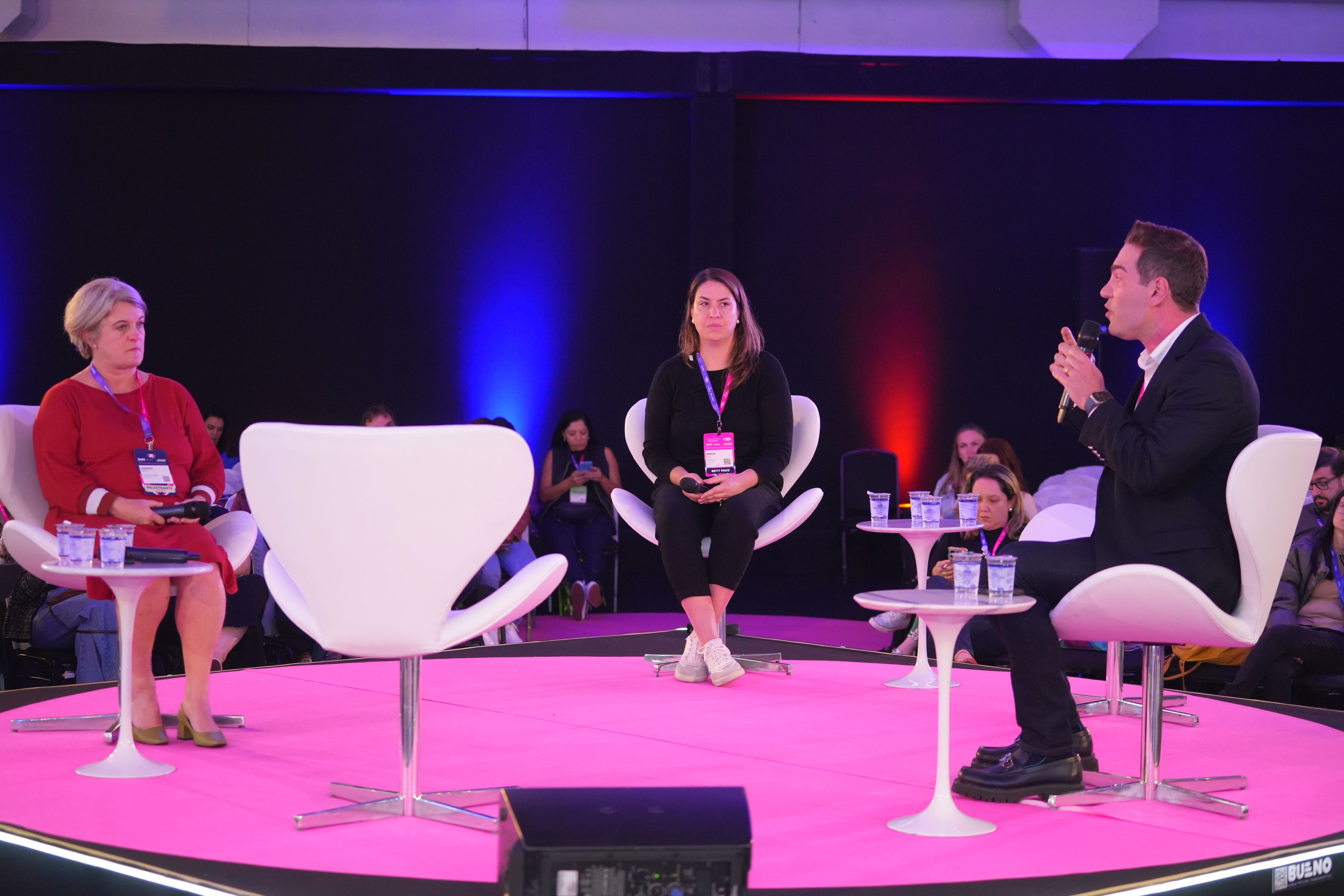
For the vice president of the Ayrton Senna Institute, it is essential that schools review what they are doing in their own settings. “What practices do schools adopt? How can we help students develop the skills to take care of themselves and others, and to take effective action to reduce inequalities? And these actions should not only take the 20th century into account, but also the centuries to come,” says Fulini.
Carmen, for her part, emphasized that in education, there are two major commitments when it comes to ESG: the students and the educational product being offered.
“We have to think about the young people in schools and universities. Who are these future citizens we’re educating? That’s a huge responsibility. They’re our priority audience. Nor can we forget our second fundamental commitment: the way we market educational products. For example, are textbooks sustainable? This needs to be a core value within our institutions so we can engage students, stakeholders, and the entire school community. Everyone needs to get involved in this effort. That’s how it starts, and we need to lead by example. And if you believe in this as an educational value, it’s easier to convey this principle to everyone,” adds Carmen.
Financial Sustainability for Educational Institutions
The second day also addressed the topic of financial management in educational institutions. Balancing expenses and revenues seems to be a Herculean task for administrators.
One of the strategies that can make the difference between profit and loss for schools lies in establishing sound financial management—based on the analysis and application of reliable data—capable of transforming the enrollment period—the key driver of new students—into a real opportunity for growth. This was the topic of the panel discussion featuring Fernando Barão, a partner at Corus Consultores—a consulting firm specializing in private schools—and Paula Jorge, the general director of ISAAC.

In Barão’s view, the reliability of the available data is crucial, and this data must be made available to decision-makers. “When we talk about reliable data, it is essential to factor in the total budget—including students, scholarships, delinquencies, and cash flow, among other things—so that the numbers and information are accurate and more precise.”
Barão listed the information he considers essential for schools to take advantage of the enrollment period to increase their profits: break-even point per class, classroom capacity utilization, discount rates by course and overall, weekly volume of visits and new enrollments per course, tracking of visitors who did not enroll, number of enrolled students per course, enrollment rate per course, and a spreadsheet for tracking students eligible for re-enrollment.
Paula, meanwhile, emphasized that it is essential to have visibility and monitor data on a daily basis in order to make more informed decisions. “The enrollment period is the most crucial time for determining a school’s annual revenue. That’s why it’s essential for schools to understand, for example, the importance of the enrollment fee—which accounts for a significant portion of revenue—as well as how to determine the best date to begin enrollment, since this will impact their bottom line. Only data can provide this kind of insight, and with the use of technology, everything becomes easier,” adds Paula.
Bilingual Education and the Climate Crisis
Edify Education was one of the exhibitors that strongly embraced the environmental agenda. During the event, co-CEO Marina Dalbem highlighted the potential of bilingual education as a catalyst for change. “We believe that bilingual education is a powerful tool for addressing—or even resolving—the challenges of our time, and none of them is more urgent than the climate crisis,” she said.
The company unveiled the latest edition of the Empathy Project, an initiative that will bring students from public and private schools to COP 30. “We want them not only to learn English, but also to be present in the places where global decisions are made, making their voices heard,” Marina added.
Practical impact
Concern for the environment also shaped the participation of Recickla, an environmental education organization in the Dome Ventures portfolio. The company presented the “Nossa Jornada” collection, launched in 2024, which is already being used in various regions of the country.
“The collection brings together content aligned with the BNCC, focusing on the 4 Rs of sustainability, the circular economy, reverse logistics, and climate change,” explained Carolina Machado, CEO of Recickla. The organization also holds workshops and events focused on environmental preservation. “Being at Bett Brasil is an opportunity to bring this message to more people,” emphasized Diogo Catão, CEO of Dome Ventures.
With a focus on public education, Marco Jordão, Government Sales Manager at Editora do Brasil, emphasized the importance of environmental education following the enactment of Law 14.926/2024. “Young people need to be prepared for this near future, with educational programs focused on prevention, mitigation, and preparedness for environmental challenges,” he noted. At the publisher’s booth, the highlight is the new release “Climate Education with the Pererê Gang,” which, according to him, “is essential for fostering initiatives that promote greater sustainability, raising awareness among citizens about environmental protection, and encouraging behavioral change in the community through children, educators, and families.”
Technology Beyond Screens
In the field of educational technology, Quizizz’s educational director, Rebecca Rios, presented a solution that seeks to balance innovation with recent policies restricting cell phone use. “At Bett Brasil, Quizizz is presenting a solution that combines technology, artificial intelligence, and gamification even without students holding screens in their hands: the paper mode,” she explained. The approach allows students to answer questions using cards printed with QR codes, while the teacher uses a single device to project the questions and record the answers with the camera.
The platform automatically generates a ranking based on students’ correct and incorrect answers, allowing teachers to quickly see which topics have been well understood and where there are gaps in learning. “Our goal is to support teachers, not to replace them. The paper-based mode is a way to incorporate technology in a balanced, accessible, and efficient manner,” Rebecca emphasized.
Personalized Learning and AI
Celebrating six decades of history, the Unip-Objetivo Group is also making its presence felt with a launch focused on personalized learning. “Objetivo is celebrating its 60th anniversary at Bett Brasil and launching the e-Genio platform,” announced the group’s Chief Technology Officer, Marcello Vannini. According to him, this new platform “transforms learning and places students at the center of the educational journey, offering a practical, engaging, and innovative experience supported by the responsible use of AI.”
Share on social media:
Categories
- The Future of Education