
AI Summit Discusses Practical Applications and the Impact of Artificial Intelligence on Education
)
A artificial intelligence took center stage in the The 31st edition of Bett Brasil. For the first time, the event featured the “AI in Education Summit”, on May 5 and 6, at Expo Center Norte, bringing together experts, educators, and leaders to discuss practical applications of the The Impact of Technology on the Future of Education.
Co-curated by Bett Brasil and the educational AI platform AI4School—a platform by Conexia Educação—the Summit featured discussions focused on the educational landscape, covering everything from practical classroom applications to ethical issues and the limits of automation in the learning process.
At the opening of the event, Bett Brasil’s director general, Claudia Valério, emphasized that education is at a historic turning point. According to her, the discussion is no longer focused on whether or not to use artificial intelligence, but on understanding how to incorporate it responsibly and strategically into the school environment.
“Innovation only makes sense when accompanied by moderation, context, and responsibility,” Claudia said. By placing AI at the center of the program, the Summit’s goal was precisely to broaden the debate on the direct impact of technology on education, without losing sight of the human dimension of learning.
For Sandro Bonás, CEO of Conexia Educação, the Summit’s main distinguishing feature was that it made schools and educators the central figures in this conversation. “We’ve seen this topic come up at many technology and business conferences, but not at education events. Over these two days, we discussed the dilemmas, safeguards, and risks, but also how we can change students’ lives through such revolutionary technology,” he said.
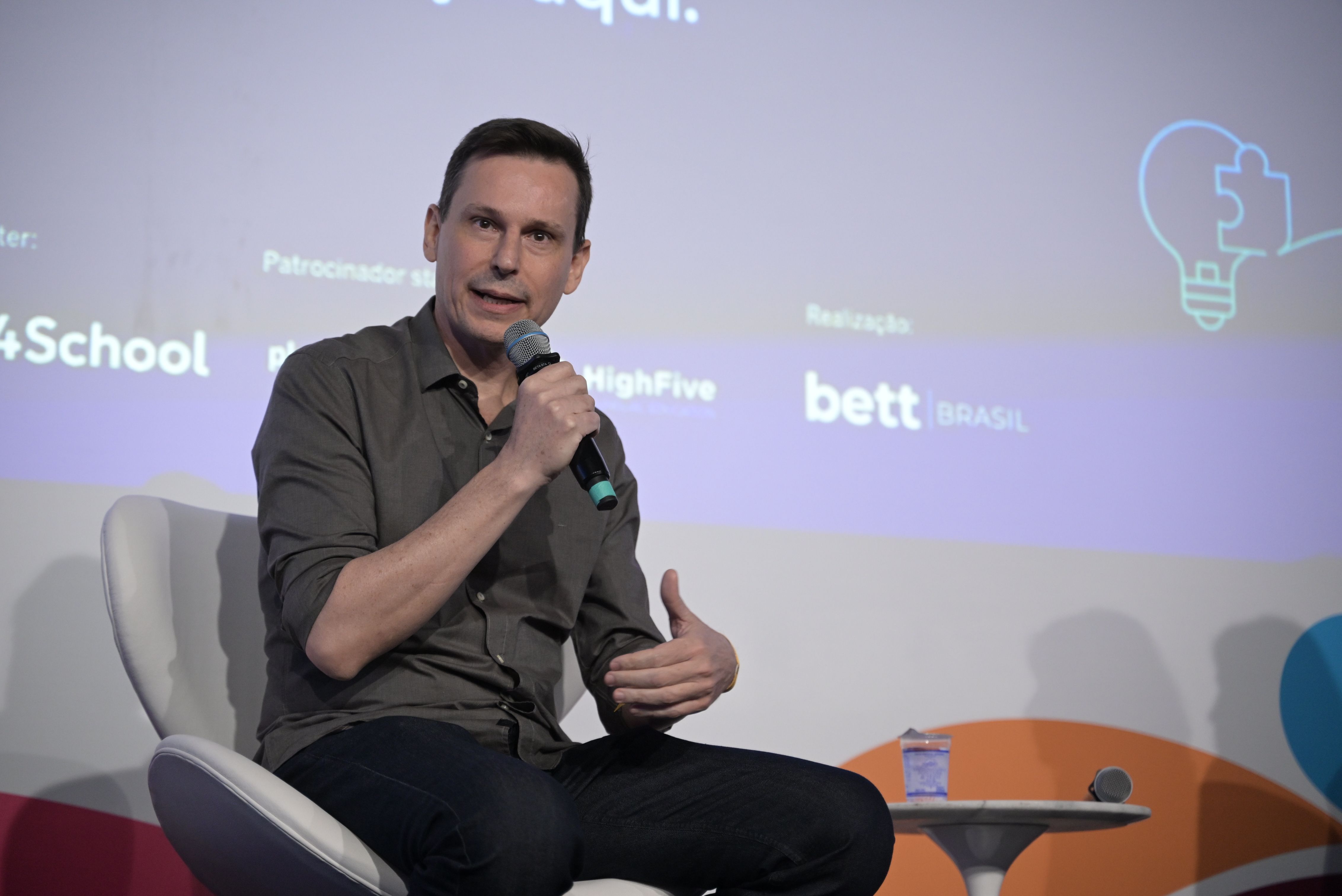
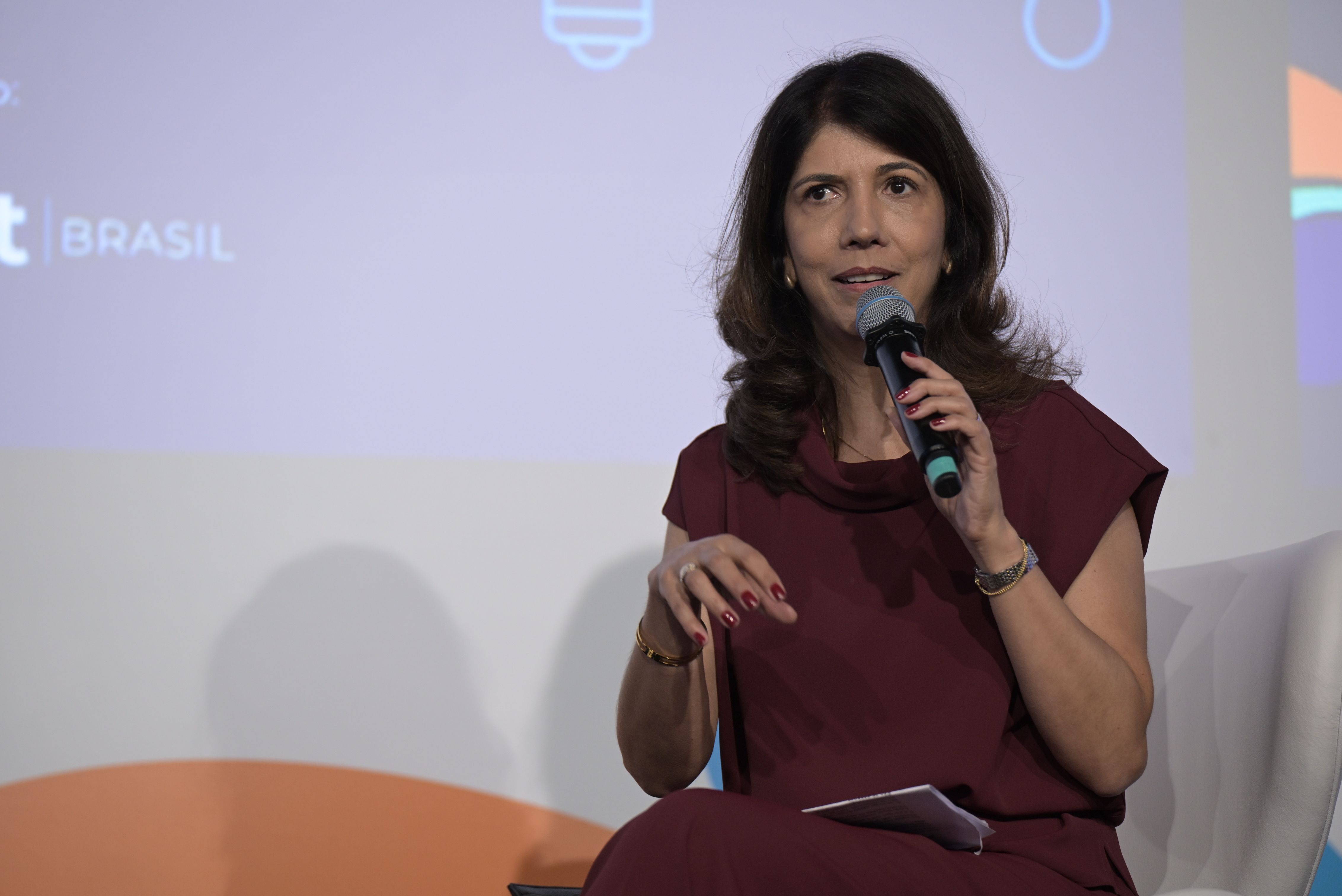
A dedicated auditorium at Bett Brasil put AI at the center of the discussions. Photo: Bett Brasil.
According to Bonás, the partnership with Bett Brasil helped bring together leading experts and a highly engaged audience. “I believe that the educators and teachers who attended the Summit returned to their schools with techniques, tools, and processes capable of transforming the lives of many students and helping this generation achieve greater success in the future,” he added.
The Summit’s program was divided into two main thematic areas. On the first day, the focus was on “AI and the New Landscape of Education.” The second day delved deeper into “Strategies, Practices, and Possible Futures, ” featuring concrete examples and reflections on the long-term impact of artificial intelligence.
The panels were moderated by journalist and TV host Marcelo Tas, who highlighted the human and thought-provoking nature of the sessions. For him, the Summit was an opportunity to transform what is often an abstract debate into a genuine exchange among experts, educators, and professionals in the field.
“It was a very hands-on experience—a real encounter—of coming face-to-face with issues that are in our minds but take on a whole new dimension when we meet experts and the people who challenge them, bringing new insights to a topic that is as complex as it is necessary. I’m leaving the Summit having learned a great deal,” said Tas.
OECD Report Release
One of the highlights of the program was the release of the report by the OECD—the Organization for Economic Cooperation and Development. Brazil now has free access, in Portuguese, to the leading international document on generative artificial intelligence in education.
During the AI in Education Summit, the Salto Institute presented the complete translation of the OECD’s *Digital Education Outlook 2026: Exploring Effective Uses of Generative AI in Education*. The report comprises 13 chapters featuring comparative evidence, case studies, and interviews with researchers and administrators from different countries on the use of generative AI in education.
The presentation was led by Rafael Parente, executive director of the Salto Institute, and Lucia Dellagnelo, deputy director for Education and Skills at the OECD and a Harvard Ph.D.
“Artificial intelligence is already deeply embedded in Brazilian schools. What was missing was a public, rigorous, and accessible resource in Portuguese to guide responsible decision-making by educational administrators and leaders,” Parente points out.
Lucia Dellagnelo emphasized that the use of generative AI tools, in and of itself, does not guarantee learning—and may even hinder understanding when used without a pedagogical purpose. “Using generative AI to perform tasks is not the same as learning from it. Educational gains occur when there is qualified guidance and an appropriate pedagogical design, led by the teacher,” she explains.
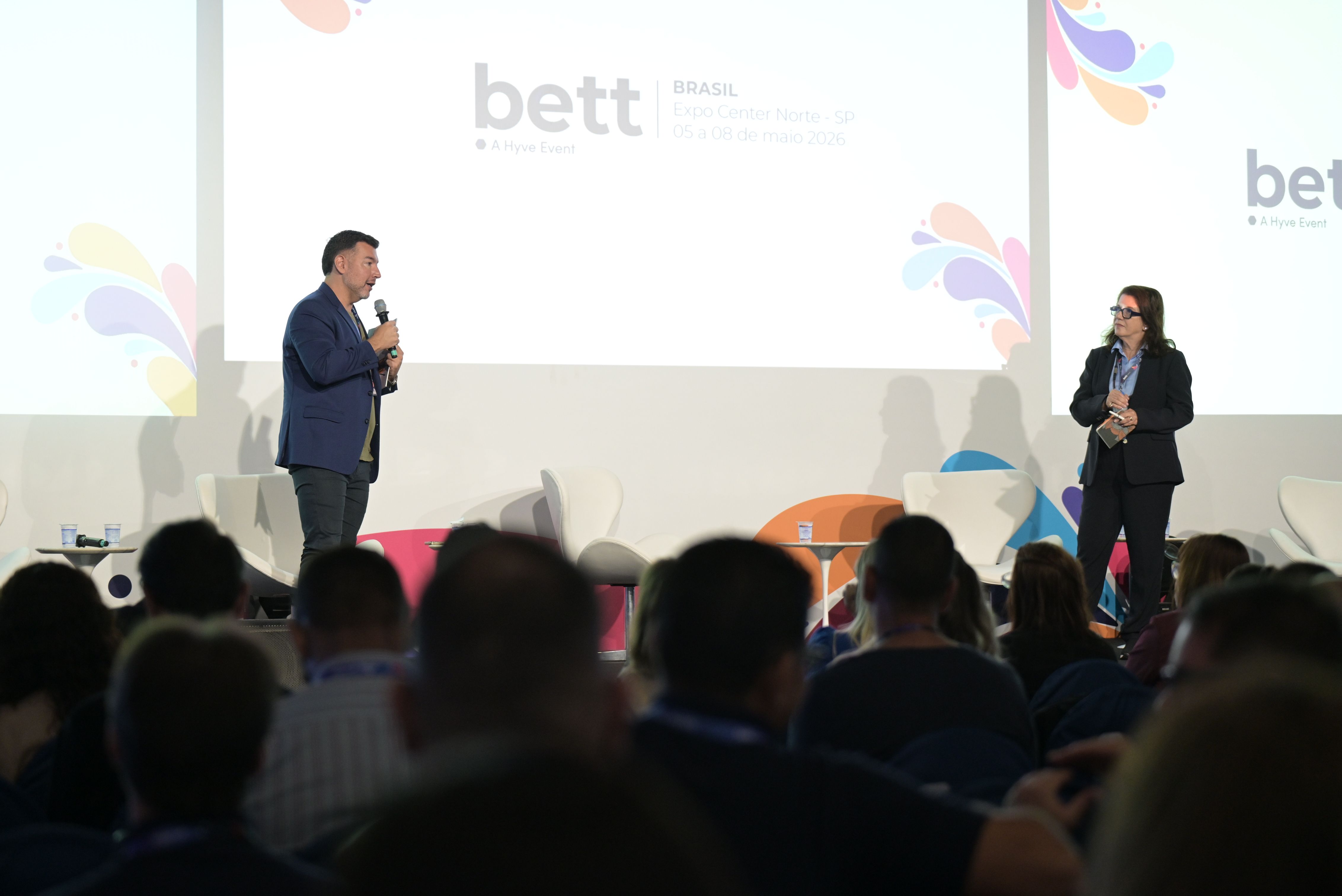
Launch of a report on the use of technology in education. Photo: Bett Brasil.
According to her, general-purpose tools can offer significant opportunities, such as more conversational, flexible, and adaptable approaches across different disciplines. However, they still present significant challenges, such as occasional errors (so-called “hallucinations”) and the need to make experiences more engaging to promote real learning.
Among the key lessons highlighted by the report is the importance of keeping teachers at the center of the educational process. “Algorithms can suggest paths, but it is educators who must make the decisions. No AI-generated lesson plan can replace a teacher’s professional judgment,” Lúcia emphasizes.
The work is available under the CC BY 4.0 open license, and it can be downloaded via this link. The aim of the study is to use its findings to develop public policies for the responsible use of AI, invest in teacher training, advance data protection regulations, and encourage research on the impacts of technology on learning.
“We are entering a phase of ‘AI-enhanced education.’ This means that technology is no longer just an accessory but is becoming an integral part of the educational framework, requiring a review of the curriculum, assessment methods, and teaching practices,” added Rafael Parente.
Ethics, Teacher Agency, and Possible Futures
Another highlight was the lecture by professor and innovation expert Gil Giardelli, who invited the audience to reflect on the coexistence of humans and artificial intelligence. According to him, rather than simply understanding the technology, we will need to learn to coexist with it within a new economic and social framework driven by the so-called “AI economy.”
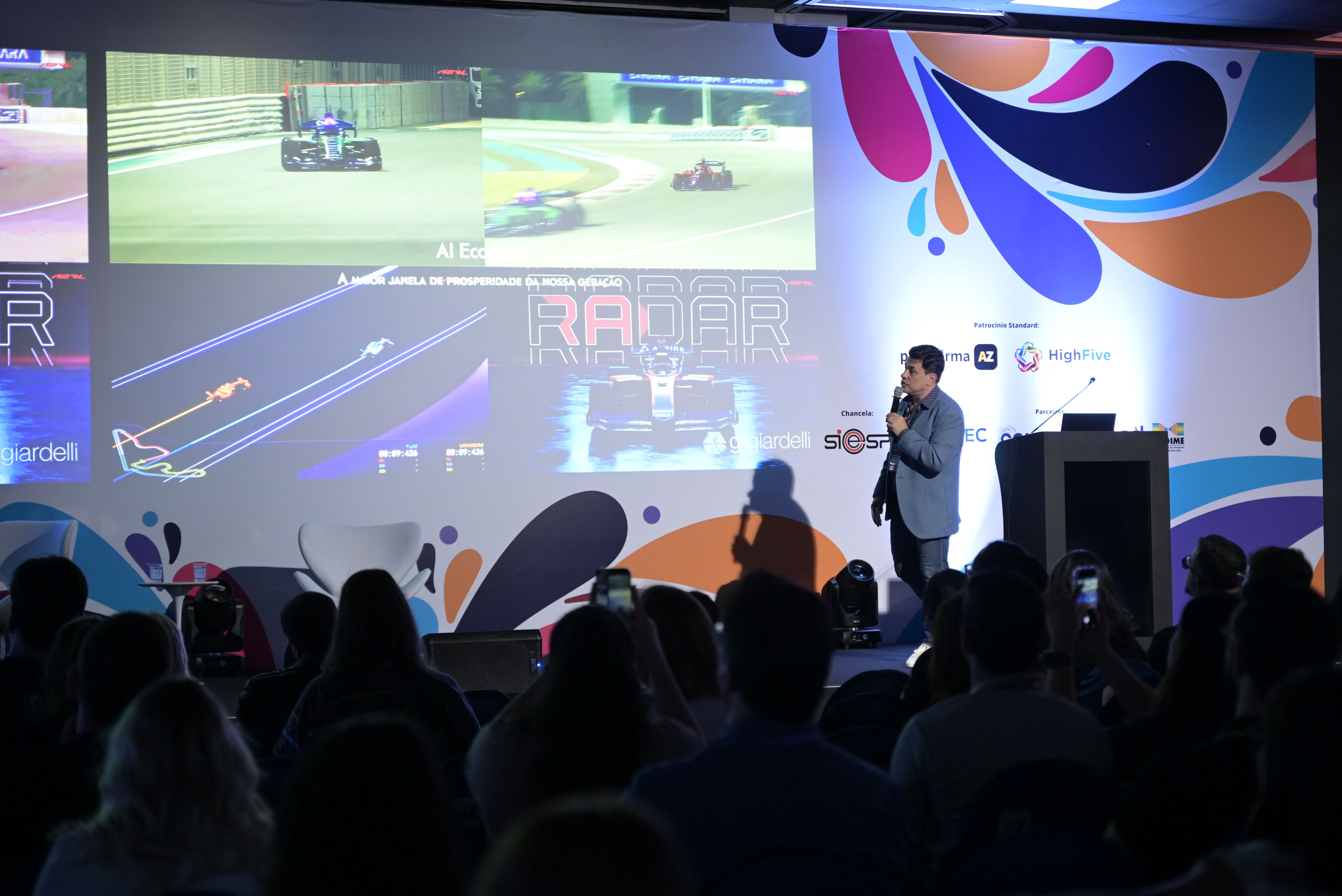
Giardelli reflected on the coexistence of humans and artificial intelligence. Photo: Bett Brasil.
However, this progress does not come without side effects. “Increased productivity goes hand in hand with a rise in cases of burnout. We’ve never seen as many cases of burnout as we do now,” he warned.
The expert also emphasized that this debate inevitably involves ethics. According to Giardelli, although technology is neutral, its use is not, and it requires clear boundaries. He cites examples that are already pushing those boundaries, such as companies working on the de-speciesing of organisms and the development of artificial faces with human expressions. “This brings us to a central question: How far should we take the use of technology?” Gil asked provocatively.
The Role of AI in Education
The program also delved into one of today’s most sensitive issues: Who makes decisions in the age of artificial intelligence? The panel addressed topics such as ethics, algorithmic biases, and the risk of delegating educational decisions to technology—debates that have accompanied the rapid advancement of AI worldwide.
During the conversation withGuilherme Cintra of the Lemann Foundation;Américo N. Amorim of NY University/Escribo Educação do Seu Jeito; andGi Santos, an educational consultant specializing in innovation at the Instituto Escolas Criativas, the group discussed how to keep teachers at the center of the learning process, while avoiding the excessive delegation of decision-making to technology.
“What AI can enable are good dialogues, good conversations. There’s nothing more ancient than the technology of dialogue. It blurs the line between mastery of knowledge and the ability to teach, but AI hasn’t yet proven itself to be better than a teacher, and I don’t know if we want it to prove itself,” commented Guilherme Cintra.
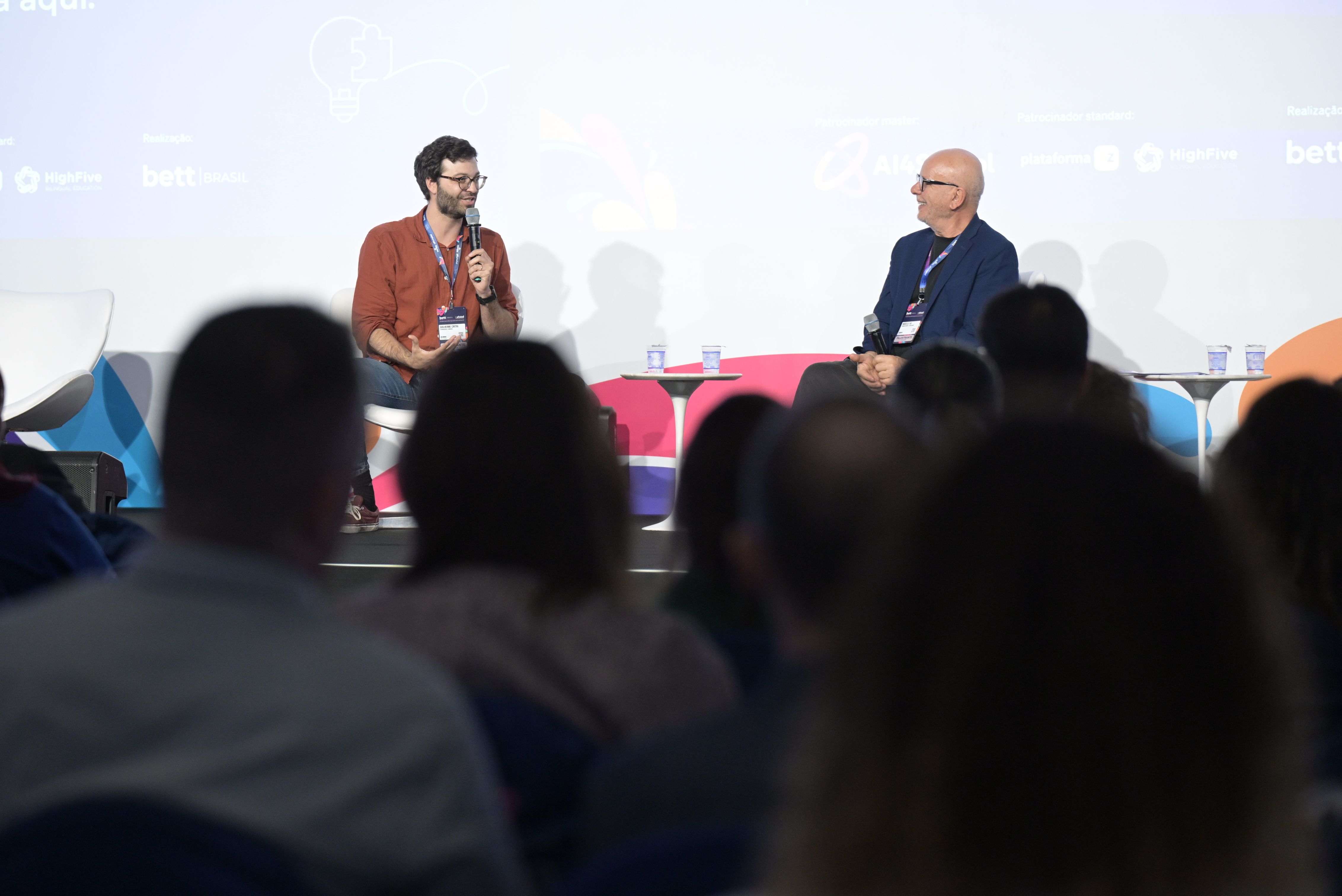
Guilherme Cintra during a panel at the IA Summit. Photo: Bett Brasil.
Another key topic was the role of school leadership in a context where artificial intelligence and data analysis are becoming part of everyday educational practice. The panel featured practical experiences with the adoption of AI in elementary school, discussing everything from strategic decisions to teacher training, personalized learning, and ethical challenges.
The program also featured speakers such as Mariana Ochs, education coordinator at Instituto Palavra Aberta; Paulo Silveira, co-founder of Alura; Alessandra Borelli, an attorney specializing in digital law, data protection, and artificial intelligence; Rodrigo Nejm, a digital education specialist at Instituto Alana; and Isabel Amigo, innovation management director at Ceibal in Uruguay.
The AI in Education Summit made it clear that, while artificial intelligence opens up new possibilities for education, the future of teaching will continue to depend, above all, on the human ability to interpret, contextualize, and make meaningful connections.
Share on social media:
Categories
- The Future of Education
- Innovation