
True or false?
)
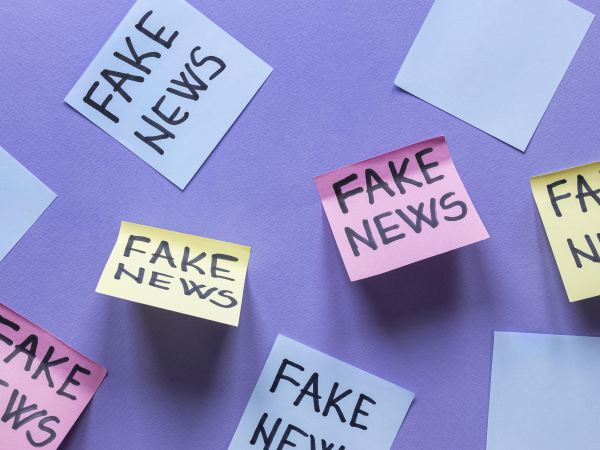
Have you seen what’s been posted online? Did you hear that…? I read that it was true… That it was a lie… These days, the concepts of true and false blur with the speed of a single click, and misinformation spreads at the speed of light. The coronavirus pandemic may be behind us, but another outbreak—just as virulent and dangerous—is showing that it has the power to defy the objectivity of common sense: that of fake news.
It’s not that fake news as a tool for disinformation is a recent phenomenon. What has changed is the sophistication with which it is crafted and the speed with which it spreads. Digital media consist of uninterrupted streams of information, which is significant in terms of the opportunity to promote all kinds of content, but identifying what is true or false is the real challenge.
Avoiding drowning in this “ocean” of data means having a set of tools that make it possible to distinguish between reliable and unreliable sources. When it comes to younger people—Generations Z and Alpha, the digital natives—building this set of tools is only possible through education.
“Education is an essential path, not only to protect ourselves from fake news, but so that we can act as agents of change in the information environment,” says Daniela Machado, coordinator of EducaMídia (the media education program of the Palavra Aberta Institute). She warns that schools must prepare to teach students how to research, verify, interpret, and use the information available on the internet and in other media. In this way, students become active participants in their own education.
Another expert who agrees with Daniela is Sandhra Cabral, a university professor with a master’s degree in Innovation in Public Interest Communication and CEO of Educar para Ser Grande. “Combating fake news is not simple, much less easy to carry out, since the mechanisms for producing and disseminating disinformation are quite efficient and almost always conceal and protect the identity of the perpetrators. Precisely for this reason, we need to train our teachers to embrace media literacy and to adopt educommunication as a routine practice in schools, so that we can raise generations capable of eliminating this practice from society in the medium term,” comments Sandhra.
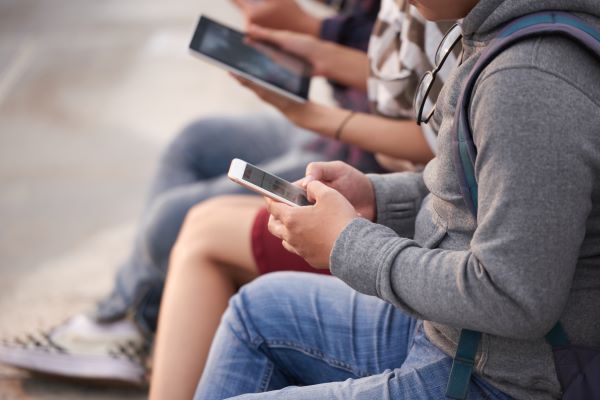
In the educator’s view, combating fake news in schools requires digital literacy. “It’s about making students aware that they are immersed in bubbles formed by algorithms based on what they search for, post, share, and comment on online, and providing in-depth guidance on the creation, spread, and harmful effects of fake news on society, as well as how to analyze news stories to verify their accuracy,” she emphasizes.
According to Alexandre Sayad, an educator, journalist, and co-chairman of the UNESCO MIL Alliance, education is part of the solution to fake news. “It is very important for schools to be involved in addressing the issue of misinformation. We need to address media education systematically, from early childhood education through high school, because misinformation affects other actors in society. Schools are part of the solution. The issue of misinformation does indeed concern sources, but it is also a broader issue that involves various actors in society.”
The Finnish Case
Finland has a long history of promoting media literacy as a critical tool for a stable democracy and a healthy society. Starting in preschool, media education in the country is integrated throughout the educational curriculum and does not end when school is over. Media Literacy Week, celebrated in Finland every February, is also aimed at reaching adults.
In an interview published on the ThisisFINLAND website, Leo Pekkala, deputy director of the Finnish National Audiovisual Institute—a government agency under the Ministry of Education and Culture—commented: “People need to understand the media critically—who creates it and why.” In the 1950s, the academic focus was on mass media, such as television and newspapers. In the 1980s, audiovisual elements were added to media education. Now, a great deal of attention is being paid to digital media.”
According to the report, media education in Finland takes an inclusive approach that involves the whole of society. Various civic organizations participate in the development and implementation of learning programs, including schools, libraries, government agencies, universities, and NGOs.
This is the systemic view of the impact of information on society that Sayad was referring to. “Everyone is involved in the effort to combat disinformation. Within UNESCO, for example, we have the participation of libraries, museums, public archives, NGOs, and the city. This entire system operates in Finland with a focus on ensuring that the media provides high-quality information,” says the co-chair of the UNESCO MIL Alliance.
From Words to Action
“The problem of misinformation can be addressed in different ways in schools, taking into account the specific context and circumstances. It is possible to develop specific projects to combat fake news, but I believe an even more effective approach is to incorporate the topic into the curriculum so that it can be addressed across subjects and on multiple occasions,” suggests Daniela, who adds.
“Let’s take a science class as an example: it’s possible to combine content on viral diseases and vaccines with a discussion about the consequences of misinformation in the field of health. In math, one possibility is to reflect on how graphs can be constructed to present different perspectives on a piece of information,” he says.
Sayad adds that an ideal initiative is one that does not treat media education as just another subject in school. “It’s a project that should be cross-curricular and engage with many subjects. I see many opportunities for a project against fake news to be linked to language arts—as an interdisciplinary project that originates in language arts but extends into other subjects. Another possibility is to start it as part of a training program,” he explains.
Sandhra Cabral agrees with Daniela and Sayad. “Schools play a decisive role in resolving this issue; the only way to put an end to fake news is through substantial, targeted investment in media education and digital and information literacy within the formal education system for children, youth, and adults,” she notes.
Original content
Media creation projects in schools can be a way to raise awareness and improve students' media literacy so they have the tools to analyze content and protect themselves from fake news.
“It is important for schools to offer students opportunities to create media, not just activities that involve critically analyzing information. This is because, outside of school, there is a growing number of children and young people with access to the internet and social media who are already acting as content creators to some extent—without necessarily reflecting on their responsibilities, the reach of what they publish, or its impact on other people’s lives,” says Daniela Machado.
According to the interviewees, these media creation projects should be part of a broader context of information and digital literacy, so that students understand how the mechanisms and tools of manipulation that govern the internet work, guiding them to conduct research properly on reliable websites and to verify and curate the content they access.
Brazilian Context
As one of the world’s top consumers of digital content, where does Brazil stand in terms of media literacy initiatives? “Media literacy has gained this importance now because of digital media and the democratization of the internet, on the one hand, and the advent of artificial intelligence, on the other. This brings to the forefront an issue that has been affecting democratic systems around the world. But the understanding that this is a necessity for the educational system is still weak in Brazil. And it is this systemic understanding that needs to grow,” says Sayad.
According to Daniela, interest in the topic of misinformation in schools has been growing overall. “At EducaMídia, the media education program I’m part of, we’ve seen increasing interest in training teachers so they can better understand these phenomena related to the world of information and incorporate them into their lessons. In public schools, partnerships with municipal and state departments of education have made it possible to incorporate media education into the curriculum or, in other cases, to develop more targeted initiatives aimed at combating fake news. Private schools also address the topic through elective courses, specialized tracks, or other formats,” she explains.
For Daniela, it is essential to recognize media literacy as a right of all students, so that they can access, analyze, and create information, and participate effectively in the media environment in a critical and responsible manner. “Documents such as the BNCC (National Common Core Curriculum) itself and the recently approved National Digital Education Plan reinforce the importance of media literacy,” she concludes.
Did you like it? Share it on social media:
Categories
- Educational Management