
Media Literacy: How Can We Prepare Students to Evaluate Information in the Age of AI?
Identifying the source of information, verifying the reliability of a source, and comparing different versions of the same fact are core skills for media literacy. With the growing use of artificial intelligence (AI) in content production and access, the challenge for schools is to prepare students to critically analyze the information they receive, recognize potential inaccuracies, and understand how technology influences their perception of reality.
Media literacy is part of the subtheme “Courage to Understand, ” one of the four content pillars of the 32nd edition of Bett Brasil, whose central theme will be “The Courage to Transform. Action begins with each of us. Transformation happens among us all”. The aim of this pillar is to discuss how to interpret, select, connect, and produce knowledge in an environment characterized by the widespread circulation of information. Topics to be covered include artificial intelligence, digital culture, science, research, data, evidence, and critical thinking.
For Alexandre Sayad, director of ZeitGeist, a UNESCO consultant on media education in France and Uruguay, and an advisor to Bett Brasil, understanding reality requires recognizing the complexity of the relationships that make up the contemporary world. This perspective, he says, should guide the work of schools, especially in the face of challenges related to information and digital technologies.
“I cannot think about contemporary education without revisiting the concept of ‘complexity,’ which the French philosopher Edgar Morin ‘imported’ from the field of mathematics to the field of social sciences as a defining feature of the contemporary world. Everything in today’s world is interconnected and interdependent,” he says.
Sayad uses climate issues to illustrate this interdependence. He explains that the issue cannot be understood in isolation, as it also involves social inequality, education, and the economy. The same logic applies to other social phenomena, which require the ability to establish connections between different pieces of information and perspectives.
In this context, the director of ZeitGeist believes that schools need to strengthen their role as spaces for constructing meaning.
“In practice, contemporary education cannot shy away from debating conflicting viewpoints and facing reality in all its complexity. We must avoid oversimplification and ‘solutionism’—a trend that concerns me. Critical thinking is not an innate skill: it must be developed through practice, mentorship, and action, including in school,” he emphasizes.
See also:
He explains that the “courage” featured in the central theme of Bett Brasil 2027 was inspired by Guimarães Rosa’s novel *Grande Sertão: Veredas*. In the novel, the protagonist, Riobaldo, believes that courage is the fundamental ability needed to face life.
“When we think about the world of education, it is up to us to resist simplistic temptations and face the challenge of understanding the world as it is. It takes a lot of work and demands a great deal from educators and administrators. But shortcuts are insufficient and dangerous. “School is the ideal space for us to construct meaning and understanding and to experience ‘kairos’—the time for both enjoyment and critical reflection,” he emphasizes.
Media Literacy in the Age of Artificial Intelligence
A report from the 2025 Program for International Student Assessment (PISA), released by the Organization for Economic Cooperation and Development (OECD), found that 48% of Brazilian students use AI chatbots at least once a week for learning, compared with an average of 46% among OECD countries.
According to Sayad, schools need to understand AI as a general-purpose technology whose influence is not limited to a single area of knowledge or a specific subject. Therefore, addressing it only in language arts, math, or even media literacy classes is insufficient.
Among the approaches suggested by the expert is the creation of an AI governance system in schools. According to him, the proposal is not limited to drafting rules for the use of these tools, but involves establishing a collaborative framework to protect students’ rights, develop the skills of education professionals, and identify ways to enhance learning.
“It’s a collaborative, intentional, and purposeful system that addresses a real-life issue,” explains Sayad, who is researching the topic as part of his doctoral studies at the Autonomous University of Barcelona (UAB).
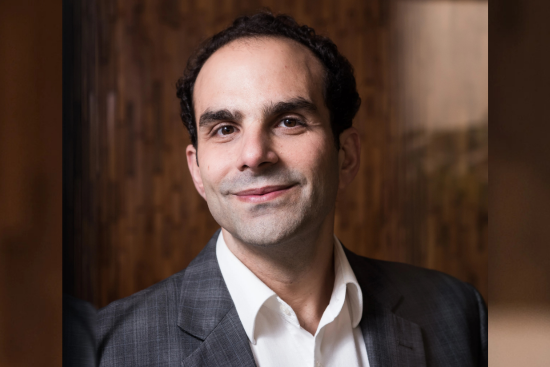
According to Sayad, media literacy needs to be incorporated into the school curriculum. Photo: Courtesy of the source.
Another aspect that complements media literacy, according to Sayad, is the recognition of the school as a space for social interaction and for building ties with the community. In his view, students’ education also depends on exposure to local culture and artistic expressions, such as theater, film, literature, and the visual arts.
Sayad believes that art helps broaden the ways in which we perceive and interpret the world, offering experiences that are not limited to the logic of automation. This human dimension, he argues, can serve as a counterpoint to algorithmic mediation by bringing together students with different sensibilities, backgrounds, and forms of expression.
How to Assess the Quality of Information
Media literacy also involves teaching students to investigate the source of the content they consume, understand the paths that information takes, and recognize the interests involved in its production and dissemination.
According to Sayad, understanding the origin and processing of information is essential to assessing its reliability. In the case of AI, this includes understanding—even if only at a basic level—how these systems work, as they use statistical models and probabilities to generate responses based on large volumes of data.
See also:
Therefore, the analysis of content should not be limited to how accurate it appears or how convincingly an answer is presented. It is necessary to investigate its source, verify the facts, and compare different versions before considering a piece of information to be reliable.
“Who generated the information we consume? What systems did it pass through? What are the interests of those who generated it and those who shared it? Is there a way to verify the accuracy of the facts? Is there a way to compare different versions? These questions are fundamental, and it is every school’s duty to help students answer them,” he says.
According to Sayad, these skills need to be developed on an ongoing basis and should not be limited to a single subject or just a few areas of knowledge. Media education and artificial intelligence literacy should be part of the curriculum, incorporating various curricular components and learning situations.
From this perspective, understanding means recognizing that information does not circulate in a neutral way and that the technologies used to produce and distribute it also influence the way the world is perceived. Grappling with this complexity requires time, education, and a willingness to question simplistic explanations—a task that places critical thinking at the heart of education.
Share on social media: