

How can we restore the balance between technology and people?
)
"We don't need machines without humanity" - Charles Chaplin
The evolution of humans and machines can proceed arithmetically, linearly, or exponentially; it may or may not be convergent. Looking at recent developments, it seems to me that we are drifting apart when it comes to technological progress.
First and foremost, it is important to note that there are no contradictions between the advancement of machines and technologies and human issues. The widespread availability and access to computers, their use in businesses, the popularization of the internet, the spread of word processors (such as Word), and Google are just a few of the items we’ve added to our “basic necessities” for daily use. All of this has had a significant impact on our daily lives and our social dynamics.
However, I would like to draw attention to the imbalance between the two sides—technology versus human beings. On our side—that of human transformation—we, as human beings, are no longer the protagonists of our actions. We have relinquished our role as direct agents of change and have become supporting characters, subject to the pace of technological evolution.
Technology and Human Beings
From a macro perspective, the immense technological advances of recent decades have occurred at an even more striking pace, which highlights the disconnect. As Charlie Chaplin once said, “You are not machines—you are human beings.”
So, if we have consciousness, reason, and emotion, what is missing to restore the balance between machines, technology, and human beings?
Today, it is imperative to go beyond. We must transcend “Being” in its substantive, passive sense and embrace “Being” as a verb of action. This involves transforming the neural network of the entire educational ecosystem, which includes schools, educational institutions, students, teachers, educators, communities, societies, and various educational stakeholders.
Read more:
- Toward a Culture of Lasting Peace
- Education and Social Change
- Learn how to implement Positive Education in schools
What will make a difference going forward is for human beings to learn who they are and how they perceive themselves within the time-space of education. To educate more effectively, development invariably involves learning about aspects related to humanization.
Given the undeniable importance of education in global societies—and its intrinsic role in economic, social, and emotional aspects, as well as in technology and the “humanization of the human being”—it is up to schools and educational institutions to foster qualities such as self-awareness, empathy, and the development of social-emotional skills, among others, both for themselves and for their students.
Human Development
We must focus on what is essential—that is, to think and rethink the human “Being” as the subject of action. We must stop acting in a substantive and passive manner. This is because educators are, and will increasingly be, central in their roles as mediators of information. As Paulo Freire said, “Education does not transform the world. Education changes people. People transform the world.”
Perhaps it is in this continuous process of learning—in the valid gerund “learning to be”—that we have an advantage over machines, technologies, and artificial intelligence, which are tools that gather vast amounts of information (produced, incidentally, by human beings) but “fall short” when it comes to connecting complex and disparate pieces of knowledge.
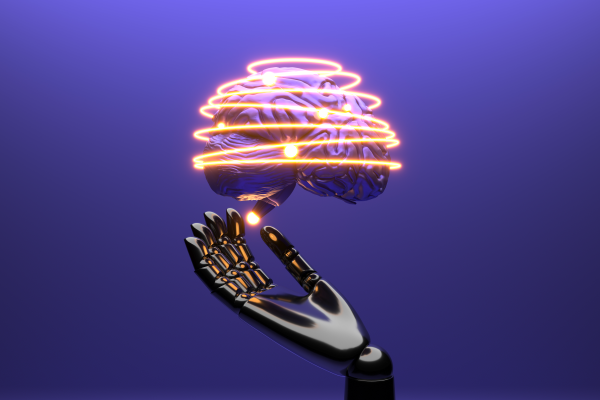
Endowed with intelligence, feelings, and emotions, educators are the agents capable of taking action, of BEING, and of fostering (in students) some of the most important aspects of 21st-century education: self-awareness, self-control, and empathy.
Certainly, human development does not preclude the use of technology. On the contrary: it involves learning to engage with technology in a critical and constructive way.
Technology in Education
In the educational context, technologies are essential for enhancing the teaching-and-learning process. We should not dismiss them, prevent their use, or delay their implementation, but rather incorporate them in a thoughtful and responsible manner, recognizing their role as tools that can expand educational opportunities and promote a more dynamic and effective education.
Preparing the next generations for the world of science, technology, and innovation brings benefits—at the very least, economic and social ones. Around the world, some countries have already learned this lesson and are leaders in international assessments that measure students’ knowledge levels.
Edgar Morin, one of the most respected thinkers of our time, a writer and philosopher, aptly describes the current state of humanity, noting that "we are asleep, even though we are awake, because, faced with such a complex reality, we barely perceive what is happening around us."
For Morin, it is essential to understand not only others but also oneself; it is necessary to engage in self-examination and analyze self-justification, since the world is increasingly ravaged by misunderstanding, which is the cancer of human relationships.
If we are so far removed from the central role of human beings and their development—and at a clear disadvantage compared to “machines”—how are we going to educate for the present and the future?
About the author:
)
Article originally published on the Revista Educação website.
Did you like it? Share it on social media:
Categories
- The Future of Education
- Innovation