

Teaching with empathy is the path to more meaningful learning
)
In an educational landscape marked by multiple pressures—learning goals, disciplinary challenges, social inequalities, and teacher overload—there is a growing understanding that teaching goes beyond the transmission of content.
For Carolina Nalon, a specialist in Nonviolent Communication (NVC) at the Tiê Institute , and Simone Andre, a founding partner of Transverso Assessoria, relationship-building, empathy, and emotional intelligence are not secondary elements, but rather pillars of care—and, therefore, of learning itself.
Both are confirmed speakers at Bett Brasil and will participate in the panel “Caring to Educate: Empathy, Active Listening, and Emotional Intelligence in Schools” at the Basic Education Congress on May 7 at 11 a.m. The complete schedule for Bett Brasil can be found here.
For Carolina, the first step toward strengthening genuine bonds is intentionality. Amid the fast pace of life and the demands placed on teachers, it is necessary to consciously decide that building relationships is part of the teaching profession.
Nonviolent Communication, she says, offers a lens capable of transforming the way we view behaviors considered difficult. Instead of labeling a student as “problematic” or “undisciplined,” the approach is to understand that all behavior expresses a need, even if in a dramatic way. “A student who is yelling and/or seeking attention is showing that some need of theirs is not being met,” she explains.
By shifting the focus from judging behavior to listening to the needs at stake, a new space for dialogue opens up—one that humanizes relationships and prevents the “objectification” of others—this student is this, that teacher is that—a process that, as Carolina warns, lies at the root of all violence.

For Carolina Nalon, intentionality is essential for strengthening bonds. Photo: Courtesy.
Simone expands on this line of thought by placing the debate within the context of contemporary changes in the conception of learning. Whereas the focus used to be on memorization and the reproduction of content, today’s curriculum guidelines—as codified in the National Common Core t (BNCC) and within the framework of Comprehensive Education—recognize that learning involves inseparable cognitive and socioemotional dimensions.
She explains that: literacy goes beyond decoding words and includes the comprehension and meaningful use of language in different spheres of social life; mathematical thinking requires formulating and solving problems; the humanities demand critical interpretation; and art and physicality integrate expression, sensitivity, and the construction of meaning.
“In this broader conception, the cognitive aspect must integrate the socio-emotional dimensions that directly influence how we learn, engage, and construct knowledge. Thus, relationships, empathy, communication, care, self-management, self-regulation, and other socio-emotional aspects are part of the learning processes in all areas of knowledge,” says Simone.
The impact of this change, however, has not yet been fully incorporated into teacher-training policies, which, according to her, often fail to prepare teachers to cultivate these skills in their daily practice.
Building Meaningful Connections
In building genuine connections with students, Simone highlights four pedagogical strengths: recognizing students’ identities; investing in peer learning; ensuring that every student has at least one significant adult at school; and ensuring that knowledge is relevant to their lives.
“These bonds deepen when there is active listening at school, nonjudgmental acknowledgment of suffering, and student involvement in decision-making and collaborative problem-solving. It is also essential to consider structural dimensions of identity such as gender, race/ethnicity, and territory—not merely as markers of identity, but as sources of power and cultural repertoire,” she emphasizes.
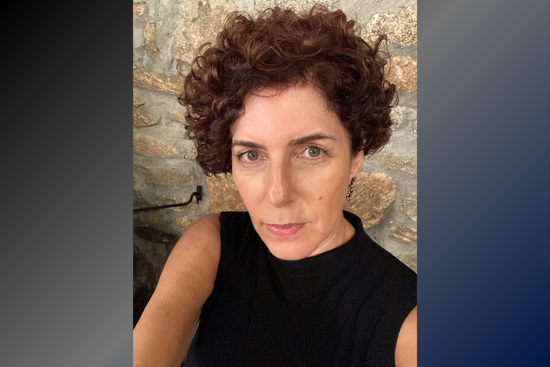
Simone Andre explains how to build genuine connections with students. Photo: Courtesy.
In situations involving misbehavior or emotional distress, both Carolina and Simone agree: empathy and nonviolent communication shift the focus from obedience to understanding.
Misbehavior is no longer seen merely as a problem to be punished but is now understood as a sign of disengagement or conflict. When students feel seen and respected, they tend to reduce defensive reactions, increase self-regulation, and take greater responsibility for their choices.
See also:
A Focus on Teacher Well-Being
Fostering a culture of care, however, also requires paying attention to those who teach. Carolina draws attention to the challenges faced by teachers, which are marked by overload, burnout, depression, and anxiety.
In her view, it is urgent to discuss structural conditions—such as time outside the classroom, workload, and compensation—to ensure that teachers can live with dignity.
“Many schools focus only on class time and ignore the invisible workload that falls on educators,” he points out.
Simone emphasizes that caring for students begins with caring for educators. “School administrators can employ simple, welcoming, and powerful strategies to support teachers. One such strategy is to organize regular, safe meetings—carefully facilitated—in which teachers are invited to share how they’re feeling and what their work experience is like, without judgment. This can start with simple questions (“What has been the most difficult?” “What has been helpful?”), combined with active listening and celebrating small, everyday achievements,” she explains.
These initiatives can create opportunities for mutual support, strengthening bonds, trust, and a sense of belonging among school staff.
Share on social media:
Categories
- Teaching Methodologies