
InteliGENTE: When Individual Differences Are Essential in Education
)
With the central theme “Individual, Collective, and Artificial Intelligences: All Within Us, Right Now! When They Engage in Dialogue, Education Is Transformed,” Bett Brasil—Latin America’s largest event on Innovation and Technology in Education—celebrates its 31st edition from May 5 to 8, 2026, at Expo Center Norte in São Paulo.
To explore this overarching theme in greater depth, the Bett Blog has prepared a series of four articles dedicated to the subtopics that form the framework of the event's program.
This text will address the “InteliGENTE—Individual Intelligences” theme, which explores the power of individual intelligences, emphasizing self-awareness, social-emotional skills, and diversity in all its forms. It also addresses mental health, human relationships, nonviolent communication, and teaching practices that strengthen each student’s uniqueness. Media literacy emerges as key to fostering critical and conscious citizens in a hyperconnected world.
The Student as the Starting Point
In a landscape where education is undergoing profound changes, understanding individual intelligences is essential for any school that wishes to promote meaningful learning. This is because each student constructs knowledge based on their own references: their cultural background, their emotions, their family context, their self-esteem, and their unique cognitive characteristics.
For Janine Rodrigues, a board member of Bett Brasil, writer, educator, and founder of Piraporiando – Education for Diversity, recognizing that every student is unique is not merely a gesture of acceptance, but an essential prerequisite for ensuring a quality education.
Janine argues that paying close attention to students’ subjectivity and diversity should be treated as a core commitment of schools. “Subjectivity is one of the most important rights for any person. It is what makes us unique, and it is a prerequisite for understanding that our beliefs, tastes, opinions, and culture are not universal or the only standards,” she says. For her, it is precisely by understanding one’s own subjectivity that each individual becomes capable of respecting that of others.
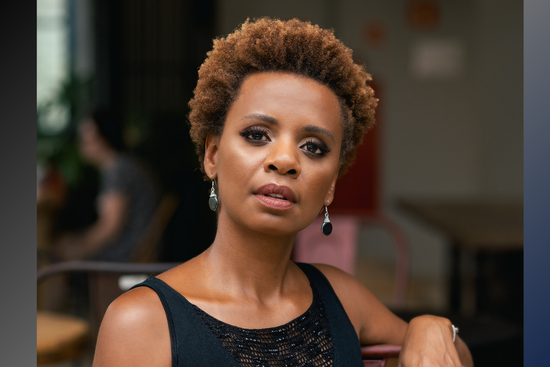
Janine Rodrigues: Photo: Courtesy/personal collection
In the educator’s view, this is one of the greatest challenges facing educational institutions: reconciling equal access to knowledge with the diversity of learning styles.
She emphasizes that this balance requires constant attention to the specific needs of each child or young person. “We must be careful not to ignore each student’s vulnerabilities and difficulties, while at the same time not stifling their potential. No one is excellent at everything,” she says.
For Janine, respecting each student’s individual pace and journey does not mean lowering standards, but rather enhancing the educational process. She also points out that every student arrives at school with their own unique stories.
“People come from different backgrounds, with different stories, and therefore will always react differently to the environment they find themselves in,” he notes. That is why he argues: “A school without warmth cannot provide a quality education.”
Impacts on the school climate and holistic education
When discussing the effects of an approach that values diversity, Janine emphasizes that the greatest impact is the creation of a safe environment where students can fully be themselves. “An environment where students can just be themselves. It seems basic and obvious, but it isn’t,” she says. She criticizes the social pressure toward uniformity that we experience today, where dissent seems to be seen as a threat.
See also:
- INTELLIGENCE: The Impact of New Technologies on Schools
- HumaNÓS and the Power of Collaboration: When School Becomes a Collective
- Bett Brasil 2026: Find out which ticket is right for you
For the educator, allowing each student to express themselves and take a stand is a fundamental part of a well-rounded education. “Disagreement that upholds ethics and respect is healthy,” she says. When the school embraces this diversity, Janine explains, students begin to see and focus more clearly on their own strengths and weaknesses, without worrying about pleasing others or being excluded.
The research that highlights the impact of this perspective
The importance of the InteliGENTE perspective becomes even more evident when viewed in light of studies on holistic development. A survey conducted by the Ânima Institute, in partnership with Lepes/USP, analyzed 500,000 responses from professionals and students in the public school system across five Brazilian states and provided relevant evidence regarding the influence of human relationships on young people’s well-being and sense of purpose.
The study showed that students who say they can count on their teachers to talk about their feelings have 16% more sense of purpose in life than those who do not have that support. Even when two young people have similar levels of mental health, the one who sees their teacher as a trusted confidant can develop up to 30% more sense of purpose.
The data also shows that many students face significant emotional challenges that can affect their sense of purpose in life: 29% believe their mental health is affected by their studies; 26% have been bullied; 24% feel pressured to meet a standard of beauty; 21% say they are distressed by their family’s financial situation; 16% felt lonely in the past year; 13% feel compelled to adopt certain behaviors they’ve seen on social media
The survey also indicates that social-emotional skills are the factors that most influence the development of a sense of purpose in life (54.9%), followed by the quality of the relationship with the teacher (14.7%), reinforcing how attention to individual differences and human relationships directly impacts students’ educational journey.
The “InteliGENTE” subtheme invites administrators, teachers, and the entire educational community to focus less on standardized models and more on the people who make up the school community. It is about understanding that each individual learns, feels, reacts, and envisions the future based on a unique combination of experiences and emotions. As Janine Rodrigues puts it: “We need schools where students can simply be themselves.”
Share on social media:
Categories
- Teaching Methodologies