

A hit with both the public and the business community, Bett Brasil wraps up this year’s edition with growth projected for the 2024 event
)
Bett Brasil, Latin America’s largest education and technology event, concluded on Friday (the 12th) in São Paulo, fulfilling its goal of being the event’s largest and best edition to date. The four-day event featured a wealth of content, including the Bett Brasil Congress, the Administrators’ Forum, workshops, and a trade show that showcased solutions, products, and services from more than 290 exhibiting brands.
This year’s event also featured initiatives that have already won over the Bett Brasil educational community. One of the new additions was the launch of Ahead By Bett, a side event focused on higher and vocational education, featuring an exhibition area and an auditorium hosting panel discussions. Another innovation was the Bett Conect@ meeting program, which facilitated more than 550 conversations over two days between educational institutions and providers of technology and solutions for education.
With the aim of promoting the exchange of experiences and fostering initiatives by startups focused on education, the event expanded the space dedicated to these companies in 2023 with a new concept called the Startup Arena. The startup exhibition area features 21 companies, and the program includes talks on topics relevant to the sector.
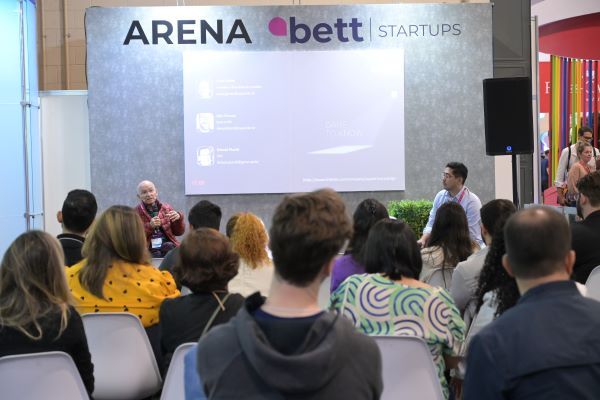
Another highlight is the sessions featuring school administrators who discuss their main operational “pain points,” as well as the reverse pitch sessions—conducted in the same format as traditional pitches, but with the roles reversed, so that potential investors present to startup entrepreneurs in the audience.
Exhibitors celebrate the success of Bett Brasil
After four days of the event, exhibitors at Bett Brasil reported positive results due to the high volume of visitors, which translated into opportunities to generate new leads and strengthen relationships with customers and partners. This year’s event drew a record-breaking crowd of more than 35,000 people.
"The trade show was wonderful—a unique opportunity to welcome clients and prospective partner schools and showcase our materials and unique offerings. By the third day, more than 1,500 people had visited our booth. Our presentations were always packed with attendees. We discussed mental health in schools; a culture of peace; empathy; maker culture; the challenges of school administration; ChatGPT; and the challenges of using it in the classroom, among other topics. We are very happy with everything we achieved at Bett Brasil 2023,” said Ana Luiza Perdigão, Marketing Coordinator at Conquista Educacional.
Marina Dalbem, co-CEO of Edify Education, also highlighted the success of the company’s booth during the event. She explained that the idea was to address the challenges faced by school administrators and present bilingual solutions for schools. “Visitors were able to explore our educational resources, such as the Toolkit lesson planning tool, our assessment system, and E-practice, which allow us to address the specific needs and challenges of each student, enhancing the personalization of instruction. “We’re thrilled to showcase what we offer schools at such an interactive and engaging booth—there was even a line at the entrance. We’re already looking forward to 2024,” said Mariana.
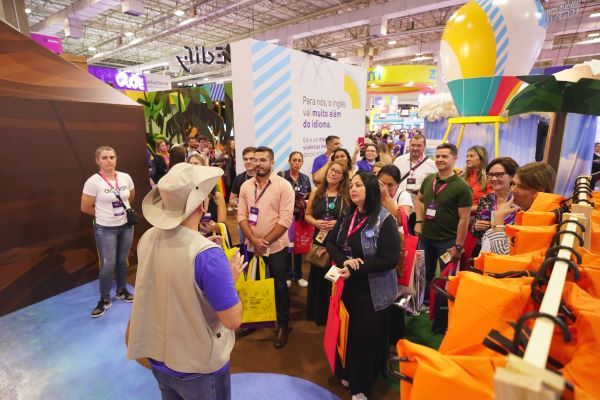
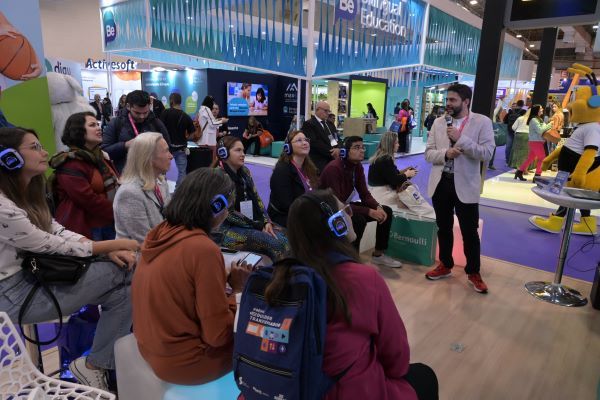
The high turnout at the exhibition area was highlighted by Helena Poças Leitão, Marketing and Market Intelligence Manager at Editora do Brasil. “We are very happy to be participating in yet another edition of Bett Brasil. Our booth was visited by many schools and administrators who were able to see our innovations up close, including those in the Metaverse. We were able to showcase all our new products and our range of distance learning services—and our presentations facilitated valuable exchanges of ideas. The interaction with the public, partners, and suppliers that this event provides is unique,” said Helena.
Aline Castro, the educational director of the pH Education System, commented on the extensive network of schools that are clients of the brand and the opportunity to prospect for new business. “We have people coming by the booth all the time wanting to see the materials. I believe there’s a very strong trend among people in the education sector who want to learn about and see the best resources available for learning,” said Aline. Daniel Perry, the educational director of the Anglo System, also highlighted the strengthening of relationships with the schools that approached the company during Bett Brasil.
"This is our first year participating in Bett Brasil, and we can say that it is exceeding our expectations in terms of the exposure and scale of the trade show. Not to mention the significance it holds for the entire education market in Brazil," said Fábio de Oliveira, general director of Aprende Brasil Educação.
Meanwhile, the Office Total team—a longtime exhibitor at the event—celebrated the public’s interest in the company’s solutions. “This is Office Total’s eighth appearance at Bett Brasil 2023. It’s a very important event and a showcase for presenting innovations and useful services for the education sector. At this year’s event, we’ve seen an audience eager for information, particularly regarding equipment leasing—a concept still unfamiliar to some administrators. Our subscription-based IT offerings are drawing attention in the educational sector,” said Poliana Rocha, Account Manager at Office Total.
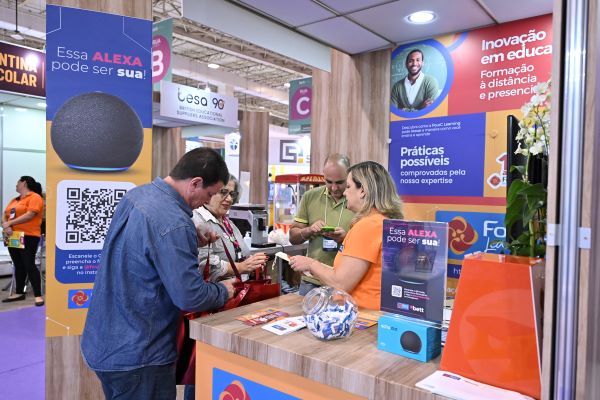

In this regard, Sara Hughes, the founder of FourC Learning, emphasized the importance of direct contact with the public to understand their demands for innovation in the field of education. And Rafaela Manes, Director of Business Development for Portuguese-speaking markets at TestWe, noted an increase in visitor traffic compared to last year and a high level of interest in the company’s solution, which integrates with ChatGPT. “It’s very interesting for TestWe to reconnect with past leads and also with some clients we were able to sign contracts with thanks to last year’s trade show,” Rafaela revealed.
Milena Fiuza, the educational director of Sistema Positivo de Ensino, highlighted the beauty of the trade show, which she described as “a feast for the eyes.” “The exhibitors, booths, and solutions are well-organized, attractive, and, of course, packed with content. We feel that the participants are satisfied with all the energy they’ve experienced here over the past few days,” Milena commented.
The Opet Educational Group (comprising Editora Opet and Centro Universitário UniOpet) is celebrating its 50th anniversary at Bett Brasil. “We are investing in technology, yes, but without losing sight of the human element—civic education—that has defined the Opet brand for 50 years. At Bett Brasil, we’ve replaced the distribution of bags and printed materials with QR codes and digital information, always with the support of our consultants. And it is precisely this personal contact that allows us to build genuine, long-lasting partnerships: understanding the school, learning about its needs, talking with administrators, finding out what they want, and making a difference,” said Adriano de Souza, general director of Editora Opet.
Media Literacy: The End of Fake News
The topic of Friday’s (12) panel discussion, media literacy plays a fundamental role in combating fake news in contemporary society. As the dissemination of information becomes easier and faster with advances in technology, it is crucial that individuals be equipped with the skills and knowledge to distinguish between true and false information, and this must begin in school.
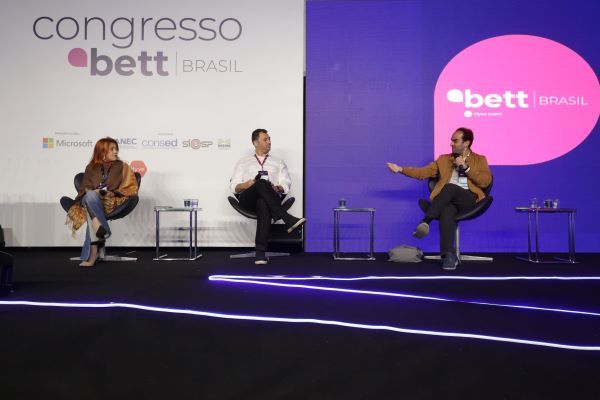
With the participation of Alexandre Le Voci Sayad, director of ZeitGeist—Education, Culture, and Media and co-chair of the UNESCO MIL Alliance, and Sandhra Cabral, CEO of Educar para Ser Grande and professor at USCS (São Caetano do Sul University), the panel highlighted several factors that can help combat misinformation in the school environment. Reading, listening, questioning, asking, and, above all, being skeptical are the foundations of a pedagogy of informational multiliteracy, notes Sandhra Cabral, who already uses digital media to teach her students.
Alexandre Sayad, meanwhile, highlighted the democratic crisis as a key factor in the global disinformation crisis. “It is essential that we build a network to combat disinformation,” he noted. The importance of valuing professional, high-quality journalism and the constant attacks on the profession were also raised. Finally, they emphasized the urgency of fostering critical thinking regarding Artificial Intelligence.
How to Develop Social-Emotional Skills Using Active Learning Methods
The mental health crisis—exacerbated by the pandemic—has shed more light on the importance of developing social-emotional skills in schools, with a focus on the well-being of students and educators. On Friday (the 12th), author and professor at the Singularidades Institute, Carolina Costa Cavalcanti, and the director of Tríade Educacional, Lilian Bacich, participated in the Bett Brasil Conference and addressed the topic.
Carolina pointed out that suicide rates among caregivers (educators, healthcare professionals, and parents) are 40% higher for men and 130% higher for women than in the general population, according to a study by Stanford University (U.S.). “This shows that we must first take care of those who care for others (educators) because no one can give what they do not have,” said the professor.
She explained that social-emotional learning is a preventive measure against health problems and that CASEL (The Collaborative for Academic, Social, and Emotional Learning) categorizes the skills we can learn to achieve this goal into five pillars: self-awareness, social awareness, relationship skills, and responsible decision-making.
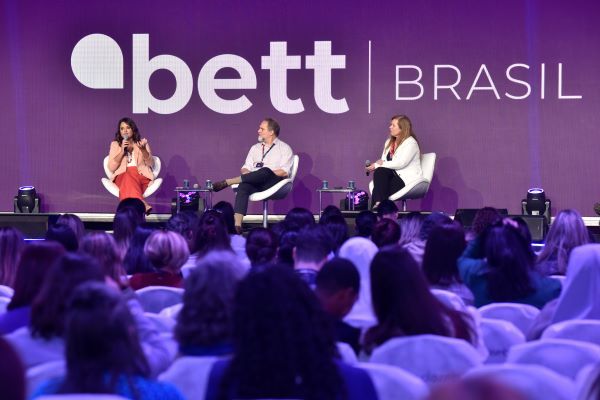
In this regard, active learning methods provide a means for social-emotional development. “You can’t teach empathy, for example, by reading a book. You have to practice empathy,” Carolina pointed out.
The director of Tríade Educacional presented a case study of a public school that demonstrated in practice how the implementation of a STEAM project—an acronym for Science, Technology, Engineering, Arts, and Mathematics, which is an active methodology based on problem-solving through projects—was used to promote students’ social-emotional skills.
As part of the project, students from a school in Piracicaba (SP) built a scale model of a community plaza, with the goal of revitalizing an abandoned lot located next to the school. In a video statement, the project advisor spoke about how important it was for the students to interact with local residents to gather ideas and about all the collaborative work they did together. According to her, the project was carried out by a remedial class, which required a little more attention due to the learning gaps caused by the pandemic, and it allowed the students to see just how capable they are.
Building a Holistic Education System
Unfortunately, the COVID-19 pandemic has exacerbated inequalities in Brazil, including in schools. Furthermore, this period has shown us how important it is to foster students’ holistic development by addressing various aspects of the educational process both inside and outside of school.
On the last day of Bett Brasil, a panel discussion was held focused exclusively on holistic education, which, according to the speakers, is not limited to full-time schooling. "Holistic development encompasses human aspects, strengthens interactions with social and cultural environments, and is built collectively. It’s a bigger undertaking,” explains Mayra Antonelli Ponti, head of the holistic development program at the Laboratory for Studies and Research in Social Economy (LEPES/USP).
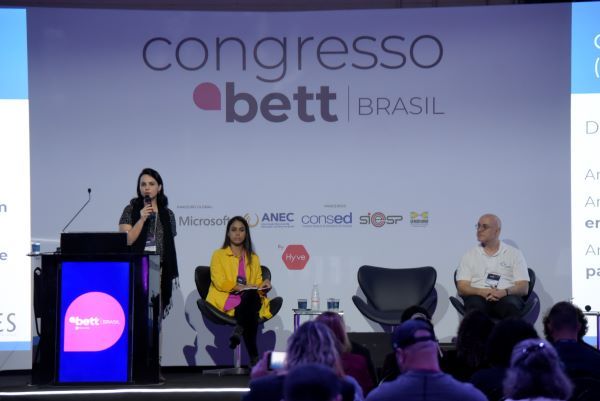
On that occasion, Luiz Guilherme Scorzafave, a researcher at LEPES/USP, highlighted some social data that could facilitate the expansion of full-day schooling in the coming years. “Brazil is aging, and as a result, some cities are already seeing much lower enrollment rates among school-age children. Consequently, these facilities can be easily expanded to accommodate full-day schooling and development programs.”
According to the organization, full-time education has a positive impact on student performance in the country; however, care must be taken to ensure that the method does not become exclusionary. “We need to evaluate the students, the implementation, and whether the method is working in that particular setting, doing everything possible to prevent students from dropping out because of it,” says Scorzafave.
Inspiring Talks
One of the final highlights of the event’s last day was former soccer player Cafu, who spoke about the role of education in shaping a person and the power of perseverance. “My career taught me a lot, but what I learned from my parents and at a humble school—made of tin—in Jardim Irene was the foundation for who I am today,” he said.
Marcos Evangelista de Morais, known as Cafu, is one of the greatest names in world soccer. As captain of the Brazilian national team, he was the one who lifted the trophy in 2002, when Brazil won its fifth World Cup. Before rising to stardom, the athlete was turned down nine times before finally landing a professional contract. “My father taught me that obstacles exist to be overcome, and I’ve always been convinced that no one can decide for us what we want to be,” the player said.
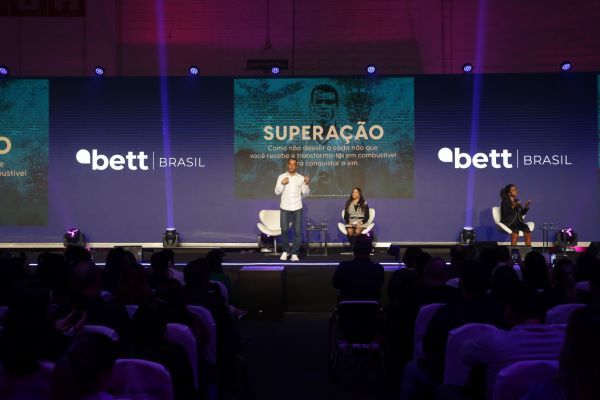
The talk was moderated by journalist Mariah Morais, who emphasized the importance of schools—whether public or private—in helping each person build their dreams. “We often think that those who come from public schools in the suburbs don’t have the right to dream, but we do. Cafu and I can attest to that—we’re products of public schools,” she concluded.
The journalist is working on the production and release of a book about the star player and revealed that the foreword will be based on the winning essay from a contest held in public schools. The book is scheduled to be released next year.
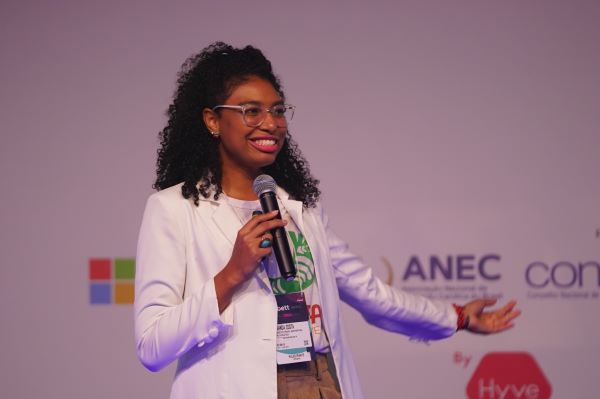
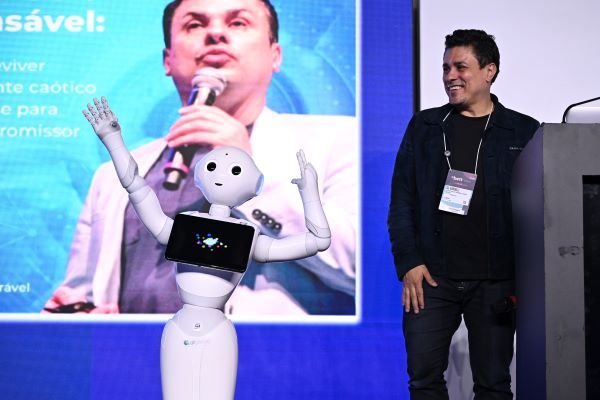
Also in attendance were Amanda Costa, founder of the Perifa Sustentável Institute, who spoke about climate justice, environmental racism, and the ecological crisis; Gil Giardelli, who discussed artificial intelligence alongside the robot Pepper; Renato Casagrande, president of the Casagrande Institute, who shared his perspectives on the future of education; and Tiago Silva, who spoke about the “Mochileiro pela Educação” project.
Did you like it? Share it on social media:
Categories
- The Future of Education
- Educational Management