

Educational tourism takes learning beyond the classroom
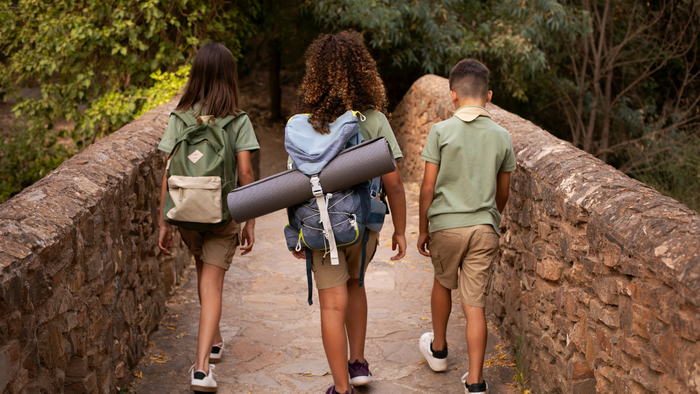
Visits to historic cities, outdoor activities, and cultural immersion experiences can broaden students’ learning opportunities. When integrated into instructional planning, these experiences bring curricular content closer to real-world contexts and encourage exposure to different cultural, historical, and social contexts.
For Cesar Leonel, director of Forma Conhecer—the educational tourism division of the Forma Turismo Group—the main distinguishing feature of these experiences lies in their educational purpose and the way the experience is structured. “To integrate a trip into the school’s curriculum, it is necessary to define what the students will investigate, what content will be covered, and how their findings will be revisited afterward,” he explains.
NR’s Product Director, Kito Vivolo, points out that these experiences can be designed both to deepen curricular knowledge and to develop social-emotional skills. An English immersion program, for example, might involve interacting with people from other cultures, while other programs might focus on leadership activities, active listening, self-awareness, and teamwork. “It’s the educational goal that guides the design of the experience, ” he says.
Roberta Fardin Bianchi, the academic director of Sítio Santa Ângela, emphasizes the potential of these hands-on experiences to connect the material studied with the students’ real-life experiences.
“In the educational experience, the material studied in textbooks finally comes to life. Smelling different scents, appreciating and experiencing nature in all its glory, interacting with cultures and realities outside of one’s daily routine—and comparing all of this to what was covered in the classroom—is something absolutely magical and transformative for learning,” he says.
Therefore, the choice of destination should be based on the learning objectives defined by the school and take into account the experiences that environment can offer. Visits to historic sites, outdoor activities, or cultural experiences can encourage observation, inquiry, and exposure to different ways of living and understanding the world, provided they are integrated into the educational plan.
See also:
Educational planning guides the itinerary of the trip
Planning an educational tourism experience begins with defining the learning objectives and must take into account the students’ age group, prior knowledge, and needs. According to Leonel, the choice of destination should align with the topics the school intends to cover, with activities that encourage students to observe, investigate, and participate.
Another key point, according to the director of Forma Conhecer, is the operational support needed to ensure that students can participate in activities under appropriate conditions. “The operational framework is equally important: transportation, supervision, insurance, emergency procedures, and communication with parents or guardians,” he notes.
This approach can also be viewed from a long-term perspective. Vivolo argues that travel should be part of an ongoing educational journey, with experiences that accompany students’ development and gradually expand their learning opportunities. Rather than isolated activities on the school calendar, the proposal is to build a path that connects different experiences throughout students’ educational journey.
Educational tourism can contribute to students' learning process. Photo: Freepik.
Teachers’ involvement is essential to this process, including those who do not accompany the students on the trip. They are the ones who can introduce the topics, spark curiosity, and encourage questions that will be explored throughout the itinerary.
“Great trips begin long before departure: they begin when a student learns about a story, becomes interested in a place, or asks a question that they’ll be able to explore during the experience,” says Vivolo.
The NR director cites as an example a trip to Foz do Iguaçu, which can be planned in geography classes by studying the countries, borders, and historical processes that shaped the region. At the point where Brazil, Argentina, and Paraguay meet, students have the opportunity to observe how these concepts relate to the movement of people, languages, trade, and cultural encounters. In this way, the material studied in the classroom takes on a concrete dimension.
Roberta emphasizes the importance of continuing the educational work after the trip. In her view, these experiences need to be revisited in the classroom so that students can share their insights, discuss what they experienced, and deepen the knowledge they have acquired.
“The educational journey doesn’t end with the ride home. What was seen, felt, and experienced in the field needs to be revisited, discussed, and explored further in the classroom, ensuring that knowledge is consolidated in a deep and structured way,” he says.
See also:
The segment's expansion brings challenges related to access
Educational tourism is showing signs of growth and diversification in Brazil, according to the interviewees. Schools in different regions have been incorporating field trips and educational outings into their curriculum.
Roberta attributes the increase in demand to the growing emphasis on active learning methods and the alignment of activities with the guidelines of the National Common Core Curriculum (BNCC).
“The BNCC requires schools to move beyond the traditional model of content delivery and adopt active teaching methods that place the student at the center of the learning process. In this context, educational tourism has established itself as an indispensable strategy for addressing the general competencies of basic education,” he says.
According to her, schools are looking for specialized partners capable of developing lesson plans with pedagogical intent, safety, and activities appropriate to the curriculum objectives.
Leonel also notes a diversification of offerings, ranging from visits to museums and historic cities to experiences related to science, culture, and entertainment. As an indicator of his group’s performance, he reports that Forma Turismo recorded 20% growth between 2025 and October 2026. For the executive, the segment’s expansion depends on the ability to demonstrate how these experiences contribute to the institutions’ educational mission.
Vivolo, meanwhile, highlights the growing demand in different regions of the country. “Before, this demand was heavily concentrated in the Southeast, and then it began to gain ground in state capitals. Today, we see schools in cities and regions farther from traditional destinations—including the North—seeking educational experiences across the country,” he says.
Despite this trend, access to these experiences remains a challenge, especially for public schools. Vivolo points out that travel costs can make activities with educational potential unfeasible, particularly in remote areas or in schools with few students to share the expenses. In this context, expanding access to educational tourism also requires taking into account the financial and logistical conditions of these institutions.
Share on social media:
Categories
- Learning Strategies