
Collective action mobilizes students to build desirable futures
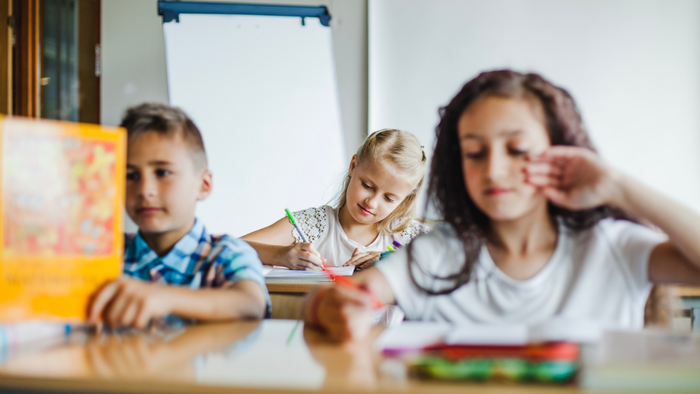
Building possible futures requires the ability to imagine alternatives, recognize opportunities, and turn ideas into concrete initiatives. In education, this process demands creating space for creativity, experimentation, and student participation in the search for solutions to real-world challenges. More than simply accumulating knowledge, we must take action to build the world we want.
This discussion is part of the subtopic “Courage to Act, ” which is part of the content framework for the 32nd edition of Bett Brasil, guided by the central theme “The Courage to Transform. Action begins with each of us. Transformation happens through all of us.” The initiative focuses on learning by doing and the ability to turn knowledge into action, featuring discussions on innovation, creativity, experimentation, entrepreneurship, problem-solving, technologies applied to education, maker culture, and new pedagogical practices.
For futurist Lala Deheinzelin—a pioneer in the creative economy, creator of the 4D Fluxonomy methodology, and advisor to Bett Brasil—preparing new generations for the future also means reexamining the values and practices that have historically guided educational processes.
“We’ve been thoroughly trained to compete, but the future depends on collaboration. Life evolves from the ‘co’: collaboration, convergence, coordination, sharing, cooperation, and trust. These are elements that ended up not being very present in our education. However, without them, we have no future,” he says.
According to Lala, the need to develop these capabilities stems from the understanding that people, societies, and countries are interdependent. In this context, joint action becomes essential for addressing problems that cannot be solved individually.
“Joint action is the only thing that can truly strengthen collaboration. One of the biggest challenges we face is polarization and excessive fragmentation, with groups that don’t communicate with one another. To move forward, we depend on action. When we do things together, our differences are overcome,” he explains.
To illustrate this principle, the futurist draws on an experiment involving the synchronization of metronomes. Initially, each instrument has its own rhythm. When placed on the same moving base, they gradually begin to function in a coordinated manner. The experiment, she says, represents the ability of different individuals to find a common rhythm when they share an action.
This reflection also points to a shift in the role of schools. “More than ever, we need to move from an education that provides content to one that equips students with the ability to act, to take initiative, and to make decisions. That is why this shift from content to projects is so important,” he emphasizes.
Illiteracy in the Future
Another concept introduced by Lala is that of “futures illiteracy.” While literacy has been associated with the ability to read and write for centuries, the futurist believes that an essential skill for future generations will be learning to recognize signs of change, imagine alternatives, and develop a repertoire for dealing with different possibilities.
This need is related to the speed of change and the shortening of the time between the emergence of an innovation and its impact on society. Whereas in the past, major changes could take centuries to take hold and produce an impact, today this process occurs over much shorter periods, driven by technology and artificial intelligence.
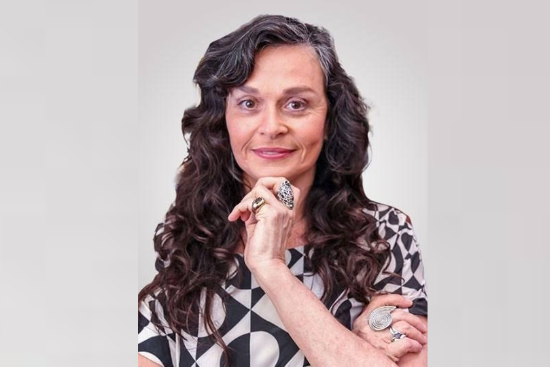
“We’ve been thoroughly trained to compete, but the future depends on collaboration,” says Lala Deheinzelin. Photo: Courtesy.
In the expert’s view, developing this ability is also linked to mental health and the formation of life perspectives. “At the Brazil Futures Forum, an event held at the Museum of Tomorrow in Rio de Janeiro, data from the IBGE were presented that reveal a concerning perception among adolescent girls regarding the meaning of their own existence. The difficulty in seeing possibilities is linked to a lack of belief that there is a future,” says Lala.
The futurist points out that, despite challenges such as global warming and economic inequality, society has the resources, knowledge, technologies, and people capable of contributing to the development of solutions; however, it is necessary to foster the awareness that there are possible paths forward.
This understanding will also be important in light of changes in the world of work. For her, imagining different scenarios allows us to recognize opportunities, make choices, and understand that the future is not set in stone. Education, therefore, needs to provide tools so that children and adolescents can actively participate in this process, rather than merely reacting to changes.
From Imagination to Experimentation
But how can this perspective be put into practice in the school setting? For Lala, one of the first steps is to encourage students to imagine desirable futures. Her experience gained over three decades of work in the field of futurism has shown her that many people, when asked how they would like the world to be, initially offer obvious and generic answers, such as an end to wars and harmony among societies.
The challenge, she says, is to expand that imagination and connect desires to concrete needs, taking into account the collective life in society. “When we create futures that are not only desirable but also necessary—considering what is important for the common good—these visions of the future have the power to mobilize people,” she explains.
According to the futurist, building a shared vision is a starting point for action. She notes that various activities and organizations that succeed in bringing people together around a common goal are based on a vision of the future that guides both individual and collective efforts.
In schools, this approach can take the form of projects that place students at the center of the creation and implementation of proposals. One possibility suggested by Lala is organizing a Festival of the Future, an initiative that could bring together science, art, and entrepreneurship, allowing students to develop projects related to the futures they wish to build.
- See also: Mental health in schools requires prevention, support, and attention to students’ well-being
The expert cites international examples in which schools were used as a starting point for creative economy initiatives. In projects she developed in Mozambique and Cape Verde, for example, students were encouraged to map the resources and potential of their own neighborhoods and to identify ways to connect them to develop solutions.
Another example took place at a public school in Paracatu, in Minas Gerais, where Lala led a “shaping the future” activity with about 40 teenagers. Using a proprietary methodology and an interactive digital system based on artificial intelligence, the students answered questions and collectively developed a vision of the future for the school community.
“It was an extraordinary experience. The school principal even cried because she never imagined that the students would come up with proposals focused on the common good. And what’s most interesting is that their visions for the future yielded concrete ideas that could actually be put into practice. Based on that, the principal suggested that they choose collective actions to put these ideas into practice. The students chose to restore the school’s sports court and clean up the community reservoir, and the initiatives turned into a sort of scavenger hunt within the school, mobilizing the students to address these issues,” she explains.
For Lala, the experience demonstrates how imagination can give rise to concrete learning projects in which students participate in identifying problems, developing alternatives, and implementing solutions.
“The future is the driving force behind action. And action, when combined with entrepreneurship, creativity, and the development of solutions, truly becomes a form of learning that goes beyond mere content. It’s about encouraging students to take initiative and create—from both artistic and scientific perspectives—as they strive to bring these futures to life,” he says.
In this process, different skills are brought together around a common goal. Creativity, collaboration, forms of expression, skills, and knowledge are no longer developed in isolation but are applied in the execution of projects.
Share on social media:
Categories
- Educational Management