
Experts say that public-private partnerships (PPPs) in education are synonymous with school efficiency and sustainability
)
Public-Private Partnerships (PPPs) are gaining ground as an alternative for modernizing educational infrastructure in Brazil. The model aims to address long-standing challenges, such as delays in construction projects, maintenance failures, and the administrative burden on school principals. At the same time, it ensures that public administrators focus their efforts on what is essential: student learning.
For José Aliperti , CEO of Astra Infraestrutura e Concessões Educacionais, the PPP model represents a break from the traditional contracting system.
“A public-private partnership (PPP) is a contracting model that offers much greater efficiency and agility. Under the conventional approach, each need requires a separate bidding process: first to build the school, then for furniture, followed by technology equipment, and even more so during operations, with the hiring of cleaning, security, and kitchen staff, among others. A new process is also required for every emergency repair. Therefore, it is an inefficient model that wastes energy and creates an administrative burden for public officials,” he explains.
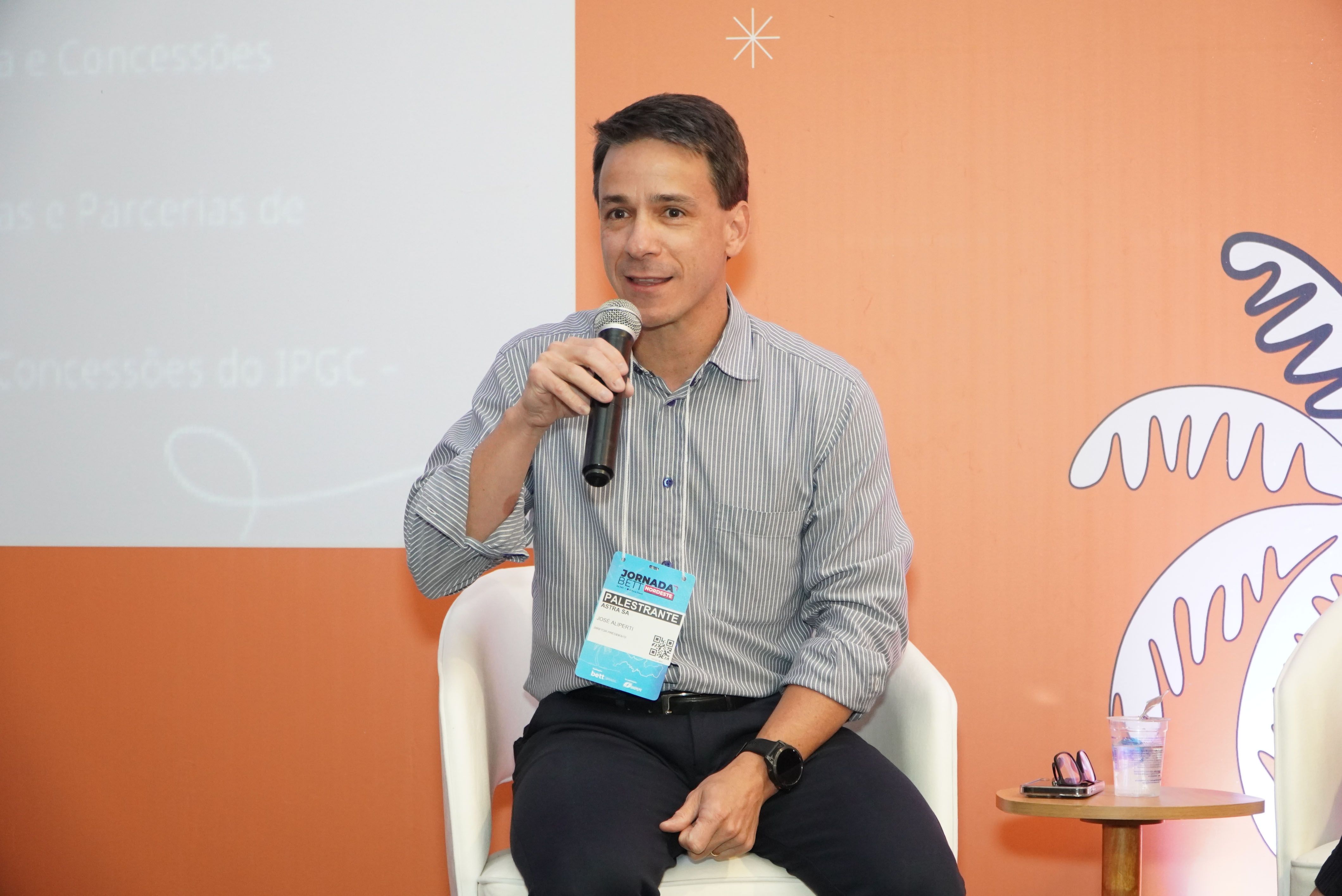
José Aliperti gave a talk in the Public Education auditorium during Bett Day. Photo: Bett Brasil
According to him, the impacts of this model on daily school life are clear. “In public schools, there is no administrative manager. The principal is responsible for the infrastructure. If the roof leaks or the power goes out, he has to fix it. Since these problems are visible and urgent, they generally become a priority, taking up 70% to 80% of principals’ time. This takes time away from what really matters, which is focusing on student learning,” he says.
Rafael Tinelli , Director of Partnerships and Concessions at the Institute for Urban Planning and Management (IPGC), emphasizes the importance of separating pedagogical and administrative responsibilities: “Education PPPs are established with the guiding principle of not interfering in pedagogical matters, which remain the responsibility of the municipality or the state. ‘This division is what ensures efficiency and speeds up service delivery, providing modern and well-maintained schools, while public management can devote itself entirely to educational quality,’ says Tinelli.”

For Rafael Tinelli, it is important to separate pedagogical and administrative responsibilities in public-private partnerships (PPPs). Photo: Bett Brasil.
Sustainability: Performance Indicators
Another key point raised by Astra’s CEO is the financial aspect. According to Aliperti, PPP contracts are able to deliver better results at a lower cost precisely because they consolidate all responsibilities under a single qualified operator.
“The contract creates a continuous management cycle. The private concessionaire makes the initial investment to build or renovate the school, sets up the entire infrastructure, and then operates it for 20 or 30 years. It receives a fixed monthly payment that covers both the investment made and ongoing maintenance and services,” he explains.
See also:
- Digital equity in schools depends on high-quality infrastructure and pedagogical intent
- How Data Can Humanize School Management
- Inclusion in Schools: Experts Identify Challenges and Strategies to Ensure Students' Full Participation
This approach also ensures long-term sustainability because the contracts entered into are tied to performance metrics.
“They are used to measure the quality of the service provided: whether maintenance is up to date, whether the school is clean, whether school meals are being served properly, and so on. This evaluation directly impacts the monthly payment, because if the concessionaire fails to deliver, it receives less. This mechanism creates an alignment of interests that ensures the smooth operation and preservation of the asset over time,” explains Aliperti.
For municipal governments, the model also represents a cultural shift in public management. In Maceió, David Gomes, Secretary of Strategic Actions and Partnerships, argues that PPPs introduce a new paradigm:
“The decision to adopt the PPP model represents a paradigm shift in public administration. It means adopting a management approach that seeks to do more while spending less, delivering better results. That is what the PPP sets out to do. That is why I strongly believe in this tool as a catalyst for change in education in Brazilian municipalities.”
The content of this article is based on the participation of José Aliperti, CEO of Astra Infraestrutura e Concessões Educacionais; Rafael Tinelli, Director of Partnerships and Concessions at IPGC; and David Gomes, Municipal Secretary of Strategic Actions and Partnerships for the City of Maceió, at the Bett Nordeste 2025 Conference.
Share on social media:
Categories
- Educational Management