

The 30th edition of Bett Brasil brings together thousands of educators and underscores the key role of education in social transformation
)
With record attendance, the 30th edition of Bett Brasil brought together more than 47,000 visitors and 330 exhibiting brands over four days of programming dedicated to discussions, experiences, trends, and business. Held from April 28 to May 1 at Expo Center Norte in São Paulo, the event established itself as the premier gathering for Latin America’s educational community and reinforced the central role of education in human, social, and economic development.
“The 30th edition of Bett Brasil exceeded all expectations, with significant growth in attendance compared to previous years. We welcomed a highly qualified audience, consisting of educators, administrators, officials, and companies from across the country and throughout Latin America, which reinforces the event’s role as the premier gathering for the education ecosystem. The engagement with the program’s activities and the volume of business generated demonstrate that Bett Brasil is increasingly a catalyst for innovation and transformation in the education sector. After all, one of our pillars is to foster dialogue, ideas, and solutions for equitable, inclusive, and high-quality education in both public and private sectors,” said Claudia Valerio, general director of Bett Brasil.
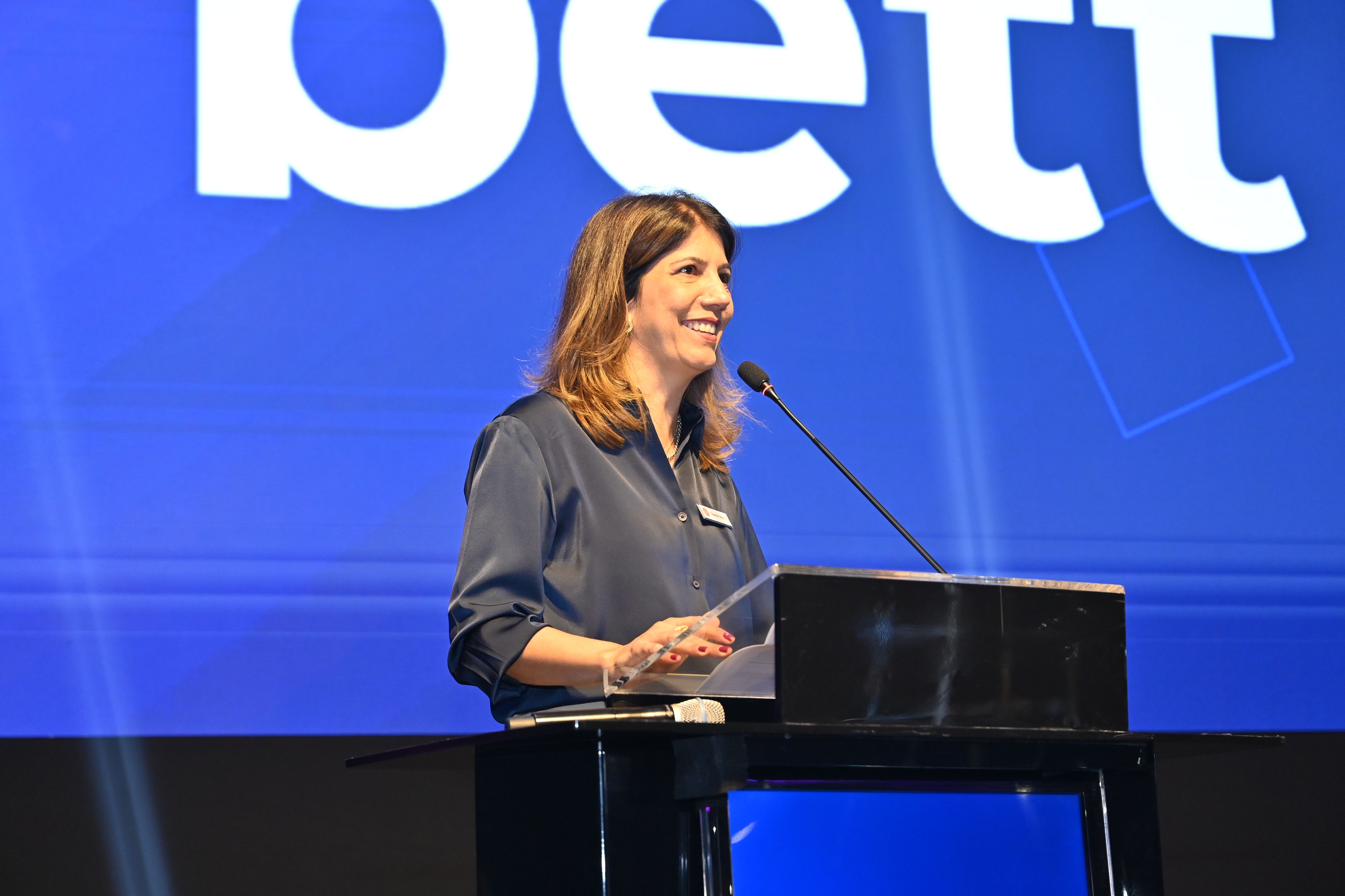
Claudia Valério during the opening ceremony of the 30th edition of Bett Brasil. Photo: Bett Brasil
To inspire and discuss the future of education and the role of technology and innovation in the training of educators and students, the event featured 12 themed sessions, divided among the Basic Education Congress, Workshops, the Administrators’ Forum, the Ahead Forum—dedicated to higher and vocational education—the Public Education session, and the Startups Arena.
Under the central theme “Education to Address Crises and Build Regenerative Futures,” the program featured more than 450 speakers and experts who discussed urgent challenges and innovations in education, addressing topics such as the climate crisis, artificial intelligence, mental health, educational equity, and human development.
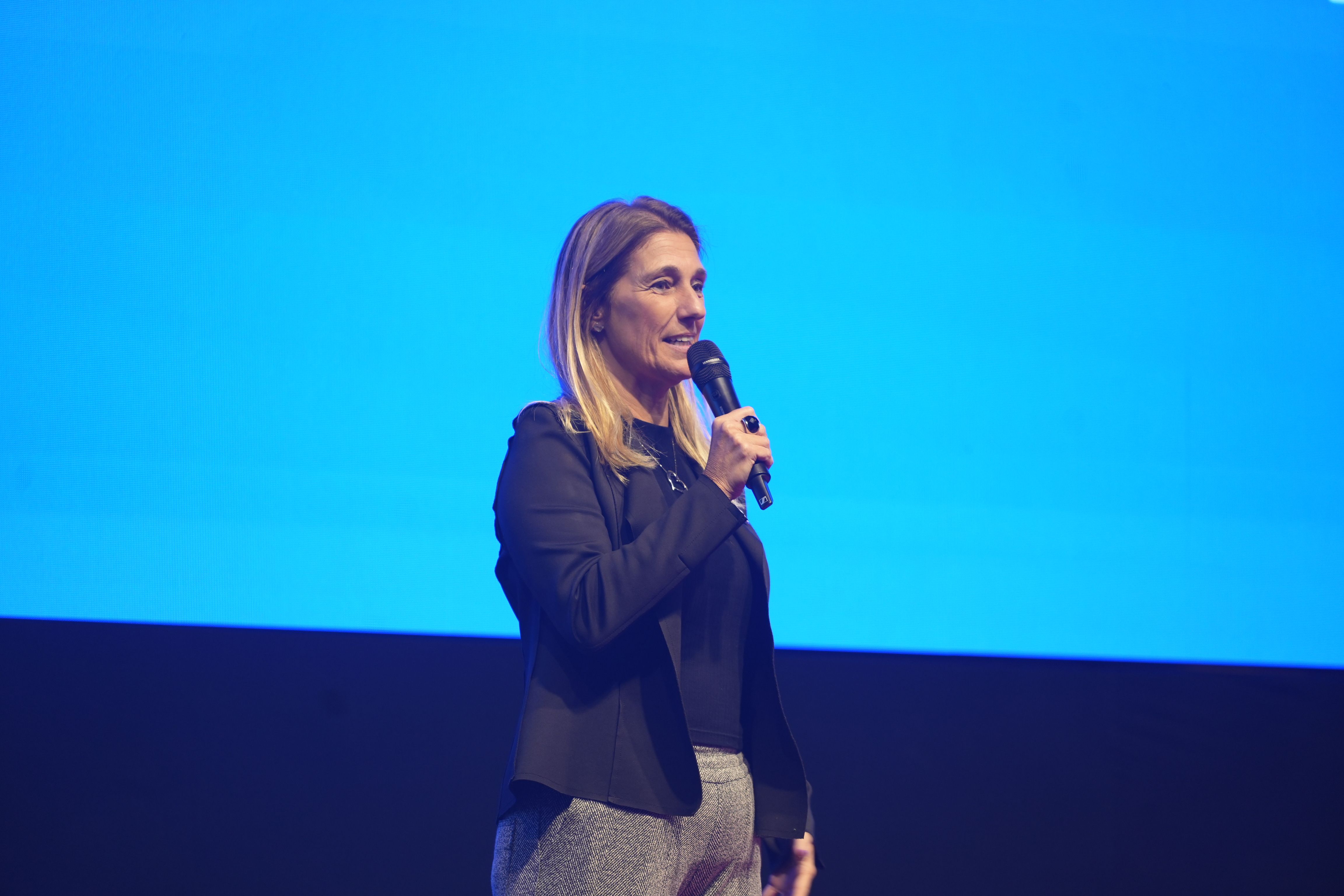
Adriana Martinelli, director of content at Bett Brasil. Photo: Bett Brasil
“This edition of Bett Brasil was historic. We established new content formats (Flipped Classroom and Creative Space), which enriched the participants’ experience and created opportunities for deeper, more collaborative conversations. We launched the Bett Brasil EdTech Awards and the Transformative Educator Award, celebrating innovation and impact. This edition reaffirms Bett Brasil’s commitment to transforming education,” said Adriana Martinelli, content director at Bett Brasil.
Opening Ceremony
State and municipal secretaries of education, government representatives, administrators and teachers from public and private school systems, educational technology companies, and civil society and nonprofit organizations gathered to share knowledge, ideas, and projects. The opening ceremony of Bett Brasil marked the beginning of this exchange by addressing the central theme: “Education to tackle crises and build regenerative futures.”
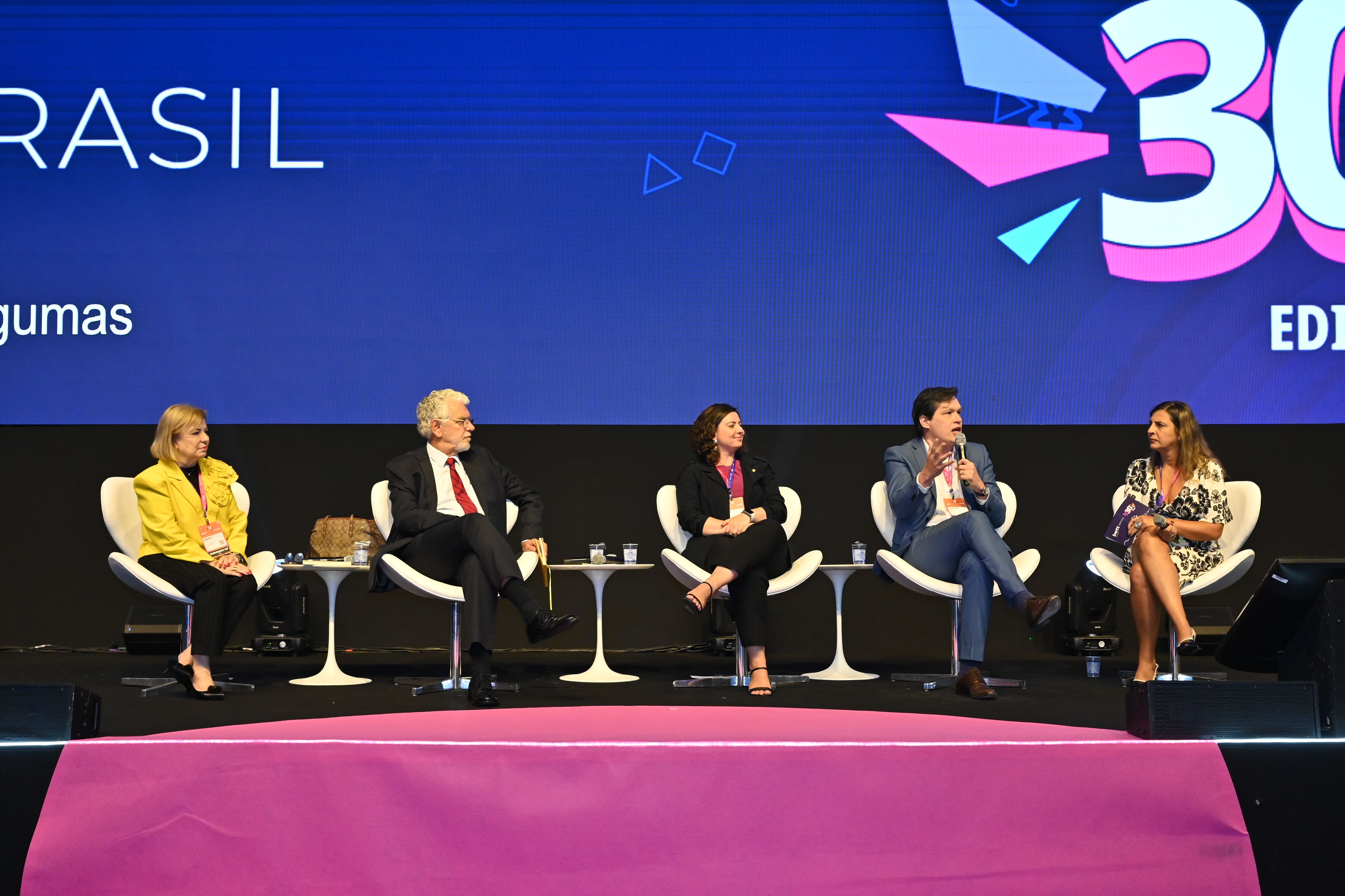
The opening panel at Bett Brasil brought together education officials. Photo: Bett Brasil.
Among the panelists, the president of the National Education Council (CNE), Cesar Callegari, emphasized that the future is already here and poses constant challenges for education. “The world is moving forward and challenging us to seek new solutions. To do so, it is essential to understand that learning is not limited to the reproduction of content, but requires processes of experimentation. We create knowledge when we experiment—and even more so when we do so collaboratively and collectively,” he said.
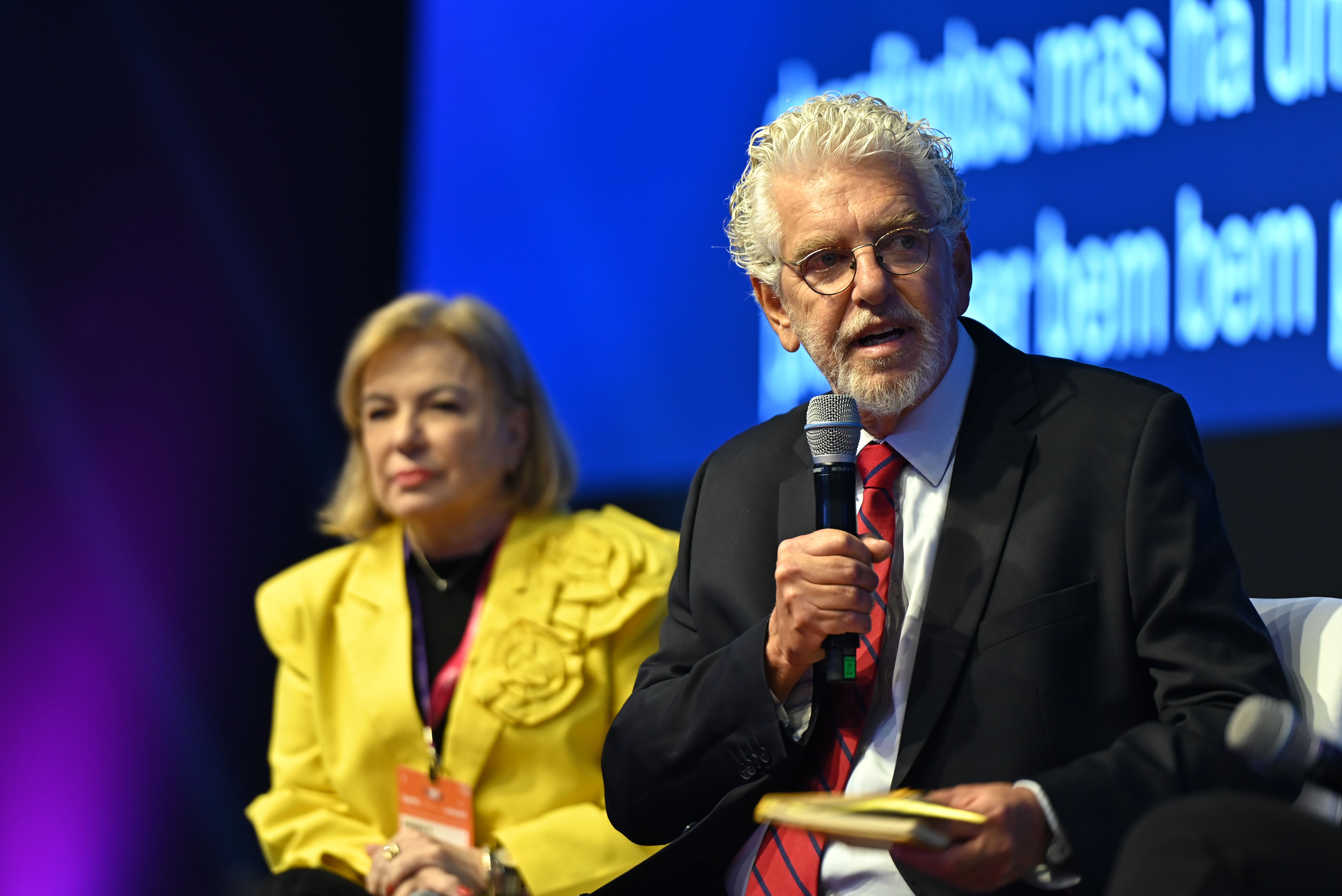
Cesar Callegari, president of the CNE. Photo: Bett Brasil.
Callegari highlighted the main challenges and projects currently led by the CNE, such as the development of the new National Education Plan; the implementation of new curriculum guidelines and high school pathways; the standardization of screen use in classrooms; and guidance on new regulations for teacher training in both elementary and high school. “We are ushering in a new era for another two million teachers. We will train a new generation focused on holistic education and on practical and theoretical experimentation. We firmly maintain that the use of technological resources does not replace face-to-face, collective teaching practices, and this is the guiding principle behind our current efforts,” he concluded.
For Amábile Pacios, vice president of the National Federation of Private Schools (FENEP), teacher training is essential for educational progress. “The private sector currently trains 67% of teachers, which places a great deal of responsibility on us. We need support to make progress in this training. This is a joint and fundamental effort.”
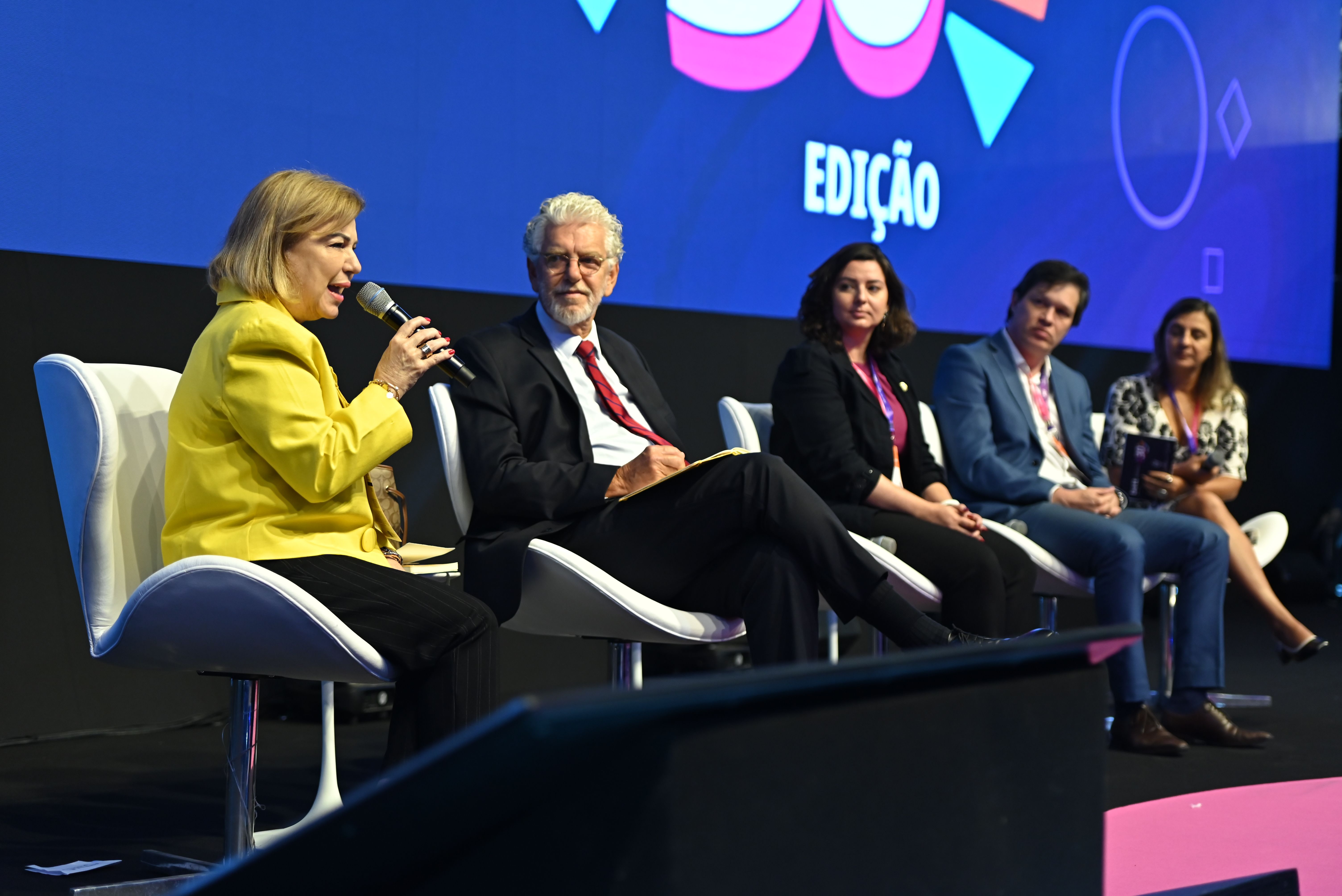
Amábile Pacios, vice president of Fenep. Photo: Bett Brasil.
Amábile offered food for thought to those in attendance at the opening ceremony. According to her, fewer young people today want to become teachers than in decades past. “Based on the school we run, we haven’t seen a significant number of young people wanting to become teachers in the last 10 years. This is largely a reflection of society’s lack of recognition of the role of teachers. We need to change this cultural aspect, and that is a responsibility we all share.”
The director of the Federal Government’s Secretariat of Basic Education (SEB), Anita Gea Martinez Stefani, emphasized that the Ministry of Education (MEC) has been working intensively to integrate technology into Brazilian education, while respecting Brazil’s unique characteristics and challenges. “Our main goal is to prevent technology from becoming yet another factor contributing to inequality. We still have nearly 4,000 schools without electricity, while others are equipped with state-of-the-art technology. We approach this from a systemic perspective, ranging from basic to advanced use of innovations without excluding anyone,” she states.
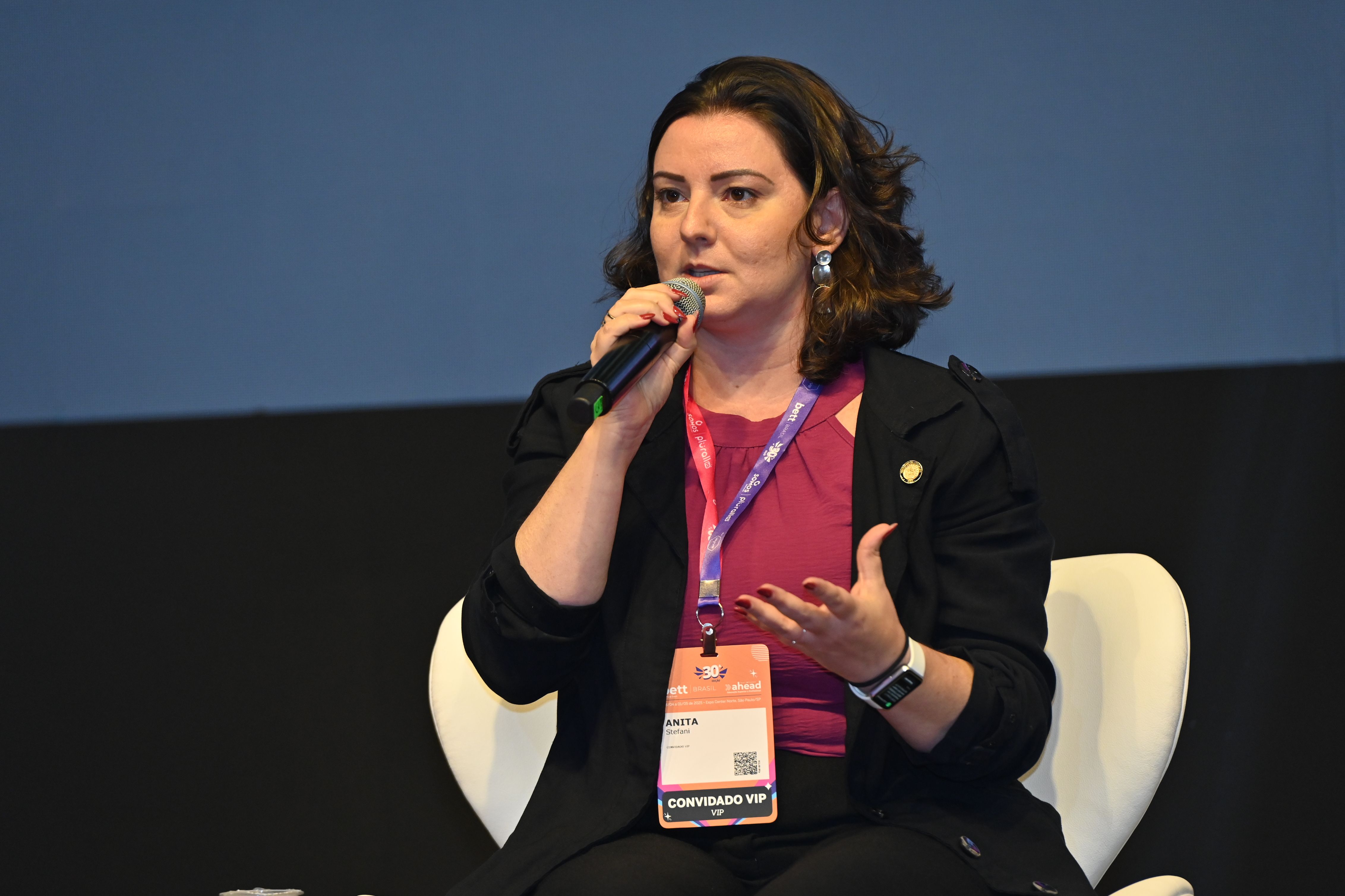
Anita Gea Martinez Stefani, director of the Secretariat of Basic Education (SEB). Photo: Bett Brasil
Continuing education for teachers that includes training in technology was another topic raised by the Federal Government representative. “We need to incorporate technology into the curriculum and the in-person learning model, strengthening the teacher’s role as a facilitator and instructor in the ethical and consistent use of these tools.”
Vinicius Neiva, executive secretary of the São Paulo State Department of Education, noted that the state government has been prioritizing age-appropriate literacy in public schools. According to Neiva, the administration has been using new technologies—some of which were even presented to the government at previous editions of Bett Brasil—and has achieved positive results with the implementation of this method.
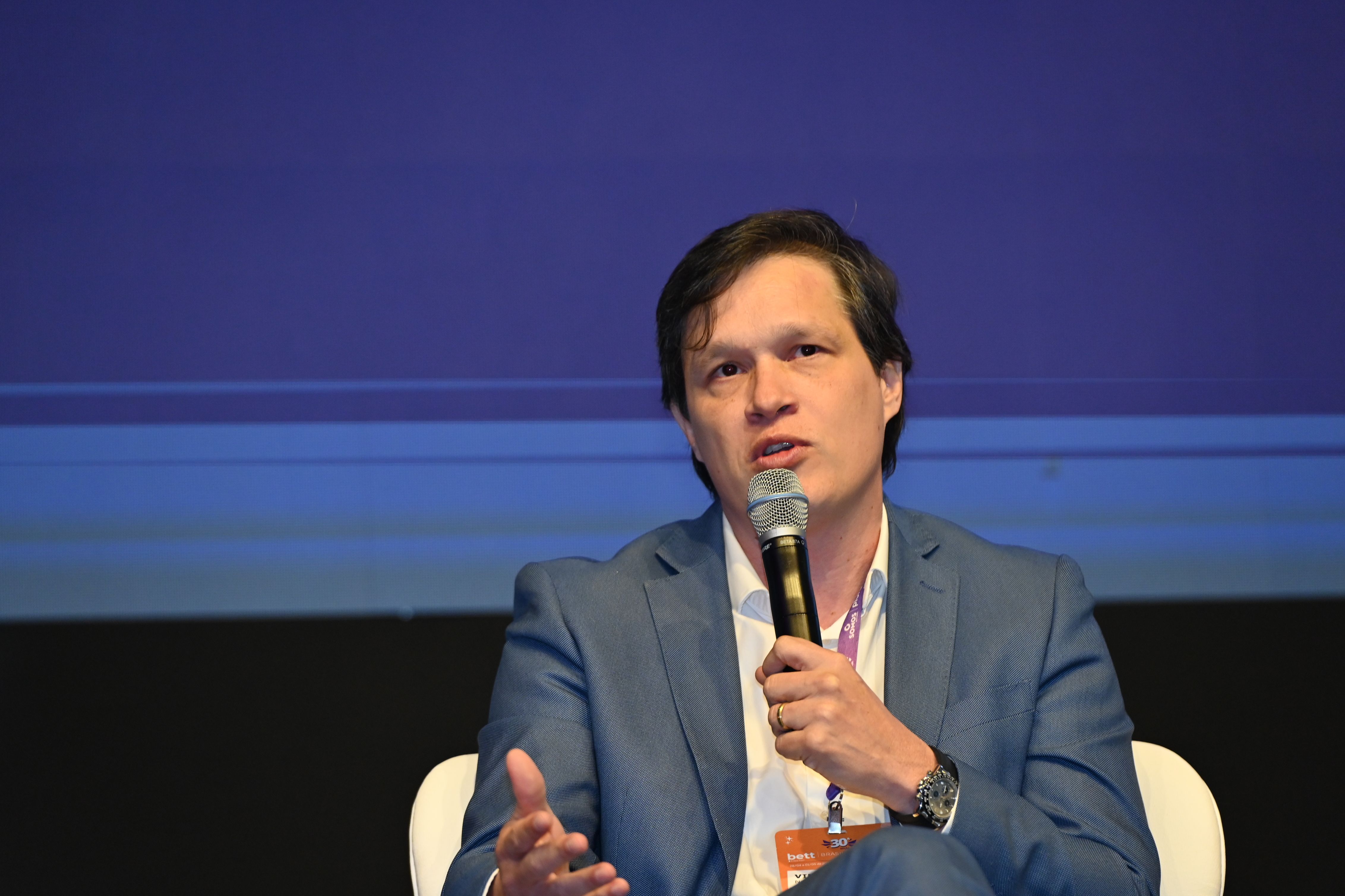
Vinicius Neiva, executive secretary of the São Paulo Department of Education. Photo: Bett Brasil.
The secretary also cited data showing that vocational education is growing exponentially in the state of São Paulo, which is prompting the government to expand the technical curriculum. “We need to define the choices we will make regarding Brazilian education. We need to define what content will be covered in the classroom and how to connect that to young people’s future in the job market. We’re seeing a huge increase in demand for technical courses, which we view very positively,” he said.
Another point raised by Vinicius is the need for discussions on education funding to address current crises. “It’s a topic that’s rarely discussed, but we need to talk about education funding. For example, to address the climate crisis, we have to retrofit schools to accommodate air conditioning and make that financially sustainable. It’s a discussion that should take place across various levels of government and sectors.”
The opening ceremony was moderated by Adriana de Barros, a journalist and TV Cultura host.
Climate Change Education
Among the various topics covered in the program, the ESG (Environmental, Social, and Governance) agenda in education stood out as one of the event’s main focuses.
In this context, the panel discussion “From Local to Global: Education and ESG as Strategies for a Sustainable World” prompted reflection on the role of education in the face of climate emergencies and the environmental changes challenging our planet.
Led by Thaís Brianezi, a professor at the School of Communications and Arts at USP and a member of the Advisory Committee of the São Paulo City Hall’s Special Secretariat for Climate Change (SECLIMA), and Edson Grandisoli, educational director of the Schools for Climate Movement, the lecture highlighted data, initiatives, and strategies that connect schools, public policies, and the private sector to the global climate agenda.
Thaís shared details about a Fapesp research project that investigates the role of communication in the impact of environmental and climate education, structured around four pillars: developing a public policy agenda, a collaborative database, training educators, and ongoing monitoring.
One of the highlights was the pilot teacher training program for 35 schools in the São Paulo municipal school system, involving 12 Regional Education Boards (DREs). “The goal was to develop a climate action plan with the participating schools, which can now be scaled up through a distance learning platform on AVAMEC, the Ministry of Education’s virtual learning environment,” Thaís explained.
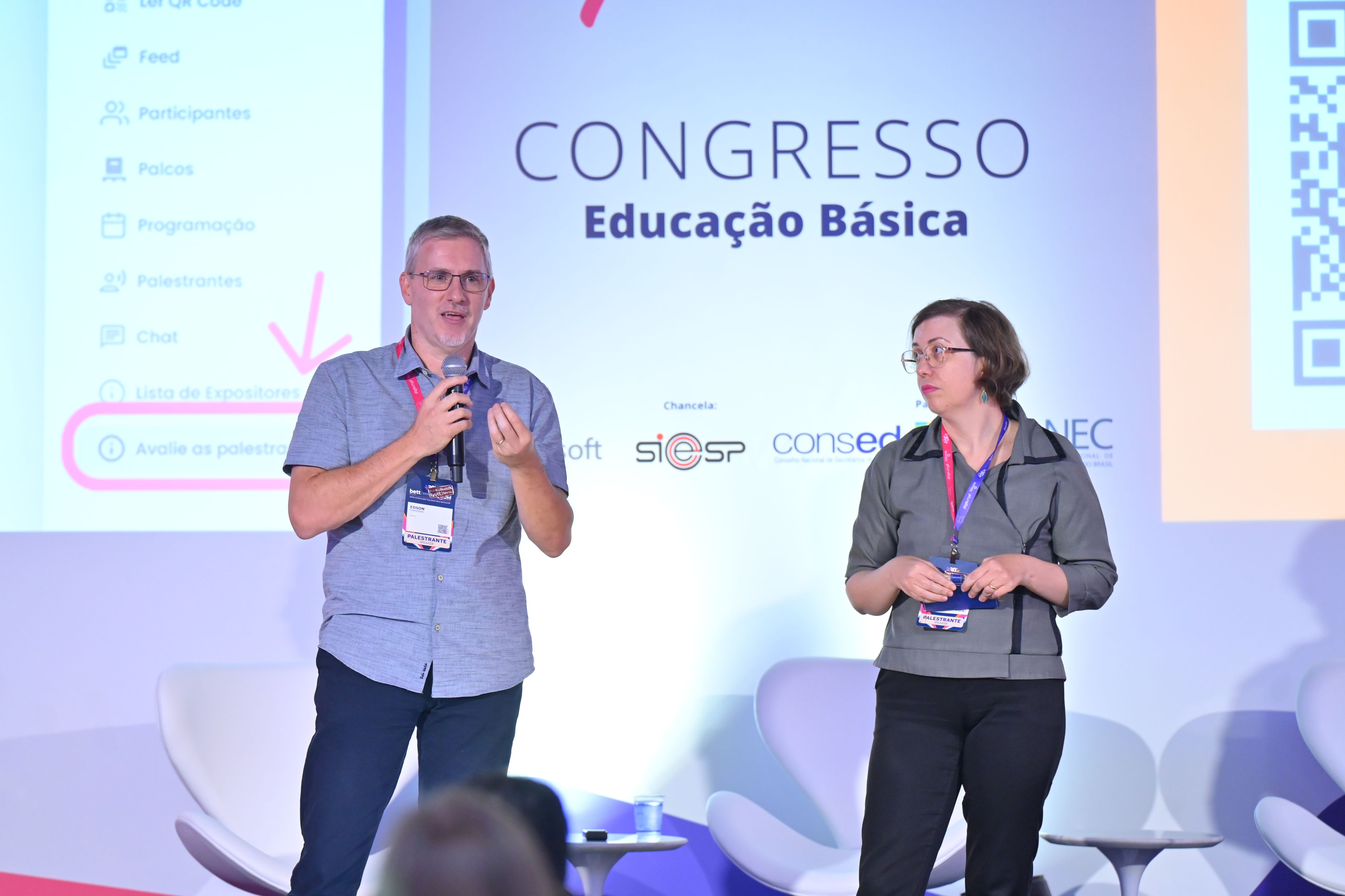
Experts discussed strategies for a more sustainable world. Photo: Bett Brasil
Professor and researcher Edson Grandisoli brought up the worsening climate crisis, emphasizing that the term “climate emergency” is increasingly necessary to describe the intensity and urgency of the current situation.
He presented alarming data: if the entire world population were to adopt the consumption habits of Americans, it would take five Earths to sustain that lifestyle; in the case of Brazilians, it would take two. In addition, Grandisoli pointed out that in 2023, humanity exceeded six of the nine planetary boundaries, including biosphere integrity, land-use change, and the freshwater cycle.
Grandisoli also shared the results of the “National Survey on Climate Change,” organized by the Schools for Climate Movement and Reconectta, which focused on the perceptions of children, youth, and adults regarding climate change.
According to the survey, concern about climate change increases with age. While 73.4% of children aged 7 to 14 say they are concerned or very concerned about the issue, that figure rises to 86.1% among young people aged 15 to 29 and reaches 96.9% among adults aged 30 and older.
With regard to perceptions of the ability to take action, children (ages 7 to 14) and adults (age 30 and older) perceive themselves as more capable of taking action against climate change than young people aged 15 to 29. Similarly, when it comes to levels of optimism, the youngest group—ages 7 to 14—is the most optimistic about the future in relation to climate emergencies.
“When considered as a whole, this age group—7 to 14 years old—is the one best suited to take on climate activism, especially girls. We have an audience interested in this issue, and we need to take advantage of that,” she emphasized.
Media Literacy
Another key topic was the role of schools in fostering informed readers who are capable of critically interpreting the content circulating on social media, in newspapers, and in everyday digital life. Moderated by journalist Petria Chaves (CBN), the debate featured media education expert and director of Entrepalavras Produção de Textos,Januária Alves, and influencer and communicator Felipe Neto.
Known for his strong digital presence, Felipe highlighted the potential of influencers and YouTubers in promoting good reading habits. According to him, digital platforms and new media can be powerful allies in fostering a love of reading, challenging the notion that these tools replace traditional methods.
“Even newspapers, when they began to be distributed on a massive scale, were criticized. Whenever something new emerges, there is criticism that it destroys the previous model. I oppose that view,” said Neto, advocating for the effective use of digital resources as tools to facilitate learning.
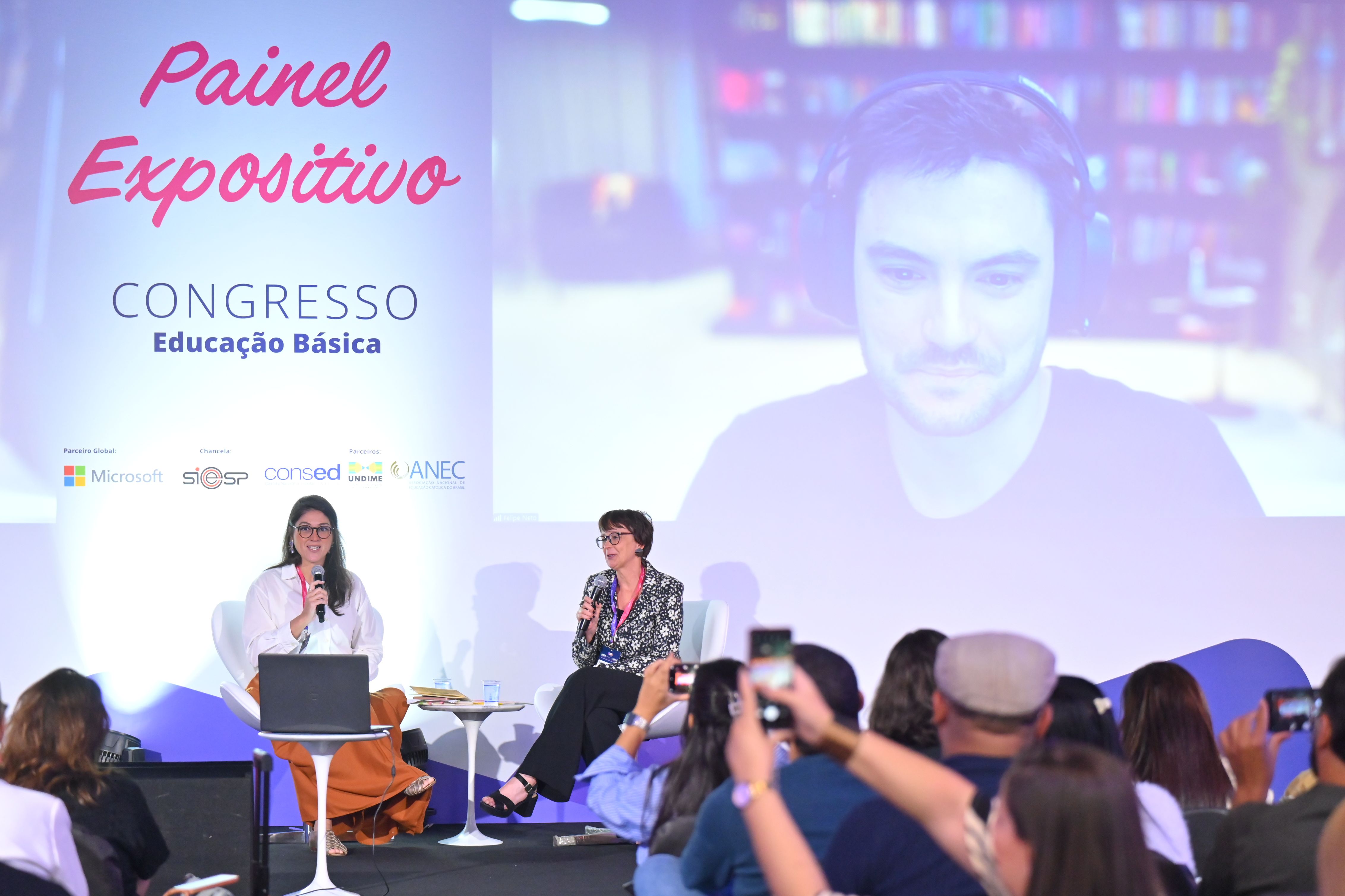
The panel focused on reading habits and the mindful use of digital media. Photo: Bett Brasil.
However, he also warned of the challenges posed by the digital environment, citing the lack of regulation on social media, which prioritizes profit over literary content.
“Social media is completely unregulated, and this lack of legislation has destabilized the digital world. Today, the algorithm favors what generates profit—which, in this case, isn’t books. This ends up causing people to lose interest, especially young people,” he said. According to Felipe, niche influencers, such as those in literature, face difficulties due to the platforms’ algorithms, which limit their reach.
The broadcaster also shared his personal experience with literature, emphasizing the importance of making reading enjoyable. “Reading shouldn’t be a habit; it should be a hobby. You have to have a passion for it. In my view, forcing children to engage with literature they don’t yet understand undermines the entire process,” he said. He cited the use of audiobooks as an alternative to spark a love of reading, highlighting the importance of trying different methods to broaden readers’ horizons.
For her part, Januária Alves reflected on the state of reading in Brazil, noting the loss of more than 4 million readers in recent years. “There is a battle for reading in Brazil. But we cannot create readers without good books,” she observed. She also shared her childhood memories, when reading was a way to calm her restless mind, emphasizing the importance of reading as a journey of self-discovery.
Responsible Use of Cell Phones in Schools
Attorney Alessandra Borelli, a specialist in digital law and partner at Opice Blum Advogados, pointed out that the initial phase of resistance and digital abstinence in schools has already been overcome—as a result of the law that restricted cell phone use in schools. “We’re realizing that it’s possible to be happy even with restricted cell phone use,” she said. According to her, the focus now is on reclaiming fundamental skills, such as the ability to express oneself without relying on technology, especially among children.
During the panel discussion titled “From Bans to Mindful Use: How Does the Law Banning Cell Phone Use in Schools Redefine the Rules of the Game?”, Borelli emphasized that the measure’s success depends on a collective effort between schools and families. “The responsibility cannot fall solely on the school. It’s no use restricting use in the classroom only to have it be offset by excessive use at home. Consistency is key.”
She warned of the effects of heavy use of digital technologies, which have shaped a generation that is less prepared to handle tasks requiring concentration, patience, and resilience—skills that are essential for professional life. “We are all digitally overwhelmed, legally uninformed, and mentally exhausted,” she summarized.

Alessandra Borelli spoke about the ban on cell phones in schools. Photo: Bett Brasil.
Alessandra also brought a neuroscientific perspective to the debate. According to her, constant screen use directly affects brain function, especially in children.
“Dependence on devices interferes with neurological connections. The brain undergoes a process called synaptic pruning, in which it eliminates less-used connections and strengthens the most frequent ones. This means that the habit of endlessly scrolling through screens alters attention patterns and makes it harder to stay focused on tasks in the classroom—even on simple tasks like reading a question with a longer prompt, for example.”
For this reason, the expert believes that cell-phone-free time in schools could foster healthier patterns and experiences for cognitive development. “We’ll start to see the benefits of this soon—perhaps as early as next year.”
The panel “What K-12 Teachers Reveal About the Use of AI in the Classroom: Challenges, Perceptions, and Possibilities” brought together UTFPR professor —Cornélio Procópio—and coordinator of the TEDI (Technology and Digital Education for Seniors) project, Camila Sestito; Robson Bonidia, who holds a Ph.D. in Computer Science and is the leader of the InteliGente project; and Wellington Cruz, the founding president of the Significare Institute.
The discussion was based on an original study conducted by the Significare Institute in partnership with the Federal Technological University of Paraná (UTFPR), which surveyed 346 teachers from all Brazilian states. The discussion prompted reflections on the actual use of technology in the classroom, addressing issues such as security, ethics, and digital inclusion.
One of the key findings of the survey is that, although most teachers have a basic understanding of AI, few have mastered its use at an advanced level. For Camila, this points to two major challenges: “We need to train teachers to use AI in their daily work and, at the same time, prepare them to support students in this process.”
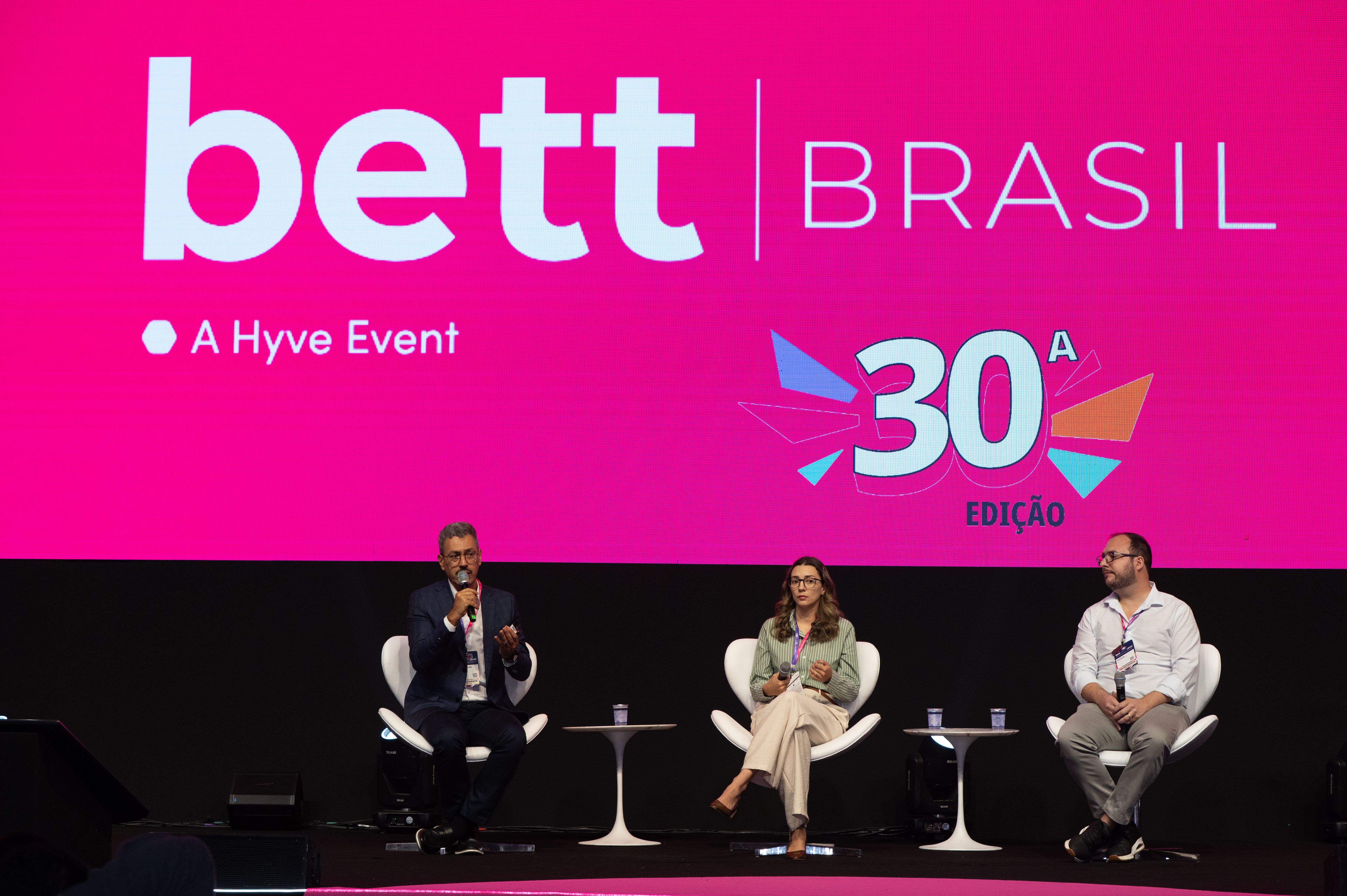
The debate revealed educators' perceptions of AI use. Photo: Bett Brasil
Despite the limitations, more than 80% of the teachers surveyed see benefits in applying AI in the classroom, especially for lesson planning and creating interactive content. About 61.6% already use generative AI tools to generate ideas, create lesson plans, and develop materials, although only 14.3% have incorporated the technology into the actual creation of instructional materials.
Among the main obstacles cited by educators are a lack of internet access, a shortage of equipment, a lack of technical support, and, above all, a lack of time.
Bonidia emphasized that it is not enough simply to bring technology to schools; it is essential to ensure its ethical and responsible use. “There’s no point in introducing AI in one region while neglecting other, less developed ones,” he warned. He also highlighted the need to educate students to be aware of and critical about the use of these tools.
For Cruz, ethical responsibility in the use of AI should be part of students’ education. “About 78.3% of teachers believe it is essential to educate students about ethics in the use of AI—and, more than that, to assess whether they have truly learned to use it critically and conscientiously,” he said.
Bett Conecta
Another highlight of the event was Bett Conecta, held for the first time during the four days of Bett Brasil. The initiative aimed to boost business in the education sector through one-on-one meetings between educational institutions and providers of technology and solutions for education. In all, more than 1,500 meetings were scheduled during this edition.
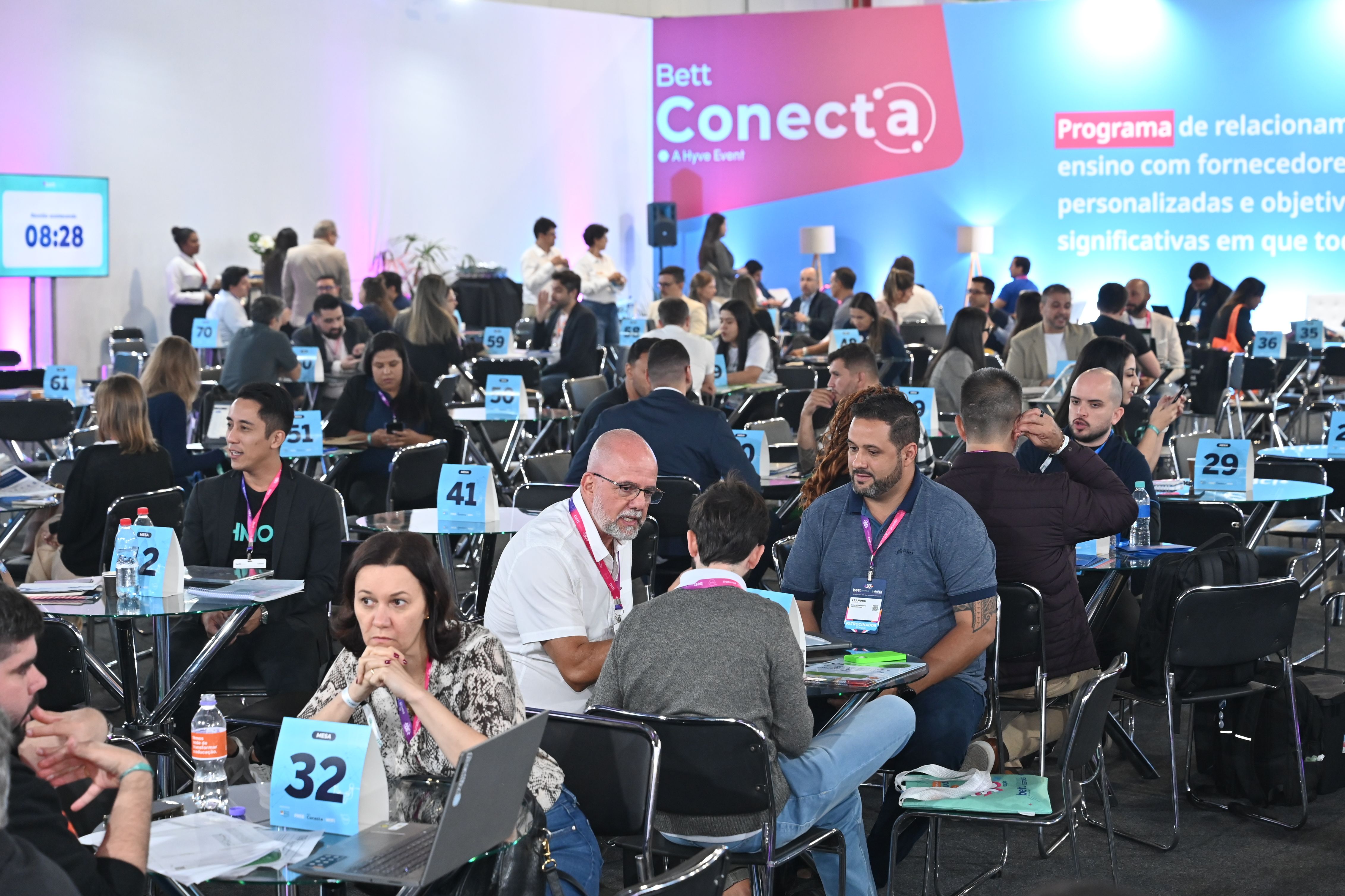
Bett Conecta organized one-on-one meetings between solution providers and educational institutions. Photo: Bett Brasil
“The expansion of the program has provided more opportunities for dialogue and results. It’s gratifying to see participants returning, engaged, and seeking innovation for their institutions. With the lounge always bustling and a high participation rate, Bett Conecta has established itself as one of the event’s major highlights,” noted Gabriel Kineippe, the project lead. He added: “In 2026, we will continue our commitment to generating value, business, and real impact in education.”
Bett Brasil EdTech Awards
One of the major highlights of this year’s event was the presentation of the Bett Brasil Edtech Awards, which recognized startups with innovative solutions to educational challenges. With 120 entries, the awards were divided into three categories— Early Stage, Traction, and Scale-up. Nine finalists presented their pitches live during the event. The winners were selected by a judging panel, while the standout startup was chosen by popular vote.
The awards ceremony was supported by CESAR School, Distrito, Instituto Significare, and the Ibero-American Association of EdTech (IAAE). Check out the winners:
- Early Stage: Collabits
- Traction: Teachy
- Scale-up: Lingopass
- Featured Startup: Edify Education
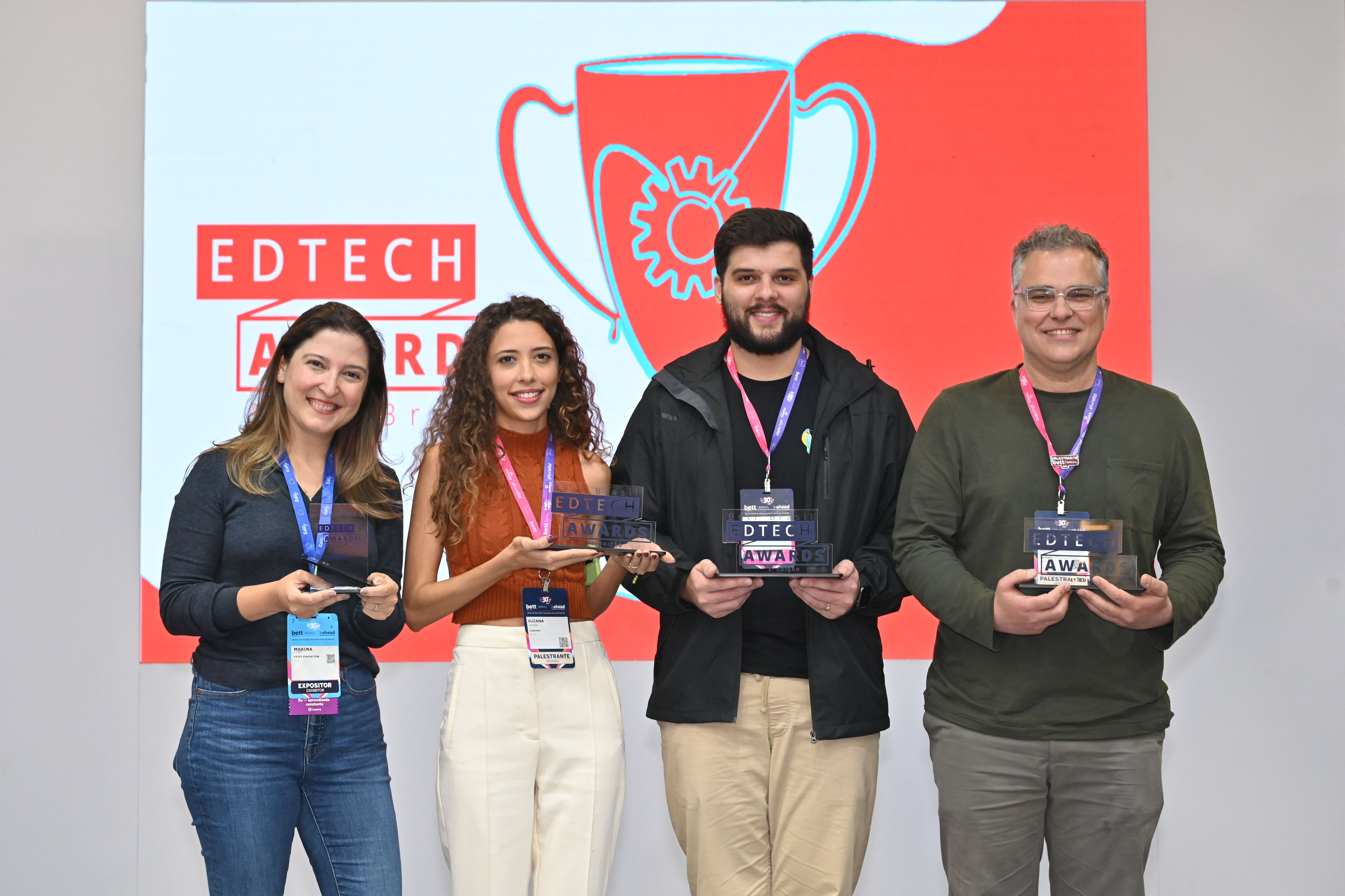
The winners of the Bett Brasil Edtech Awards. Photo: Bett Brasil
In addition to the trophy and certificate, the winners received specialized mentoring and secured a spot at Arena Bett Startup 2026 (Table Top format), as well as broad visibility within Latin America’s largest educational community.
Solutions and innovations for education
More than 330 brands showcased new releases and innovations in solutions, products, and services geared toward the public and private education ecosystem.
One of the initiatives came from FTD Educação, which introduced a tool for automatically grading handwritten essays. Using computer vision and machine learning, the solution is already in use in public schools in 38 municipalities across seven Brazilian states. The technology generates personalized feedback for students and supports teachers in providing instructional guidance; starting in the second semester, it will also include a plagiarism detection system.
“FTD Educação has consistently invested in innovation and social indicators as performance metrics. As a result, teachers can work more effectively, focusing on student learning and individual guidance, while more time-consuming processes are automated,” explained Ricardo Tavares, CEO of FTD Educação.
See also:
- First Day of Bett Brasil Highlights Educational Innovations and Discussions on the Future of Education
- The second day of the 30th edition of Bett Brasil highlights innovation, sustainability, artificial intelligence, and educational management
- The final day of the 30th edition of Bett Brasil addresses the challenges facing schools in the digital age
SOMOS Educação, in turn, presented Plurall IA, a solution that combines artificial intelligence with pedagogical curation to strengthen inclusion in schools. The main new feature is the ability to create Individualized Education Plans (IEPs), which uses data and information from educators to propose personalized learning paths.
“Plurall AI functions as a smart and reliable personal assistant that works with the curated content and teaching materials from SOMOS’s brands and educational systems. Teachers, administrators, and educators now have more time to focus on inclusive teaching practices, and schools are strengthening their commitment to equity and diversity,” said Bruno Brusco, partner and director of Digital Solutions at SOMOS Educação.
, the SaaS platform known as Agenda Edu, has launched a school assistant with AI integrated into its SuperApp. The new feature allows schools to automatically create activities, announcements, and events in a matter of seconds.
“AI is revolutionizing various sectors, and education is no exception. Agenda Edu’s SuperApp, which automates 85% of school operations, is gaining even more autonomy and playing an important role in schools’ daily routines, as AI helps save time and reduce costs while optimizing communication between schools, students, and families,” said Anderson Morais, co-founder and CEO of Agenda Edu.

The exhibition area showcased hundreds of innovations, products, and solutions for education. Photo: Bett Brasil.
The Sofia Platform, in turn, conceived by Professor Profinho—who scored 1,000 on the Enem—presented an AI solution for the instant and standardized grading of essays, in line with the national exam’s criteria. Designed to reduce costs, prevent delays, and ensure consistency, the tool already benefits thousands of students and institutions, delivering savings of up to 80%, greater student satisfaction, and absolute standardization in assessments.
“Students were born in the Digital Age, but the teaching of writing had remained stuck in the 19th century. Sofia solves this problem with autonomy, agility, and precise feedback. It’s the only platform that uses AI to correct students’ essays and also trains school teachers,” emphasized the creator.
In the field of educational technology, Quizizz has introduced a solution that seeks to balance innovation with recent policies restricting cell phone use. “At Bett Brasil, Quizizz presented a solution that combines technology, artificial intelligence, and gamification even without students holding screens in their hands: the paper mode,” explained Quizizz’s educational director, Rebecca Rios. The approach allows students to answer questions using printed cards with QR codes, while the teacher uses a single device to project the questions and record the answers with the camera.
Concern for the environment, meanwhile, was the focus of Recickla’s participation—an environmental education organization in the Dome Ventures portfolio. The company presented the “Nossa Jornada” collection, which is being used in various regions across the country. “The collection brings together content aligned with the BNCC, focusing on the 4 Rs of sustainability, the circular economy, reverse logistics, and climate change,” explained Carolina Machado, CEO of Recickla.
With a focus on public education, Marco Jordão, Government Sales Manager at Editora do Brasil, highlighted the importance of environmental education following the enactment of Law 14.926/2024. At the publisher’s booth, the main new release was the book *Climate Education with the Pererê Gang*. According to Jordão, the book “is essential for encouraging sustainable actions, raising citizens’ awareness about environmental protection, and promoting changes in community habits through children, educators, and families,” he concluded.
Next Steps
Continuing its commitment to promoting educational innovation throughout Brazil, Bett Brasil will bring its expertise and curated content to the Bett Nordeste Conference. The traveling event will take place in Recife on August 27 and 28, with the goal of bringing together educators, public officials, institutions, and companies from the region’s educational ecosystem.
In 2026, the 31st edition of Bett Brasil will take place May 5–8 at Expo Center Norte in São Paulo.
Share on social media:
Categories
- The Future of Education